
What Can Dungeons And Dragons Teach Us About Risk?

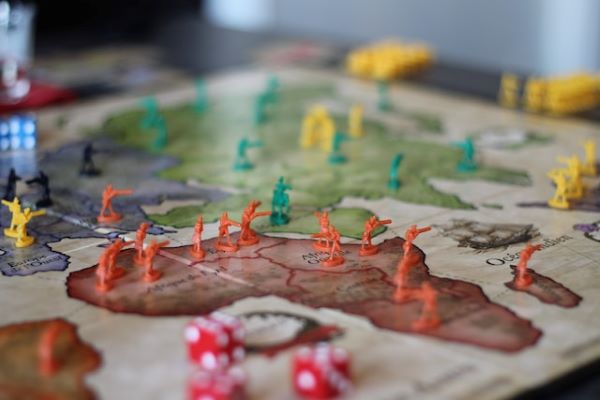
Risk game board

For those of us who play, we know Dungeons and Dragons (D&D) as an exciting and immersive experience. However, I believe it is also a valuable tool for developing critical skills applicable to the business world. In todays post, I explore how engaging in the world of D&D (and other games like it) can help professionals learn to assess risk effectively. I delve into the concepts of uncertainty, decision-making, strategic planning, adaptability, and learning from failure, showcasing their direct application in the business environment.

Uncertainty in the Realm of Adventure

D&D is a game filled with uncertainties. Players constantly face unknown challenges and unpredictable outcomes. Goals can sometimes get blurred and allies turn out to be villains in disguise. Perhaps the helpless prince is actually the evil mage in disguise. Not only that but adventures are often full of hazards, traps, puzzles and antagonists. This unknown is what makes the game fun. Facing off against unpredictability and then pulling through as a team creates a shared sense of accomplishment that is difficult to replicate elsewhere.

Similarly, the business world is rife with uncertainties, ranging from market fluctuations to changing customer demands. By its very nature the world is chaotic. Good leaders need to be able to calmly navigate these waters of unpredictability.

By regularly facing uncertainties in the game, players can learn to embrace ambiguity, developing a resilient mindset essential for assessing risk in the business world.

Decision-Making and Consequence Evaluation

In D&D, players make decisions that have lasting consequences. Each choice carries a level of risk, and players must evaluate the potential outcomes before committing. If the DM is doing their job right, choices should be made under tight time pressure and with limited information. Of course, the consequences should also be significant.

This mirrors the decision-making process in the business world. I would argue, that most decisions made by a leader have limited information and degrees of time pressure. Whether a team needs an answer now to keep their project moving, or a customer is requesting a new service, there is never enough information and action must be taken.

Jocko Willink author of Extreme Ownership suggests making small iterative decisions to counter this lack of information. This allows you to easily adjust as new information comes to light. While I do use this technique as part of my real world job I have also found myself purposefully practicing it when I play role playing games. As such it is now second nature and a regular part of the way I operate as a leader.

Once again, by playing the game, players gain experience in weighing risks, analyzing potential outcomes, and considering long-term consequences. Invaluable skills for risk assessment and decision-making in business.

Assessing and understanding consequences is critical

Strategic Planning and Resource Management

Undertaking D&D adventures often require strategic planning and resource allocation by the players. Players assess the risks associated with different paths, balance resources, and adapt their strategies accordingly. For example, exploring a lost underground city might require climbing tools, torches and a map. Whilst removing an evil vampire lord may require magical weapons and a plan centered around sunlight.

Of course, these skills directly translate to the business world. Strategic planning and resource management are essential for mitigating risks, seizing opportunities, and maximizing returns on investments. Again each business is different requiring a unique strategy. The resource planning for an environmental consultancy would be very different to a manufacturer of water quality instruments. But the concepts and principles remain the same. People, customers, finances and systems & processes all need to be considered.

Adaptability in Dynamic Environments

Dungeons and Dragons is known for having a dynamic and ever-changing nature. Players and Dungeon Masters alike, adapt to unexpected challenges, revise strategies on the fly, and pivot when necessary. The story evolves through player action and often ends up in places that no one expected. I believe this is where the gold of the game can be found, in this dynamic, improvised area where the story can take on a shape of it’s own. For the magic to happen all the players have to be able to adapt to these in game shifts and take joy in the unexpected.

Similarly, business is characterized by constant change and disruptive forces. There have been an incredible number of disruptions over the last decade with companies scrambling to adapt and keep up. AI, autonomous vehicles, Internet of Things are a few of the high profile ones. As a leader you have to get comfortable with this change and uncertainty. Embracing and finding joy the ever-changing nature of the world will set you up for opportunity rather than defeat.

By honing adaptability skills in D&D, players cultivate the ability to assess risks in real-time, make agile decisions, and adjust business strategies to navigate uncertain environments successfully. It can help you get comfortable with change and find joy in dynamic outcomes. A critical mindset to find in todays fast changing business landscapes.

Learning from Failure and Iterative Improvement

Failure is a natural part of D&D, where players may encounter setbacks, make mistakes, or face defeat. However, these failures serve as valuable learning opportunities. Through reflection and analysis, players can identify the factors that contributed to their failures and develop strategies to improve their future outcomes. This mindset of learning from failure and embracing iterative improvement is essential in the business world, where risk assessment requires an open mind, adaptability, and a continuous learning mindset.

Final Thoughts on D&D and Risk

I believe playing Dungeons and Dragons provides a unique and immersive experience that helps individuals develop essential skills for assessing risk in business. By navigating uncertainties, honing decision-making abilities, strategic planning, embracing adaptability, and learning from failure, D&D players acquire a valuable toolkit to assess and manage risk effectively. The transferable skills developed through the game empower individuals to make informed decisions, seize opportunities, and navigate the complexities of the business landscape with confidence.

Next time you play D&D, take a moment to think about the risks you encounter and how you plan to face them.


3 Powerful Reasons You Should be Playing D&D with Your Workmates

Picture this: You’re sitting around a table with your coworkers, immersed in an epic adventure, slaying dragons, solving puzzles, and forging alliances. This isn’t just another team-building exercise; it’s Dungeons & Dragons (D&D), a tabletop role-playing game that has gained immense popularity in recent years. But why should you consider playing D&D with your workmates? In this post, we’ll explore three valuable lessons that playing D&D can teach you about teamwork, problem-solving, and creativity, and how these lessons can positively impact your professional life.

Lesson 1: Teamwork Makes the Dream Work

In D&D, players assume different roles within a team, each contributing unique skills and abilities to achieve a common goal – typically, completing a quest or defeating a formidable foe. This collaborative aspect of the game can teach you invaluable lessons about teamwork in the workplace:

  1. Effective Communication: D&D requires players to communicate and coordinate their actions. Just like in the office, clear communication is essential to ensure everyone is on the same page. Through D&D, you can practice articulating ideas, listening to others, and making informed decisions as a group.
  2. Delegation of Tasks: In D&D, not everyone can be the fearless leader or the master of all skills. Recognizing and assigning tasks based on each player’s strengths is crucial. This mirrors the importance of assigning roles in a team at work, where utilizing individual strengths leads to better overall performance.
  3. Conflict Resolution: Disagreements are bound to arise, whether it’s in a D&D party or your office team. Learning how to navigate conflicts and reach compromises in a game setting can improve your conflict resolution skills at work, fostering a healthier work environment.
Playing D&D with your workmates is fun and has lots of benefits
Playing D&D with your workmates definitely improves teamwork

Lesson 2: Creative Problem-Solving

D&D presents players with complex challenges and puzzles that require creative problem-solving. These challenges can be a breeding ground for innovative thinking and resourcefulness:

  1. Thinking Outside the Box: In D&D, there is rarely a single “right” solution to a problem. Players are encouraged to think creatively, considering unconventional approaches and experimenting with different strategies. This mindset can translate directly to the workplace, where thinking outside the box can lead to innovative solutions.
  2. Adaptability: D&D is filled with unexpected twists and turns. Players must adapt to changing situations and make quick decisions. These adaptability skills can be highly valuable in the fast-paced, ever-evolving world of business.
  3. Critical Thinking: Analyzing clues, deciphering riddles, and making informed decisions are all essential aspects of D&D. These same critical thinking skills are invaluable for problem-solving at work, whether you’re tackling a complex project or troubleshooting an issue.

Lesson 3: Fostering Creativity and Imagination

D&D is a world of limitless imagination, where players can create and explore fantastical realms, characters, and stories. Engaging in this imaginative exercise can enhance your creativity and inspire innovation in your professional life:

  1. Storytelling: As a D&D player, you become part of an ever-evolving narrative. This can improve your storytelling abilities, a valuable skill in presentations, marketing, and communication in general.
  2. Risk-Taking: D&D encourages players to take calculated risks, sometimes even daring ones. Of course, this willingness to step out of your comfort zone can lead to breakthrough moments in your career, where calculated risks can yield significant rewards.
  3. Problem Framing: D&D teaches you how to frame problems creatively, often looking at issues from various angles. This can be applied to business challenges, helping you see problems as opportunities for innovative solutions.

Final Thoughts on Playing D&D with your Workmates

Playing D&D with your workmates may seem like a leisure activity, but it offers powerful lessons that can benefit your professional life. Through teamwork, creative problem-solving, and fostering imagination, D&D can help you develop crucial skills that can be applied in any workplace. So, why not gather your colleagues, roll the dice, and embark on an epic journey of growth and collaboration? In the world of D&D, and in your career, the possibilities are endless.

Survive the Sinking Submarine: Ultimate Hell Week Scenario

My last post explored using roleplaying games like Dungeons and Dragons to create a Hell Week scenario experience for your staff. With the aim of creating a bonding experience for teams, leaders and new starters. In this post I aim to develop a scenario/event that you could use to create this type of experience.

Event Goals

Before we start, it is essential to understand the goals of the event and work out from there. This event is designed to be run for groups of new leaders in an organization. These are high performing individuals tipped for future leadership positions or newly promoted into one.

The goal of the event is to foster a sense of team and belonging amongst the future leadership of the business. This will achieved through overcoming shared adversity.

Overview of the Hell Week Scenario

In an effort to keep the hell week scenario outside of the lived experience of the cohort but allowing for high pressure the scenario will focus on escaping from a submarine. Participants will be allocated different roles/skillsets and work together to escape. A series of tasks requiring multiple skillsets will need to be prioritized and completed against time pressures. Additionally, surprise events throughout the scenario will add additional pressure, upsetting any planning. Adaptability and teamwork will be essential in beating the scenario.

In addition, each participant will have six endurance points that are lost if tasks are failed. They can also be traded in to help improve the likelihood of success. However, when the last point is lost the player is out of the scenario.

The player briefing might look something like the following:

Congratulations on joining our team! We believe in hands-on training to prepare you for real-world challenges ahead. In this immersive training scenario, you will find yourself a crew member of a sinking research submarine. Your mission is to work together to overcome a series of challenges and escape before it’s too late. Remember, teamwork, communication, and quick thinking are essential. Good luck!

Duration: 2 hours

Location: Office setting or conference center. Smaller rooms preferred.

Lighting and sound effects can really enhance the immersion

Required Props and Setup to Enhance Immersion

As discussed in my last post immersion is really important. Of course, you don’t need a full on mock up of a submarine. But there are some simple things you can do to help create a sense of place out with the normal office environment.

  1. Submarine Environment: Create a makeshift submarine environment by shifting tables and chairs into a series of spaces along a thin column Alternatively, set up in a corridor to give an improved sense of the enclosed space. Additionally, turn off overhead lights and use desk lights with blue/green lighting gels to mimic the underwater setting. Having a red alarm light will definitely add to the sense of urgency when it goes off.
  2. Sound Effects: Use a portable speaker to play submarine sounds, alarms, and underwater noises. This can be used as a timed track signaling surprise events and highlighting the sense of urgency.
  3. Props:
    • Flashlights
    • Walkie-talkies or two-way radios
    • Gauges to indicate hull integrity and oxygen levels
    • Life vests
    • Clipboards with task instructions
    • Stopwatch
    • Nautical maps and charts
    • First-aid kit
    • Ropes and carabiners
    • Puzzles or challenges related to navigation and communication
  4. Instructor/Facilitator: You will need someone to facilitate the scenario and provide guidance when necessary.
Keeping to schedule is key in running an event like this

Training Scenario Schedule

Below is a proposed schedule of the hell week scenario.

  1. Briefing (15 minutes):
    • Gather all participants and explain the scenario.
    • Emphasize the importance of teamwork, quick decision-making, and effective communication.
    • Assign roles to each participant (e.g., captain, engineer, navigator, medic, radio operator etc) and distribute their respective skills and tasks.
  2. Submersion and Initial Challenges (20 minutes):
    • Participants enter the makeshift submarine (clearly demarcated).
    • Turn on the sound effects to create an immersive atmosphere.
    • The submarine begins “sinking.” Water and pressure-related challenges arise.
    • Participants must address immediate issues like water leakage, pressure indicators, and stabilizing the vessel. Limited resources, must prioritize tasks.
  3. Navigation and Communication (20 minutes):
    • Provide a nautical map with coordinates.
    • Participants must collaborate to determine their location and chart a course to safety.
    • Encourage the use of walkie-talkies for communication between navigation and the steering team.
  4. Obstacle Challenge (15 minutes):
    • Present a challenge that requires participants to work together to overcome an obstacle (e.g., blocked hatch or damaged equipment).
    • They must use ropes, carabiners, and problem-solving skills to succeed.
  5. Medical Emergency (10 minutes):
    • Simulate a crew member’s injury.
    • The medic must provide first aid while others maintain the vessel and continue with the mission.
  6. Countdown to Escape (20 minutes):
    • Introduce a time constraint and associated red lights and klaxon.
    • Announce that the submarine’s condition is deteriorating rapidly.
    • Participants must complete their tasks and navigate to the surface before it’s too late.
  7. Debriefing (20 minutes):
    • After the scenario, gather the team and discuss their experiences.
    • Encourage feedback, focusing on what went well and what could be improved.
    • Highlight the importance of adaptability, teamwork, and problem-solving under pressure.
  8. Final Remarks (10 minutes):
    • Conclude the training with a reminder of key takeaways.
    • Reiterate the importance of quick thinking, clear communication, and collaboration in real-life situations.

Further Work

While I have listed each of the tasks above in a linear series, it would be better to have tasks overlapping. Teams must then prioritize tasks. Remember, failed tasks remove endurance points from participants, adding additional pressure. Endurance points can also be traded for clues and assistance.

Perhaps you can restrict the number of people in each section of the submarine and create time penalties for movement between the sections. This would emphasize the use of walkie talkies for communication. It would also highlight the need for clear and concise communication between different sections of the submarine.

Each task needs more work around the detail, but I think this gives the picture of how an event like this might work. I for one would love to experience it. Part escape room, part rpg, part leadership learning experience. For me it ticks all the boxes.

What do you think? Would this hell week scenario work? Is there anything you would add? Have you attended something similar?