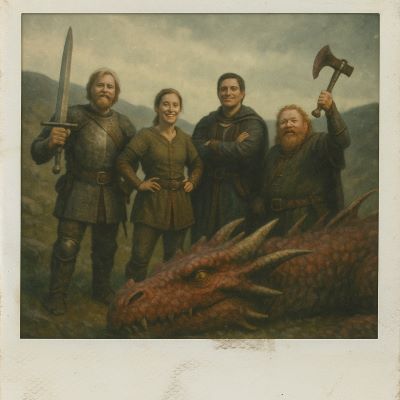
In games of Dungeons & Dragons, survival isn’t guaranteed by brute strength alone. It’s the party—a team of adventurers with varied skills and personalities—that determines success. A well-balanced party navigates danger, solves puzzles, negotiates with kings, and defeats dragons. Building a party that is poorly balanced? They get wiped out in the first dungeon.
This isn’t just fantasy. Building a good party is a powerful metaphor for creating real-world teams—whether in business, education, or community leadership. Let’s explore how the lessons of D&D party composition can help you build more effective, resilient, and exciting teams.
The Classic Roles: Diversity of Function
In most D&D parties, players naturally fall into a few core roles:
- The Fighter (or Tank) – Soaks up damage, leads from the front, keeps the team safe.
- The Healer (or Support) – Keeps the team alive, fixes problems mid-battle, often overlooked until things get desperate.
- The Arcane Master (or Wizard) – Wields immense power, but fragile. A thinker and planner.
- The Thief (or Rogue) – Deals precision damage, scouts ahead, solves traps. Agile and clever.
- The Negotiator (or Face) – Talks the party through problems. Reads the room, persuades the crowd, calms the chaos.
Each of these roles plays a critical part in a party’s success. And just like in the workplace, it’s dangerous to build a team with only one type of thinker or doer. A team of fighters might get stuck on a puzzle. A group of wizards might collapse under pressure. True strength comes from complementary roles—from people doing different things well, not the same thing better.
Unique Players, Unique Takes
But D&D is never just about archetypes. Each player adds their own twist to their role. Of course, one fighter might be a stoic knight. Another, a reckless brawler. One rogue might be a sly thief with a heart of gold, another an acrobat who only steals for sport. A cleric might be a devout priest—or a cynical medic who just happens to carry a holy symbol (“I’m a doctor, not a bricklayer”) .
These personal touches matter. They affect how players interact, solve problems, and support one another. In leadership, we call this individual agency within a role. Just because two people have the same job title doesn’t mean they’ll approach it the same way—and that’s a strength, not a flaw.
Encouraging individuality within roles allows team members to take ownership, play to their strengths, and bring their full selves to the work. You don’t want five clones with different names. You want five distinctive voices working together.
The Magic of Synergy
Some of the most memorable D&D moments come from synergy—when players combine their abilities in surprising ways:
- The rogue distracts the guards with sleight of hand while the wizard casts invisibility on the fighter, who then sneaks into the vault
- The druid wild shapes into a blue ring octopus and is thrown by the fighter, on the end of a spear into the villain, poisoning him fatally (yes, this really happened).
- The barbarian takes all the hits while the healer stacks buffs and the bard inspires everyone with a heavy metal song.
These combos aren’t in the rulebook. They come from understanding what your teammates can do and planning together. In other words, collaboration.
In leadership, encouraging synergy means helping people know each other’s strengths, build trust, and experiment together. Cooperation like this doesn’t just increase output—it creates those unforgettable “we did it!” moments that build lasting team culture.
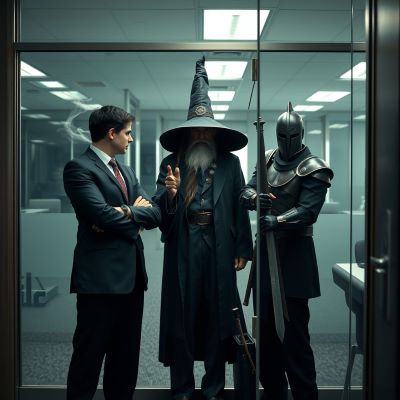
Building Your Party in the Real World
So how do you use the concepts of building your party in your own team or organization?
- Define Your Roles Clearly
Just like D&D characters have classes, your team members need to understand their roles—not just their job titles, but how they contribute to the team’s overall success. This can be done individually as people step into a new role. However, it can also be done as a group where everyone’s role is defined collectively. - Value Diversity of Skills
Don’t hire or assign roles based on sameness. Bring in people who think differently, act differently, and bring different types of magic to the table. You want to avoid groupthink at all costs, get diversity into your team quicksmart. - Let People Own Their Role
Encourage creativity. Let team members adapt their roles to suit their strengths and interests. Don’t just assign tasks—give ownership. Watching a team member make a role their own is one of the joys of leadership. - Foster Collaboration, Not Competition
Create a culture where people look for combo moves, not solo glory. Reward teamwork over individual brilliance. Collaboration and teamwork should be the norm. Don’t encourage or reward Lone Wolf behaviour. - Make Time for Storytelling
In D&D, parties bond over shared adventures. In real life, teams need time to reflect, celebrate wins, laugh over failures, and tell the story of what they’ve achieved together.
Final Thoughts on Building a Party
Whether you’re storming a goblin-infested ruin or navigating a complex project at work, success rarely comes from going it alone. It comes from assembling a party that works—people with different talents, unique styles, and a shared goal.
Leadership, then, isn’t about being the strongest character. It’s about building the right party, helping each person shine, and creating the space where together you can do something extraordinary.
And honestly? That’s where the real adventure begins.