From Band of Brothers to SAS Rogue Heroes: Inspired Kill Team Missions

There’s something timeless about small squads of soldiers through a larger conflict — tense, personal, and filled with moments of heroism and chaos. That’s what makes shows like Band of Brothers and SAS: Rogue Heroes so compelling. These are exactly the kind of stories that Warhammer 40K: Kill Team excels at telling.

In Kill Team, every operative matters. You’re not moving faceless troops around a battlefield — you’re guiding a handful of specialists, each with their own role, personality, and fate. Which makes it the perfect sandbox to reimagine iconic World War II small unit missions with a sci-fi twist.

Let’s look at how you can take inspiration from Band of Brothers and SAS: Rogue Heroes and turn those classic moments of grit and brotherhood into thrilling tabletop missions.

1. Brecourt Manor Assault (Band of Brothers)

Theme: Tactical problem-solving under fire.
The Scene: Easy Company (episode two) assaults a heavily fortified German artillery position, using initiative and teamwork to neutralize each gun in turn. In fact, this assault was so successful that they still teach it to officer candidates at West Point today.

Kill Team Mission Hook: Your squad must disable a chain of heavy weapon emplacements. Each emplacement requires a different skill test or demolition action to destroy.

  • Objective: Destroy all three artillery emplacements before the end of the battle.
  • Faction Fit:
    • Attacker: Veteran Guardsmen, Intercessors, or Pathfinders.
    • Defender: Traitor Guard, Heretic Astartes, or Necrons.

It’s a mission that rewards smart use of cover, movement, and individual heroics — exactly what Kill Team is built for.

One thing I like about this mission is that you can set up the terrain to reflect the real engagement. Do away with the balanced terrain set ups suggested in the rulebook and give this a go. You don’t have to go with Normandy bocage either, why not set up your more grim dark terrain in a similar configuration.

If you’re worried about balance, why not play the game twice. Switching attacker defender roles each time will a fun experience.
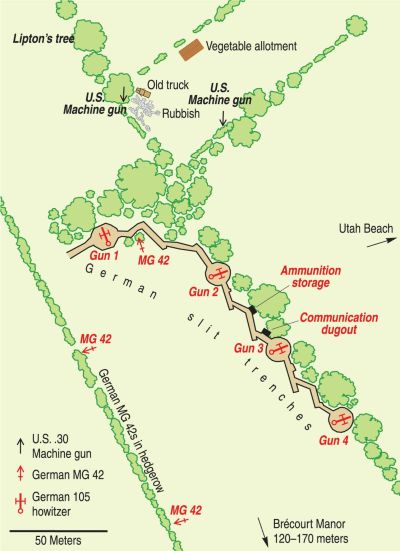
Why not set up your battlefield to reflect the real engagement?

2. Desert Airfield Ambush (SAS: Rogue Heroes)

Theme: Guerilla warfare and improvisation.
The Scene: The SAS (episode 6) raids enemy airfields deep in the desert, using speed and shock tactics to devastating effect.

Kill Team Mission Hook:
One team is guarding a space port with specific objectives (spaceship, fuel depot, pilots building), while the other launches a hit-and-run ambush.

  • Objective: The defender must prevent the attacker from destroying 2/3 of the objectives.
  • Special Rules: Limited visibility due to sandstorm reducing ranged fire; fuel dump and spaceship can explode spectacularly.
  • Faction Fit:
    • Attacker: Ork Kommandos, Kroot Farstalkers, or Ratlings.
    • Defender: Astra Militarum, Adeptus Mechanicus, or Blooded.

This mission brings cinematic chaos to the tabletop — explosions, last stands, and desperate retreats.

There is a great opportunity to make a themed desert table here. Build it out like an airfield/spaceport. If you have a spaceship model, why not place it front and center. Open spaces, palm trees, pilots mess hut, you get the picture.
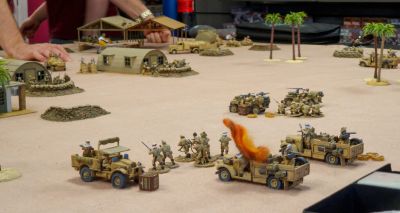
This Bolt Action battlefield provides a good suggestion for the table layout. You can find more pics from the Warlord website.

3. Operation Market Garden (Band of Brothers)

Theme: Holding out against overwhelming odds.
The Scene: Allied paratroopers seize Eindhoven only to find themselves isolated and outnumbered as German counterattacks close in.

Kill Team Mission Hook:
A beleaguered squad must hold a key structure (like a comms tower or reactor junction) until reinforcements arrive.

  • Objective: Survive for a set number of turns while preventing the enemy from capturing the objective.
  • Special Rules: The attacker’s numbers increase each round; the defender may receive one small reinforcement drop midway through.
  • Faction Fit:
    • Defender: Imperial Navy Breachers, Inquisition Agents, or Deathwatch marines.
    • Attacker: Chaos Legionaries, Ork Kommandos, or Fellgores.

This setup should create those tense, cinematic moments where every dice roll feels like life or death.

It could be played best as a joint ops mission, with two players fighting off waves of attackers. Why not create a densely packed board to replicate the close confines of the town. Narrow streets will create the need for desperate close combat actions, adding to the difficulty of completing the mission.

Bringing It All Together

By translating these real-world (albeit hollywoodised) operations into Kill Team missions, you blend the historical tension of WWII storytelling with the gothic sci-fi of the 41st millennium. You get all the things that make Band of Brothers and SAS: Rogue Heroes so gripping — camaraderie, courage, chaos — but with plasma rifles and occasional daemon incursions.

Basing your maps on these real engagements and creating asymmetric mission objectives will help add something different to your Kill Team games. So next game night, don’t just roll for missions — tell stories. Steal from history, tweak the details, and create moments that feel like they belong in both Normandy and Necromunda.
Build Your Practical Coaching Skills With D&D

Orc coach giving practical coaching tips

A couple of weeks ago we looked at how D&D can give insight into leadership coaching. Coaching is about unlocking the potential of others—helping them find their own solutions, build confidence, and grow. And a session of D&D gives you dozens of opportunities to practice exactly that. In this article I look at some ways to gain practical coaching skills through playing D&D with your mates.

Here’s a few tips to help your practical coaching skills.

Active Listening: Pay Attention to the Details

At the table: In D&D, missing a detail in the Dungeon Master’s description can mean walking into a trap. Players learn to listen carefully, not just to what is said, but how it’s said.

In leadership: Listening with intent is the foundation of good coaching. Instead of planning your response while someone speaks, focus fully on their words, tone, and body language. Then reflect back what you heard:

  • “It sounds like you’re feeling stretched thin—what part of the project is weighing most heavily?”

Ask Questions, Don’t Give Orders

At the table: When a player is unsure what to do, the best response isn’t “You should cast Fireball.” It’s asking questions like, “What’s your wizard best at in this situation?” That prompts them to think, decide, and take ownership.

In leadership: Instead of solving problems for your team, use open-ended questions to help them discover solutions:

  • “What options have you considered?”
  • “What outcome would you like to see?”
  • “What support do you need from me to make that happen?”

This shifts you from problem-solver to coach.

Encourage Quieter Voices

At the table: Every party has a quiet player who might get overshadowed by louder personalities. A skilled Dungeon Master or fellow player creates space by inviting them in: “Hey, what’s your rogue’s take on this plan?”

In leadership: Teams are the same. Coaching means ensuring every voice is heard. You might ask:

  • “I’d like to hear your perspective before we decide—what do you think?”

This inclusion builds confidence and uncovers fresh ideas.

Celebrate Creativity and Experimentation

At the table: Sometimes the “right” solution isn’t obvious—so players experiment. They may try to distract the dragon with a song or use a spell in a clever, unintended way. Great D&D groups celebrate the attempt, win or lose.

In leadership: Coaching encourages experimentation without fear of failure. Acknowledge effort and creativity, even when results aren’t perfect:

  • “That was a smart angle—you tested something new, and we learned from it.”

This builds psychological safety and fosters innovation.

Turn Setbacks into Learning

At the table: Characters fail rolls. Plans go sideways. But those moments often lead to the best stories. Players learn to laugh, adapt, and move forward.

In leadership: Coaching reframes mistakes as opportunities:

  • “What worked here, and what would you try differently next time?”

This approach develops resilience and problem-solving skills in your team.

Final Thoughts on Practical Coaching

When you play D&D, you practice listening, questioning, encouraging, celebrating, and reframing setbacks. All of these are core practical coaching skills. Bring them into your workplace and you stop being the one with all the answers—you become the leader who helps others shine.

So, next time you sit down for a session, remember: you’re not just slaying dragons—you’re sharpening your skills as a coach.

My First Game of Bolt Action — And Why I’m Hooked

As I’ve mentioned in previous articles, I love the grimdark of Warhammer 40,000 and the tight, tactical skirmishes of Kill Team. I love both systems—they’ve given me epic moments, great friends, and plenty of tabletop fun. But I’ve found myself looking for a game that recaptures the excitement of wargaming that I experienced back when I was first starting out (a long time ago). The recent incarnations of 40K are super complicated and I’ve been on the lookout for something a little simpler with engaging gameplay. And recently, I’ve been noticing something called Bolt Action.

World War II miniatures. Thematic, gritty tables. Terrain that looks like an actual battlefield. Order dice being drawn creating a chaotic swirl of combat that keeps you engaged throughout. This sounded like just my thing. I’d always been curious… so last November I reached out on the Facebook group of a local club and Jackson offered to run a demo game.

I’m very, very glad I said yes.

The Demo Game: Soviets vs Germans

It was a simple setup: Soviets vs. Germans, a classic match-up. Jackson had everything ready—beautiful terrain, two well painted armies, and the kind of calm, patient enthusiasm you only get from someone who genuinely loves the game.

I took the Germans.

Within minutes, I realised two things:

  1. This system is incredibly easy to pick up.
    The core mechanics are intuitive. No encyclopedic stratagems. No flipping between multiple supplements. Just straightforward rules that give you tactical freedom without drowning you in complexity. It basically boils down to rolling a 4 + on a D6 with various modifiers. Obviously there’s more to it than that, but it’s a very simple game at its core.
  2. There is no down time.
    The way units activate based on the order dice draw creates this constant feeling of uncertainty.. You never know who’s going next, so you’re always involved, always paying attention, always planning. This swinging back and forth keeps the engagement level high at all times.

These put Bolt Action in a completely different space to 40K. It’s not better or worse—it’s just different. More narrative. More engaging. Much less downtime.

The Table Matters

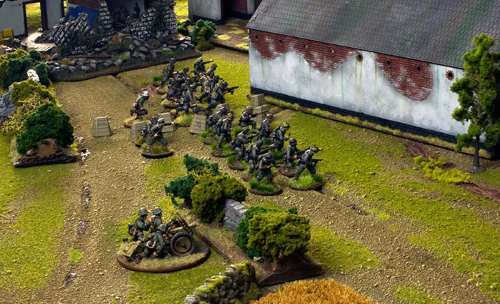
One thing that really sold me was the terrain. This wasn’t a competitive layout with perfect symmetry and L-shaped ruins. This was:

  • hedgerows
  • burnt-out farmhouses
  • muddy fields
  • woodlands
  • cover that looked like cover

The whole experience felt like we were playing a real battle on the Eastern Front. That immersion was much deeper than I expected.

The Mechanics Just Make Sense

The alternating activation system keeps both players engaged constantly—no long, 40K-style “go make a coffee” phases.

You draw a die. If it’s yours, you activate a unit. Next die drawn determines the next force to activate. Is it yours or your opponents….

It’s simple, but the tension it creates is addictive. You’re always one dice pull away from something heroic, chaotic, or disastrous. Despite the game’s easy fundamentals, it forces you to make deep decisions. Which unit do you activate first and which stay in reserve for later in the turn. Where do you focus your efforts and how do you react to your opponents activations.

From Demo to… Buying a Whole New Army

I don’t think I am alone in suffering this and I’ve heard many wargamers lamenting the same thing. You try something new, enjoy it, before convincing yourself you’ll just dip our toe in the water.

And then suddenly you’re on Ebay and thinking:

“Well, Commandos do look cool…”

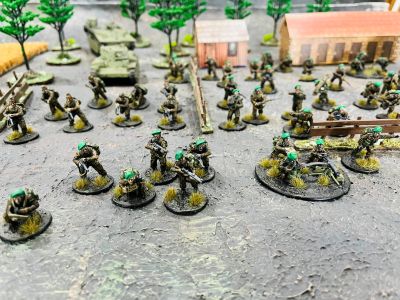
So yes… I’ve taken the plunge. I now own a British Commando starter army, which I spent quiet periods of the Christmas break painting and basing.

The playstyle appeals to me: mobile, elite, characterful, full of flavour. I also have a strong family connection to the Royal Marines. So, I’ve been researching WW2 commando engagements and uncovering some fascinating stuff including the many raids across the English channel and the battle of Walcheren. I’m also doing some reading about 30 Assault Unit, the commando group set up by Ian Fleming of James Bond fame. I hadn’t realised it would be so satisfying setting up a force that has such real-world history behind it.

My first Bolt Action Army: Commandos, painted and ready for action.

The 20-Player Game

There’s a big multiplayer Bolt Action event planned for March—around twenty players from different clubs and communities. If all goes well, I’ll be joining that battle line with my freshly-painted and battle-tested Commandos.

The idea of a huge, sprawling WWII tabletop game filled with gorgeous terrain, cinematic moments, and dozens of players all leaning in together? That sounds like exactly the kind of hobby experience I want more of.

Not only that, but I’m taking my commandos to a 6 player narrative game this weekend as part of the open day of a nearby club. I’m really looking forward to this and I’m sure the experience will form another article in the near future.

Final Thoughts

My first game of Bolt Action was everything I’d hoped for:

  • easy to learn
  • narratively rich
  • tactically engaging
  • visually immersive
  • very welcoming community

It hasn’t replaced 40K or Kill Team for me—instead adding something new and refreshing. And honestly? I can’t wait to get stuck in.