
Dungeons and Dragons the Ultimate Lesson in Diversity

In recent years, Dungeons and Dragons (D&D) has experienced a massive resurgence in popularity. It’s broad appeal is captivating players of all backgrounds and ages. Beyond its fantastical realms and epic adventures, D&D offers valuable lessons in diversity that leaders in the business world should take note of.

Having worked in companies where diversity was encouraged and accepted and in ones where is wasn’t, I have seen the benefits of a workplace where employees are comfortable being themselves. This post explores the concept of diversity within D&D. Before examining how it can enhance teamwork, foster creativity, and promote inclusivity in business environments.

Embracing Unique Abilities

In D&D, characters possess diverse abilities, talents, and skills, each contributing to the success of the party. In addition they portray a wide variety of races or heritages. Elves, Dwarves, Birdmen, Cat people all working side by side. Diversity makes the game world rich and each character unique.

Similarly, in the business world, individuals bring their own unique strengths, perspectives, and experiences. By embracing and valuing these diverse abilities, teams can tap into a rich pool of talent and enhance their problem-solving capabilities. Of course, having team members from different cultural backgrounds adds different perspectives to the way we work. Having worked with people from all over the world I can attest to the real value these different perspectives bring.

Collaboration and Teamwork

D&D thrives on collaboration, requiring players to work together to overcome challenges. A diverse party, composed of characters with different races, classes, and backgrounds, teaches the importance of teamwork, communication, and leveraging individual strengths. If all characters were the same the game would soon get boring and the solutions to solving in-game problems extremely limited.

In the business world, a team with limited diversity or where a leader suppresses diverse thinking will often fall into groupthink. As such their problem solving and creativity around work flow is severely inhibited. Instead developing diverse teams fosters innovation, creativity, and adaptability by encouraging individuals to contribute their unique insights and collaborate effectively.
D&D is the perfect place to explore the benefits of inclusive diversity

Building Inclusive Spaces

D&D’s diverse character options provide players with opportunities for self-expression and representation. By allowing individuals to create characters that reflect their identities and backgrounds, the game cultivates inclusivity and a sense of belonging. The games’ publisher Wizards of the Coast recognizes this as one of the games unique strengths and is continually taking steps to make it more inclusive.

Similarly, businesses that create inclusive spaces and promote diversity allow employees to bring their authentic selves to work, resulting in increased employee satisfaction, engagement, and productivity. This recognition has encouraged businesses large and small to actively and publicly embrace diversity in all its forms.

Problem-Solving and Adaptability

Playing games like D&D presents players with complex scenarios and unexpected challenges, requiring adaptability and creative problem-solving. A diverse group brings a wide range of approaches and strategies to the table, enabling teams to tackle problems from multiple angles. In my own games I’ve played with people from all sorts of backgrounds, ages and orientations. The combined problem solving and ingenuity of these groups never ceases to amaze me.

This ability to adapt and think outside the box is invaluable in the fast-paced, ever-changing business landscape. Having a diverse team of individuals all pulling together towards a common goal will present incredible, creative opportunities.

Final Thoughts

Dungeons and Dragons serves as a powerful metaphor for embracing diversity and reaping the benefits it offers. By recognizing the lessons from D&D and applying them to the business world, organizations can create inclusive environments. As well as, enhancing teamwork, encouraging creativity, and cultivating a competitive edge. Embracing diversity not only leads to stronger teams but also enables businesses to better understand and serve diverse customer bases, fostering growth and success in today’s global marketplace.
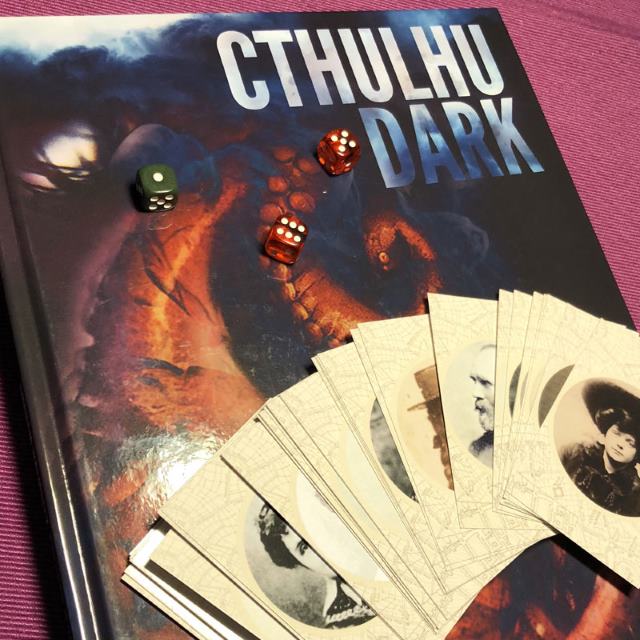
Developing a Powerful Learning RPG with Cthulhu Dark and Those Dark Places

Role-playing games (RPGs) have long been celebrated for their ability to immerse players in rich narratives and challenging scenarios. Beyond their entertainment value, RPGs can also serve as powerful tools for learning and personal development. It is my aim to create a roleplaying game that can help facilitate powerful learning experiences. I have set out a series of principles that I consider critical to playing the game in this context.

In this article, I look at two rulesets that I think can be used in developing a learning RPG where player decision making is key. I believe that Cthulhu Dark and Those Dark Places, can be effectively harnessed into a ruleset for a learning-focused RPG experience.

Cthulhu Dark

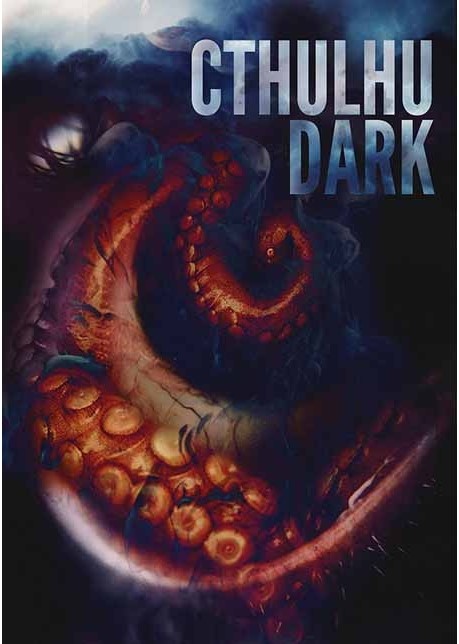
Cthulhu Dark, designed by Graham Walmsley, is a minimalist RPG system that thrives on atmospheric horror and player-driven storytelling. While the game is known for its Lovecraftian themes, its simplicity and focus on narrative make it a versatile tool for educational settings. The core mechanic revolves around rolling one to three six-sided dice to determine success or failure. Additionally, characters have only one stat. This streamlined approach encourages players to immerse themselves in the story, fostering creative thinking and collaborative problem-solving skills.

This game has a brilliant insight mechanic. As characters are exposed to the horrors of the scenario it slowly builds. Until the characters have seen too much and break. While this works really well for the horror theme it may need alteration when developing a learning RPG. Changing it from insight to exhaustion would allow you to cover a wider variety of genres and scenarios.

You can read a more in depth review of this fantastic game here.

Those Dark Places

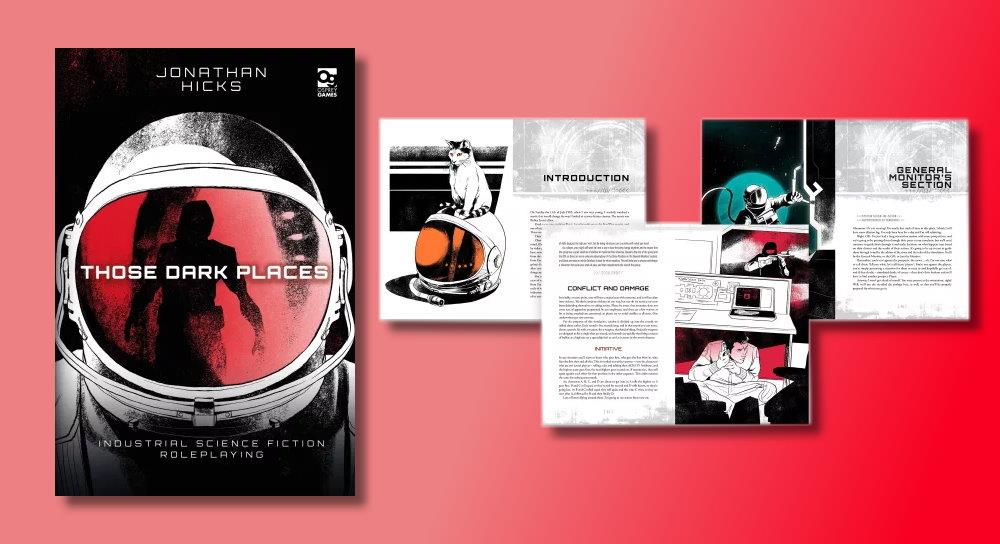
Those Dark Places, created by Jonathan Hicks, is a science fiction RPG system that invites players to explore the mysteries of the cosmos. My favourite movie of all time, Alien is a core inspiration here. It emphasizes the survival of a team in an unforgiving environment, fostering teamwork, critical thinking, and decision-making skills. By presenting players with complex challenges and dilemmas, Those Dark Places prompts them to weigh the consequences of their choices, fostering a deep sense of responsibility and strategic thinking.

Of course, the game system is also very rules-lite. Utilizing six sided dice over four attributes. It also has a great stress mechanic that builds over time as the characters experience high pressure situations.

You can find a more detailed review of this awesome game here.

Using These Games

Integrating Cthulhu Dark and Those Dark Places into an experiential learning setting yields numerous benefits. Firstly, these games encourage active participation and engagement, fostering a love for learning and exploration. Dice rolling in both games are kept to a minimum. Meaning decision making and player actions have significantly more weight. The collaborative nature of RPGs also promotes teamwork and effective communication skills, as players must work together to overcome obstacles and solve problems. Additionally, neither game has the level/experience constructs of Dungeons & Dragons. The open-ended nature of these systems stimulates creativity and imagination, allowing players to think outside the box and develop innovative solutions.

Use When Developing a Learning RPG

Utilizing Cthulhu Dark and Those Dark Places as learning tools, educators can adapt the game mechanics to suit specific educational goals. For example, scenarios based in reality can be easily reimagined in the Cthulhu Dark system. Focusing on participant decisions and collaboration. Those Dark Places might be more applicable to simulate problem-solving, using skills to solve hypothetical challenges.

Of the two I think that Cthulhu Dark will form the mainstay of my future learning-rpg ruleset. It is highly versatile, focuses on player decision making and ramps up pressure with its insight mechanic. While scenarios will require careful tweaking, the core of the rules will not. Additionally it is the easier to teach players who are completely new to the concept of roleplaying.

Safety and Ethical Considerations

You may have noticed that the two gaming systems chosen both have a horror theme. This is not intentional. Perhaps the horror genre lends itself to more narrative focused gameplay. Of course, it is not my intent to include horror elements into the learning-focused scenarios, instead focusing on more grounded high pressure scenarios.

Remember, when utilizing RPGs as learning tools, it is crucial to establish a safe and inclusive environment for all participants. Emphasize the importance of respect, consent, and cooperation among players. Ensure that sensitive topics are approached with care, and provide opportunities for reflection and discussion after each session to process the emotional impact of the game.

Final Thoughts On Use as a Learning RPG

Cthulhu Dark and Those Dark Places are not only captivating RPG systems for entertainment but also effective tools for fostering learning and personal development. By leveraging their narrative-driven mechanics, we can create engaging and immersive experiences that promote critical thinking, problem-solving, teamwork, and creativity. Both would make a great learning RPG in their own right.

Using these game mechanics we can create unique and exciting ways to engage learners and expand their horizons beyond traditional training methods. Over the coming weeks I intend to pull together a simple ruleset that will let us explore experiential leadership and team learning through the poser of RPGs.

Three Reasons Why You Should Put D&D On Your CV

I believe that playing Dungeons and Dragons (D&D) gives you many cross transferable skills for the world of leadership and teamwork. Of course, in today’s competitive job market, standing out from the crowd is crucial. Employers are looking for candidates with unique skills and experiences that make them valuable assets to their organization. One such experience that you might not have considered adding to your resume is playing Dungeons & Dragons. While D&D is commonly associated with fantasy adventures and storytelling, it offers much more than meets the eye.

Gone are the days when playing D&D was looked down upon as being too “nerdy” or antisocial. Nowadays, it is so ingrained in the zeitgeist that most future employers would have some idea of what the game entails. In this post, we will explore three compelling reasons why you should consider putting D&D on your CV.

Collaboration and Teamwork

One of the fundamental aspects of D&D is teamwork. As a player, you collaborate with a group of individuals to overcome challenges, solve problems, and achieve common goals. This experience translates seamlessly into the professional world. By including D&D on your CV, you showcase your ability to work effectively as part of a team, navigate interpersonal dynamics, and communicate and coordinate with others to achieve shared objectives. Employers value candidates who can thrive in a team-oriented environment, and D&D demonstrates your capacity to do just that.

Don’t roll the dice! Put D&D on your CV.

Critical Thinking and Problem-Solving

D&D is a game that demands critical thinking and problem-solving skills. As a player, you encounter complex situations that require you to analyze information, assess risks, make decisions under pressure, and adapt to ever-changing circumstances. These skills are highly transferable to the workplace, where problem-solving abilities are highly sought after. By highlighting your experience with D&D on your CV, you demonstrate your capacity to think critically, strategize effectively, and find creative solutions to challenges—a valuable asset in any professional setting.

Creativity and Imagination

Roleplaying games thrive on creativity and imagination. As a player, you have the opportunity to create unique characters, devise intricate backstories, and develop captivating narratives. These imaginative elements foster creativity, storytelling, and the ability to think outside the box. Showcasing your involvement with D&D, conveys your capacity to think creatively, bring fresh perspectives, and approach problems with an innovative mindset. This can set you apart from other candidates who may lack such creative experiences.

How to Add D&D to Your CV

This is the million dollar question. How can you incorporate D&D into your CV? If you are presenting a skills based resume then this becomes relatively easy. Use D&D examples alongside your work experience examples. This could include something like:

Teamwork: During my college years, I ran a Dungeons & Dragons campaign, fuelling my passion for storytelling and honing my teamwork skills. As the Dungeon Master, I facilitated a cooperative environment. My team of diverse individuals collaborated to overcome challenges, solve intricate puzzles, and navigate complex narratives. Through effective communication, active listening, and strategic planning, we leveraged each other’s strengths to achieve our goals and have fun. Our successful completion of the campaign highlighted my ability to foster an inclusive team dynamic, promoting cooperation and creative problem-solving. The experience strengthened my interpersonal skills and taught me the importance of trust, adaptability, and shared vision when working towards a common objective.

I see this being a really valuable addition. Especially if you don’t have a lot of work experience to date.

Here is some more advice on how to practically incorporate it into your CV.

Final Thoughts on Putting D&D on Your CV

Adding D&D to your CV can provide a unique advantage in the job market. The collaborative nature of the game demonstrates your ability to work effectively in teams. While the critical thinking and problem-solving skills required in game show your capacity to tackle complex challenges. Furthermore, the game’s emphasis on creativity and imagination highlights your ability to think outside the box and bring fresh perspectives to the workplace. So, if you’ve enjoyed the adventures and camaraderie of Dungeons & Dragons, don’t hesitate to showcase it on your CV. Let it enhance your professional profile. Maybe it will help you get the job of your dreams.