
Echoes of Xenos: An Event Focused on Emergent Play

Following on from my last experience running a multiplayer game I’ve been exploring emergent play. In parallel to this I have developed a mini event for six participants that I hope will create an emergent narrative experience for all involved. I’ve included mechanics to ensure that no two games are alike and every decision can lead to unexpected outcomes. Welcome to Echoes of Xenos!!

While this is a campaign of sorts with players playing multiple games, it is going to take place over the afternoon/evening of a single Saturday. Keeping it short and sweet will foster maximum engagement. Resulting, I hope, in lots of player interaction with the narrative and each other.

Setting the Stage: Embrace the Unknown

I’ve always had a soft spot for the INQ28 movement. This is based loosely on an old Games Workshop game that was more roleplaying game than wargame. It pits bands of Inquisitors, secret agents of the Imperium, against one another. Different ideologies, agendas and objectives make for a murky espionage fueled setting that truly fosters creativity in scenarios, art and model making. As such I’ve set this event squarely within this milieu.

The campaign is based in the western reaches of the Ultima Segmentum, specifically in the enigmatic Lupin System. As commanders of various factions, players are on a mission to retrieve the lost research of the radical Inquisitor Tiberius Glaze. While they all have the same core objective, secret objectives, emergent narrative and sworn enemies will make this anything but straight forward.
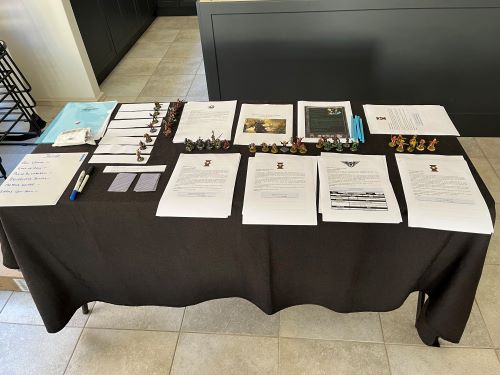
Player packs and warbands ready to go

Factions in Pursuit

As mentioned, multiple factions are on the hunt for Glaze’s elusive research. Each with its unique motivations and secret agendas:

  1. Puritan Inquisitor of the Ordo Hereticus: Determined to destroy the heretical research.
  2. Rogue Trader: Sees profit in capturing and selling the research.
  3. Tech Priest of the Adeptus Mechanicus: Aims to harness the research for their own mysterious purposes.
  4. Two Radical Inquisitors of the Ordo Xenos: Both seek glory through the continuation of Glaze’s work. However, the glory can only go to one!
  5. Rogue Inquisitor of the Ordo Malleus: Believes the research is linked to a prophecy foretelling the downfall of the Imperium.

As you can see, there is already a lot of scope for conflict. But for emergent play to flower we need additional complications.

The Mechanics: Fueling Emergent Narrative

This campaign is structured to encourage emergent play, where the unfolding story and strategic interactions create a unique and engaging experience for every participant. As such the details of each battle will be randomly determined. Firstly, there will be three rounds of 1v1 battles . At the start of each round, factions will randomly draw opponents and battle locations. Each location has a shared primary objective and a set of secret objectives. After objectives are revealed, faction leaders select their roster for the engagement. The final round will involve all the players competing against one another in a large multiplayer scenario.

Like the last game I ran we’ll be using the Space Weirdos ruleset. This is simple enough for players to pick up the concepts easily. However, it has enough complexity to allow for strategic play. A great balance. It also plays fast. Letting us complete multiple games over the course of the event.

Roster Management

Each faction begins with a 125-point Space Weirdos list, but for each scenario, players can only field three agents from their roster. This limitation means roster management is crucial, as losing agents can significantly impact your strategy and the outcome of future battles. It also means that agents need to be carefully chosen for each game, as each have different advantages. I’m interested to see how this plays out. Will players be more cautious in their tactics? When will they commit their more valuable agents?

Locations and Objectives:

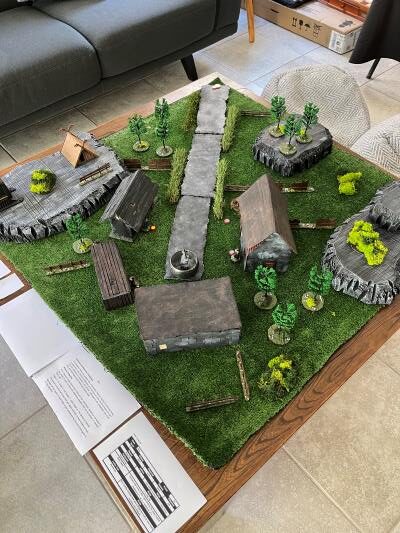
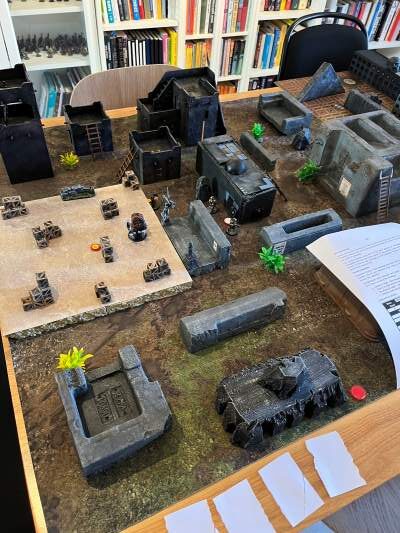
To keep things uncertain battles will be fought over 4 different locations. Each is rich with potential for emergent play, featuring primary objectives and a variety of special secret objectives specific to each. Here’s a glimpse of what to expect:

  1. Abandoned Orbital Station: Retrieve data from the lone servitor.
  2. Research Station on the Moon: Get a copy of the research papers.
  3. Ag Settlement: Identify and interrogate Glaze’s old companions for the location of the genetics research base.
  4. Space Port Relay Station: Hack the last communication from the Research Station.

Winning a game at each location gives the victorious player a secret clue that details some of the back story and the villainy that Inquisitor Glaze was up to.

Combining roster management, narrative clues, secret objectives and a range of game boards will keep the players on their toes. Decisions will have to be made with imperfect information. Stories will emerge. I cant wait to see how the game evolves.
Points and Clues

An emergent narrative may not be enough for some players so I have introduced a competitive element in the Campaign Points (CP) which are awarded based on performance

  • Win Primary Objective: 2 CP
  • Win Secret Objective: 1 CP
  • Beat sworn enemy in battle: 1 CP

The warband with the most CP will start the final scenario with a crucial advantage – the research genetic material. A tally of points on a whiteboard near game control will keep everyone on their toes. Announcing changes in the leaderboard at the end of every round should enhance the competitive element.

It’s my hope that this element spurs players to strive for a win and push their secret objectives for each round to get that valuable additional CP.

The Grand Finale

The final showdown takes place at a secret location (no spoilers), the fifth moon of Lupin III. Here, factions must secure the genetic material – the ultimate prize. With dangerous abominations lurking, this climactic battle will push the players strategic skills to the limit and create unforgettable moments of emergent play. Will they work together to get run the gauntlet or fall into mad competitive scrambling to get the prize. Only time will tell.

Preparation

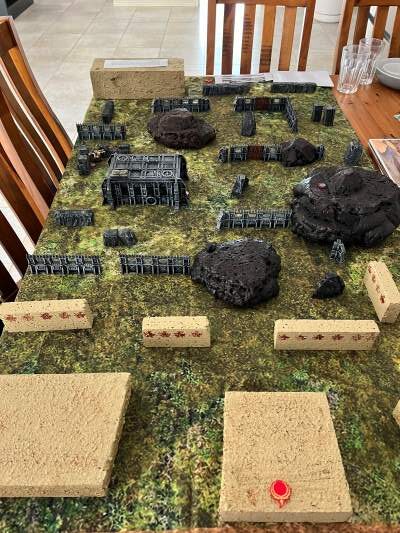
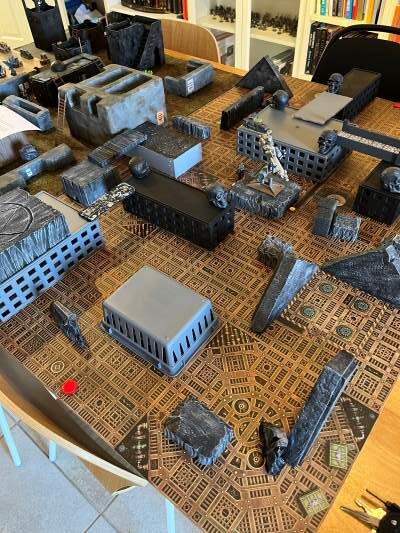
In an effort to make the game as immersive as possible I’ve prepared individual player briefings, faction rosters, thematic clues and ideological clashes. Additionally, I’ll be using my collection of miniatures and terrain to its fullest. I’m hoping that this will give the players enough to really lean into the setting and make the most of the game. This has take a lot of work, but I’m hoping it’s worth it.

Once we’ve played I’ll write about the experience and my learnings from it. Will emergent narrative occur? I’ll also see whether this format may be utilized in a different form to teach/enhance leadership skills.

Wish me luck!!

Using Emergent Play for Better Leadership Training

I find one of the joys of playing Dungeons and Dragons is the emergent play. No-one around the table quite knows what is coming next. Even when you’re the one running the adventure. The games direction shifts and changes as the players make decisions. When looking at leadership development, traditional training methods rarely give students loived experiences to put their new found knowledge to the test. Emergent play, a concept drawn from the world of gaming, offers a fresh and effective approach to leadership training. By creating scenarios where players must adapt, innovate, and collaborate in real-time, emergent play provides a rich ground for developing critical leadership skills. This article explores how emergent play experiences can be leveraged to enhance leadership training.

Understanding Emergent Play

How do we define what emergent play actually is? As a concept it occurs when players engage with a game in ways that go beyond the designers’ intentions. It arises from the interactions within a complex system, where simple rules can lead to unpredictable and sophisticated behaviors. This type of play emphasizes creativity, problem-solving, and adaptability, as players navigate a world where their decisions have significant and often unforeseen consequences.

Roleplaying games are often considered the ultimate expression of emergent play. Players have an inordinate amount of flexibility to do almost anything. Each scenario can be approached from a hundred different angles. Obviously, as a designer, or dungeon master it is often a fruitless exercise trying to second guess what the players are going to do. I’ve learned this the hard way.

Another great example is the megagame. These complex games involve tens of players on multiple teams, with competing objectives. Information is often imperfect and players must interact, cooperate or compete (often all at the same time) to achieve their goals. This is ripe for emergent play, as narratives and directions of play spin directly from these player interactions.

A megagame in action

Interestingly, games companies are beginning to pick up on this. I recently started playing Warhammer 40000, a sci-fi grimdark wargame, with my son. Flipping through the rulebook I was pleased to see a heavy emphasis on narrative play. A story emerges from the actions of the players. Perhaps not as complex as the other two examples, but a step in the right direction.

Why Emergent Play is Effective for Leadership Training

Now we understand a bit about what emergent play is, I hope you can see the why they might be good tools for enhancing leadership training.

  1. Realistic Complexity: Emergent play mirrors the complexities of real-world scenarios, where leaders must often deal with ambiguous and rapidly changing situations. This realistic complexity prepares leaders to think on their feet and adapt to unexpected challenges.
  2. Enhanced Engagement: Games designed for emergent play are inherently engaging. Consequently the unpredictable nature of these games keeps participants invested and motivated, leading to deeper learning experiences.
  3. Active Learning: Emergent play requires active participation, where learners must make decisions, interact with others, and see the outcomes of their actions. Using an active learning approach helps reinforce key leadership concepts and skills.
  4. Safe Environment for Experimentation: In an emergent play setting, participants can experiment with different strategies and approaches without the fear of real-world repercussions. Of course, this safe environment encourages risk-taking and innovation, essential traits for effective leadership.

Key Elements in Leadership Training

To create effective emergent play experiences for leadership training, I believe the follwing elements should be incorporated.

1. Open-Ended Scenarios

Design scenarios that are not constrained by a single solution or path. Open-ended scenarios allow participants to explore multiple strategies and outcomes, fostering creativity and critical thinking. For example, a leadership training game might simulate a company facing a market disruption, where participants can choose various ways to respond, such as innovating new products, pivoting their business model, or forming strategic partnerships. Or, if they are particularly ambitious, all three!

2. Dynamic Environments

Create environments that change based on participants’ actions and decisions. Dynamic environments mimic real-life situations where leaders must continuously adapt to new information and shifting conditions. Some ways to achieve this include, real-time updates, random events, and evolving challenges keeping participants on their toes. It can also help if the game rivals are controlled by players rather than game control.

3. Collaboration and Competition

Incorporate both collaborative and competitive elements to simulate the complexities of organizational dynamics. Encouraging teamwork helps develop collaboration and communication skills, while competitive aspects can drive strategic thinking and resilience. For instance, a game could involve teams working together to solve a crisis, but also competing for limited resources or recognition. This would create interesting friction and force thoughtful leadership decisions to be made.

4. Meaningful Consequences

Ensure that participants’ actions have meaningful and visible consequences. This helps reinforce the importance of decision-making and accountability. For example, if a team chooses to cut corners on a project, they might achieve short-term gains but face long-term setbacks such as reputational damage or reduced morale. This can be made tougher by including moral dilemmas into the fabric of the game. From games I’ve played these touch decisions with big consequences are often the most memorable. Ultimately, making them incredible learning opportunities.

Applications for leadership training are significant

Implementing Emergent Play in Leadership Training Programs

If you wanted to include emergent play into your leadership training there are a few things to consider.

1. Develop Customized Games

Design custom games tailored to your organization’s specific leadership challenges and goals. Simply re-skinning existing games to align with a new setting is a relatively straight forward exercise. Working with game designers from outside your organization can help you to create and modify game scenarios to fit your training objectives while removing some of your organizational assumptions.

2. Facilitate Reflective Debriefings

After gameplay, conduct debriefing sessions where participants can reflect on their experiences, discuss what they learned, and draw parallels to real-world leadership situations. Of course, this reflection helps solidify learning and translate game insights into practical skills. A good tip here would be to include a facilitator who observes the game and can take notes on what’s happening enabling even deeper reflection by the participants.

3. Encourage Continuous Learning

Use emergent play as part of an ongoing leadership development program rather than a one-time event. Regularly incorporating such experiences helps reinforce learning and allows leaders to practice and refine their skills over time.

4. Leverage Technology

Consider utilizing digital platforms and virtual environments to create scalable and accessible emergent play experiences. Technology can facilitate complex simulations and enable remote participation, making it easier to integrate emergent play into diverse training programs. This could allow games to be played across time zones adding further complexity to team interactions.

Some Ideas for Emergent Play in Leadership Training

Here are a couple of quick examples of the types of game you could include in your next training cohort.

“The Infinite Loop”

This collaborative game involves teams working together to escape a virtual time loop by solving puzzles and making strategic decisions. The game’s open-ended nature and evolving challenges make it an excellent tool for developing problem-solving, collaboration, and adaptability. Actions would have significant consequences every time the time loop resets. To pile on the pressure there are only a limited number of time loop iterations before the game finishes.

“Evolve”

A simulation game where participants lead a virtual organization through various crises and opportunities. Players are split into different departments, all with competing objectives. The team must make strategic decisions, manage resources, and navigate complex interpersonal dynamics. Of course, the game’s dynamic environment and meaningful consequences would provide a realistic and engaging leadership training experience. To add to the pressure and complexity, a second group of players could be set up as a rival organization. Will the disparate teams come together under a common cause?

Final Thoughts

Emergent play offers a powerful and innovative approach to leadership training, by providing engaging, and impactful learning experiences. By incorporating open-ended scenarios, dynamic environments, collaboration, competition, and meaningful consequences, emergent play prepares leaders to navigate the complexities of the modern world. As organizations continue to seek effective ways to develop their leaders, emergent play stands out as a promising method for fostering the skills and mindsets needed for success.

What Are Megagames? Exploring the Benefits of Large-Scale Gaming

Although not well known, Megagames stand as the ultimate immersive experience, blending elements of role-playing, board games, and live-action simulations. These large-scale games, often involving dozens to hundreds of players, create complex and dynamic environments. This structure and emergent play style really puts players through their paces. Notably, I believe that Megagames could be an exceptional in fostering leadership skills. This article delves into what Megagames are, provides specific examples, and explores how they might be used to enhance leadership skill through experiential learning.

What Are Megagames?

Megagames are large-scale games that combine elements of strategy, role-playing, and simulation, often played out over an entire day. They typically involve multiple teams, each with distinct roles and objectives, interacting within a shared narrative framework. The complexity and scale of these games demand coordination, strategic thinking, and adaptive problem-solving from players.

The design of Megagames allows for rich, emergent gameplay, where the actions of individual players and teams can significantly influence the overall outcome. This dynamic environment mirrors real-world scenarios, making Megagames not only entertaining but also educational.

Examples of Megagames

While I have explained what a Megagame is, it really takes some examples to showcase their scale and complexity. Here are some better known examples.

1. Watch the Skies

One of the most well-known Megagames, “Watch the Skies,” involves teams representing nations and alien factions navigating a world where extraterrestrial contact has just been made. Each team must manage resources, conduct diplomacy, and respond to various crises, all while dealing with the unknown intentions of the aliens.

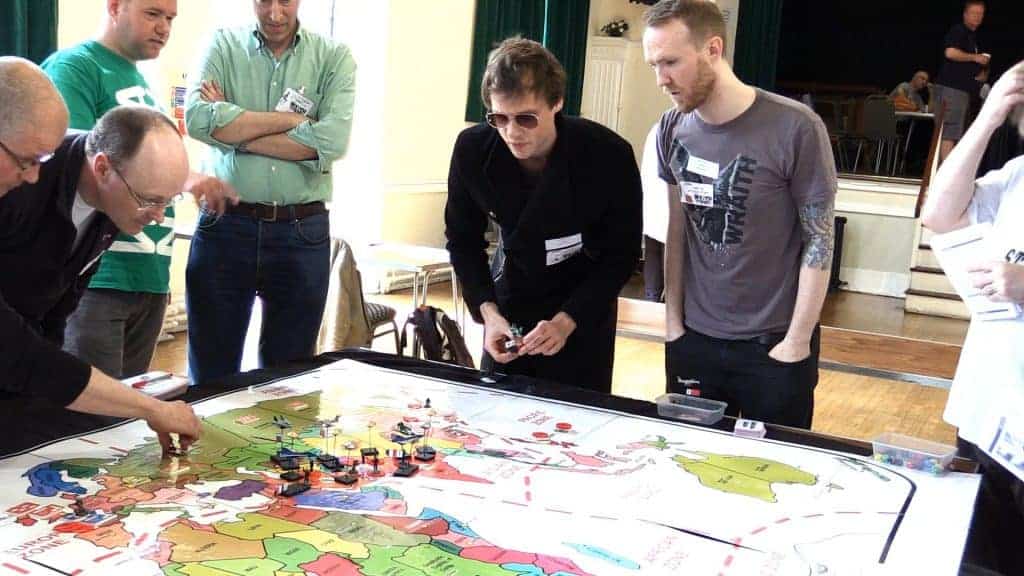
“Watch the Skies” has been run by numerous organizations across the UK, USA and Australia and there are some great videos exploring the players experiences.

For more information, you can visit the Stone Paper Scissors website here.

A small part of a Watch the Skies Megagame in progress

2. Den of Wolves

“Den of Wolves” places players in the roles of the crew and passengers of a fleet of spaceships escaping a dying star system. Players must manage limited resources, make critical decisions about survival, and navigate complex interpersonal dynamics. Leadership roles within the fleet are crucial for the game’s progression.

Further details are available from the South West Megagames. Interestingly they also run games for businesses and other organizations, already proving the concept that games of these sort can build leadership skill and ability.

3. Urban Nightmare: State of Chaos

Written by Megagame stalwart Jim Wallman, “Urban Nightmare: State of Chaos,” throws players into a zombie apocalypse affecting an entire state. Teams represent various governmental and non-governmental organizations working to manage the outbreak, maintain public order, and ensure survival. The game emphasizes crisis management and inter-agency cooperation. A great game to play if a business is experiencing low communication or significant silo-ing between departments.

You can explore more about this game here. A great review can be found on the BeckyBecky blog.

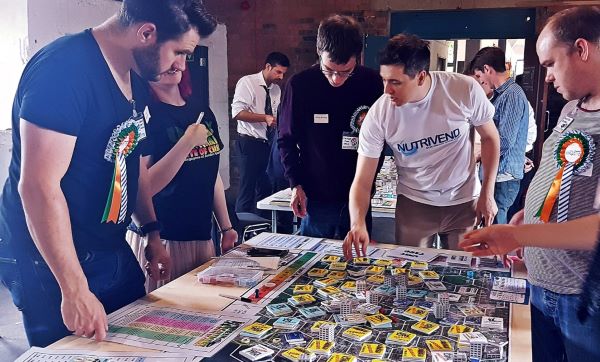
A game of Urban Nightmare in progress

Megagames and Leadership Development

The immersive and multifaceted nature of Megagames makes them an excellent platform for developing leadership skills. surprisingly, they are already being used in this capacity. Both Stone Paper Scissors and SW Megagames are hosting games in the corporate and government spheres.

Here’s a few reasons why these games are so effective:

1. Strategic Thinking and Planning

Megagames require players to think strategically and plan ahead. In “Watch the Skies,” for example, national leaders devise long-term strategies while preparing to adapt to rapidly changing circumstances, mirroring the need for strategic foresight in leadership roles.

2. Decision-Making Under Pressure

Megagames often place players in high-pressure situations where quick, decisive action is necessary. “Den of Wolves” challenges players to make critical decisions about resource allocation and crisis response, honing their ability to make sound decisions under stress.

3. Collaboration and Teamwork

Success in Megagames relies heavily on effective teamwork and collaboration. Players must communicate and coordinate with their teammates and other groups to achieve their objectives. This aspect is particularly evident in “Urban Nightmare: State of Chaos,” where various agencies must work together to manage the zombie outbreak.

4. Conflict Resolution

Megagames simulate environments where conflicts of interest are common, requiring players to negotiate and resolve disputes. These skills are directly transferable to leadership scenarios where conflict resolution is a daily necessity.

5. Adaptability and Flexibility

The dynamic nature of Megagames demands that players be adaptable and flexible. Unexpected events and actions by other players can drastically alter the game landscape, requiring leaders to pivot and adjust their strategies. This mirrors real-world leadership scenarios where adaptability is key to navigating uncertainty.

Final Thoughts

Megagames offer a unique and powerful means of developing leadership skills through their complex, interactive, and immersive gameplay. By simulating real-world scenarios and challenges, they provide players with opportunities to enhance strategic thinking, decision-making, teamwork, conflict resolution, and adaptability. As these games continue to grow in popularity, their potential as tools for leadership development becomes increasingly apparent.

As such, I’ve been interested in running one of these behemoths for a long time. I’m currently writing a smaller version for 12 players and I’ll report back once I’ve actually run it. As a side note, if you’re in Perth, Australia and would like to play in a Megagame drop me a line. A game this size will need plenty of players!