
Dangers of Groupthink: Lessons from the D&D Satanic Panic

In the 1980s, a phenomenon known as the Satanic Panic swept across the United States. This moral panic falsely claimed that playing the popular tabletop role-playing game Dungeons and Dragons could lead to Satanism, suicide, and other dangerous behaviors. The Satanic Panic serves as a chilling reminder of the perils of groupthink, where collective beliefs and irrational fears can lead to widespread misinformation and unjust consequences. In this post, we delve into the dangers of groupthink and explore how the Satanic Panic serves as a poignant example of its destructive power.

What is Groupthink?

Groupthink refers to a psychological phenomenon where a group of individuals conform to a prevailing belief or opinion. This often leads to faulty decision-making and the suppression of dissenting voices. In an environment of groupthink, critical thinking and objective analysis take a backseat, paving the way for irrational and harmful outcomes.

This can occur in teams, businesses, large organizations and as we’ll see below, entire countries.

The D&D Satanic Panic

During the 1980s, concerns emerged that Dungeons & Dragons, a fantasy role-playing game, was causing moral corruption. There was a belief that it was leading players toward Satanism and occult practices. While unfounded, this panic was fueled by sensationalist media coverage, unsubstantiated anecdotes, and the collective fear of parents and religious groups. The resulting moral panic wrongly demonized a harmless game and its players. Of course, this lead to social ostracism, legal challenges, and damaging consequences for many individuals.

One example is the sad case of Patricia Pulling who, blamed the suicide of her son on Dungeons & Dragons. She formed Bothered About Dungeons and Dragons (B.A.D.D), leading a moral crusade with global reach. Her materials were distributed as far as Australia. Alarmingly, Patricia also assisted local police forces in gaming-related lawsuits.

Of course, today D&D is experiencing huge growth in popularity. It seems ludicrous to modern eyes that such persecution was allowed to occur. However, it highlights the real risk of groupthink dynamics.
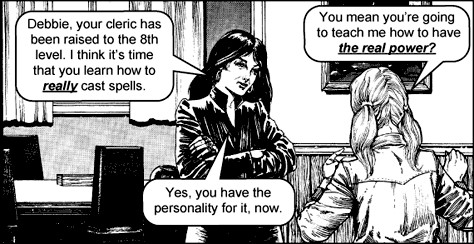
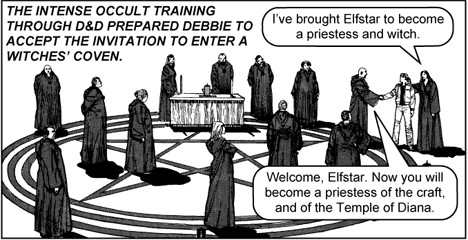
The notorious comic Dark Dungeons was published at this time fuelling the hysteria.

Groupthink Dynamics at Play

The D&D Satanic Panic exemplifies the dangerous dynamics of groupthink. Several factors contributed to the escalation of fear and the adoption of unfounded beliefs:

  1. Confirmation Bias: Once the idea of D&D as a gateway to evil gained momentum, people selectively sought out and believed information that confirmed their preconceived notions. Counterevidence or rational arguments are dismissed or ignored, reinforcing the prevailing narrative.
  2. Illusion of Invulnerability: As the panic spread, those who oppose the narrative faced backlash and ridicule. This created an illusion of invulnerability among the proponents of the panic, discouraging critical examination and reinforcing their beliefs.
  3. Pressure to Conform: Social pressure plays a significant role in perpetuating panic. Individuals who express doubts or question the claims face isolation or social rejection. This pressure to conform suppressed dissent and stifled alternative perspectives.
  4. Outgroup Stereotypes: The panic created a clear division between “us” (the morally righteous) and “them” (the alleged Satanists). As a result, this dichotomy further solidified group cohesion and fueled irrational fears, making it harder to challenge the prevailing narrative.

Consequences and Lessons Learned

The D&D Satanic Panic had profound consequences for those caught in its grip. Innocent gamers were subjected to unwarranted suspicion, ostracism, and even legal battles. Unfortunately, lives were disrupted, reputations tarnished, and a harmless form of entertainment unjustly vilified.

This episode serves as a stark reminder of the dangers of groupthink and the importance of critical thinking. It highlights the need for individuals to question prevailing beliefs, seek diverse perspectives, and rely on evidence-based information before forming judgments or taking action.

Final Thoughts

The D&D Satanic Panic of the 1980s stands as a chilling testament to the perils of groupthink. It serves as a cautionary tale about the dangers of unquestioned beliefs, the suppression of dissent, and the potential harm caused by irrational fears. By understanding the dynamics of groupthink and promoting critical thinking, we can guard against such phenomena. Instead, foster a more inclusive society, and prevent the repetition of history’s misguided panics.

As leaders it is our job to ensure that groupthink doesn’t worm its way into our organizations. Firstly, question everything and avoid jumping to conclusions too quickly. Secondly, if outlandish claims are being made, check their validity and data. Making decisions based on fact, not emotion will go a long way to preventing groupthink and it’s potentially harmful outcomes.


Difficult Conversations in Dungeons and Dragons, More than Comms

Difficult conversations are an inevitable part of life. Unfortunately both Dungeons and Dragons (D&D) and the business world are not exempt from this. In this post, we explore how the Dungeon Master (DM) and players engage in and navigate challenging discussions within the game. Before looking at how these experiences can serve as valuable practice for effective business leadership.

Effective Communication: Setting the Stage for Productive Dialogue

In D&D, the DM and players rely on effective communication to convey ideas, share information, and coordinate actions. The game hinges on the participants talking to one another. The DM must describe the world and situation that the players face. In turn the players need to be clear about how their characters are interacting. If the communication breaks down, the game breaks down.

Similarly, in the business world, leaders must master the art of communication to convey their vision, provide feedback, and resolve conflicts. How else do their teams know what they are trying to achieve. Without easy to understand feedback there is no indication of the quality of their work. Business is built on communication. Many failures could have been avoided if staff communicated better.

By practicing communication skills within the context of D&D, leaders can develop clarity, empathy, and articulation, enabling them to navigate difficult conversations more effectively in the professional realm.

Emotional Intelligence: Understanding and Managing Emotions

Through the nature of the game, D&D often elicits strong emotions, including excitement, frustration, or disappointment. Beating a difficult foe, or losing a beloved character can create strong highs and lows. Both the DM and players must be attuned to their emotions and those of others to create a positive and inclusive environment. Treating others emotions with respect becomes a core part of what makes a fun D&D group.

Emotional intelligence is also vital in business leadership. It helps leaders navigate sensitive topics, recognize and manage emotions, and foster a supportive workplace culture. Understanding the emotional state of your team allows leaders to communicate with tact. It also helps leaders to look after their staffs well being.

Working on difficult conversations in Dungeons and Dragons provides a platform to develop emotional intelligence, facilitating its application in real-world leadership scenarios.

Conflict Resolution: Finding Common Ground

The freeform nature of D&D adventures can introduce conflicts and disagreements among players. Whether deciding a course of action or style of play emotions can get heated. Resolving these conflicts requires effective conflict resolution strategies, such as active listening, seeking understanding, and finding common ground. This resolution falls to all players at the table not just the DM. Sometimes taking a break from the game and having a frank discussion is needed. One thing for certain is that shying away from the difficult conversations usually results in unhappy participants and ultimately the game folding.

Hankerin Ferinale from Rune Hammer Games suggests using a Tribunal type set up where the group meet outside the usual game session to discuss issues openly together. Determine what is working and what is not and then, if needed make change.

Similarly, leaders in the business world often encounter conflicts that demand resolution. Whether in your team, with other teams or clients contentious issues will arise. Having the courage to have a difficult conversation early and actively trying to understand each sides perspective will more often than not solve the problem. At the very least it starts the journey towards resolution.

By engaging in difficult conversations in D&D, leaders can practice conflict resolution techniques, hone their negotiation skills, and foster an environment of collaboration and understanding within their teams.

Finding common ground is a good way to resolve conflict

Active Listening: Honoring Different Perspectives

Running a D&D sessions involves active listening, as players contribute ideas, voice concerns, and share their experiences. The DM must attentively listen to player input to shape the narrative. Players must pay attention to the DM and the other players. This keeps everyone actively involved in growing the game together.

When players don’t practice active listening the game immersion and excitement diminishes. One of the biggest contributors to this is the mobile phone. There is nothing worse than when a player sits at the table on their phone. There is no engagement with the game or the other players and when it is their turn to interact they have no idea what is going on. Committing to active listening during a game session makes the game better for everyone.

Active listening is equally crucial in business leadership, where leaders must hear diverse perspectives, understand the needs of their team members, and encourage open dialogue. If you are talking to a team member pay real attention to what they are saying. Asking relevant questions lets you gain deeper understanding but also shows the team member that you are listening to them and engaged. Practicing active listening in the workplace will grow your reputation as a leader who cares.

Using D&D sessions to practice active listening, leaders strengthen their ability to listen empathetically, cultivate trust, and foster a culture of inclusivity and psychological safety.

Final Thoughts on Difficult Conversations in Dungeons and Dragons

Difficult conversations in Dungeons and Dragons offer valuable practice for business leaders in navigating challenging discussions, fostering effective communication, and promoting a positive team dynamic. By honing communication skills, developing emotional intelligence, practicing conflict resolution, and fostering actively listening within the game, leaders can gain valuable experience and refine their approach to difficult conversations in the business world. By applying the lessons learned from D&D, leaders can foster productive dialogue, build strong relationships, and lead their teams with empathy, clarity, and authenticity.

Dungeons and Dragons the Ultimate Lesson in Diversity

In recent years, Dungeons and Dragons (D&D) has experienced a massive resurgence in popularity. It’s broad appeal is captivating players of all backgrounds and ages. Beyond its fantastical realms and epic adventures, D&D offers valuable lessons in diversity that leaders in the business world should take note of.

Having worked in companies where diversity was encouraged and accepted and in ones where is wasn’t, I have seen the benefits of a workplace where employees are comfortable being themselves. This post explores the concept of diversity within D&D. Before examining how it can enhance teamwork, foster creativity, and promote inclusivity in business environments.

Embracing Unique Abilities

In D&D, characters possess diverse abilities, talents, and skills, each contributing to the success of the party. In addition they portray a wide variety of races or heritages. Elves, Dwarves, Birdmen, Cat people all working side by side. Diversity makes the game world rich and each character unique.

Similarly, in the business world, individuals bring their own unique strengths, perspectives, and experiences. By embracing and valuing these diverse abilities, teams can tap into a rich pool of talent and enhance their problem-solving capabilities. Of course, having team members from different cultural backgrounds adds different perspectives to the way we work. Having worked with people from all over the world I can attest to the real value these different perspectives bring.

Collaboration and Teamwork

D&D thrives on collaboration, requiring players to work together to overcome challenges. A diverse party, composed of characters with different races, classes, and backgrounds, teaches the importance of teamwork, communication, and leveraging individual strengths. If all characters were the same the game would soon get boring and the solutions to solving in-game problems extremely limited.

In the business world, a team with limited diversity or where a leader suppresses diverse thinking will often fall into groupthink. As such their problem solving and creativity around work flow is severely inhibited. Instead developing diverse teams fosters innovation, creativity, and adaptability by encouraging individuals to contribute their unique insights and collaborate effectively.

D&D is the perfect place to explore the benefits of inclusive diversity

Building Inclusive Spaces

D&D’s diverse character options provide players with opportunities for self-expression and representation. By allowing individuals to create characters that reflect their identities and backgrounds, the game cultivates inclusivity and a sense of belonging. The games’ publisher Wizards of the Coast recognizes this as one of the games unique strengths and is continually taking steps to make it more inclusive.

Similarly, businesses that create inclusive spaces and promote diversity allow employees to bring their authentic selves to work, resulting in increased employee satisfaction, engagement, and productivity. This recognition has encouraged businesses large and small to actively and publicly embrace diversity in all its forms.

Problem-Solving and Adaptability

Playing games like D&D presents players with complex scenarios and unexpected challenges, requiring adaptability and creative problem-solving. A diverse group brings a wide range of approaches and strategies to the table, enabling teams to tackle problems from multiple angles. In my own games I’ve played with people from all sorts of backgrounds, ages and orientations. The combined problem solving and ingenuity of these groups never ceases to amaze me.

This ability to adapt and think outside the box is invaluable in the fast-paced, ever-changing business landscape. Having a diverse team of individuals all pulling together towards a common goal will present incredible, creative opportunities.

Final Thoughts

Dungeons and Dragons serves as a powerful metaphor for embracing diversity and reaping the benefits it offers. By recognizing the lessons from D&D and applying them to the business world, organizations can create inclusive environments. As well as, enhancing teamwork, encouraging creativity, and cultivating a competitive edge. Embracing diversity not only leads to stronger teams but also enables businesses to better understand and serve diverse customer bases, fostering growth and success in today’s global marketplace.