
Sometimes, you only have an hour to run a game session. Other times, you’re designing a one-shot and need a structure to keep things tight and engaging. Enter the 5 Room Dungeon—a simple but powerful framework that’s stood the test of time, perfect for both new and experienced Dungeon Masters looking to craft quick, satisfying adventures. Whether you’re building a fantasy heist, or a sci-fi jailbreak, the 5 Room Dungeon can help you do it all.
What is the 5 Room Dungeon?
The 5 Room Dungeon is a classic RPG design tool created by Johnn Four, a long-time RPG writer and editor of the newsletter Roleplaying Tips. It provides a repeatable format for building compact, memorable adventures that can be played in a single session.
Obscurely, despite the name, it’s not just for literal dungeons. Each “room” represents a beat in the story or an encounter in the adventure. The beauty of the format lies in its flexibility—it works for fantasy, sci-fi, horror, and even real-world or workplace-themed roleplaying.
I “discovered” it a few years ago and it was a game changer for my D&D prep. I made some truly memorable and unique dungeons for my Salkire campaign.
The 5 Room Structure
Here’s the basic breakdown of the 5 Room Dungeons framework:
- Room 1: Entrance and Guardian
The players are tested before they enter the main part of the adventure. This could be a fight, a puzzle, or a social encounter. It’s the hook. - Room 2: Puzzle or Roleplaying Challenge
Slow things down and give players a chance to think. This could be a riddle, a moral choice, or an NPC interaction. - Room 3: Trick or Setback
Something unexpected happens. It’s a twist or complication—maybe the villain was expecting them, or the artifact is cursed. - Room 4: Climax / Big Battle
The final conflict. This is often a combat encounter, but it could also be a tense negotiation or race-against-the-clock event. - Room 5: Reward, Revelation, or Plot Twist
Wrap things up. The party gains treasure, new knowledge, or a narrative twist that sets up future adventures.
Why It Works
There are at least four benefits to using this framework including:
- Compact: You can prep a full session in an hour or less.
- Flexible: Use it for any genre or system.
- Engaging: Each room has a purpose and keeps the story moving.
- Replayable: Change the theme or setting, and you’ve got a brand-new adventure.
Adapting the 5 Room Dungeon to Different Genres
As mentioned above the 5 Room Dungeon is adaptable across pretty much every genre. Here are some simple examples of how you might use it.
Fantasy:
- Theme: “The Cursed Tomb”
- R1: Guardian skeletons
- R2: Mural puzzle
- R3: Hallway collapses
- R4: Fight the tomb guardian
- R5: Relic grants visions of a new threat
Sci-Fi:
- Theme: “Derelict Space Station”
- R1: Airlock breach
- R2: Interact with the station AI
- R3: Rogue drones attack
- R4: Shut down the reactor
- R5: Discover the station was sabotaged by their own faction
Horror:
- Theme: “The House That Whispers”
- R1: Locked front door—must find the key
- R2: Possessed mirror asks questions
- R3: “Friendly” ghost leads them into a trap
- R4: Exorcise the spirit
- R5: Learn the house was a prison for something much worse
I used this framework recently in my Star Wars inspired adventure. You can read more here. My adventure had the following frame:
- Theme: Star Wars – Steal the Phantom TIE Fighter
- R1: Crash on to planet and avoid Scout Trooper Patrols
- R2: Try and find and win over the Imperial defector
- R3: It’s a trap – ambushed by Main villain – Agent Ixil
- R4: Big battle, escape with the TIE
- R5: Investigations show Phantom TIE is powered by Sith technology
The 5 Room Dungeon Framework helped me shape what turned out to be a really fun adventure. Obviously, there’s nothing worse than staring at a blank page. Of course, having the bare bones set out already lets you then hang the really interesting stuff onto it. NPCs, environments, twists and dangers all come to mind much more easily when the space is already partially built like this.
Final Thoughts
The 5 Room Dungeon is more than just a dungeon—it’s a storytelling engine. Whether you’re running a fantasy adventure, a modern mystery, or a Star Wars extravaganza, this simple five-beat structure helps you stay focused and deliver a memorable experience. Try it out the next time you’re short on prep time or want to design an adventure with a clear, satisfying arc.
Of course, a big thanks to Johnn Four, the creator of this magnificent DMing tool.
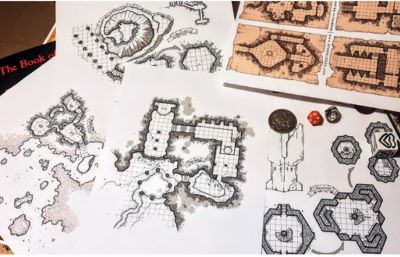
If you are looking for some amazing maps to support your 5 Room Dungeons check out Dyson Logos. You can see his wonderful work in the image at the top of this article. An incredible resource!