
If you’ve ever played Blades in the Dark, you’ll know that one of the most effective tension-building tools in the game are clocks. Not the ticking kind on your wall, but a visual countdown that tracks threats, progress, or time-sensitive goals. It’s simple, elegant, and incredibly powerful.
What if I told you that you can lift this mechanic straight out of Blades in the Dark and drop it into your Dungeons & Dragons campaign to make things way more dramatic?
Let’s dive into how clocks work and how to use them in D&D to raise the stakes, keep players engaged, and build unforgettable moments of tension.
What Is a Clock?
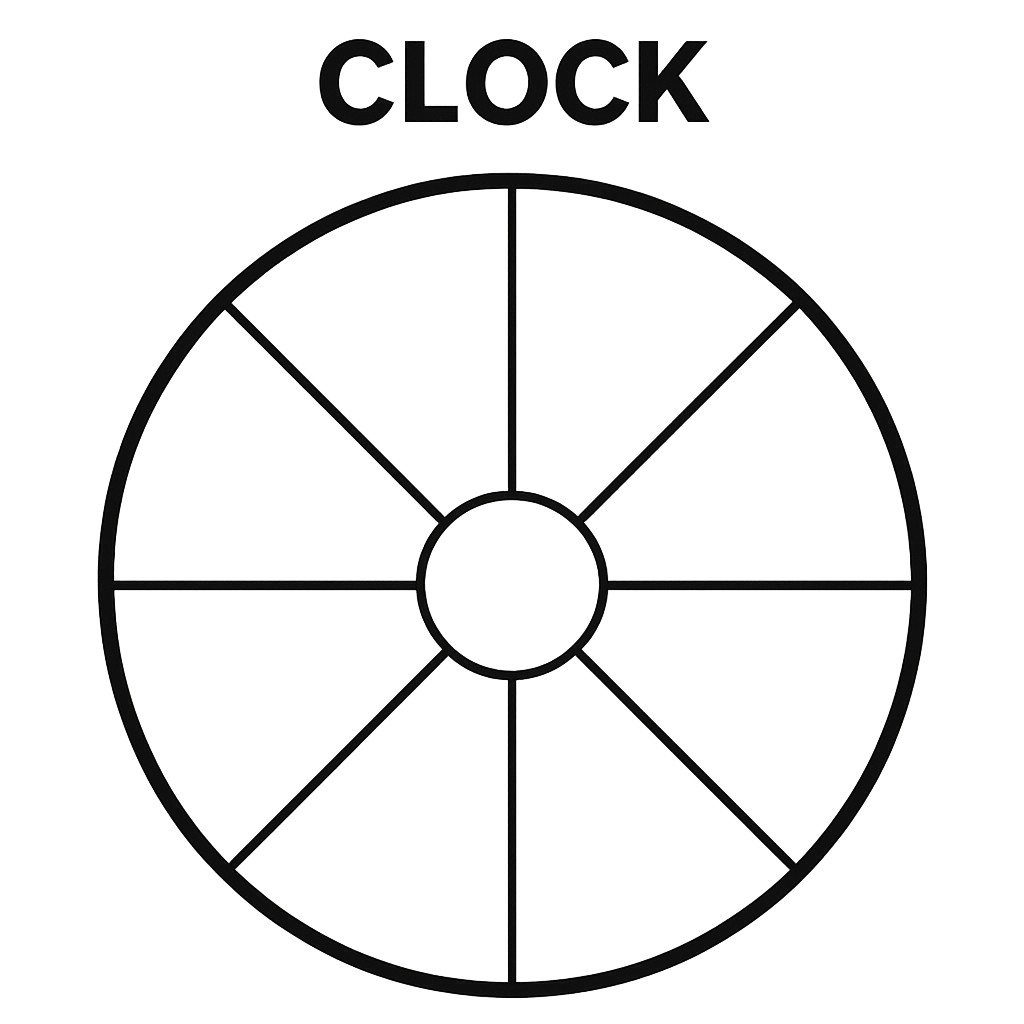
In Blades in the Dark, a clock is a segmented circle that fills in as a consequence of actions or the passage of time. For example:
- A 4-segment clock might track how long until the guards arrive.
- A 6-segment clock might measure the party’s progress disabling a magical barrier.
- A 12-segment clock might represent an ancient dragon slowly awakening.
Each time something happens that aligns with the consequence, the GM fills in one or more segments. When the clock is full, the event it represents happens.
Simple. Visual. And nerve-wracking.
Why Clocks Work So Well
Clocks shine because they:
- Make abstract danger feel concrete.
- Give players a sense of urgency.
- Create dynamic situations where failure and success aren’t binary.
- Offer a visual reminder that choices have consequences.
This makes them an excellent fit for D&D, where pacing can sometimes sag or players feel unsure whether they’re making progress. Clocks are a quiet motivator—and a loud one when they fill up. The visual element of this tool keeps players aware of the likely consequences of the situation they are in and the closeness they are to getting into trouble.
How to Use Clocks in Your D&D Game
Here’s how to adapt clocks into your D&D session. No need to change any rules.
Draw Them Out
Grab a notepad, whiteboard, or even a coaster. Draw a circle, divide it into 4, 6, or 8 segments. See the template above. Make sure to label it:
- “Reinforcements Arrive”
- “The Ritual Completes”
- “Guards Become Suspicious”
- “Ship Sinks”
Then, fill in segments as events unfold—on failed checks, at key intervals, or whenever the party dithers too long.
Tie Them to Player Actions
Players will quickly learn that failing stealth rolls might tick the “Guards Notice” clock. Or that every round spent arguing about tactics fills in the “Cult Finishes Ritual” clock.
You don’t need to explain the consequences in detail. Just let the clock sit on the table, ominously gaining ticks. Players will feel it.
Use Them for Progress, Too
Clocks aren’t just for bad things. Use them to track the party’s progress disabling a trap, researching a cure, or converting a noble to their cause. It turns a string of skill checks into something far more satisfying to complete.
Stack Them for Chaos
Multiple clocks running at once? That’s where the drama kicks in. Imagine:
- “Enemies Reinforce in 3 Segments”
- “Party Finds Hostages in 4 Segments”
- “Explosion in 5 Segments”
Now the players are really juggling priorities and feeling the pressure.
Example in Play
Scenario: Infiltrating a Cult’s Ceremony
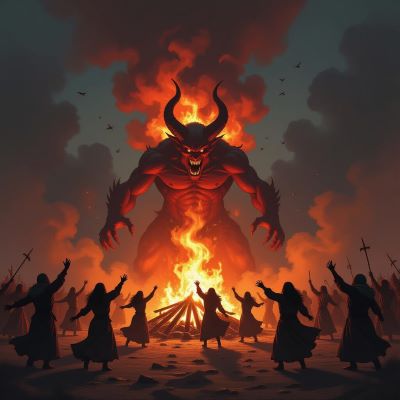
You’re running a tense infiltration mission to stop a cult from manifesting a Demon. Here’s how clocks could work:
- 6-Segment Clock: “Cultists Grow Suspicious” — Ticks up with noise or strange behavior.
- 8-Segment Clock: “Ritual Completes” — Starts ticking when the party arrives. Once it’s full, the demon enters the world and all chaos breaks loose. Too late.
The party now has layered objectives, a visible countdown, and the need to make hard calls.
Do I Need to Change Rules?
Not at all. Clocks are purely narrative tools. They don’t replace D&D mechanics—they enhance them. You still roll perception checks, stealth rolls, persuasion attempts. But now, failures and delays have a tangible cost.
Want to go deeper? Tie clocks to initiative rounds, make players roll d4s to fill segments faster, or let them spend inspiration to remove ticks. But honestly, just drawing and filling a circle is already incredibly effective.
Final Thoughts
D&D thrives on drama. But often, that drama is hidden behind numbers, dice rolls, and DM narration. Blades in the Dark clocks offer something more visual, more urgent, more human. By borrowing this mechanic, you give your players a countdown they can see—and feel. You turn waiting into worry, failure into friction, and decisions into dilemmas.
So next session, pull out a pen, draw a circle, and start ticking. You’ll be amazed at the tension that builds.