
Emergent Gameplay — Co-Creating Awesome Adventures with Your Players

emergent gameplay

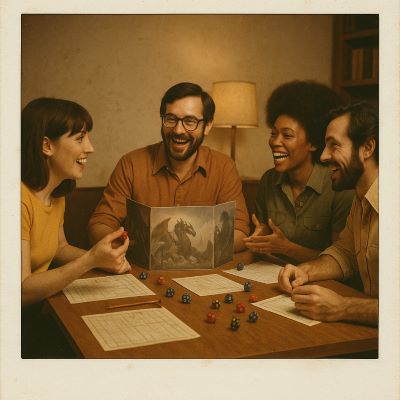
If you’ve ever run a tabletop roleplaying game and watched a story unfold in ways you never expected, you’ve already experienced emergent gameplay—the joy of watching a narrative evolve not from a script, but from a conversation.

Few systems embrace this more fully than Dungeon World. Built on the Powered by the Apocalypse engine, Dungeon World encourages GMs and players alike to let go of control and lean into collaborative storytelling. At the heart of this approach is a powerful principle: the game world belongs to everyone at the table.

This article explores how Dungeon World’s GM advice promotes emergent play, highlights key techniques, and shows how these tools can shape rich, player-driven narratives.

What Is Emergent Gameplay?

Emergent gameplay is storytelling that arises during play, rather than being planned in advance. It’s what happens when players surprise the GM with clever choices, and the GM says “yes, and…” instead of redirecting. It’s the difference between following a script and building a story together. Dungeon World thrives on this. It asks GMs to prepare situations, not scripts, and to embrace the unexpected. The game’s core principles encourage openness, improvisation, and player input.

The Dungeon World GM Principles

Some of the key principles from Dungeon World that promote emergent storytelling include:

  • Ask questions and use the answers
  • Draw maps, leave blanks
  • Play to find out what happens
  • Make a move that follows

These aren’t just rules for Dungeon World—they’re tools for any GM who wants to co-create with their players.

Let’s look at one of the most powerful techniques: Paint the Picture questions.

“Paint the Picture” Questions

This is a technique where the GM prompts the player to help describe the world around them, often adding emotional, cultural, or sensory details.

Examples:

  • “You enter the ruined temple. What about it tells you that this place was once holy to your people?”
  • “As you step into the market square, what sound overwhelms you first?”
  • “What’s the one thing in the bandit leader’s camp that surprises you?”

These questions do more than build the setting. They:

  • Signal to players that their ideas shape the world
  • Tap into backstory, emotion, and personal stakes
  • Provide instant richness and depth with minimal prep

You’re not just running a game—you’re inviting players to become storytellers alongside you.

Co-Creation in Practice

In Dungeon World, players don’t just fill out a character sheet—they fill out the world. There are even paint the picture questions on the character sheets. When you ask a player, “Who rules this town, and why do you owe them a favour?” you’re inviting them to help shape the political landscape. When you ask, “Why do you fear the forest you grew up next to?” you’re creating lore together.

Some GMs are nervous about giving up control. But the truth is, player input doesn’t dilute your world—it enriches it. The players don’t need to invent major plot points. Even small contributions (a tavern name, a strange superstition, a former ally) add texture and depth.

The secret is to guide, not dictate—to build the skeleton and let the group add the muscles, skin, and spirit.

Making Emergence the Core (Or Just a Flavour)

This co-creative style can form the foundation of your game. A whole Dungeon World campaign might begin with just a few questions:

  • “What threat looms over this land?”
  • “Who among you has a connection to it?”
  • “Why is your party already in trouble?”

From those seeds, an entire world blossoms.

But you don’t have to go all-in. These techniques work just as well in a more traditional game like D&D or Pathfinder:

  • Use “Paint the Picture” questions to add local colour and culture
  • Let players invent small NPCs or towns they’ve visited
  • Ask what their character remembers about a place or why they hate a particular enemy

A few well-placed questions can shift players from passive participants to creative collaborators.

Final Thoughts on Emergent Gameplay

Dungeon World’s approach reminds us of something essential: roleplaying games are not individual performances—they’re involved conversations. When players feel like their ideas matter, the story becomes theirs. That ownership creates richer narratives, stronger investment, and more memorable moments.

Whether you use emergent techniques as your main style or just sprinkle them in for flavour, the result is the same: a world that feels alive, responsive, and uniquely yours. So next session, don’t ask what the players do. Ask them what they see. What they fear. What they hope for. Then let the adventure emerge.

I’ve compiled a two page emergent play prompt sheet full of paint the picture questions for you to use at your table. Visit the Play2Lead area from the top menu to download your copy.

Building a Party That Works — Unlocking the Secrets of Team Composition with D&D

Building a Party

In games of Dungeons & Dragons, survival isn’t guaranteed by brute strength alone. It’s the party—a team of adventurers with varied skills and personalities—that determines success. A well-balanced party navigates danger, solves puzzles, negotiates with kings, and defeats dragons. Building a party that is poorly balanced? They get wiped out in the first dungeon.

This isn’t just fantasy. Building a good party is a powerful metaphor for creating real-world teams—whether in business, education, or community leadership. Let’s explore how the lessons of D&D party composition can help you build more effective, resilient, and exciting teams.

The Classic Roles: Diversity of Function

In most D&D parties, players naturally fall into a few core roles:

  • The Fighter (or Tank) – Soaks up damage, leads from the front, keeps the team safe.
  • The Healer (or Support) – Keeps the team alive, fixes problems mid-battle, often overlooked until things get desperate.
  • The Arcane Master (or Wizard) – Wields immense power, but fragile. A thinker and planner.
  • The Thief (or Rogue) – Deals precision damage, scouts ahead, solves traps. Agile and clever.
  • The Negotiator (or Face) – Talks the party through problems. Reads the room, persuades the crowd, calms the chaos.

Each of these roles plays a critical part in a party’s success. And just like in the workplace, it’s dangerous to build a team with only one type of thinker or doer. A team of fighters might get stuck on a puzzle. A group of wizards might collapse under pressure. True strength comes from complementary roles—from people doing different things well, not the same thing better.

Unique Players, Unique Takes

But D&D is never just about archetypes. Each player adds their own twist to their role. Of course, one fighter might be a stoic knight. Another, a reckless brawler. One rogue might be a sly thief with a heart of gold, another an acrobat who only steals for sport. A cleric might be a devout priest—or a cynical medic who just happens to carry a holy symbol (“I’m a doctor, not a bricklayer”) .

These personal touches matter. They affect how players interact, solve problems, and support one another. In leadership, we call this individual agency within a role. Just because two people have the same job title doesn’t mean they’ll approach it the same way—and that’s a strength, not a flaw.

Encouraging individuality within roles allows team members to take ownership, play to their strengths, and bring their full selves to the work. You don’t want five clones with different names. You want five distinctive voices working together.

The Magic of Synergy

Some of the most memorable D&D moments come from synergy—when players combine their abilities in surprising ways:

  • The rogue distracts the guards with sleight of hand while the wizard casts invisibility on the fighter, who then sneaks into the vault
  • The druid wild shapes into a blue ring octopus and is thrown by the fighter, on the end of a spear into the villain, poisoning him fatally (yes, this really happened).
  • The barbarian takes all the hits while the healer stacks buffs and the bard inspires everyone with a heavy metal song.

These combos aren’t in the rulebook. They come from understanding what your teammates can do and planning together. In other words, collaboration.

In leadership, encouraging synergy means helping people know each other’s strengths, build trust, and experiment together. Cooperation like this doesn’t just increase output—it creates those unforgettable “we did it!” moments that build lasting team culture.

Who will make up your party?

Building Your Party in the Real World

So how do you use the concepts of building your party in your own team or organization?

  1. Define Your Roles Clearly
    Just like D&D characters have classes, your team members need to understand their roles—not just their job titles, but how they contribute to the team’s overall success. This can be done individually as people step into a new role. However, it can also be done as a group where everyone’s role is defined collectively.
  2. Value Diversity of Skills
    Don’t hire or assign roles based on sameness. Bring in people who think differently, act differently, and bring different types of magic to the table. You want to avoid groupthink at all costs, get diversity into your team quicksmart.
  3. Let People Own Their Role
    Encourage creativity. Let team members adapt their roles to suit their strengths and interests. Don’t just assign tasks—give ownership. Watching a team member make a role their own is one of the joys of leadership.
  4. Foster Collaboration, Not Competition
    Create a culture where people look for combo moves, not solo glory. Reward teamwork over individual brilliance. Collaboration and teamwork should be the norm. Don’t encourage or reward Lone Wolf behaviour.
  5. Make Time for Storytelling
    In D&D, parties bond over shared adventures. In real life, teams need time to reflect, celebrate wins, laugh over failures, and tell the story of what they’ve achieved together.

Final Thoughts on Building a Party

Whether you’re storming a goblin-infested ruin or navigating a complex project at work, success rarely comes from going it alone. It comes from assembling a party that works—people with different talents, unique styles, and a shared goal.

Leadership, then, isn’t about being the strongest character. It’s about building the right party, helping each person shine, and creating the space where together you can do something extraordinary.

And honestly? That’s where the real adventure begins.

Succession War: Kill Team Campaign Design

Kill Team Campaign Design

Following the success of my last Kill Team narrative campaign at my local club I’ve decided to run another one. This time I want to incorporate some of the feedback from the participants in an attempt to heighten the narrative and increase engagement. Membership at the club has increased over the last few months so I’m hopeful we can have even more players than previous. But first I need to plan the narrative and scope. So read on for my Kill Team campaign design notes, to get my take on where this next event might take us.

Campaign Scope

While the last campaign was purposefully kept as simple as possible I want to increase the length and scope of this attempt without stretching myself or the players too thin. A couple of goals I’ve set myself includes:

  • Longer event without losing momentum. 7 week campaign this time round.
  • Engaging storyline that goes beyond the regular 40 faction divides of Chaos, Imperium and Xenos.
  • More opportunities for narrative.
  • Links to previous Promethium Wars event.
  • Include more than 12 players if possible.
  • Accessible to all play levels.
  • Multiplayer events.
  • Multiplayer grand finale.

Succession War Narrative

In an attempt to open up the alliances to multiple factions I’ve worked in a narrative based around the death of a Planetary Governor on an Imperial World. His offspring are fighting for the governorship supported by multiple factions. The plot will look something like this:

In the dying embers of the Forge World Velkira Prime, the great Steward Magus Regulus Thane lies on the edge of death. His three children—each bearing different visions for the planet’s future—prepare to seize power.

Amid their silent war of diplomacy, bribery, and sabotage, an external threat looms: Rhyskar the Unbound, a newly ascended Daemon Prince, seeks dominion of the system to prove his worth to the Chaos Pantheon. With Pyrothis V already in ruin, Velkira Prime is next.

The Imperium watches. The Xenos listen. And the Forge World burns with secrets.

Players take the role of shadow operatives, kill teams loyal to hidden masters. At the beginning of the campaign, each player secretly chooses a sibling to support. Each sibling also has one player assigned as their Captain—privy to deeper strategy and mission briefings.

Sibling Factions

The player base will be split across the three sibling factions regardless of whichever faction their Kill Team is aligned to. While each sibling is outwardly aligned to a particular faction they actually appeal to all three as described below.

Darian Thane – The Iron Heir

  • Loyalty: The Imperium
  • Vision: A brutal but stable militarized technocracy. Increased tithe to the Imperium to win political favor.
  • Theme: Order, sacrifice, grim determination.
  • Support: Militarum, Adeptus Mechanicus hardliners, conservative Space Marine chapters.
Darian Thane the Iron Heir

Chaos Support: Chaos-aligned factions view Darian’s rigid order as fertile ground for insidious infiltration. His obsessive devotion to law and productivity blinds him to the slow rot within.
Imperial Support: Darian is the traditionalist’s choice. He vows loyalty to the Imperium, pledges increased tithes, and promotes military strength and hierarchy.
Xenos Support: Pragmatic T’au or mercenary Kroot may ally with Darian via under-the-table deals with his logisticians, supplying rare resources or weapons in exchange for toleration.

Selene Thane – The Hidden Flame

  • Loyalty: Xenos sympathizer
  • Vision: Secret alliances with the T’au and Aeldari to boost production and evade Imperial taxes.
  • Theme: Innovation, progress, secrecy.
  • Support: Rogue Traders, T’au diplomats, Harlequin agents, Forge World fringe cults.
Selene Thane the Hidden Flame

Chaos Support: Chaos cults view Selene’s obsession with innovation and progress as an open door to Tzeentchian manipulation. Her radical reforms destabilize the status quo—perfect for seeding anarchy.
Imperial Support: Some elements in the Imperium (Inquisition radicals, free-thinking Magi, or certain Rogue Traders) see her ideas as necessary evils for survival on the frontier.
Xenos Support: Selene has already opened discreet trade lines with T’au diplomats and Aeldari seers. Her faction embraces alien tech, psychic insight, and fringe experimentation.

Kato Thane – The Pale Prophet

  • Loyalty: Chaos
  • Vision: A Forge World as a daemon-forge of flesh and steel. Secretly devoted to Nurgle and Tzeentch.
  • Theme: Corruption, mutation and progress.
  • Support: Cults, Traitor Astartes, Renegade Mechanicus, Genestealer remnants.
Kato Thane the Pale Prophet

Chaos Support: Kato is a willing servant of Chaos. His hidden cults grow daily, and his daemon-forges swell with unsanctioned warp energies. He dreams of apotheosis.
Imperial Support: Kato presents himself as a quiet, dutiful son. Loyalist factions that prefer a weak or pliable ruler may support him as a puppet candidate.
Xenos Support: Genestealer Cult remnants, radical Necron Crypteks, or even Ork Mekboyz might be amused by Kato’s grotesque tech-heresy. Some see his reign as inevitable—and profitable.

Player Distribution and Captains

In an effort to even up the teams players will be assigned based on rough skill level and experience. A captain will also be assigned with the aim of hyping up their team as well as dishing out specialist campaign equipment. The captains will also be tasked with encouraging the narrative within the campaign, creating rivalries and grudges etc.

Campaign Progression

Campaign progression will look something like the following:

Week ThemeCrit OpsNotes
1Fires of Ambition Secure – Capture Key industrial sites on Velkias Prime
2Silent Alliances Dead Drop – Deliver/collect coded intel across the mapTeam Captains will be given a selection of rare equipment to pass out to their team members.
3Saboteurs Unleashed Sabotage of key rival infrastructure2v2 Half teams multiplayer missions
4Assassination Assassination crit op targeting rival leadersThe sibling with the weakest control is assassinated and removed from the race. Lost faction players redistributed to the winners.
5Aftershocks Turf WarSeize and control disputed territoryCaptains given further assets to distribute to their teams.
6Final StrikeKill Op, wipe out the other teams2v2 Half teams multiplayer missions Adding double control points.
7ControlLarge multiplayer event set in the Governors PalacePlayers bring 1-2 operatives for a final show down. Which faction will control the winning Sibling?

Victory Conditions

A simple map of Velkaria Prime divided into 5 sectors will form the basis of the win condition. Each game (decided or rolled for by the players) will take place in a different sector and a win will create a control point in that location. Control of the planet will therefore take on a visual aspect as control of the different sectors changes hands.

Having a map came up a lot in the player feedback and will form a central unifying aspect of this Kill team campaign design.

A separate element will be the Champion. Each player will nominate a champion (not their leader). Each champion gets a point for every Kill they make. This will form a different leader board giving players another victory condition to work towards.

Final Thoughts on the Kill Team Campaign Design

With regards to this Kill Team campaign design, I’m hoping that the mix of factions and player captains and map will all serve to keep the players engaged. As well as the multiplayer events and shifts in the story arc.

While players will be assigned to factions, it will be important that they develop a narrative around why their team is supporting the given sibling and work changes in the plot.

While a little more complicated than the previous campaign, the administration is actually fairly limited for me as the Arbitrator (organiser). Having the captains help corral players will also be a big help.

Looking forward to getting the map, missions and player pack finalized and kicking it off in a couple of months.