My First Bolt Action Tournament

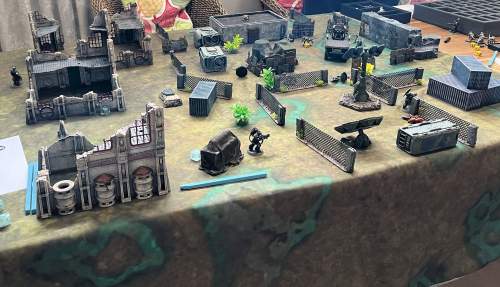
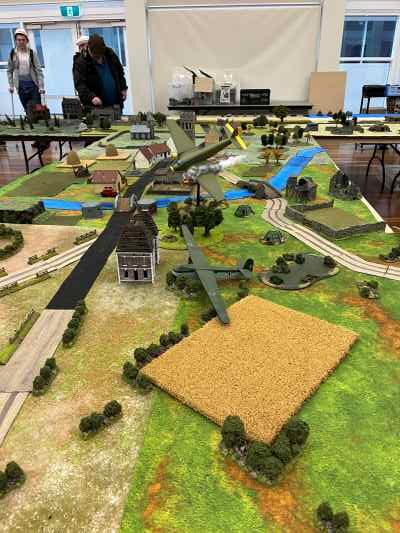
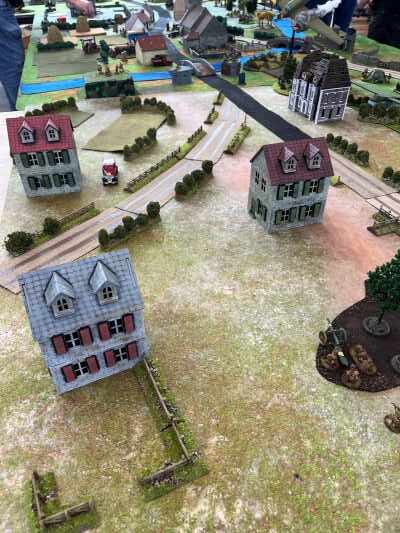
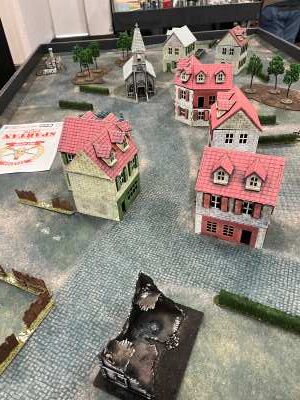
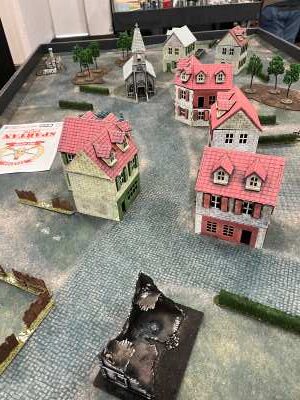
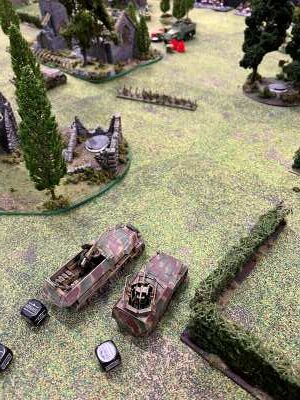
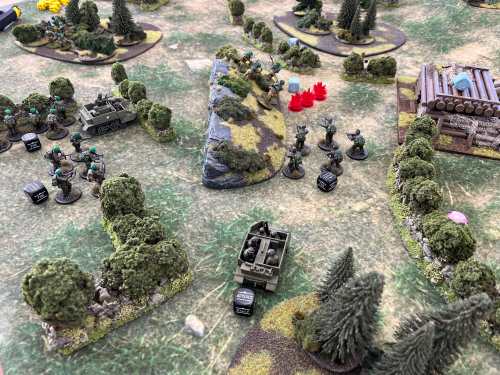
Bolt Action game in progress

I’ve recently got into Bolt Action a WW2 wargame and am absolutely loving it. Before too long I found out that one of the local Perth clubs, Outpost 6030, was hosting Bolt Action at it’s Skulls 2026 tournament in March. I’ve never been particularly competitive gamer, rather enjoying the stories at the table than the results. However, playing four games in a day and getting to meet the wider community was too good a chance to pass up.

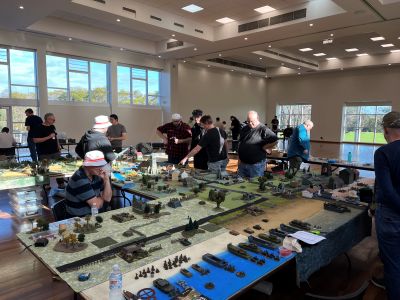
There is something nerve-wracking about your first tournament. You spend weeks painting models, tweaking lists, reading scenarios and imagining strategies. Then suddenly it is 0730 on a Sunday, you are standing in a hall full of strangers, ten beautifully laid out tables, 17 competitors, and your carefully assembled 1100 point force is waiting to march onto the battlefield.

I took a British Royal Marine Commando army with 12 order dice (not very many order dice as it turned out). I had spent plenty of time thinking about my list beforehand and honed it over a few practice games with Jake and Richard (thanks guys!). The event itself was run brilliantly by Dan. He kept everything moving smoothly, while maintaining a sunny disposition throughout. Four games between 0800 and 1700 is a proper marathon, but the day rattled along at a surprisingly fast pace.

Dan patrolled the tables answering rules queries and making sure we knew how much time we had left for each game. He also seemed to just love the atmosphere and getting into the hard fought games at each table. Every time he told me the time, I think a look of panic would cross my face. No poker faces in my side of the table.

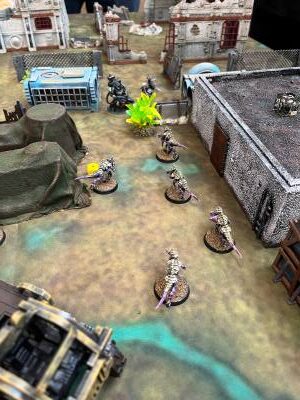
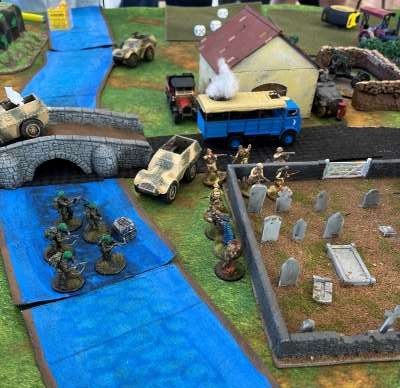
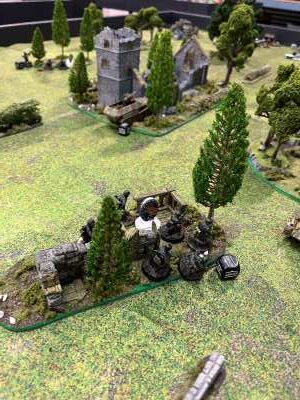
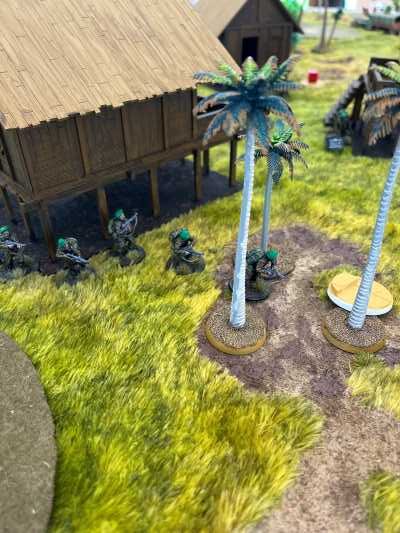
My commandos sneaking up to an objective

Game one was against Marco and his Japanese army. This was my first real lesson of the day. I played far too cautiously, sitting back and trying to preserve units instead of throwing myself into the objectives. The result was that the end score was very one sided. Marco wiped the floor with me. These games were moving fast, and with four games packed into one day you had to get yourself into a winning position within three turns or simply run out of time.

After that first match I realised I needed to change my approach. From that point on I became much more aggressive and mobile with my commandos.

Game two was against Mark and his American force. The scenario involved hunting an informant and I felt much sharper in this game. I had a clear plan, moved more decisively and generally played far more tactically than I had in game one. The strategy itself was sound, but the dice gods decided to laugh in my face. My reserves stubbornly refused to arrive and secure the left flank, which allowed Mark to roll up that side of the table and march away with the informant and a convincing win. A fun game, though and I really felt on the edge of my seat the whole way through.

Lunch was a classic sausage sizzle and a quick chat, talking tactics and straight back into it.

Game three was against Martin and, yes, another Japanese army. By this point I was starting to wonder if every Japanese player in the state had decided to attend. This scenario focused on destroying objectives rather than simply shooting each other. It created a very different sort of game because instead of trading fire across the table, both of us were racing to damage key targets.

Martin had a very rough run of luck with his dice, while my army stuck to my plan nicely. My commandos moved quickly, focused on the objectives and managed to take out most of them. At last, my first tournament win. It may not have been the most heroic battle of the day, but it felt great to get one on the board.

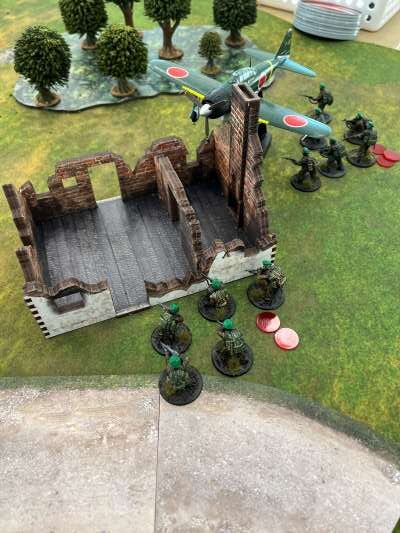
The final game was against Dave and, somehow, yet another Japanese force. The scenario focused on eliminating a specific unit. I made a few mistakes early, lost momentum and Dave completely outplayed me. I couldn’t get anywhere near his unit while his airstrike and mortars battered my army from turn one.

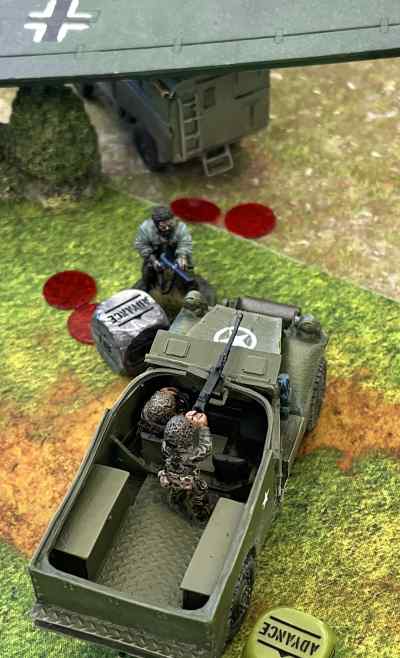
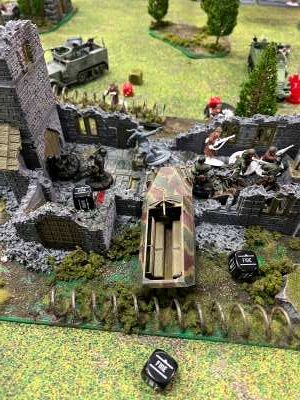
My brave commandos being strafed by an enemy fighter

One thing that really helped me through the day was preparation. Before the tournament I had printed out the scenario pack and written a rough strategy for each mission. That turned out to be incredibly useful. Instead of staring blankly at the table trying to invent a plan on the spot, I already had a basic framework in mind. It freed up brain space for reacting to what my opponent was doing and kept me focused on the scenario.

Perhaps the biggest takeaway from the day was not the result, but the people. Every opponent I played was an absolute gentleman. Everyone played fairly, kept things friendly and had a good laugh along the way. I also had some great conversations with the other players between rounds. The WA Bolt Action community felt very welcoming, which makes a huge difference when you are walking nervously into your first event.

At the end of the day there was a prize giving. I think I finished 11th out of 17, which I was pretty happy with for a first event. I also won some extra order dice and an exclusive Gus March-Phillipps model, which felt like a proper little treasure chest at the end of the day.

Most importantly, I came away with four fun games, a better understanding of how tournament Bolt Action works and a few offers for future games. Not a bad haul for one Sunday. One thing’s for certain, I’ll be signing up for the next one as soon as I can.

Echoes of Xenos: An Event Focused on Emergent Play

Following on from my last experience running a multiplayer game I’ve been exploring emergent play. In parallel to this I have developed a mini event for six participants that I hope will create an emergent narrative experience for all involved. I’ve included mechanics to ensure that no two games are alike and every decision can lead to unexpected outcomes. Welcome to Echoes of Xenos!!

While this is a campaign of sorts with players playing multiple games, it is going to take place over the afternoon/evening of a single Saturday. Keeping it short and sweet will foster maximum engagement. Resulting, I hope, in lots of player interaction with the narrative and each other.

Setting the Stage: Embrace the Unknown

I’ve always had a soft spot for the INQ28 movement. This is based loosely on an old Games Workshop game that was more roleplaying game than wargame. It pits bands of Inquisitors, secret agents of the Imperium, against one another. Different ideologies, agendas and objectives make for a murky espionage fueled setting that truly fosters creativity in scenarios, art and model making. As such I’ve set this event squarely within this milieu.

The campaign is based in the western reaches of the Ultima Segmentum, specifically in the enigmatic Lupin System. As commanders of various factions, players are on a mission to retrieve the lost research of the radical Inquisitor Tiberius Glaze. While they all have the same core objective, secret objectives, emergent narrative and sworn enemies will make this anything but straight forward.

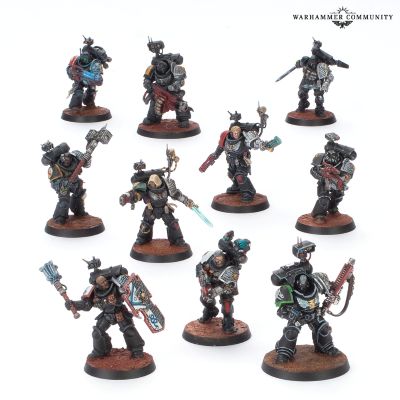
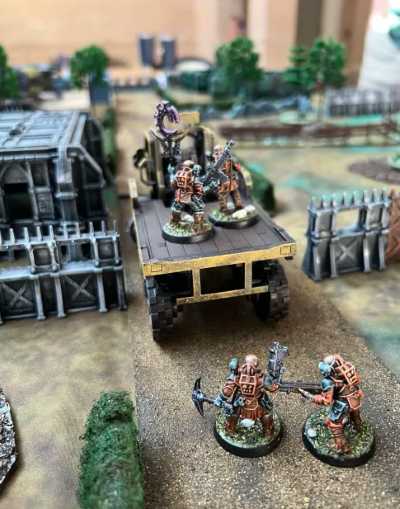
Player packs and warbands ready to go

Factions in Pursuit

As mentioned, multiple factions are on the hunt for Glaze’s elusive research. Each with its unique motivations and secret agendas:

  1. Puritan Inquisitor of the Ordo Hereticus: Determined to destroy the heretical research.
  2. Rogue Trader: Sees profit in capturing and selling the research.
  3. Tech Priest of the Adeptus Mechanicus: Aims to harness the research for their own mysterious purposes.
  4. Two Radical Inquisitors of the Ordo Xenos: Both seek glory through the continuation of Glaze’s work. However, the glory can only go to one!
  5. Rogue Inquisitor of the Ordo Malleus: Believes the research is linked to a prophecy foretelling the downfall of the Imperium.

As you can see, there is already a lot of scope for conflict. But for emergent play to flower we need additional complications.

The Mechanics: Fueling Emergent Narrative

This campaign is structured to encourage emergent play, where the unfolding story and strategic interactions create a unique and engaging experience for every participant. As such the details of each battle will be randomly determined. Firstly, there will be three rounds of 1v1 battles . At the start of each round, factions will randomly draw opponents and battle locations. Each location has a shared primary objective and a set of secret objectives. After objectives are revealed, faction leaders select their roster for the engagement. The final round will involve all the players competing against one another in a large multiplayer scenario.

Like the last game I ran we’ll be using the Space Weirdos ruleset. This is simple enough for players to pick up the concepts easily. However, it has enough complexity to allow for strategic play. A great balance. It also plays fast. Letting us complete multiple games over the course of the event.

Roster Management

Each faction begins with a 125-point Space Weirdos list, but for each scenario, players can only field three agents from their roster. This limitation means roster management is crucial, as losing agents can significantly impact your strategy and the outcome of future battles. It also means that agents need to be carefully chosen for each game, as each have different advantages. I’m interested to see how this plays out. Will players be more cautious in their tactics? When will they commit their more valuable agents?

Locations and Objectives:

To keep things uncertain battles will be fought over 4 different locations. Each is rich with potential for emergent play, featuring primary objectives and a variety of special secret objectives specific to each. Here’s a glimpse of what to expect:

  1. Abandoned Orbital Station: Retrieve data from the lone servitor.
  2. Research Station on the Moon: Get a copy of the research papers.
  3. Ag Settlement: Identify and interrogate Glaze’s old companions for the location of the genetics research base.
  4. Space Port Relay Station: Hack the last communication from the Research Station.

Winning a game at each location gives the victorious player a secret clue that details some of the back story and the villainy that Inquisitor Glaze was up to.

Combining roster management, narrative clues, secret objectives and a range of game boards will keep the players on their toes. Decisions will have to be made with imperfect information. Stories will emerge. I cant wait to see how the game evolves.

Points and Clues

An emergent narrative may not be enough for some players so I have introduced a competitive element in the Campaign Points (CP) which are awarded based on performance

  • Win Primary Objective: 2 CP
  • Win Secret Objective: 1 CP
  • Beat sworn enemy in battle: 1 CP

The warband with the most CP will start the final scenario with a crucial advantage – the research genetic material. A tally of points on a whiteboard near game control will keep everyone on their toes. Announcing changes in the leaderboard at the end of every round should enhance the competitive element.

It’s my hope that this element spurs players to strive for a win and push their secret objectives for each round to get that valuable additional CP.

The Grand Finale

The final showdown takes place at a secret location (no spoilers), the fifth moon of Lupin III. Here, factions must secure the genetic material – the ultimate prize. With dangerous abominations lurking, this climactic battle will push the players strategic skills to the limit and create unforgettable moments of emergent play. Will they work together to get run the gauntlet or fall into mad competitive scrambling to get the prize. Only time will tell.

Preparation

In an effort to make the game as immersive as possible I’ve prepared individual player briefings, faction rosters, thematic clues and ideological clashes. Additionally, I’ll be using my collection of miniatures and terrain to its fullest. I’m hoping that this will give the players enough to really lean into the setting and make the most of the game. This has take a lot of work, but I’m hoping it’s worth it.

Once we’ve played I’ll write about the experience and my learnings from it. Will emergent narrative occur? I’ll also see whether this format may be utilized in a different form to teach/enhance leadership skills.

Wish me luck!!

Exploring Dynamics in Uncertainty: A Wargame Experience

April saw me attend MartyCon 2024, where I ran a miniatures wargame intended to test players resolve under uncertain conditions. As leaders in the real world we deal with a distinct lack of information about our competitors motives and objectives. This uncertainty leads to difficult decision making and stress. My players came from all walks of life including engineers, teachers, ex soldiers and bankers. All were thrust into a scenario of limited information where quick decision making was needed to win the game. In this article I describe the game set up and play before looking at three leadership lessons we can draw from the experience.

The Set Up

I designed the game using the Space Weirdos ruleset with players commanding one of six factions battling it out under a giant factory complex set in the underbelly of the Warhammer 40,000 universe. Each player had a different primary and secondary objective. These ranged from hunting a demon infused artefact, starting a rebellion and assassinating a rival leader. Below is a summary of each group:

  • Inquisition/Sisters of Battle: A formidable force dedicated to rooting out heresy and chaos, armed with faith and righteous fury.
  • Enforcers: Tasked with maintaining order and eliminating gang activity, these elite warriors are the enforcers of Imperial law.
  • Honor Guard Kill Team: The personal guard of the Imperial Governor, wielding the authority to bring the Mining Guild. They also had a side mission to get rid of the Governors future Son in Law.
  • Acolytes of the Red Mist: A mysterious order shrouded in secrecy, rumored to be on the brink of completing an elaborate ritual with unknown consequences.
  • Mining Guild: Hard-bitten workers pushed to the brink of rebellion by mistreatment, seeking to assert their rights amid the chaos of civil unrest.
  • Scissor Sisters: An influential crime syndicate capitalizing on the turmoil, maneuvering in the shadows to exploit opportunities for profit and power.

Each players team comprised four miniatures with different weapons and abilities. But so many that the game became overwhelming.

I took the role of gamemaster to keep play moving, answering rules queries and making sure everyone was having fun. Of course, this was key in keeping the game running smoothly and allowing for players to try things outside of the normal ruleset.

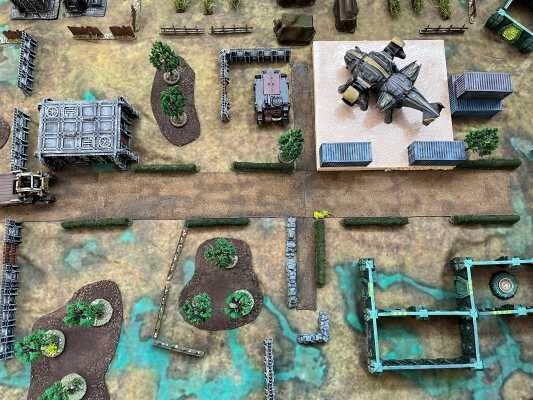
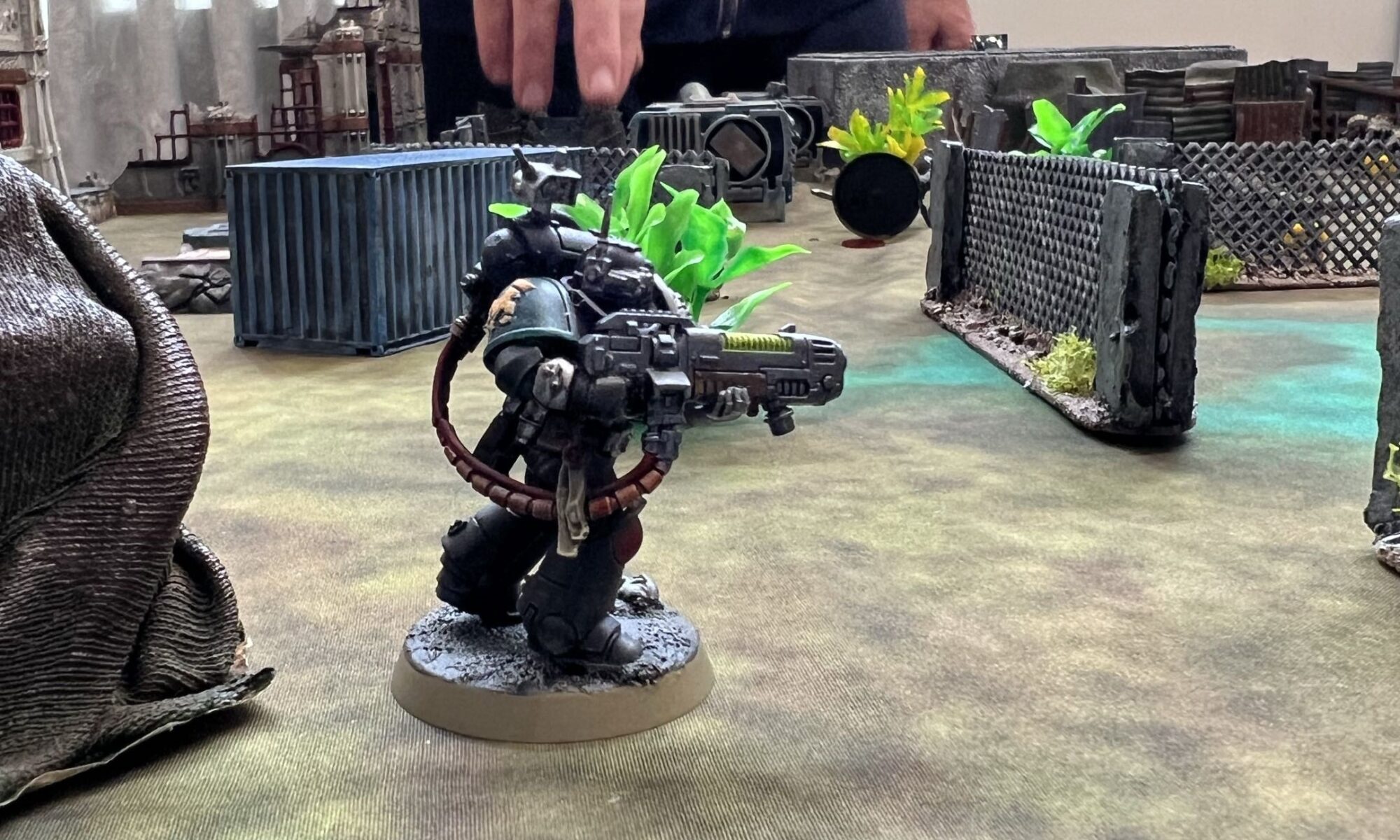
Part of the battlefield with four factions visible

Space Weirdos

I chose the Space Weirdos ruleset intentionally during my planning of the experience. First, it is very simple, but with enough variety in character skills and weapons to keep things interesting. Secondly, players take turns moving one miniature each. This, and the fact that players can interrupt each others goes with actions made sure that no players were left out twiddling their thumbs. Lastly, movement was completed using a 6 inch stick removing the cumbersomeness and clutter of tape measures.

Everyone around the table picked the rules up easily. This is high praise indeed as most hadn’t played a wargame before. I cant recognize this game enough. In fact, I know my friends and I will be playing this ruleset again in the near future.

Adding Uncertainty

Having read their briefs, each player knew their main objective and main adversary. They also had notes on potential allies. Consequently, there was a base line of understanding around the situation. Encouraging players to communicate by secret notes added extra spice. Creating and breaking alliances as needed. Communications lit up within the first minute of the game, with notes flying between all participants. I quickly ran out of post-it notes and players turned to texting one another.

Now the waters were truly muddied. Who to trust. How to win your objective and how to illicit help in doing so was no longer a straight forward concern.

Game Action

We played for two and half action filled hours. Alliances were made. Motives were guessed at. The ensuing firefight unleashing chaos. Feedback from the players showed how difficult they found working with such unknowns. Enjoyable, but difficult.

One player, found himself getting frustrated at another player, perceived to be a neutral party who seemed to be targeting him. Afterwards it dawned on him that the targeting was the result of an unknown objective. He was of course completely right about that.

The player who eventually won, was double crossed, lost most of their team members, but stayed focused on their objective to pull a win on the very last turn.

Often wargames can turn into straight forward affairs. Not this one. Everyone was second guessing each other right until the end. The debrief at the end created more than a few ah ha moments as pieces of the puzzle fell into place.

Given all this uncertainty experienced by the players, what lessons can we learn from the scenario?

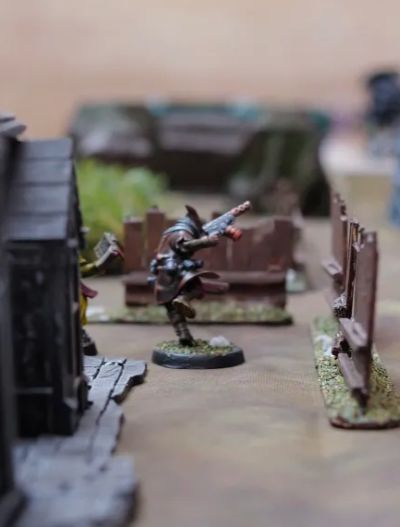
The action from a models perspective

Lesson 1: Flexibility and Collaboration

The game’s setup, designed to pit players against each other amidst uncertainty, showcased the importance of flexibility and collaboration in leadership. One of the players, embodying these traits, adeptly negotiated alliances and adapted his strategy on the fly to help achieve his objective. His willingness to collaborate with unexpected allies underscored the power of flexibility in leadership, demonstrating the value of adaptability in the face of adversity.

Lesson 2: Trust, Betrayal, and the Art of Managing Expectations

As players delved into the fray, trust, betrayal, and the delicate art of managing expectations emerged as crucial leadership lessons. The player running the Sisters of Battle/Inquisition faction, initially sought alliances based on his knowledge of the Warhammer 40,000 universe. However, when his allies turned on each other and betrayal ran rampant, he found himself isolated and betrayed. His assumptions very nearly cost him the game. This experience highlighted the importance of managing expectations and understanding the fluid nature of alliances in leadership scenarios.

More action as the mining guilder sprints for the vox cast station (their primary objective)

Lesson 3: Effective Communication and Information Management in the Face of Adversity

Against the backdrop of clandestine dealings and covert alliances, effective communication and information management emerged as critical leadership skills. Players communicated covertly through notes and smartphones, forming secret alliances and plotting betrayals. This emphasis on information management underscored the importance of access to key intelligence and the ability to convey messages discretely in leadership scenarios, especially amidst the chaos of conflict.

Final Thoughts on Uncertainty

In conclusion, I believe this experience moved beyond that of a simple game. Instead serving as fertile ground for exploring leadership dynamics. Leading the different factions, players not only battled for victory but also honed their leadership skills in the crucible of conflict amidst uncertainty.

I will be sure to use this type of game to explore other leadership themes in the future.