Having a quick break this week to rest and recharge. We’ll be back with a new article next week. So stay tuned!
Quick Break


Leadership, Teamwork and Culture from the Worlds Most Popular Roleplaying Game
Having a quick break this week to rest and recharge. We’ll be back with a new article next week. So stay tuned!

If you’ve been following this blog for a while you’ll know that I consider D&D to be a powerful way to develop teamwork, communication, and leadership skills. There is a great opportunity to use games like D&D in the workplace to upskill your team. However, as the old adage suggests time is money. Finding time to run a workplace adventure can be difficult. So, when you only have an hour, structure really matters.
That’s where the Play2Lead ruleset shines. Designed to be fast, focused, and built around teamwork mechanics like the Team Dice Pool, it’s ideal for short, high-impact sessions. It is just a ruleset. Where it really shines is in the scenarios played. In this post, I’ll show you how to write a tight, engaging 1-hour workplace adventure using a three-encounter framework that encourages collaboration and leaves players excited for more.
Here’s the structure:
This structure mirrors how stories are told in action-packed short fiction, and it works beautifully for limited time workplace sessions: start fast, build tension, finish big.
When designing adventures in the 1 Hour Framework consider the following design goals.
Here are some examples to get you started. Leaning in to popular tropes can help players begin engaging with the game quicker. Everyone knows Zombies, superheroes or pulp adventures and what they entail. The more easily recognizable the faster players can understand what is needed from them.
Title: “Extraction Point Echo”
Theme: Crisis leadership, teamwork under pressure
Inspiration: 28 Days later, Walking Dead, iZombie, Dawn of the Dead.
Title: “Pressure Protocol”
Theme: Decision-making under constraint, trust, clarity in communication
Inspiration: Abyss, The Poseidon Adventure, The Deep, Jaws, The Meg
Using the Play2Lead ruleset in a 1-hour adventure is basically a leadership workshop disguised as a zombie movie or underwater thriller. It’s short enough to fit a lunch break or between learning sessions, structured enough to teach valuable skills, and fun enough to make people want to play again.
Three encounters. One hour. One story they’ll talk about all week.
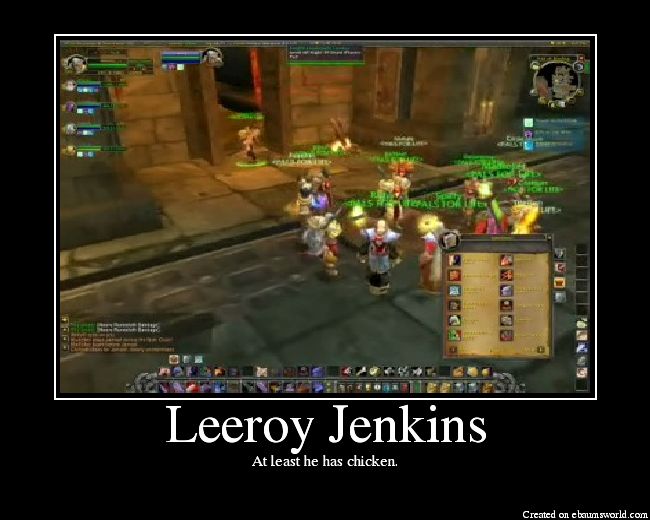
Over the last 15 year, few moments have become as iconic in the gaming sphere as the infamous “Leeroy Jenkins” incident from the video game World of Warcraft. For those unfamiliar, Leeroy Jenkins is a character who, in a recorded raid planning session, abruptly charges into battle without waiting for his team’s strategy, resulting in a spectacular failure. While this moment is often remembered for its humor, it also holds valuable lessons that transcend gaming and apply to various aspects of life and teamwork. So what can we learn?
One of the most glaring takeaways from the Leeroy Jenkins saga is the significance of preparation. In the video, the team meticulously plans their strategy, calculating odds and discussing tactics. However, Leeroy’s unplanned charge into the fray completely derails their carefully laid plans, leading to most of the party being wiped out and their objective lost.
Lesson: Preparation is key to success, whether in gaming, work, or personal projects. Taking time to plan, understand the task at hand, and ensure everyone is on the same page can dramatically increase the chances of success. While spontaneity can sometimes lead to positive surprises, a lack of preparation often results in preventable failures. Think of the six Ps: Proper Planning Prevents Piss Poor Performance.
The Leeroy Jenkins moment underscores the importance of teamwork and clear communication. The rest of the team was engaged in a collaborative effort to strategize, yet Leeroy’s solo actions ignored this collective effort, leading to chaos. The actions of one, completely destroyed the goal of the group.
Lesson: Effective teamwork relies on every member contributing and adhering to the agreed-upon plan. Communication is crucial in ensuring that all team members understand their roles and responsibilities. Disregarding team dynamics can undermine the entire group’s efforts, leading to conflict and failure.
Although amusing, Leeroy Jenkins does highlight the issues of having a Lone Wolf on your team. As a leader you need to try and get everyone pulling together as a team. If an individual doesn’t want to do that, then perhaps it is time for them to work/play elsewhere.

Despite the catastrophic outcome, the Leeroy Jenkins incident has been embraced by the gaming community as a legendary moment of humor and learning. World of Warcraft now has a Leeroy Jenkins NPC for players to interact with and references have popped up in media ranging from Family Guy to serious military discourse. It highlights that failure, while sometimes embarrassing or frustrating, can also be an opportunity for growth and camaraderie.
Lesson: Failure is an inevitable part of any endeavor. The key is to embrace these moments, analyze what went wrong, and use the experience to improve future efforts. In both gaming and life, laughter and resilience in the face of failure can transform a setback into a memorable and educational experience.
The legend of Leeroy Jenkins is more than just a funny internet video; it’s a cautionary tale with lessons about preparation, teamwork, and the value of learning from failure. By taking these lessons to heart, we can approach our own challenges with greater foresight. So next time you’re about to charge into a situation, take a moment to plan, communicate, and remember the enduring cry: “Leeeeroy Jenkins!”

I’ve volunteered to run a one-shot adventure for my friend Andrews birthday. Usually we play D&D together, but I decided to mix things up with some good old fashioned Star Wars. This franchise is perfect for the one-shot style game. It’s popular and players know exactly what’s expected. After much navel gazing I decided that there’s nothing like a good heist give the one-shot a truly Star Wars feel. Not only that but it had top be set in the dark days before A New Hope, when the Rebel Alliance is a ragtag network of scattered cells and the Empire’s grip is tightening. One daring raid can turn the tide.
In this post, we’ll walk through designing a Star Wars-themed one-shot using:
I really needed a game system that would be at once familiar tot eh players and fast paced. Index Card RPG (by Runehammer Games) is a rules-light system based on the concepts of D&D but streamlined to keeps things moving. One roll target per scene, fast turns, minimal math—it’s all built for cinematic play. Players don’t need to learn a dozen subsystems. They just go. Whether it’s blasting stormtroopers, slicing into doors, or dodging TIE Fighters, ICRPG makes gameplay smooth, allowing the players to focus on the high-stakes of the scenario.
To keep the pace snappy, I have prepped prep a number of characters, each with a strong role. While statted out with a specialist skill and a couple of attribute points, my players can add a further 8 attribute points and put their own stamp on the character. I’ve included the following:
Each comes with ICRPG-style stats, starting gear, and a special skill. Enough depth to spark roleplaying, but not so much to overwhelm.
Rebel intelligence have learned that the Empire has secretly constructed a working prototype of the TIE Phantom—a cloaking starfighter that could change the course of the war. It’s hidden deep in a secure Imperial testing facility on the shattered moon of Harax, guarded by stormtroopers, officers, and harsh automated defenses. But there is hope, one of the technical specialists is thought to have Rebel sympathies. Perhaps he will help the war effort.
Your team has one shot to infiltrate, steal the fighter, and escape before the Empire realises what’s happening.
Let’s structure it using the 5 Room Dungeon method. If you haven’t checked out this effective method of adventure design I highly recommend you do. This is the perfect way to frame the adventure. It keeps things exciting and tight, giving the players a fun adventure with limited prep time.
With their shuttle malfunctioning the rebel team crash land onto Harax’s fractured surface during an ion storm. thrown straight into the action they must reach the facility perimeter undetected, but patrols are already combing the surface. A speeder patrol closes in. Do they ambush, sneak, or run?
ICRPG Notes:
The hangar is shielded and locked down. Players must disable the security grid without triggering alarms. Can they make contact with the sympathetic tech specialist to help—but only if convinced the Rebels are real.
ICRPG Notes:
The TIE Phantom is here—but it’s also bait. An elite stormtrooper squad, led by an ISB Agent, has been watching. They knew someone would come for the prototype and hope to uncover the Rebel cell network. Suddenly, blast doors seal, and enemy troops swarm in.
ICRPG Notes:
The Rebels must fight their way to the TIE Phantom, power it up, and blast their way out. One player can pilot; others defend the hangar or sabotage remaining defenses. A shuttle is parked nearby to allow the other players the possibility of escape. Possibly a mid-flight dogfight to escape in orbit.
ICRPG Notes:
The Phantom is in Rebel hands… but at a cost. Did they all make it? Did the ISB Agent escape with intel on the Rebel organization? The fighter’s logs might reveal even more hidden Imperial projects and a planned raid on a nearby Rebel safe house. Investigation of the cloaking technology will show it to be of Sith origin.
Get the players to describe what their characters are doing a day, a week and a year after the adventure. This gives the one-shot game a great feeling of closure.
This adventure is meant to be fully Star Wars. Nothing clever here. In an attempt to catpure the feel of the original films I’ll aim to include the following at different points throughout the game.
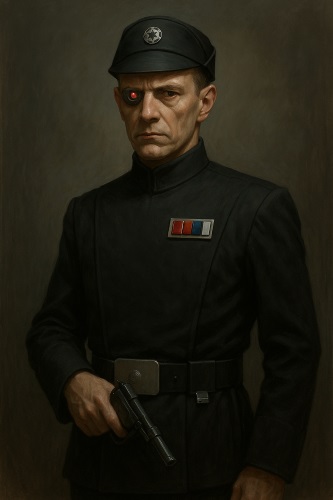
In an effort to make the villain memorable I developed him to be someone the players can hate. Introducing Agent Varn Ixil
Imperial Security Bureau – Counter-Insurgency Division
Description: Cold, calculating, and eerily calm under pressure, Agent Varn Ixil is a mid-ranking ISB operative known for using psychological tactics and traps rather than brute force. He wears pristine officer’s attire with his distinctive cream dress jacket. He carries a modified blaster pistol—rarely drawn, always lethal. His right eye has been replaced with an optical implant that constantly analyzes his surroundings, and he records every conversation for later dissection.
Memorable Trait: He never raises his voice. Even during combat, his commands are delivered in a chilling whisper. He refers to Rebels by their full names and known affiliations, as if reading from a classified file—making players feel like he already knows them.
Motivation: Not just to protect the TIE Phantom, but to capture the Rebel team alive and study them as part of a broader psychological warfare program. He wants to break the Rebellion, one mind at a time.
Catchphrase: “You think this is about a ship. No. This is about you. All of you. And the cost of believing in ghosts.”
I cant wait for the players to meet Agent Ixil!
A small Rebel team, a deadly prototype, stormtroopers in pursuit—it’s the recipe for a perfect Star Wars one-shot. With ICRPG’s easy-to-learn system and the tight 5 Room Dungeon structure, you can drop players straight into the action and deliver a cinematic, satisfying night of roleplay.
Let them steal the future from the Empire. Let them feel like heroes. It’s all here. I cant wait to run it!! And remember…..
Rebellions are built on hope.
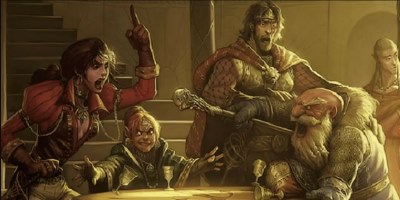
Dungeons & Dragons is built on teamwork, creativity, and shared storytelling. However, at least once in their journey every Dungeon Master will eventually encounter a problem player—someone whose behavior disrupts the game, frustrates other players, or creates unnecessary conflict. Whether it’s an attention-hogging player, a rules lawyer, or someone who constantly derails the campaign, handling these individuals effectively is essential for maintaining a fun and engaging experience for everyone.
The problem player takes many different guises. But the one thing they have in common is disrupting the game and reducing the fun of everyone else at the table. Here are a few of the more common varieties:
Players who disrupt the game in the ways described above need to be dealt with. Otherwise, the alternative becomes a game that is not as fun. Players will leave the table with a sense of frustration and are much less likely to come back to your table. Here are a few strategies that myself and other DMs I know have used to minimize the disruption caused by problem players.
Of course, this article wouldn’t be complete without a parallel to the workplace. Just like in D&D examples above, businesses also deal with problem employees—individuals who disrupt workflow, cause conflicts, or refuse to collaborate. A few of the more common problem employee types include:
Dealing with problem employees is not dissimilar to handling problem players as a DM. Communication and tact are the name of the game as well as understanding when to enforce consequences. A few good examples include:
Whether at the gaming table or in the office, a single disruptive individual can have a significant negative impact on team morale and productivity. By addressing issues directly, setting clear expectations, and reinforcing positive behavior, both DMs and business leaders can cultivate a more cooperative and enjoyable environment for everyone involved. Ultimately, strong leadership, communication, and proactive management are key to dealing with problem players—whether they’re rolling dice or filing reports.