Can Dungeon Masters Unlock The Secrets of Business Strategy?

In Dungeons & Dragons, the Dungeon Master is the architect of worlds, the keeper of lore, and the facilitator of the collaborative narrative. But more than that, the best DMs are long-term strategists—quietly planting seeds, managing moving parts, and adapting to chaos while keeping their eye on the horizon.

Sound familiar?

That’s because successful business leaders do the same.

Whether you’re building a company, leading a team, or mapping out a new initiative, the skills and mindset of a great DM are surprisingly applicable to long-term business strategy. Here’s what you can learn when you trade your quarterly report for a DM screen.

Think in Arcs, Not Just Encounters

New DMs often plan one session at a time, focusing on exciting battles or clever puzzles. But experienced DMs know that the real magic happens when the individual moments serve a larger arc. The villain introduced in session two becomes the shadowy mastermind behind the season’s climax. A throwaway NPC becomes a key ally—or traitor—ten sessions later. Sowing the seeds and building them in to long reaching arcs is a fantastic way to tie a series of adventures into a meaningful and exhilarating campaign.

Likewise, in business, short-term wins are important, but they must connect to something greater.

  • Are your marketing efforts building toward a brand story?
  • Are your hires developing into a team that will thrive next year, not just today?
  • Are your decisions aligned with the vision you’re working toward five years from now?

Business strategy isn’t just about reacting to the moment—it’s about giving the moment meaning within a larger whole.

Set the World in Motion, Then Let It Breathe

Good DMs don’t script every event—they set up factions, tensions, and goals, then let the players interact with the world organically. The game evolves based on choices, not rigid plans. Understanding the goals of a faction of evil wizards lets you understand how they react when the players begin meddling in their affairs.

In business, the same is true. You can’t predict every outcome, but you can:

  • Create a strong strategic foundation.
  • Anticipate how customers or competitors might react.
  • Build systems that allow your team to respond to changes without losing sight of the vision.

The trick is to build a world (or a business model) robust enough to stand on its own, with the flexibility to adapt.

Don’t make your campaign or business strategy so complicated that it loses all flexibility.

Plant Seeds Early, Reap Rewards Later

DMs know that if you introduce a mysterious artifact or a hint about a lost kingdom early in the campaign, it creates narrative fuel for later. That kind of long-term payoff makes players feel like their journey has depth and continuity. Sowing rumors like those above really pays off when the players start connecting the dots and realize that enemy faction are looking for the powerful artifact as well.

In business, this means making investments today that will pay off down the line:

  • Building trust with clients before the big pitch.
  • Creating content or systems that scale with your growth.
  • Training your team in skills that won’t be needed until next year—but will be essential when the time comes.

Long-term strategy is all about foresight. You don’t need to know exactly how it’ll play out—you just need to sow the right seeds.

Know When to Pivot the Plot

Sometimes, (actually pretty often) the players ignore your carefully placed clues and head straight for the mountains. Other times, they befriend the villain you planned for them to kill. A rigid DM gets frustrated. A great DM adapts and makes it work—even better than before. I’ve had plenty of moments where the players have headed in unforeseen directions and it’s actually made the campaign so much better. It is useful to remember the goal of D&D is to have fun. Pivoting the plot still lets us achieve the goal, just in a different way.

Business leaders face the same dilemma:

  • Market shifts.
  • Customer feedback contradicts assumptions.
  • A competitor changes the game.

A good long-term strategist knows that adaptability is part of the plan. Sticking to your goals doesn’t mean refusing to change your path—it means changing the path without losing the destination.

Keep the Players (and Team) Invested

A campaign isn’t just about the DM’s story—it’s about the players’ story. A great DM makes sure every character has a moment to shine and a reason to care. They listen, adapt, and build the world around what excites the table. Everyone collaborates enabling awesome stories to emerge.

In business, your long-term strategy will fall flat if your people aren’t bought in. Just like players, your team wants to:

  • Understand their role in the big picture.
  • Feel like their actions matter.
  • See growth, purpose, and excitement on the horizon.

Strategy is not just spreadsheets and roadmaps—it’s storytelling. It’s culture. It’s giving your people a shared quest worth embarking on.

Final Thoughts on Business Strategy

Being a Dungeon Master is a creative, sometimes chaotic exercise in long-term thinking. So is running a successful business. In both worlds, your success depends not just on reacting well in the moment, but on building something that lasts. Something that adapts, engages, and evolves. Something with a story worth telling.

So take a note from your homebrew world: plan the arc, plant the seeds, and trust that with intention and imagination, your strategy will lead to something epic.

Promethium War Campaign Wrap Up – Did it Work?

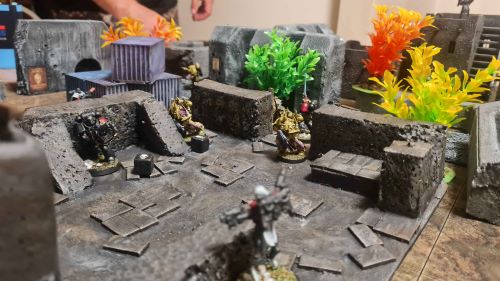
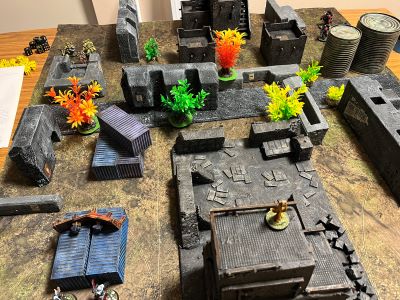
Back in April and May I ran a narrative Kill Team event called Promethium War. We had 12 players all fighting over the Promethium rich world of Pyrothis V. The aim of the campaign was to keep it simple, push the narrative side of the game and see what it is like to run an experience like this. I purposely kept it short at 4 weeks so that I could dip my toe in the water and understand what works and what doesn’t. Of course, I also wanted to make sure people at the club were really interested.

Did it work and what lessons did I learn? Lets find out.

What Worked?

To start with we had 12 club goers sign up for the campaign. So there was real interest in the narrative side of the game. People were excited about giving more meaning to their casual Wednesday night games.

Having factions and teams working together created lots of banter and feedback from the participants rated this as an enjoyable part of the whole experience. The exception to this was the different win conditions for the Xenos team, which didn’t really work as well as I had hoped.

Most of the players really engaged with the narrative elements of the campaign and wrote up fun battle reports. They weren’t shy about putting their own spin on the campaign events, resulting in some really creative additions.

All in all, lots of engagement, fun banter and some great narrative. An all round win. However, there were some elements that could have gone better.

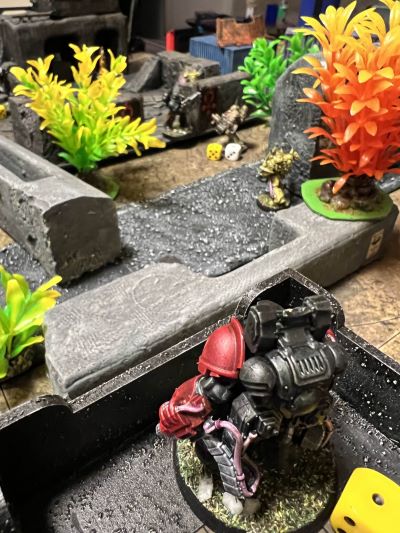
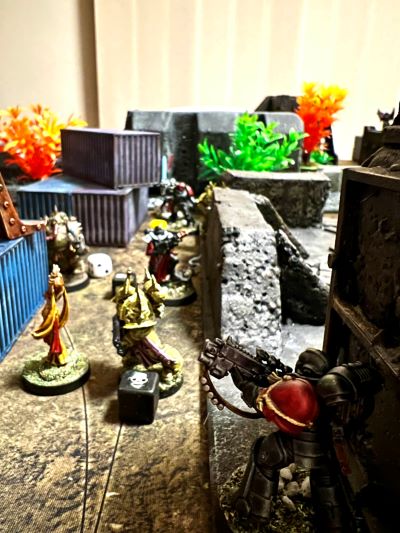
Close fought battle from week 4

What Didn’t Work?

As mentioned above the Xenos faction win condition was confusing and actually difficult to pull off. To their credit the Xenos players leaned into it well, but if I were to do it again I would have their win condition be more aligned with the other two factions.

Scoring was based only on wins. Looking back, I think that points should be scored for playing games as well, not just the win. this encourages players to get more games in and removes the sting of defeat a little.

During Promethium War all the narrative elements were collected as stories in the discord and the weekly campaign journal. Having a map would have grounded the games even more with actual territory being fought over. Whether this needs actual mechanics associated with it or stays as a tool to aid the narrative remains to be seen.

In my set up of the campaign I added a couple of bespoke crit ops. However, I feel like I missed a trick here. Having a strong of specific ops can really help tell the story of the campaign. The scientist mission I included was a real hit. Having things like this that deviate from the regular game set up gave additional life to the campaign.

Campaign Journal

Inspired by the old Necromunda newsletters from the 1990s White Dwarf magazine, I wrote a series of campaign journals. These were intended to tell the story of the campaign, including results and missions. These took a fair bit of work to compile and I’m not sure that the players really engaged with them. From an effort/reward point of view I’m not sure they are worth it. Next time I think I will do something similar but a lot shorter.

If you want to follow the campaign here are the journals from Week 1 to the finale:

Lessons Learned from Promethium War

From my own experience and from my player survey there are a few things I’d do next time. these include:

  • Include a map to fight over (though with limited mechanics)
  • Keep multiple factions, but keep win conditions more aligned
  • Appoint Faction Captains to encourage engagement and narrative
  • Include secret missions for Factions to give a sense of mystery
  • Have a specific mission for each week that follows the arc of the campaign
  • Include environmental rules to make battles feel different
  • Have a reduced campaign journal, rely on players and captains to provide the narrative
  • Include specific events during the campaign with special missions and multiplayer games to maintain interest and give different experiences throughout
  • Make it longer than 4 weeks to give more of a feeling of a larger scale campaign.

Final Thoughts on Promethium War

Did Promethium War work? Yes it did. The players were engaged and had fun, which is after all the purpose of the whole experience. Additionally I learned a lot about the effort required and other things that the players were looking for.

Would I run another narrative campaign? Definitely! Would I recommend running your own narrative campaign? Definitely again. However, the set up does take quite a bit of work. Watching players engage with your material and make it there own is a very satisfying experience.

While writing this I already have the makings of the next campaign already forming. Get ready for Succession War (working title) later in the year. Cant wait to see what story emerges.

Start with Why: Running D&D with Purpose

Simon Sinek’s Start with Why has inspired countless leaders to dig deeper into their motivations and clarify their purpose. His message is simple but powerful: “People don’t buy what you do; they buy why you do it.” When applied to leadership, business, or creativity, this mindset can be transformative.

But what if we applied it to Dungeons & Dragons?

Whether you’re a Dungeon Master or a player, understanding your “Why” can elevate your game from a fun pastime to a truly memorable and meaningful experience—for yourself and everyone at the table.

Why are you playing?

Let’s start at the broadest level: why do you play D&D?

  • Is it to blow off steam and have a laugh with friends?
  • To experience epic, cinematic fantasy stories?
  • To scratch that creative itch—worldbuilding, improvisation, writing?
  • To connect more deeply with your friends, family, or coworkers?

Being honest about this can help you set expectations, choose the right tone, and avoid burnout. When you know your “Why,” you can shape your approach and make sure the game aligns with what you’re hoping to get from it.

As a Dungeon Master, this becomes even more important. You’re not just playing; you’re facilitating. So ask yourself:

Why am I running this game?

  • Is it to give new players a chance to fall in love with D&D?
  • To tell a dark, emotional story you’ve been imagining for years?
  • To create a low-pressure space where friends can just have fun together?

Your Why becomes the compass for your style of prep, how you run sessions, and even which rules you emphasize or ignore.

Simon Sinek’s Golden Circle applicable to business and D&D!

Why is this campaign happening?

Once you’ve got your own purpose clear, zoom in on the game you’re running. Every campaign needs a “Why” behind the story, or it risks feeling generic and forgettable.

You can ask:

  • Why is this world worth exploring?
  • Why are these characters central to what’s going on?
  • Why does this story need to be told now?

When your players understand the thematic or emotional core of the campaign—whether it’s rebellion, redemption, survival, legacy, or something else—it helps them buy in. They’re not just reacting to plot beats; they’re engaging with the story on a deeper level.

You don’t have to spell it out in a monologue. Just make sure your theme is present in the way you frame quests, describe NPCs, or react to player choices.

A campaign where “Why” is clear might look like:

“This land was conquered long ago, and the people are still suffering. You’re part of a fragile spark of rebellion. Will you fan the flames or protect what little peace remains?”

Now the game isn’t just about killing goblins. It’s about choosing between safety and justice.

Why is each character here?

Encourage your players to think about their Why too—not just backstory, but purpose.

Why did this character leave home? Why do they keep going after that near-death experience? Or even, why do they care about the group?

When players define their characters’ core motivations, they make better decisions in character, and the party becomes more than a random collection of murderhobos. Even better? Ask your players how their Why might evolve. Give them the space to change. Because just like in real life, a good “Why” can grow as your story deepens.

Running D&D like a Purpose-Driven Leader

If you’re a DM, you’re already leading a team—even if you don’t think of it that way. Applying Start with Why means you’re leading with intent.

  • Your prep becomes more focused.
  • Your storytelling has more depth.
  • Your players are more emotionally invested.
  • And your games—no matter how light-hearted or intense—feel more meaningful.

It doesn’t mean you need to be serious all the time. A campaign where the “Why” is “laugh until we cry every Wednesday night” is just as valid as “explore grief through fantasy allegory.”

The point is to know your Why. Share it. Revisit it when things start to drift.

Final thoughts on Start with Why

Simon Sinek’s idea isn’t just for boardrooms and brand strategists—it’s for anyone trying to create something with heart. In D&D, whether a DM or a player, knowing your “Why” can be the spark that takes your game from good to unforgettable.

So before your next session, pause and ask yourself:

Why are we sitting around this table?

Then build everything from there.