Team Building Through Shared Storytelling — Why D&D Might Be the Ultimate Trust Exercise

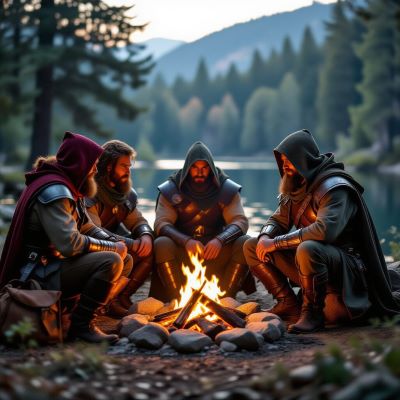
When people think about team building, they often picture ropes courses, awkward icebreakers, or nerve-wracking trust falls. But what if the most powerful tool for creating real team cohesion wasn’t physical activity or corporate exercises—but storytelling? Enter Dungeons & Dragons, a tabletop roleplaying game that thrives on shared storytelling. It’s a game where players build imaginary worlds together, solve problems as a group, and embody characters who grow, struggle, and triumph as a team. And while it might look like fantasy fun (and of course it is), D&D also offers a surprisingly deep model for how to build strong, psychologically safe, high-performing teams.

Let’s look at how D&D’s narrative structure creates team bonds—and how you can use these lessons in your workplace, classroom, or community group.

Shared Storytelling = Shared Ownership

In D&D, the story doesn’t belong to one person. Sure, the Dungeon Master (DM) might guide the world, but the plot evolves through the choices of everyone at the table. Players decide how to approach challenges, who to trust, and what kind of characters (or leaders) they want to become.

That shared narrative builds shared ownership. When a mission succeeds, the whole group feels it. When things go wrong (and they almost always do), the group adapts together. This sense of co-authorship is powerful: it creates a team culture where every voice matters.

In the workplace, this mirrors the difference between top-down directives and collaborative strategy. When the story is presented from the top, buy in can meet significant resistance. However, when team members help shape the story—of a product, a project, or a goal—they’re more invested, more creative, and much more committed.

Psychological Safety: Failure Is Part of the Game

One of the greatest strengths of D&D is how it normalizes failure. Characters miss attacks, fall into traps, or make poor decisions—and the story doesn’t end. It gets significantly more interesting. The consequences of failure become narrative fuel, not a source of shame.

This culture of playful risk-taking builds what Google’s research famously identified as the #1 trait of high-performing teams: psychological safety. In a psychologically safe team, people feel comfortable speaking up, taking risks, and being vulnerable without fear of ridicule or retribution. By playing D&D together, teams rehearse this kind of safety in a low-stakes setting. They learn that mistakes aren’t fatal—they’re part of the fun. And that mindset carries over into real work.

Building Empathy Through Character

In D&D, players take on personas that often differ wildly from their real-world identities. A quiet analyst might play a boisterous half-orc bard. An outspoken manager might become a timid elven healer. As they explore these characters, players inhabit new perspectives—and watch their teammates do the same.

This roleplaying builds empathy. It invites players to step into someone else’s shoes (or boots, or hooves), wrestle with emotional dilemmas, and support each other’s fictional struggles. And in doing so, it strengthens their emotional intelligence in real life.

Empathy isn’t a soft skill—it’s a critical leadership trait. D&D gives teams a safe way to build it naturally, through play.

Tips for Encouraging Shared Storytelling

You don’t need to be a master Dungeon Master to encourage better storytelling in your game. If you are running a game at work or using roleplaying to help impart experiential learning, consider using these tools to deepen the shared storytelling experience:

1. Paint the Scene Questions

Instead of describing everything yourself, invite players to contribute. Ask things like:

  • “What does the ruined temple smell like?”
  • “What’s the one thing about this town that makes it feel like home?”
  • “What do you see on the battlefield that makes you hesitate?”

These questions invite creativity, distribute narrative control, and reinforce the idea that this world belongs to everyone.

2. Ask for Flashbacks

Let players add history to the world:

  • “What memory does this cave bring back?”
  • “Tell us about the last time you faced something like this.”

Flashbacks connect characters more deeply to the story and build emotional investment.

3. Spotlight Sharing

Make space for each player to shine. Don’t let loud voices dominate the session. Encourage quieter players by giving them openings:

  • “Hey, Mira, what does your character think of this?”
  • “You’ve been watching from the shadows—what do you notice?”

4. Celebrate Narrative Wins, Not Just Combat

Don’t let the game revolve around dice rolls alone. Praise creative problem-solving, emotional roleplay, and team synergy as much as battle strategy.

5. De-brief After the Game

After each session, take a few minutes to reflect:

  • “What was your favourite moment tonight?”
  • “What surprised you?”
  • “What do you think your character learned?”

This builds reflection and reinforces shared memory—essential for team bonding.

Every Team Has a Story

Your team already has a story. The question is: are you telling it together, or is it being written without them? Dungeons & Dragons shows us that the act of co-creating a story builds connection, empathy, and trust. Whether you’re sitting around a game table or a boardroom, the principle holds: when people feel seen, heard, and included in the narrative, they give their best.

So maybe next time you’re planning a team-building session, skip the ropes course. Grab some dice. Sit around a table. And start telling a story—together.

How to Use Clocks to Add Tension to Your D&D Game

Using clocks in Dungeons and Dragons

If you’ve ever played Blades in the Dark, you’ll know that one of the most effective tension-building tools in the game are clocks. Not the ticking kind on your wall, but a visual countdown that tracks threats, progress, or time-sensitive goals. It’s simple, elegant, and incredibly powerful.

What if I told you that you can lift this mechanic straight out of Blades in the Dark and drop it into your Dungeons & Dragons campaign to make things way more dramatic?

Let’s dive into how clocks work and how to use them in D&D to raise the stakes, keep players engaged, and build unforgettable moments of tension.

What Is a Clock?

In Blades in the Dark, a clock is a segmented circle that fills in as a consequence of actions or the passage of time. For example:

  • A 4-segment clock might track how long until the guards arrive.
  • A 6-segment clock might measure the party’s progress disabling a magical barrier.
  • A 12-segment clock might represent an ancient dragon slowly awakening.

Each time something happens that aligns with the consequence, the GM fills in one or more segments. When the clock is full, the event it represents happens.

Simple. Visual. And nerve-wracking.

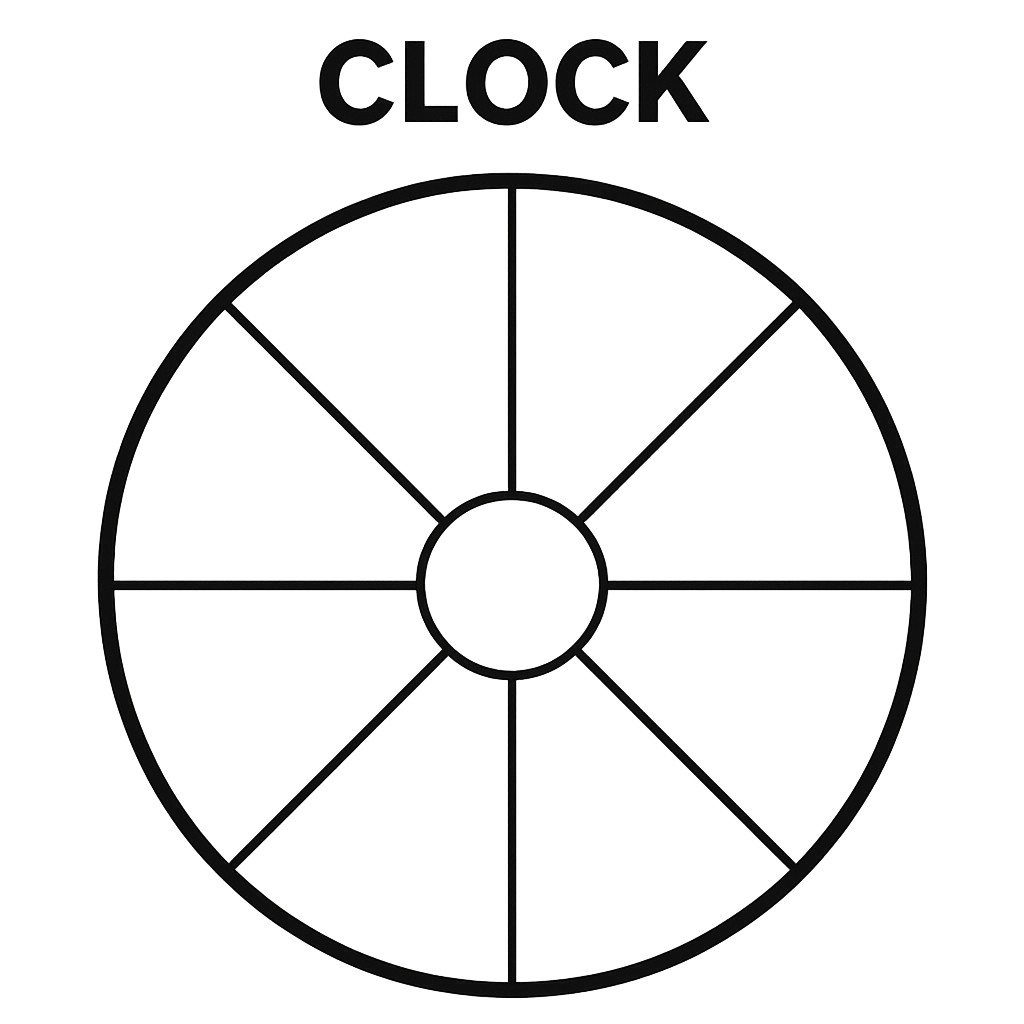
An example of a clock template you could use in your games

Why Clocks Work So Well

Clocks shine because they:

  • Make abstract danger feel concrete.
  • Give players a sense of urgency.
  • Create dynamic situations where failure and success aren’t binary.
  • Offer a visual reminder that choices have consequences.

This makes them an excellent fit for D&D, where pacing can sometimes sag or players feel unsure whether they’re making progress. Clocks are a quiet motivator—and a loud one when they fill up. The visual element of this tool keeps players aware of the likely consequences of the situation they are in and the closeness they are to getting into trouble.

How to Use Clocks in Your D&D Game

Here’s how to adapt clocks into your D&D session. No need to change any rules.

Draw Them Out
Grab a notepad, whiteboard, or even a coaster. Draw a circle, divide it into 4, 6, or 8 segments. See the template above. Make sure to label it:

  • “Reinforcements Arrive”
  • “The Ritual Completes”
  • “Guards Become Suspicious”
  • “Ship Sinks”

Then, fill in segments as events unfold—on failed checks, at key intervals, or whenever the party dithers too long.

Tie Them to Player Actions
Players will quickly learn that failing stealth rolls might tick the “Guards Notice” clock. Or that every round spent arguing about tactics fills in the “Cult Finishes Ritual” clock.

You don’t need to explain the consequences in detail. Just let the clock sit on the table, ominously gaining ticks. Players will feel it.

Use Them for Progress, Too
Clocks aren’t just for bad things. Use them to track the party’s progress disabling a trap, researching a cure, or converting a noble to their cause. It turns a string of skill checks into something far more satisfying to complete.

Stack Them for Chaos
Multiple clocks running at once? That’s where the drama kicks in. Imagine:

  • “Enemies Reinforce in 3 Segments”
  • “Party Finds Hostages in 4 Segments”
  • “Explosion in 5 Segments”

Now the players are really juggling priorities and feeling the pressure.

Example in Play

Scenario: Infiltrating a Cult’s Ceremony
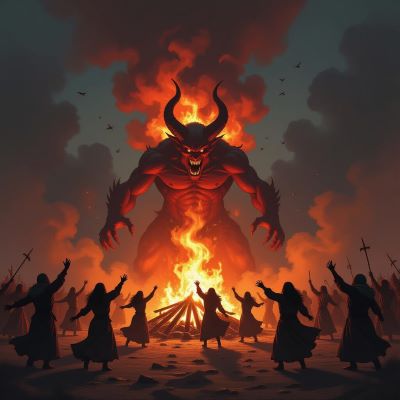
You’re running a tense infiltration mission to stop a cult from manifesting a Demon. Here’s how clocks could work:

  • 6-Segment Clock: “Cultists Grow Suspicious” — Ticks up with noise or strange behavior.
  • 8-Segment Clock: “Ritual Completes” — Starts ticking when the party arrives. Once it’s full, the demon enters the world and all chaos breaks loose. Too late.

The party now has layered objectives, a visible countdown, and the need to make hard calls.

Looks like the “Ritual Completes” clock filled up…

Do I Need to Change Rules?

Not at all. Clocks are purely narrative tools. They don’t replace D&D mechanics—they enhance them. You still roll perception checks, stealth rolls, persuasion attempts. But now, failures and delays have a tangible cost.

Want to go deeper? Tie clocks to initiative rounds, make players roll d4s to fill segments faster, or let them spend inspiration to remove ticks. But honestly, just drawing and filling a circle is already incredibly effective.

Final Thoughts
D&D thrives on drama. But often, that drama is hidden behind numbers, dice rolls, and DM narration. Blades in the Dark clocks offer something more visual, more urgent, more human. By borrowing this mechanic, you give your players a countdown they can see—and feel. You turn waiting into worry, failure into friction, and decisions into dilemmas.

So next session, pull out a pen, draw a circle, and start ticking. You’ll be amazed at the tension that builds.

Fast, Fun, and Focused: Using Character Playbooks to Enhance Your Game

Character Playbooks

Character creation is often one of the most exciting, and sometimes most daunting, parts of starting a new roleplaying game. For many, it’s a chance to dream up a bold new identity. For others, it’s a speed bump they need to get through before the fun begins. That’s where character playbooks come in.

Popularized by games like Blades in the Dark and Dungeon World, playbooks are pre-structured character archetypes that bundle together key decisions: attributes, gear, special moves, and even personality prompts. Making each character feel distinctive and unique. They let players jump into the action fast, without sacrificing the creativity and individuality that make roleplaying so engaging.

But playbooks aren’t just great for steampunk heists or fantastical dungeon crawls—they’re also an incredible tool for leadership-focused RPGs and team training games like my own Play2Lead.

What Makes Playbooks Powerful?

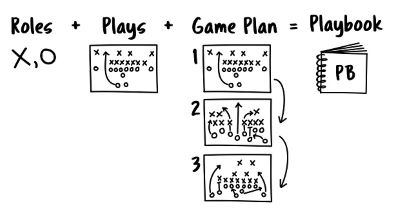
At their core, playbooks do three key things:

  1. Simplify Decision-Making: Instead of choosing from dozens of classes, feats, skills, and powers, players select a playbook and make a few meaningful choices within it. This lowers the cognitive load and keeps the game moving, while still making character creation meaningful.
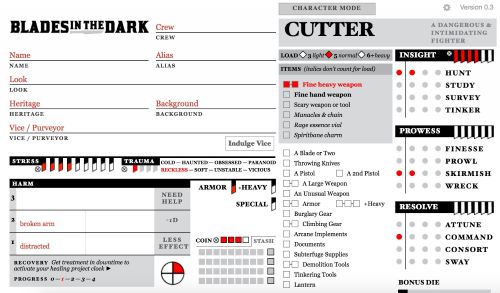
  2. Set Expectations: A Cutter in Blades in the Dark is likely to be physical, intimidating, and direct. The playbook leads the player in that direction through the choices that it offers. clarity like this really helps players quickly understand their role in the team and how they might contribute.
  3. Encourage Roleplay: Many playbooks include bonds, questions, or prompts that nudge players into thinking about how their character sees the world—and how they’ll interact with the rest of the group.

These features combine to create a quicker, smoother onboarding process—perfect for groups who want to dive into the action or get through a session during a lunch break.

An example of one of the Blades in the Dark Character Playbooks

How Character Playbooks Can Elevate Play2Lead

In my own game Play2Lead, the focus is on leadership, communication, and teamwork in a roleplaying context. It’s a game designed to help people learn by doing—to explore different leadership styles, solve complex problems together, and reflect on how they interact in a group. Currently character creation sits with a broad occupation, leadership style and one stat (exhaustion). Using playbooks might be a quick way for participants to engage with the game and understand what’s expected of them during play.

Here’s how playbooks can serve that mission:

  • Align with Leadership Styles: Playbooks in Play2Lead could represent leadership archetypes: The Visionary, The Facilitator, The Challenger, The Harmoniser, etc. Each one comes with strengths, blind spots, and a unique way of contributing to the team.
  • Jumpstart the Game: With predefined goals, triggers, and interpersonal dynamics, players can hit the ground running. This is especially helpful in one-shot sessions or corporate workshops where time is limited. You could also include a differing objective for each player, letting them work through conflict and compromise.
  • Create Teachable Moments: By embedding questions like “What do you do when your suggestion is ignored?” or “How do you handle team conflict?”, playbooks can gently guide players into valuable moments of reflection and growth.

Overall including a playbook system in Play2Lead is a great way to create more depth into the scenarios. Now instead of just trying to escape the Lost Temple, we can include interparty conflict and different objectives that better reflect teams in the real world.

Using Playbooks with Traditional D&D-Style Games

Playbooks aren’t exclusive to narrative indie RPGs—they can be layered onto more rules-heavy systems like Dungeons & Dragons to help get new or time-strapped players into the story faster. Imagine starting a D&D one-shot where the group is a squad of mercenaries. Each player picks a playbook with questions like:

  • The Veteran (Fighter/Leader) – “Who saved your life once, and what do you owe them?”
  • The Scout (Rogue/Observer) – “What truth have you discovered that no one else believes?”
  • The Mystic (Cleric/Wild Card) – “What vision haunts your dreams, and how does it shape your choices?”

These pre-framed characters help players understand not only what their characters can do, but also who they are, and why they’re involved in the mission. You don’t need to rewrite the D&D rulebook—just wrap character choices in storytelling scaffolding that speeds things up and adds emotional depth.

For inspiration, Simon Carryer has developed some great playbooks for older versions of D&D, check them out here.

Making Your Own Playbooks

Creating your own playbooks is easier than it sounds. Think of it like designing a template that sparks imagination while setting clear boundaries. Here’s a quick method:

  1. Define the Role: What job does this character do in the team? What are they responsible for?
  2. List Core Abilities: Pick 2-3 key strengths. Keep the wording accessible: “You keep the group calm in crisis” is better than “+2 to Persuasion.”
  3. Add Unique Moves or Perks: Give each playbook one or two special abilities or tools that make them distinct.
  4. Prompt Player Reflection: Include a few questions about values, goals, or backstory. These help the player bring the character to life in their own way.
  5. Include Interpersonal Hooks: Write 2-3 “bonds” or connections to other team members. These generate immediate relationships and drama.

Final Thoughts on Character Playbooks

Playbooks are more than shortcuts—they’re powerful frameworks for story and chartacter depth. Whether you’re sneaking through a haunted city in Blades in the Dark, solving a leadership challenge in Play2Lead, or running a team-building D&D session, playbooks help players connect quickly, act decisively, and reflect meaningfully.

So next time you’re planning a game—whether for fun, training, or both—consider developing some playbooks. You’ll be amazed at how fast your players step into the story and start leading.