My First Game of Bolt Action — And Why I’m Hooked

As I’ve mentioned in previous articles, I love the grimdark of Warhammer 40,000 and the tight, tactical skirmishes of Kill Team. I love both systems—they’ve given me epic moments, great friends, and plenty of tabletop fun. But I’ve found myself looking for a game that recaptures the excitement of wargaming that I experienced back when I was first starting out (a long time ago). The recent incarnations of 40K are super complicated and I’ve been on the lookout for something a little simpler with engaging gameplay. And recently, I’ve been noticing something called Bolt Action.

World War II miniatures. Thematic, gritty tables. Terrain that looks like an actual battlefield. Order dice being drawn creating a chaotic swirl of combat that keeps you engaged throughout. This sounded like just my thing. I’d always been curious… so last November I reached out on the Facebook group of a local club and Jackson offered to run a demo game.

I’m very, very glad I said yes.

The Demo Game: Soviets vs Germans

It was a simple setup: Soviets vs. Germans, a classic match-up. Jackson had everything ready—beautiful terrain, two well painted armies, and the kind of calm, patient enthusiasm you only get from someone who genuinely loves the game.

I took the Germans.

Within minutes, I realised two things:

  1. This system is incredibly easy to pick up.
    The core mechanics are intuitive. No encyclopedic stratagems. No flipping between multiple supplements. Just straightforward rules that give you tactical freedom without drowning you in complexity. It basically boils down to rolling a 4 + on a D6 with various modifiers. Obviously there’s more to it than that, but it’s a very simple game at its core.
  2. There is no down time.
    The way units activate based on the order dice draw creates this constant feeling of uncertainty.. You never know who’s going next, so you’re always involved, always paying attention, always planning. This swinging back and forth keeps the engagement level high at all times.

These put Bolt Action in a completely different space to 40K. It’s not better or worse—it’s just different. More narrative. More engaging. Much less downtime.

The Table Matters

One thing that really sold me was the terrain. This wasn’t a competitive layout with perfect symmetry and L-shaped ruins. This was:

  • hedgerows
  • burnt-out farmhouses
  • muddy fields
  • woodlands
  • cover that looked like cover

The whole experience felt like we were playing a real battle on the Eastern Front. That immersion was much deeper than I expected.

The Mechanics Just Make Sense

The alternating activation system keeps both players engaged constantly—no long, 40K-style “go make a coffee” phases.

You draw a die. If it’s yours, you activate a unit. Next die drawn determines the next force to activate. Is it yours or your opponents….

It’s simple, but the tension it creates is addictive. You’re always one dice pull away from something heroic, chaotic, or disastrous. Despite the game’s easy fundamentals, it forces you to make deep decisions. Which unit do you activate first and which stay in reserve for later in the turn. Where do you focus your efforts and how do you react to your opponents activations.

From Demo to… Buying a Whole New Army

I don’t think I am alone in suffering this and I’ve heard many wargamers lamenting the same thing. You try something new, enjoy it, before convincing yourself you’ll just dip our toe in the water.

And then suddenly you’re on Ebay and thinking:

“Well, Commandos do look cool…”

So yes… I’ve taken the plunge. I now own a British Commando starter army, which I spent quiet periods of the Christmas break painting and basing.

The playstyle appeals to me: mobile, elite, characterful, full of flavour. I also have a strong family connection to the Royal Marines. So, I’ve been researching WW2 commando engagements and uncovering some fascinating stuff including the many raids across the English channel and the battle of Walcheren. I’m also doing some reading about 30 Assault Unit, the commando group set up by Ian Fleming of James Bond fame. I hadn’t realised it would be so satisfying setting up a force that has such real-world history behind it.

My first Bolt Action Army: Commandos, painted and ready for action.

The 20-Player Game

There’s a big multiplayer Bolt Action event planned for March—around twenty players from different clubs and communities. If all goes well, I’ll be joining that battle line with my freshly-painted and battle-tested Commandos.

The idea of a huge, sprawling WWII tabletop game filled with gorgeous terrain, cinematic moments, and dozens of players all leaning in together? That sounds like exactly the kind of hobby experience I want more of.

Not only that, but I’m taking my commandos to a 6 player narrative game this weekend as part of the open day of a nearby club. I’m really looking forward to this and I’m sure the experience will form another article in the near future.

Final Thoughts

My first game of Bolt Action was everything I’d hoped for:

  • easy to learn
  • narratively rich
  • tactically engaging
  • visually immersive
  • very welcoming community

It hasn’t replaced 40K or Kill Team for me—instead adding something new and refreshing. And honestly? I can’t wait to get stuck in.

Gain Powerful Coaching Skills Through Dungeons & Dragons

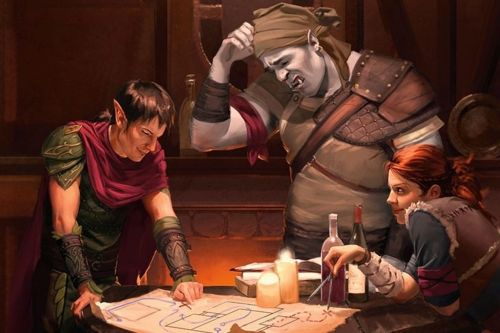
A coach leading a team of orc football players

Coaches can be an important part of every leaders journey. They help the leader reflect and learn from their experiences. My personal leadership journey has greatly benefitted from both informal mentors and formal coaches. In fact, I still catch up with a coach regularly to reflect on my own leadership. These conversations have really helped me step out of the day to day and see my leadership from a broader perspective. As a leader it is beneficial to gain coaching skills to help your own staff reflect on their own journeys. Interestingly, I believe that coaching skills can be learned within Dungeons and Dragons, hidden within the game’s innate storytelling and teamwork. Whether you’re sitting behind the Dungeon Master’s screen or playing as a character, D&D creates countless opportunities to guide, support, and unlock the potential of others—exactly what effective coaching is all about.

Coaching in the Dungeon

As I’ve discussed before, in D&D, success rarely comes from one hero acting alone. The party needs to share ideas, coordinate strategies, and support each other through challenges. This collaboration creates a natural environment for coaching moments. Here are a few examples:

  • Encouraging quieter voices: A player who hesitates to speak up can be brought into the conversation by gentle prompts—“What does your rogue think about this plan?”—mirroring how a leader ensures all team members contribute.
  • Asking guiding questions: Instead of dictating solutions, you can ask your fellow players questions that help them find their own answers. “What would your character want to do here?” is not far from “What do you think the best next step for this project is?”
  • Building confidence: Just like a Dungeon Master might celebrate creative problem-solving, leaders can acknowledge small wins that encourage team members to take on bigger challenges.

Coaching Lessons at the Table

I must caveat the following with he fact that I am not a coach, but i have benefitted greatly through being coached. I am also purposeful in trying to use coaching techniques with both my own team members and D&D table. Through roleplay and problem-solving, you learn practical coaching behaviors. Here are a few to consider at your next session:

  1. Active Listening: D&D demands attention. A missed detail could mean falling into a trap, and in leadership, missing someone’s concern can erode trust. Listening closely to others’ words—especially what’s between the lines—builds empathy and understanding.
  2. Empowerment Over Direction: In-game, it’s tempting to tell others what the “best move” is. But the best D&D sessions happen when everyone feels ownership of their choices. Leaders, too, unlock the best results by empowering rather than directing.
  3. Creating Safe Spaces for Experimentation: A D&D table is a place where failure isn’t the end, just the next step in the story. Leaders who coach with the same mindset—viewing setbacks as learning opportunities—help their teams grow stronger.

Bringing Coaching from the Table to the Workplace

When you carry these habits into your leadership, you stop being the person with all the answers and start becoming someone who brings out the best in others. This includes:

  • Encouraging team members to develop their own solutions.
  • Supporting people to step into roles they might not initially feel ready for.
  • Helping build a culture where experimentation is valued, not feared.

That’s the essence of coaching. And what’s remarkable is that, for D&D players, this skillset grows naturally through play.

Final Thoughts

Every great adventuring party needs someone who can support, guide, and lift others up. In the same way, every great workplace needs leaders who coach. If you want to practice those skills in a low-stakes, creative, and fun environment, there’s no better training ground than a session of Dungeons & Dragons.

In a couple of weeks I’ll post an article that will explore some practical tips to help get thinking and acting more like a coach.

New Podcast Apperances

a podcast music playing on a smartphone

I’ve been lucky enough to be invited to a couple of new podcast appearances over the last few months and I wanted to share them with you. If you’d like to listen to me waxing lyrical about the concepts I explore in this blog you can find more appearances here.

Game Masters Book Club

Myself and two of my best gaming buddies (Marty and Rich) join the host Eric to discuss throne of the Crescent Moon by Saladin Ahmed. We explore ways to use the book as inspiration for your own roleplaying adventures. Recording this was a blast, and the discussion brought out some really interesting ideas and concepts that can be ported to almost any game.

The podcast website is here.

You can catch the episode on Apple and on Spotify.

Collaboratory Podcast

Nic and I talk all things D&D in relation to teamwork. How does teamwork actually happen in game and how can we use this experience to help our collaboration in the real world. We had a wonderful discussion and I go a little deeper into some of the topics explored in this blog.

You can find the episode here.