
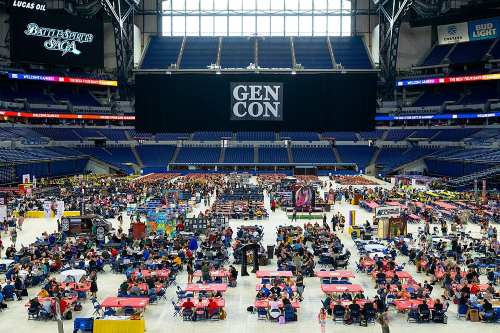
One of the biggest challenges when using roleplaying games in workplace settings is time. At home, a roleplaying session can happily sprawl across an entire afternoon or evening. Players chat about their week, argue with goblins for forty minutes, and somehow spend half the session buying rope. Conference environments are very different creatures entirely and run to an extremely tight schedule. Sessions need to start quickly, engage immediately, and conclude cleanly before attendees disappear into the next keynote presentation.
I have been asked to run a series of games for a communication conference in 2027 (I’ll post more details closer tot he time). There will be four sessions over two days, each 75 minutes long. The idea is to showcase how roleplaying games can help foster communication and develop leadership skills. Now I love playing short one shots, but they normally take a minimum of 3 hours. So, I have an interesting challenge: write two engaging scenarios that show case the player interaction and can be wrapped up with a debrief in one hour. Easy, right… right…
Rules
While I love D&D, Call of Cthulhu and others, they do contain pretty heavy rulesets. I will also be working under the assumption that none of the conference attendees will have any experience playing roleplaying games. Consequently, using an established ruleset is going to have too high of a learning curve.
In order for the players to get into the game quickly I’m going to use my own ruleset Play2Lead. Easy to learn in a couple of minutes participants should be able to get into the action straight away. In a similar vein there will be no character creation, rather pre generated characters will be provided for each scenario, with clear roles.
The Three Encounter Structure
I’ve written before about designing workplace scenarios before and i intend to follow the same design principles. As such each of these scenarios will a simple three encounter structure that I use for one-shots:
- Cold Open: Throw players straight into action—explosions, monsters, a chase. Skip the slow build.
- Middle Twist: Add a big revelation that flips the situation on its head.
- Final Showdown: End with a bang. The danger should feel real, and not everyone has to make it out alive. If possible add a difficult dilemma for the players to work through.
That’s all we have time for.
This structure creates momentum. Players immediately understand there is a clear objective and limited time to achieve it. As first-time players it’s important that they feel comfortable so they can quickly grasp the rhythm of the game.
Perhaps most importantly, it leaves room for some roleplay without letting the session drift into the wastes of overlong decision-making.
Why Familiar Genres Matter
One thing I’ve learned over years of introducing new players to RPGs is that unfamiliar rules are far less intimidating when wrapped inside familiar stories. People already understand the language of popular movies. They know how zombie survivors behave. The tension of an alien horror film is obvious. They instinctively grasp the heroic structure of fantasy quests. Of course, this means you can skip enormous amounts of explanation.
Nobody needs a twenty-minute briefing to understand: “Something is hunting us on this spaceship.” Or: “The dead are rising and we need to escape.”
The tropes do the heavy lifting for you. Players arrive with expectations already loaded into their brains like pre-installed software, allowing them to engage almost immediately.
As such my intention is to design my scenarios around popular movies. My initial thinking is Alien, Zombies and potentially a Lord of the Rings inspired one, this is roleplaying after all.

First Thoughts on an Alien Inspiration
Science fiction horror works beautifully in short-form workplace games because the pressure is immediate and constant. Everyone can visualise the close industrial tunnels of these types of film. The players can get straight into the game without much in the way of explanation.
Characters
The pre-generated characters for this session will include standard tropes: captain, engineer, science officer, medic, pilot each with a specific skill and piece of equipment.
Encounter One: The Distress Signal
Straight into the action, the crew of a salvage vessel begin by investigating a damaged research station after receiving a fragmented distress call. The station is mostly abandoned, lights flickering, alarms sounding intermittently, and signs of violence scattered throughout the corridors. The players must find the generator and restore power to the engines. What has caused such chaos?
Suddenly the hull will breach and the players need to work together to secure it, quickly. A nice bit of urgency right from the get go.
Encounter Two: Something is Loose
Now for the middle twist, although probably not unexpected given the theme. As the team explores deeper into the facility, they discover evidence of a hostile lifeform. Slime, scratch marks etc. Communications fail. The creature begins stalking them through vents, maintenance tunnels, and darkened laboratories.
Players must talk in whispers, or communicate through note or face attack from the creature. The scenario becomes about teamwork, communication, and managing panic under pressure.
Encounter Three: Escape
The players discover the only way out is aboard a damaged shuttle with limited seats and a failing reactor countdown. They must choose between rescuing survivors, destroying the station, or simply escaping alive. A very juicy dilemma!
This final encounter creates fantastic workplace discussions around leadership, decision-making, and competing priorities.
Keep It Simple, Keep It to a Tight Schedule
The key to designing this sort of adventure is that simplicity creates engagement.
Conference attendees do not need twenty pages of backstory and complicated rules.
They need:
- A clear objective
- Recognisable tropes
- Immediate problems
- Interesting decisions
- A chance to contribute
That’s what creates memorable sessions.
Over the next few months I’ll be refining the design for 2-3 scenarios and sharing my thinking here.
But what i really want is to give those conference attendees signing up for my games to leave with a fun memory having experienced something different. And i hope the realisation that RPGs can be used as a fun way to practice both communication and leadership.
Particularly the bit where Dave from HR sacrificed himself to the space monster while screaming into a malfunctioning flamethrower.