What Worked in My Imperium Maledictum Campaign

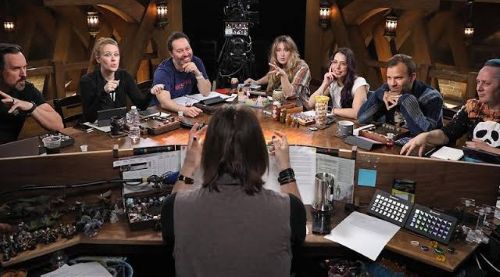
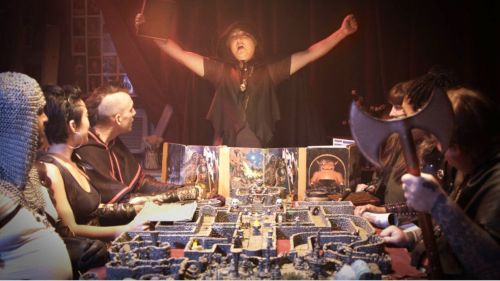
Long term readers of this blog know that I have a love of Warhammer 40K. While I don’t play the wargame very much any more i still have a massive weakness for the lore. What’s not to love about over the top super soldiers in a dystopian empire threatened from all sides. One of the things about the lore that I really love is the Inquisition desperately trying to root out heresy in the back alleys and tunnels of the Imperium. This isn’t the huge battles of the wargame, rather grimy espionage like shenanigans in the palaces and slums of the millions of worlds that fall within the Emperors light. So you can imagine my joy to get my hands on Imperium Maledictum by Cubicle Seven, a rpg that lets you play adventures just like that. I recently wrapped up my Imperium Maledictum Campaign, and I wanted to share a summary of how I designed it and how it played.

Campaign principles

When setting up the Imperium Maledictum Campaign I had a number of principles that informed the design.

Schedule

While I knew I would have players who would jump at the chance to play characters in the 40K universe, I already had a pretty full calendar of gaming goodness. It can be tempting to cram in one more campaign. However, keeping game-life balance is incredibly important, especially if you have a family. My players and I all had a myriad of commitments. Consequently I had to schedule the game in a way that would fit in with everyone.

Principle 1: 3 monthly gaming schedule

This fitted around us all and let us get our 40K roleplaying fix without being too much of a time commitment.
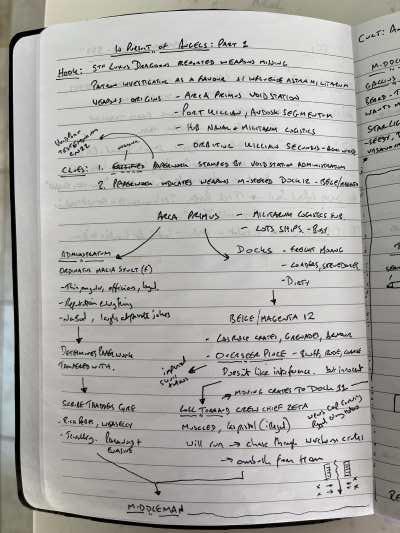
Notes for In Pursuit of Angels (page 1)

Adventure type

Given that we were playing a session once a quarter I was conscious that having a convoluted plot with lots of moving parts would be difficult to keep track of for both the players and myself. So I wanted to have each session as a self contained adventure with limited connection to the previous adventure.

Principle 2: Self contained adventures

For inspiration I was thinking of season one of the 90s TV series X:Files. Each episode was pretty much a self contained plot with the occasional linking thread. Using this structure to the campaign would let us explore different elements of the 40K universe, reduce the need to remember lots of details and allowing people to drop in and out if needed.

Iconic 40K

The last principle was around the theme of the game itself. I really wanted to tap into some of the iconic features of the 40K setting. Think Inquisitors, Chaos, dangerous xenos, grime, suffering and general misery. It had to feel like the setting.

Principle 3: Feel like 40K

Of course, Imperium Maledictum does make achieving this relatively easy. But I did make sure to read Xenos by Dan Abnett and Day of Ascension by Adrian Tchaikovsky for some thorough 40K inspiration.

Campaign Premise

With the campaign principles in place i needed to create the initial premise. What are the characters doing together. The imperium Maledictum system provides a lot of scope here, but generally revolves around a patron. This could be a Rogue Trader, Imperial Guard commander or even a tax collector of the Administratum. And all of these would make for brilliant campaigns. However, I wanted to keep it iconic (see principle 3). So the team would be working for an Inquisitor.

Rolling up their patron was simple and I ended up with Inquisitor Whispercloak, a no nonsense player rooting out heresy. She was defined by a bald head and face covered with tattoos of imperial scripture. Very paranoid, she communicated with strange, opaque codes and designated the party: Emperors Light 357.

Choosing Whispercloak as a patron allowed almost any type of character to join the party and also opened up a huge amount of scope for the types of adventures I could throw at the players.
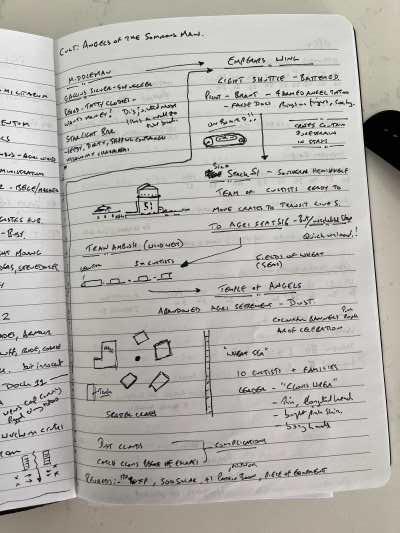
In Pursuit of Angels (page 2)

Inquisitorial Retinue

We had a nice range of characters makign up the party:

  • One Eye: a penal legion guardsmen indentured to WhisperClaok and wearing an explosive collar.
  • Vetruvius: Hive scum ganger from Tranche, who had distinguished himself during a chaos incursion on that world.
  • Classicus Tar: a bindfolded, blue skinned psyker from a distinguished navigator family.
  • Ismus Infernal Soul: a tech priest who investigates corrupt machines
  • Titus Joly: feral zealot looking for heretics to burn

As you can see the players really got into the spirit of the campaign, despite not all of them knowing the 40K universe.

Adventures

Talking about adventures, I ended up running five. Just over a years worth of play.

Session 1: In Pursuit of Angels (part one)

The team are sent to Port Killian orbital in the Andosk Segmentum to investigate missing weapons that were scheduled for delivery to the 5th Luxus Dragoons. The investigation uncovered a mysterious sect: Angels of the Somnous Maw with a base on the nearby Agri World.

The players had a ball uncovering the plot. Bypassed a wild west style train encounter but ended up in a shuttle craft over enormous fields of wheat with a genestealer loose within. Very cinematic and a good start.

Session 2: In Pursuit of Angels (part two)

Following the success of the previous mission, Whispercloak begins to trust the group and sends them on a follow up mission. They have been booked passage on the Voidship Severian Umbra, suspected of holding Somnous Maw cargo. They must uncover teh cargo and destroy it before they reach their destination, the forge world Nexus Panith.

I wanted this session to be across between a closed location murder mystery and horror. The team had to investigate the crew and passengers, some of whom were not what they seemed and uncover the slumbering genestealers in the cargo hold.

The scenario played out well, with the players gradually uncovering the mystery before entering into a full blown gun fight in the claustrophobic cargo holds of the ship.
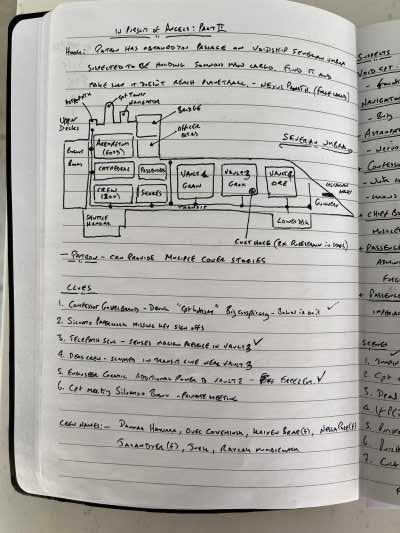
The Voidship Severian Umbra

Session 3: Something Rotten in Helsrach

I wanted a change of pace with this adventure. A sanctioned diviner, Nebulous Gaze, has foreseen something terrible occurring in Ephraim’s Rest, a small settlement in the depths of the Helsrach Hive city. This adventure was channeling Necromunda style vibes, a bit like the Space Weirdos games I’ve run for my friends in the past.

The inquisitorial agents had to contend with a gang war, a greedy water seller and an agent of Tzeentch intent on raising a greater demon. They managed to stop the ritual in the nick of time. Though hordes of pink and blue horror demons fought a running battle throughout and the agents barely escaped with their lives.
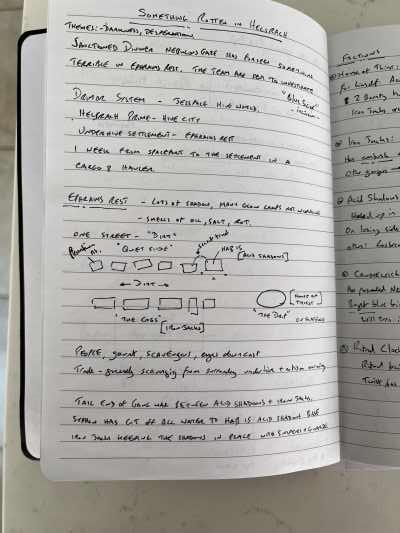
Ephraim’s Rest

Session 4: Blood of the Loom

So far int his Imperium Maledictum Campaign we’d explored an agri-world, orbital, voidship and hive. Now I wanted to take the action to the manufactories of the Imperium. The daughter of the Weaverbaron Vael has gone missing and Whispercloak has sent her agents to help retrieve her. A single clue pointed tot he Gloam Looms of Saint Helix, a massive cloth weaving factory.

I wanted the weaving to be a central theme in this one and the players had to explore giant looms, come across strange folk-horror inspired threadling dolls and uncover the Living Stitch, worshippers of the loom. This adventure was a bit more horror focussed. Creeping around a giant factory, being watched by dolls and fighting a loom come to life at the end.
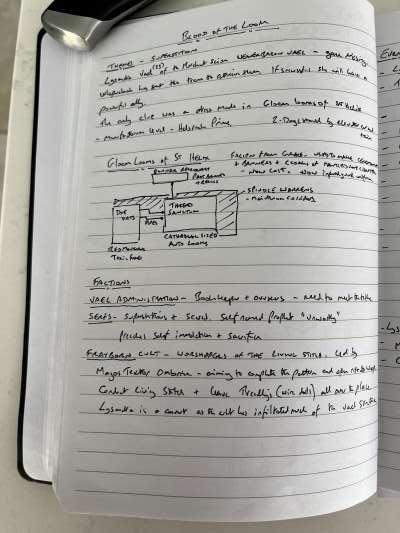
The Gloam Looms of St Helix

Session 5: It’s a Jungle Sometimes…

Our campaign finale needed to be very 40K. What is more 40K than a Death World, Chaos and a Warp Gate? The events of the Gloam Looms necessitated a purge of the Weaverbarons family. However, Galliar Vael, the heir, has run. The agents have tracked him down to the death world Bouthern’s Reach and must bring him back for interrogation.

Deadly jungle creatures, an ancient Slaan temple, a warp gate and daemons all featured in this climatic campaign ending. Psyker talents were blasting left and right before teh party blew up thegate and escaped. A really fun way to finish.
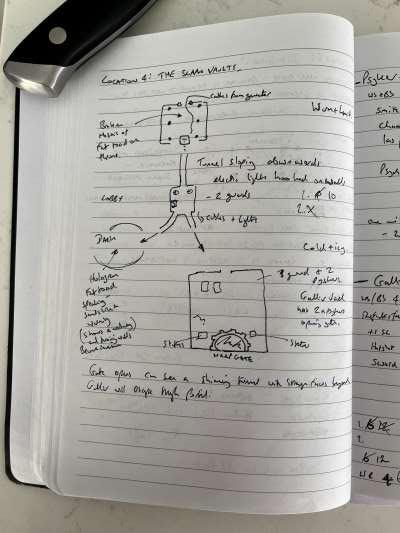
The ancient Slaan Vaults

How did it play out

Overall the campaign went well. Having the sessions as standalone episodes worked treat. There was no need for the players to try and rememebr all the details of previous sessions. A rough outline was enough for them to get stuck into the next adventure.

Mixing up the locations and villains went down well with my player group and made sure that every session was unique. So I would recommend this style of campaign especially if your sessions are so far apart.

What would I do differently

While the above set up and adventure design worked for this campaign I think a big part of an Imperium Maledictum Campaign is the factions. Rather than hopping from place to place the group should be trying to influence and curry favour with factions holding sway over a particular location. Essentially, it becomes more political in nature.

Next time I run the game I would set it in one location. Perhaps a hive city, huge factory ship or forge world, there is a lot of options out there. A web of factions crossing the location would add the political element before finally lacing in a juicy conspiracy or two.

Luckily for me, my mate Marty has taken up the GM mantle and is running a new campaign very much in this style. Set on a prison planet our team is trying to work out what the hell is going on while navigating some dodgy and dangerous factions embedded there. Good times, can’t wait to see how it plays out.

Final thoughts

I’d like to think that my Imperium Maledictum campaign was a success. I stuck to my design principles of quarterly games, standalone sessions and iconic 40K and it seemed to work. The players kept coming back, so that’s a good sign.

I think it really shows that you can run a quarterly campaign successfully. So if you don’t have time for a weekly or monthly session this might be a good alternative. Particularly if you have a busy life. So what are you waiting for, grab your bolt rifle, say a prayer to the Emperor and go purge some heretics!
My New Book Has Arrived!

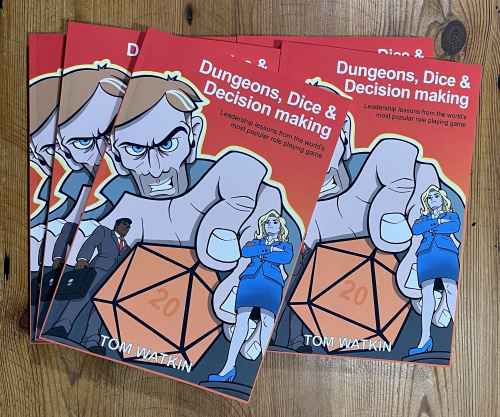
Front cover of Dungeons, Dice & Decision Making

There are some moments as an author that feel a little surreal. This week, I received the final copies of my new book, Dungeons, Dice and Decision Making, from the publisher. After all the writing, editing and work that goes into getting a book over the line, there is something rather satisfying about finally holding the finished product in your hands.

And I have to say, I’m really pleased with how it has turned out.

The book will officially launch in the first week of December, on Amazon and this site, just in time for Christmas (the perfect present for your gaming friend, relative or significant other).

Much like this blog, Dungeons, Dice and Decision Making explores the fascinating connection between playing Dungeons & Dragons and developing the skills we use in leadership and the workplace. D&D might look like a game of fantasy adventures, monsters and questionable decisions involving dice, but around the table players are constantly communicating, collaborating, making decisions and dealing with the consequences of their choices.

Of course, those are all leadership skills too.

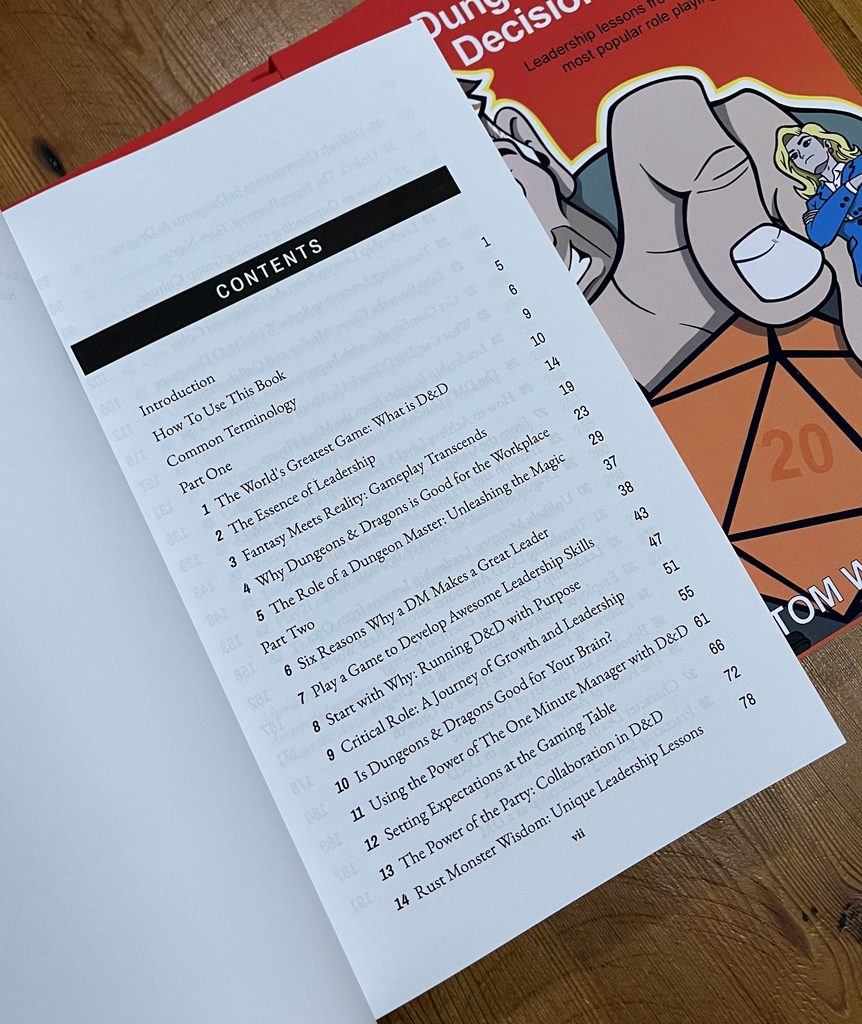
The first contents page

The book explores some of those connections and, hopefully, gives readers a different way of thinking about both D&D and leadership.

I’ll be sharing more about the book, its ideas and the launch over the coming weeks. For now, though, I’m just enjoying having the finished book sitting on my desk. After all, there’s something quite special about seeing an idea that started as a thought bubble in your head eventually become a reality.

Collaboration in D&D – The Party Is Always Stronger Together

There is a moment in every Dungeons & Dragons game when the party encounters a problem that no single character can solve. Each character has specific strengths: the fighter might be able to stand toe-to-toe with the monster, the rogue can sneak past the guards and of course the cleric can keep everyone alive when things inevitably go wrong.

But none of them can do everything.

The party succeeds because the players combine their different abilities, perspectives and ideas to solve the problem in front of them. That is collaboration. And, interestingly, it is one of the biggest lessons D&D has to offer the workplace.

You don’t need another hero

One of the easiest traps for a D&D party, particularly when players are new and enthusiastic, is assuming that one character should solve every problem. It can be entertaining, but rarely effective. Threatening a red dragon on your own can be down right deadly, regardless how high your strength score is.

The same thing happens in workplaces.

We can become overly reliant on the person who is particularly good at something. The technical expert becomes the person everyone asks to solve technical problems. Our successful salesperson becomes responsible for every client conversation. The manager becomes the person expected to make every decision. Eventually, you create a team where everyone is waiting for the “hero” to solve the problem.

That isn’t collaboration. It’s dependency.

Good teams understand that different people bring different strengths. The trick isn’t getting everyone to become good at everything. It is learning how to combine those strengths effectively. In D&D, the rogue doesn’t need to become a wizard. They just need to know when the wizard’s abilities might help.

Know what everyone brings to the table

While a good D&D player understands their own character, a great player also perceives the strengths of the rest of the party. If you know the cleric has a powerful healing spell, don’t waste your turn trying to replicate it. The party’s rogue is particularly good at opening locks, don’t get the barbarian to start headbutting the door. You learn what your teammates can do and look for opportunities to use those strengths.

Workplaces are no different.

Collaboration starts with understanding the people around you. What are they good at? Where does their experience lie? Do they need support? What do they enjoy doing? And perhaps most importantly: When should you involve them?

Don’t just wait for your turn

There is another subtle lesson from D&D. While one player is taking their turn, everyone else is still involved. Good players are watching what is happening. They are thinking about what they might do next. They are listening to the Dungeon Master. They are considering how their abilities could interact with what the other characters are doing.

The game works because people aren’t simply waiting for someone else to finish speaking so they can have their turn.

Work meetings can sometimes feel very different.

  • Someone presents an idea.
  • Everyone waits.
  • Someone asks a question.
  • Everyone waits.
  • The manager makes a decision.
  • Everyone goes back to their desks.

Collaboration requires something different. Listen actively. Think about what has been said. Build on it. Ask questions. Connect ideas. You don’t have to be the person who comes up with the brilliant idea. Sometimes your contribution is making someone else’s idea better. That’s collaboration too.

The best plans are usually shared plans

Every experienced D&D player knows that the party’s beautifully constructed plan will probably survive for approximately six seconds after the adventure begins. Things don’t go expected, the dice fall as they do. The party has to adapt.

This is another important lesson for workplace teams. Collaboration isn’t about getting everyone to agree on one perfect plan and then following it religiously.

It is about creating enough shared understanding that the team can adapt when reality inevitably disagrees with the plan. That means communicating clearly so that everyone understands the objective and that important information is shared rather than kept in your own head. Crucially it also means being willing to alter your approach when someone else has information that changes the situation.

A collaborative team doesn’t need everyone to think the same way, rather it needs everyone to understand where they are trying to go.

Different perspectives make better decisions

D&D parties are often deliberately diverse. The characters have different abilities, personalities, backgrounds and approaches to problems. That diversity creates possibilities. Our sneaky rogue might notice something everyone else completely missed, or the wizard might create a magical solution nobody else considered. The barbarian might simply say, “What if we just break the wall?” And sometimes she is absolutely right.

Workplaces benefit from exactly the same thing.

If everyone approaches a problem in exactly the same way, you may get agreement quickly, but you can also miss things. Collaboration creates an opportunity to challenge assumptions. simply asking Why are we doing it that way? can open up whole new solutions.

Questions like this aren’t obstacles to collaboration. They are part of it. Good collaboration isn’t about avoiding disagreement. It is about creating an environment where disagreement can improve the outcome.

Share the spotlight

There is an important distinction between participating in a game and contributing to a game. A player can dominate the table. They can make every decision, interrupt other players, solve every puzzle and become the centre of every scene. While they might have a very powerful character this sort of behaviour makes the game much worse for everyone else.

The same applies at work.

Collaboration requires us to create space for other people. If you always speak first, try speaking second. Ask someone else how they would approach the problem. If you have the most experience in the room, use that experience to help others contribute rather than using it to close down the discussion.

Sometimes collaboration means stepping forward. Sometimes it means stepping back. The skill is knowing which one the situation needs.

What can you do to become more collaborative?

Collaboration can sound like something a team or party needs to fix. But teams don’t collaborate. People do.

Here are a few practical things each of us can do, whether at the gaming table or in the office.

1. Ask before assuming

Before deciding you know how something should be done, ask someone else for their perspective. You might discover something you hadn’t considered.

2. Learn your teammates’ strengths

Know who has experience in what, who enjoys solving particular problems and who has useful knowledge that might not be obvious from their job title. Your team’s collective capability is much bigger than your own skill set.

3. Share information proactively

Don’t make people hunt for information that you already have. If something changes or you learn something useful, tell the people who are affected.

4. Listen to understand

Don’t spend the other person’s sentence preparing your response. Actually listen. Sometimes the most useful contribution you can make is understanding what someone else is trying to say.

5. Build on other people’s ideas

Instead of immediately evaluating an idea, try adding to it.

“Yes, and…”

You don’t always need to bring a completely new idea to the table, instead what if you made an existing idea better.

6. Give credit

If someone helped solve a problem or had an original idea, acknowledge it. Collaboration becomes much easier when people know their contribution will be recognised rather than absorbed into someone else’s success story.

7. Make space for quieter voices

The loudest person in the room isn’t necessarily bringing the best idea. Ask for input from people who haven’t spoken. Sometimes the person quietly examining the map has noticed the trap everyone else is about to walk into.

The party wins together

One of the great things about D&D is that success rarely belongs to one person. At the end of an adventuring session there isn’t one winner. No, the party succeeded together. Everyone contributed.

The same is true of good workplaces. Projects succeed because people contribute different skills. Clients are won because different people bring different expertise. Problems are solved because someone asks a question, someone else provides information, and someone else turns that information into action. The final result might have one person’s name attached to it, but the achievement belongs to the team.

That is perhaps one of the most useful lessons D&D can teach us about work:

You don’t build a great team by finding a group of individual heroes. You build one by teaching people how to be a party.

And when the inevitable workplace equivalent of a dragon walks through the door, you’ll be much better off facing it together.

The DM Needs to Have Fun Too

There is a lot of D&D advice out there about making sure your players are having fun. And rightly so. As a Dungeon Master, you are responsible for creating the world, presenting the challenges, playing the monsters and NPCs, adjudicating the rules and keeping the adventure moving. You spend hours preparing encounters, designing maps, reading adventures and thinking about what your players might do next. So naturally, you want your players to enjoy themselves. But there is a question that doesn’t get asked quite as often:

Are you having fun?

Because the DM is playing D&D too. You just happen to have considerably more hit points, several hundred NPCs and an alarming number of voices to keep track of.

The DM isn’t the entertainment committee

There is sometimes an assumption that the DM’s job is to provide entertainment for everyone else. But that isn’t really how D&D works. Rather, D&D is collaborative storytelling, with a strong emphasis on collaborative. Everyone at the table contributes to creating the game, and the DM is one of those people.

Of course the DM should absolutely care about what the players enjoy. Their characters, choices and experiences are a huge part of what makes the game work. But the DM’s enjoyment matters too.

In fact, I would argue that it matters enormously. Because if the person running the game isn’t enjoying themselves, it becomes increasingly difficult to create a fun game for everyone else.

You are allowed to enjoy your own adventure

I get a huge amount of joy from being the DM, it might actually be the part of D&D that I enjoy the most. There’s nothing quite like creating situations and then watching the players completely misunderstand them, or introducing an NPC you’ve been waiting three sessions to reveal. It’s so satisfying to see your players pull together to overcome the terrifying monsters and obstacles that you’ve thrown in their path.

You get to play the villain and create the ridiculous shopkeeper with a completely unnecessary accent. And often, you get to sit there silently thinking:

“They have absolutely no idea what’s coming.”

That is fun, and we shouldn’t be afraid to admit it.

The DM is not a neutral game engine

There is also a temptation to think that a good DM should be completely neutral. The players decide what they do while the world reacts. Rolling the dice decides the outcome. The DM simply facilitates the process.

There is some truth in this. Players need genuine agency. Their decisions should matter, and the DM shouldn’t simply force the story toward a predetermined outcome. But being a DM isn’t the same as operating a complicated random-number generator.

You are allowed to have ideas, to be excited about an encounter and enjoy the villain you have created. Putting in an encounter because you think it will be cool is part of the job. The trick is making sure that your enjoyment doesn’t come at the expense of everyone else’s.

DM fun and player fun aren’t opposites

This is perhaps the most important point. The DM having fun doesn’t mean the players have less fun. Usually the opposite is true. A DM who is excited about the game is infectious. You can hear it in their voice and feel the energy when they introduce an NPC or reveal a monster. That enthusiasm spreads around the table.

I’ve played games where the DM is clearly having an absolute blast. They aren’t necessarily running a perfect adventure and the encounters might not be perfectly balanced. Even when the plot wandered off into a swamp somewhere everyone was having a blast and that’s what people remember.

Give yourself something to look forward to

One of the easiest ways to increase your DM fun is to deliberately include things that you enjoy. Love tactical combat? Create an interesting battlefield. Enjoy roleplaying? Introduce an NPC you can’t wait to play. Like creating puzzles? Put one in the adventure.

You don’t have to build the entire adventure around your personal interests. But there should be something in there that makes you think: “I really want to see how this goes.” That little spark can make preparation feel much less like homework.

Follow your curiosity

A simple way approach DMing is simply to ask: “What would be fun?” Not just for the players, but for you as well. Following your own curiosity can be an incredibly powerful DMing tool. Instead of trying to control the story, you become interested in discovering it alongside the players. You don’t need to know exactly what happens, instead be curious about what might happen.

The best tables have shared ownership

Ultimately, D&D works best when nobody feels solely responsible for making the game fun. The DM isn’t responsible for entertaining the players and the players aren’t responsible for entertaining the DM. Everyone contributes.

Players bring characters, ideas, jokes, decisions and unexpected solutions. The DM brings the world, the challenges, the characters, the consequences and the occasional gelatinous cube. Together, they create something none of them could have created individually. That’s the magic of the game and it means the DM deserves a seat at the table in more ways than one.

So, DM, are you having fun?

The next time you finish a session, don’t just ask your players: “Did you enjoy that?” Ask yourself the same question. If the answer is yes, fantastic. If the answer is no, don’t automatically assume you need to become a better DM. Instead think about what you didn’t enjoy. Maybe you need less preparation or a different type of adventure. Perhaps you need more combat, or less combat, or an NPC that you get a kick out of playing. It could even be time to hand the DM screen to someone else for a while and enjoy being a player.

Because D&D shouldn’t be a performance where one person works so everyone else can have fun. The DM is part of the game and your enjoyment matters.

So build the adventure you want to run. Create the villain you’re excited to play. Put the ridiculous monster on the table. Laugh when the players completely derail your carefully prepared plot. And when they do something you never expected, don’t think: “That’s not what was supposed to happen.” Instead think: “Oh, this could be fun.” Then roll the dice and see what happens.