How to Write Engaging Game Scenarios That Fit a Tight Schedule

One of the biggest challenges when using roleplaying games in workplace settings is time. At home, a roleplaying session can happily sprawl across an entire afternoon or evening. Players chat about their week, argue with goblins for forty minutes, and somehow spend half the session buying rope. Conference environments are very different creatures entirely and run to an extremely tight schedule. Sessions need to start quickly, engage immediately, and conclude cleanly before attendees disappear into the next keynote presentation.

I have been asked to run a series of games for a communication conference in 2027 (I’ll post more details closer tot he time). There will be four sessions over two days, each 75 minutes long. The idea is to showcase how roleplaying games can help foster communication and develop leadership skills. Now I love playing short one shots, but they normally take a minimum of 3 hours. So, I have an interesting challenge: write two engaging scenarios that show case the player interaction and can be wrapped up with a debrief in one hour. Easy, right… right…

Rules

While I love D&D, Call of Cthulhu and others, they do contain pretty heavy rulesets. I will also be working under the assumption that none of the conference attendees will have any experience playing roleplaying games. Consequently, using an established ruleset is going to have too high of a learning curve.

In order for the players to get into the game quickly I’m going to use my own ruleset Play2Lead. Easy to learn in a couple of minutes participants should be able to get into the action straight away. In a similar vein there will be no character creation, rather pre generated characters will be provided for each scenario, with clear roles.

The Three Encounter Structure

I’ve written before about designing workplace scenarios before and i intend to follow the same design principles. As such each of these scenarios will a simple three encounter structure that I use for one-shots:

  1. Cold Open: Throw players straight into action—explosions, monsters, a chase. Skip the slow build.
  2. Middle Twist: Add a big revelation that flips the situation on its head.
  3. Final Showdown: End with a bang. The danger should feel real, and not everyone has to make it out alive. If possible add a difficult dilemma for the players to work through.

That’s all we have time for.

This structure creates momentum. Players immediately understand there is a clear objective and limited time to achieve it. As first-time players it’s important that they feel comfortable so they can quickly grasp the rhythm of the game.

Perhaps most importantly, it leaves room for some roleplay without letting the session drift into the wastes of overlong decision-making.

Why Familiar Genres Matter

One thing I’ve learned over years of introducing new players to RPGs is that unfamiliar rules are far less intimidating when wrapped inside familiar stories. People already understand the language of popular movies. They know how zombie survivors behave. The tension of an alien horror film is obvious. They instinctively grasp the heroic structure of fantasy quests. Of course, this means you can skip enormous amounts of explanation.

Nobody needs a twenty-minute briefing to understand: “Something is hunting us on this spaceship.” Or: “The dead are rising and we need to escape.”

The tropes do the heavy lifting for you. Players arrive with expectations already loaded into their brains like pre-installed software, allowing them to engage almost immediately.

As such my intention is to design my scenarios around popular movies. My initial thinking is Alien, Zombies and potentially a Lord of the Rings inspired one, this is roleplaying after all.

Everyone loves a good allien.

First Thoughts on an Alien Inspiration

Science fiction horror works beautifully in short-form workplace games because the pressure is immediate and constant. Everyone can visualise the close industrial tunnels of these types of film. The players can get straight into the game without much in the way of explanation.

Characters

The pre-generated characters for this session will include standard tropes: captain, engineer, science officer, medic, pilot each with a specific skill and piece of equipment.

Encounter One: The Distress Signal

Straight into the action, the crew of a salvage vessel begin by investigating a damaged research station after receiving a fragmented distress call. The station is mostly abandoned, lights flickering, alarms sounding intermittently, and signs of violence scattered throughout the corridors. The players must find the generator and restore power to the engines. What has caused such chaos?

Suddenly the hull will breach and the players need to work together to secure it, quickly. A nice bit of urgency right from the get go.

Encounter Two: Something is Loose

Now for the middle twist, although probably not unexpected given the theme. As the team explores deeper into the facility, they discover evidence of a hostile lifeform. Slime, scratch marks etc. Communications fail. The creature begins stalking them through vents, maintenance tunnels, and darkened laboratories.

Players must talk in whispers, or communicate through note or face attack from the creature. The scenario becomes about teamwork, communication, and managing panic under pressure.

Encounter Three: Escape

The players discover the only way out is aboard a damaged shuttle with limited seats and a failing reactor countdown. They must choose between rescuing survivors, destroying the station, or simply escaping alive. A very juicy dilemma!

This final encounter creates fantastic workplace discussions around leadership, decision-making, and competing priorities.

Keep It Simple, Keep It to a Tight Schedule

The key to designing this sort of adventure is that simplicity creates engagement.

Conference attendees do not need twenty pages of backstory and complicated rules.

They need:

  • A clear objective
  • Recognisable tropes
  • Immediate problems
  • Interesting decisions
  • A chance to contribute

That’s what creates memorable sessions.

Over the next few months I’ll be refining the design for 2-3 scenarios and sharing my thinking here.

But what i really want is to give those conference attendees signing up for my games to leave with a fun memory having experienced something different. And i hope the realisation that RPGs can be used as a fun way to practice both communication and leadership.

Particularly the bit where Dave from HR sacrificed himself to the space monster while screaming into a malfunctioning flamethrower.
Enjoying the Chaos of a Gigantic Bolt Action Game: Operation Sea Lion

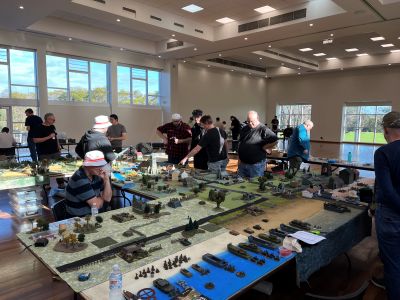
Last weekend I took part in one of the most ambitious and entertaining wargames I have ever experienced. This game of massive Bolt Action was based on Operation Sea Lion, Hitler’s planned invasion of Britain. This took place at Outpost 6030 and was organised by the cunning, deplorable and very organised Jackson and John. It brought together somewhere between 22 and 26 players (I lost count of how many due to in-game shenanigans) for a day of glorious confusion, desperate heroics and unexpected betrayals.

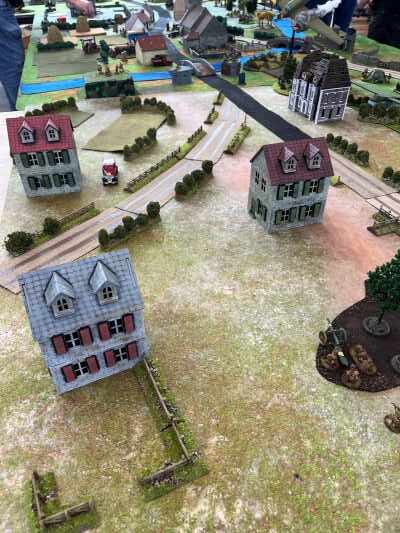
Part of the battlefield looking towards the beach in the far distance

A Massive Battlefield

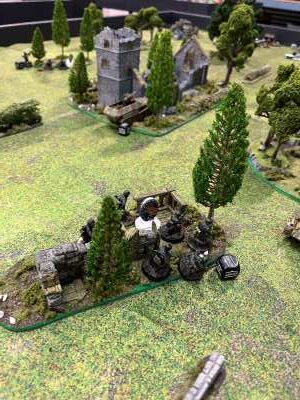
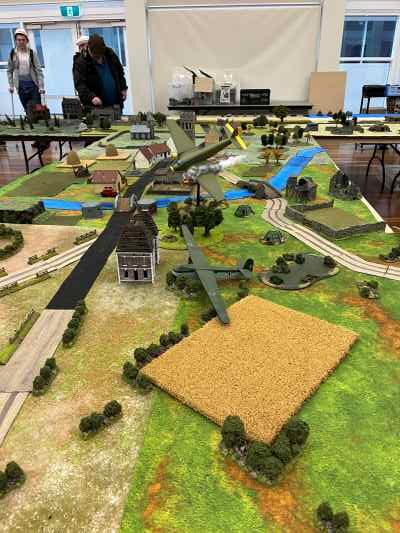
Firstly, the battlefield itself was a spectacle. A sprawling 12ft x 12ft table, arranged in an H-shape to allow players access, was packed with beautifully painted terrain. The board depicted a slice of rural England, complete with coastline, villages, rivers, bridges, roads, fields and woodland. Telephone boxes, signposts and even a suspicious-looking TARDIS added to the atmosphere. Every piece had been provided by the players, creating a stunning setting for the battle to unfold. I even managed to get my houses, hedges and fences to depict a corner of sunny England (soon to be occupied by a battery of French howitzers.

My corner of England

Game Set Up

For the game, I dusted off my British Royal Marine Commandos to help defend our green and pleasant land. My force included a couple of mobile assault squads led by the legendary Gus March-Phillipps (depicted by Henry Caville in the recent film Ministry of Ungentlemanly Warfare), supported by additional commando sections and a command unit complete with a piper to keep morale high. If you’re going to defend Britain, you may as well do it in style.

The Allied team was ably commanded by our authentic cap-wearing Commander Jono and consisted of an eclectic mix of British Expeditionary Force troops, French forces, Home Guard and of course my commandos. We had plenty of artillery, lots of early-war infantry and precious little armour. We also had a cricket team, ready to knock Jerry for six, literally.

What made the scenario particularly interesting/confusing was that both the Allied and Axis teams were issued secret objectives. Nobody knew exactly what the other players were trying to achieve. Certain locations, landmarks and VIPs carried hidden importance, meaning that every move and every deployment could be part of a larger plan.

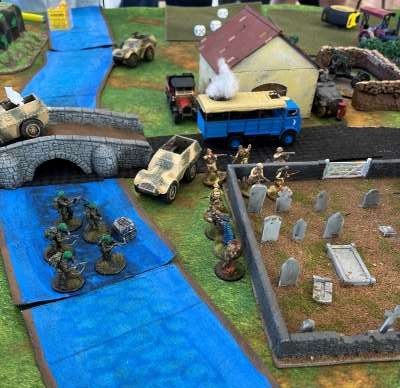
The Allies deployed first, spreading our forces across the battlefield. My Commandos took up position near a river and road network, ready to act as a rapid-response force. With rumours of German paratroopers and glider-borne troops potentially appearing anywhere, flexibility seemed the wisest course of action.

Then the first order dice was drawn and the madness began.

Save the King!

One Massive Bolt Action Battle

Objectives included bunkers, churches, schools, stately homes and a bewildering assortment of VIPs. Winston Churchill appeared in multiple locations, very much channeling the Eagle has Landed. The King was present. Thomas Shelby of Peaky Blinders fame was somehow involved. There was so much happening that I spent the first couple of activations feeling completely overwhelmed. My Commandos sat on ambush, waiting for the inevitable airborne assault while I tried to make sense of events unfolding around me.

Eventually I settled into the game, only to discover that understanding the situation was apparently against the scenario rules.

New factions kept appearing with their own agendas. American forces arrived and immediately started shooting at my troops. An Allied partisan force suddenly revealed itself as German paratroopers straight out of The Eagle Has Landed and made off with Churchill from under my nose. Hidden German troops concealed inside a stately home opened fire, devastating nearby Allied units and wiping out a section of my brave commandos.

Outrageously, the King himself was captured by the Italians. My Commandos rushed to the rescue, driving off his captors and preventing his abduction. It was a suitably heroic moment. Unfortunately, before we I could celebrate, IRA partisans emerged from nowhere and gunned him down. So much for that plan.

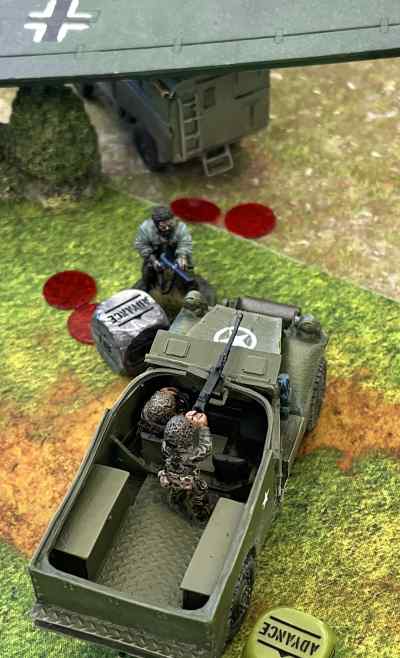
Elsewhere, Gus March-Phillipps and his assault team launched a daring attack against an American half-track, nearly destroying it before being cut down by supporting fire. It was a fittingly bold end for the Commandos, who spent much of the game charging towards trouble wherever it appeared.

Gus March -Phillips last stand

The Bigger Picture

The remarkable thing was that all of the above happened within my relatively small section of the battlefield.

To my right, German forces were attempting a major beach assault. To my left, gliders and paratroopers were descending into Allied lines. Across the table, allegiance flexible partisan forces and the Americans were pursuing their own mysterious objectives. During the game I had almost no idea what was happening beyond my immediate area of operations. It was only afterwards, when players compared stories, that the full scale of the chaos became apparent.

By the end of the day, the results were dramatic. The King was dead. His brother Edward had been captured by the Americans, only to be blown up by the French. The Germans had been held on the beaches but had achieved enough of their secret objectives elsewhere to secure a convincing Axis victory.

For my part, I was betrayed by supposed allies on three separate occasions. And I loved every minute of it.

Emergent Story

If you’ve been following this blog for a while you’ll know that I love the concept of emergent play. This game really embraced the concept and ratcheted it up to 11. As mentioned above, secret objectives, multiple factions and of course the huge number of players meant that lots of stories unfolded on the table. I don’t believe that the organisers Jackson and John, quite knew how things were going to land. The stories evolved on their own. The battle for the King, dogfights overhead, desperate clashes on the beach. It felt like a hundred cinematic stories played out over the course of the day.

Final Thoughts on Massive Bolt Action

The Commandos acquitted themselves well, even if they ultimately failed to save the King. More importantly, every player embraced the spirit of the event. Nobody took things too seriously, everyone leaned into the narrative, and the result was a game full of memorable stories that will be talked about long after the final dice were packed away.

I’ve played a lot of wargames over the years, but I’ve never experienced anything quite like this. Though it did remind me of some of my multiplayer Space Weirdos games, albeit at a much grander scale. It felt less like a traditional tabletop battle and more like being dropped into an alternate-history war movie where nobody had been given the full script.

A huge thanks to the two organisers, Jackson and John, an amazing effort that resulted in a very fun and chaotic day!

Apparently next year’s big game is set to be Operation Crusader.

I’d better start shopping for some desert tanks.

Dungeons & Dragons: A Surprising Tool for Workplace Success

While I have talked about this before I thought it would be worth revisiting for people who are a bit newer to this blog. While most of us know Dungeons & Dragons (D&D) as the worlds most popular fantasy role-playing game, I really believe that it offers more than entertainment. D&D has the potential to be a powerful tool for personal growth and professional development. Surprisingly, the skills honed at the gaming table—creativity, collaboration, and critical thinking—extend far beyond the dungeon and can have a lasting impact in the workplace. In this article, we’ll revisit three compelling reasons why playing D&D can help foster a productive and innovative work environment.

1. Fostering Creativity

At its heart, D&D thrives on imagination. Players immerse themselves in complex worlds, creating unique characters, crafting storylines, and solving challenges in unexpected ways. This exercise in creativity translates directly to the workplace, especially where fresh thinking and innovation are highly prized.

Employees who engage in creative activities like D&D become adept at looking at problems from different angles. They are better equipped to brainstorm unconventional solutions and tackle obstacles with creativity. This flexibility is especially valuable in industries where problem-solving requires innovative approaches. for example film production, software engineering and marketing could really do with more D&D players amongst their workers. Additionally, D&D encourages players to adapt on the fly, sharpening their ability to remain agile in the face of rapidly changing situations—a skill that’s equally important in all fast-paced professional environments.

Workplace Takeaway: By nurturing creativity, D&D empowers employees to approach workplace challenges with enthusiasm, confidence, and a sense of resourcefulness, benefitting the entire team.

2. Encouraging Collaboration

D&D is a collaborative experience. Players must work together as a team, using their individual strengths to overcome obstacles and achieve shared goals. Similarly, in most workplaces, teamwork is essential for success.

Through playing the game, employees can develop essential collaboration skills such as effective communication, cooperation, and trust-building. The game offers opportunities to practice working together, combining diverse talents to achieve the best outcomes. In doing so, D&D mirrors real-world team dynamics—players need to listen to one another, adapt their strategies, and support each other to succeed. They may also come up against disagreements in game. Navigating these helps hugely in overcoming similar situations in the real world.

I see the game as also being a fantastic space to develop leadership skills, as players often take turns guiding the group through quests, motivating others, and coordinating efforts toward a common goal.

Workplace Takeaway: D&D builds a strong sense of camaraderie and helps employees understand the value of working together, ultimately leading to improved collaboration in the workplace.

Not this sort of collaboration…

3. Cultivating Critical Thinking

D&D is filled with complex challenges, from solving intricate puzzles to navigating moral dilemmas and tactical combat. To overcome these obstacles, players must think critically, analyzing situations and making decisions that could affect the outcome of the entire adventure or campaign. While not real, the in-game consequences can be vast, with whole worlds in the balance. Of course, these decision-making skills are highly transferable to the workplace.

In professional settings, critical thinking is a cornerstone of problem-solving and strategic planning. D&D teaches players to evaluate situations, consider multiple perspectives, and anticipate consequences. What’s more, the game encourages players to embrace failure. When a strategy doesn’t go as planned, the group regroups, reevaluates, and tries again—fostering the ability to persevere in the face of setbacks. This mindset is invaluable at work, where adaptability is crucial, and learning from failure is essential for long-term growth.

Workplace Takeaway: By sharpening critical thinking skills, D&D helps employees become better problem solvers, enhancing their ability to navigate complex situations in the workplace.

Final Thoughts: Why D&D Is Good for the Workplace

If you’ve been reading this blog for a while you’ll already know that I consider D&D to be much more than a game. It really is a gateway to developing skills that are essential for a thriving workplace. From sparking creativity to enhancing teamwork and sharpening critical thinking, D&D equips players with tools that can transform how they work and collaborate with others. Whether you’re looking to foster a more innovative team, improve communication, or build resilience, the lessons learned through D&D can have a profound impact on workplace dynamics.

So, keep an eye out for D&D players at work and don’t dismiss it as just a pastime. It could be the key to unlocking their potential as creative problem-solvers and collaborative teammates as well as helping forge your next cohort of effective and successful leaders.

Second Bolt Action Tournament: Spartan 2026

Bolt Action Tournament Spartan 2026

After thoroughly enjoying my first Bolt Action tournament, Skulls 2026, I thought I’d enter a second. In stepped Spartan 2026! A full day of three games was an enticing prospect in itself, but I have found the Bolt Action scene here in Perth to be one of the most welcoming I’ve ever encountered. Win or lose it was set to be a fun event.

Tournament Preparation

I’d fallen in love with Bolt Action at the end of 2025, when Jackson gave me a trial game. Since that moment I’d furiously painted up a Royal Marine Commando army and fought a few games before taking it to a 6 player narrative game and then on to the Skulls tournament. If you want to know what I enjoy about the game please check out the link above.

This time round I wanted to play something different. I’d been collecting an opposing force of German Wermacht to go up against my commandos, and it was finally painted. I have a thing about only playing with painted miniatures. What better way to test the army than by entering it into Spartan. I found the commandos, being all veteran (meaning fewer units), were being outmaneuvered by my opponents. My German collection has much more variety: flamethrowers, half tracks, heavy weapons and plenty of infantry.

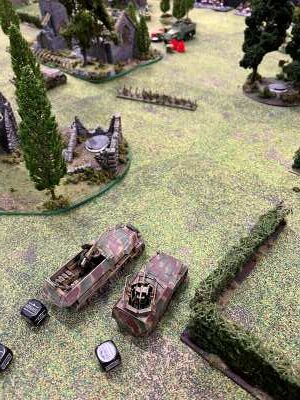
Having played three practice games I finalised my list. A very mobile force of heavily armed halftracks with engineer flamethrower squads, panzer grenadiers (2 LMGs), Heer grenadiers and a unit of SMG assault veterans. I even added a small unit of Feldgendarme (military police) to help get my reserves on the board. Added to this was an armoured platoon consisting of a Stummel (howitzer armed half track), 222 armoured car and a 250/9 halftrack.

I hoped that this set up would give me the flexibility to capture objectives while responding to the threats posed by the opposition.

My Heer Grenadiers moved onto an objective

Further Preparation

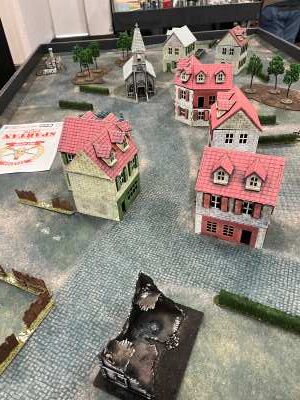
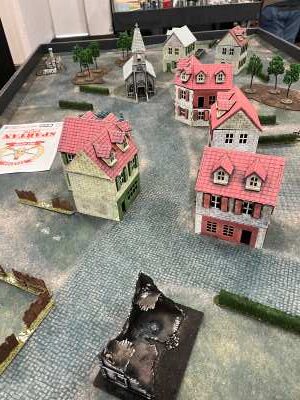
In addition to my fully painted army I also wanted to contribute a table of terrain for the day. There’s something wonderful about playing a game of Bolt Action on a thematic board with painted terrain, hedgerows etc. So I ordered a set of Normandy inspired mdf buildings from Dark Castle Terrain in Australia and spent all my hobby time prior to the event madly constructing and painting it up.

Despite covering my hands in glue and paint I did manage to get a decent looking table together.

My finished Normandy inspired village

Spartan 2026

First of all I need to mention that the T.O Matt did an amazing job of running this event. It all went very smoothly. Additionally, all the competitors were very friendly with some good banter rippling through the room. There was a big mix of experience levels from the relative novice to the very seasoned. One competitor had only played 2 games previously and still got stuck in.

There were 16 players and 9 incredible terrain tables. The latter of which really caught the eye other people at the venue. In fact, a couple of the onlookers were able to get a demo game in too. So some new converts to the Bolt Action community!

I played three games: Breakthrough (vs Japanese), Nuts (vs German) and Meeting Engagement (vs US). Each one was a nail biter for me, with lots of cinematic moments. However, all three I started strong before losing pretty dramatically at the end. I can honestly say that all the games were incredible fun, regardless of the outcome.

While I didn’t win the wooden spoon I did come second from the bottom. Even so, I walked away with some cool prizes including a Sherman (perfect to support my commando force), some amazing fence terrain printed and painted by a talented local (which will lift my Bolt Action table to new heights) and a very nice spy mini (that I think will form part of a future resistance contingent). Most importantly though I had a great time and feel part of this incredibly friendly community.

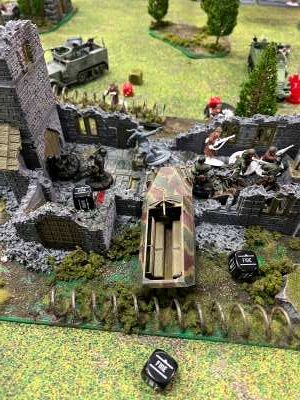
Mad skirmish in the ruins, the US took a beating, but not enough to lose the game

Lessons Learned

With three losses to my name, what would I do differently? Firstly, I would have more practice games with my list prior to attending the event. I don’t think I had a full grasp on the synergies of my units, I was getting closer, but still need more practice.

Next, I had written down plans for each scenario. But, every time I got over excited and deviated. While of course plans never hold up to first contact, looking back a bit more sticking tot he strategy could have stood me in good stead.

Lastly, firing units at point blank can be devastating (within 6″) and I want to experiment with that more.

My armoured vehicles attempt to knock out the enemy. Attempt being the key word here.

What a Tournament

What can I say, an on point TO, great venue, thematic tables and super friendly players all combined to make Spartan 2026 an amazing event. As the community here in Western Australia continues to grow I can only see events like this getting better and better. Next month is a huge narrative game based on Operation Sealion, Hitlers planned invasion of the UK. I believe there will be twenty players on one board. Cant wait!

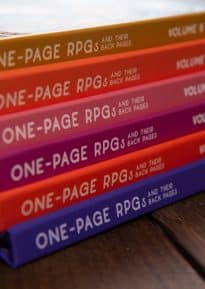
Discovering the Hidden Joy of One-Page RPGs

Roleplaying games come in all shapes and sizes. Some arrive in beautifully bound rulebooks hundreds of pages thick, complete with detailed character creation systems, extensive equipment lists, and years of accumulated lore. I love those games. But sometimes, the funnest adventures fit on a single sheet of paper. One-page RPGs occupy a special place in my gaming heart. They are unapologetically focused, delightfully weird, and incredibly accessible. In a hobby that can sometimes feel intimidating to newcomers, a one-page RPG keeps it simple: “Here’s the premise. Grab some dice. Let’s play.”

Theme Heavy, Rules Lite

The magic of a one-page RPG isn’t found in complex mechanics. It’s found in commitment to a theme. A good one-page RPG takes a single idea and runs with it at full speed. The handful of rules exist purely to support that concept. There is no attempt to simulate every possible situation. Instead, each game asks a simple question:

“What if we spent the next few hours fully embracing this particular fantasy?”

That focus creates something remarkable. Players aren’t spending the first hour learning rules or optimising character builds. They’re immediately stepping into the tone and spirit of the game. The result is often a session that feels more like an improv comedy show, a favourite movie, or a particularly chaotic stage play than a traditional campaign.

Perfect for a Single Evening

Where I think One-page RPGs really shine is as one-shots. Most can be taught in less than minutes and completed in a three to four-hour session. That makes them ideal for game nights when the full Dungeons & Dragons campaign isn’t happening, when new players are joining the table, or when you simply want to try something different.

There’s also a peculiar freedom that comes from knowing the story begins and ends in a single sitting. Players are more willing to take risks. They make bigger choices. They embrace ridiculous plans. Nobody is worried about preserving a carefully crafted character for the next two years of campaign play.

If the plan fails spectacularly, then that’s a great way to finish.

Nice Marines

One of my favourites is Nice Marines. I ran this back at MartyCon 2026 with ten minutes prep and we had a blast.

The premise is wonderfully simple. You’re genetically engineered super-soldiers in enormous power armour, capable of crushing enemies and surviving impossible odds.

Your mission? Diplomacy. Helping a planets government after the war. The contrast between the imperial murder machines and the non combat scenario became a great source of comedy.

Want to play regency era? Virtues and Scandals might be for you.

Virtues and Scandals

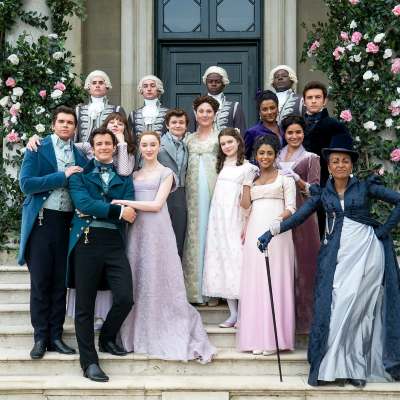
Then there’s Virtues and Scandals, which I would like to run for my current gaming group. This throws the players into a Bridgerton-esque Regency-era romance drama. Think grand balls, whispered rumours, unsuitable romances, ambitious social climbing, and enough scandal to keep society talking for months.

Here success isn’t measured by defeating monsters or collecting treasure. It’s measured by reputation, romance, influence, and whether your latest social disaster can somehow be turned into an advantage.

The stakes are completely different, yet somehow feel just as important. And for a group that enjoys the rough and tumble of combat it will make for a fun change of pace. I might even buy some cheap fans for the players to hide behind during the game.

This One Time at Bard Camp

If Virtues and Scandals is Regency drama, This One Time at Bard Camp is pure college comedy. Players take on the roles of aspiring bards attending a summer academy dedicated to music, performance, and probably causing trouble.

The game embraces all the classic teen movie tropes: rivalries, friendships, crushes, embarrassing mistakes, talent competitions, and authority figures who are somehow always one step behind the chaos.

I think this would be great fun for my group to get let loose on.

A Perfect Fit for the Workplace

One of the biggest challenges when introducing roleplaying games to a professional audience is overcoming the learning curve. Participants may only have an hour or two available, and few want to spend half that time reading rules.

That’s where one-page RPGs excel.

Explaining the rules takes minutes, allowing groups to spend the majority of their session actually playing, communicating, and solving problems together. The simplicity removes barriers and helps participants focus on the experience rather than the mechanics.

The strong themes also make it easier for people to engage quickly. Most people immediately understand the social dynamics of a Regency romance, or the chaos of a summer camp comedy. Familiar tropes give players permission to jump straight into roleplaying without worrying about getting the setting “wrong.”

For workplace conferences, training sessions, and leadership development programs, this makes one-page RPGs an ideal tool. In a single 90-minute session, participants can practise communication, teamwork, creativity, adaptability, and problem-solving while sharing plenty of laughs along the way.

In many ways, one-page RPGs demonstrate one of the greatest strengths of roleplaying games as a learning tool: meaningful experiences don’t require complex systems. Sometimes a simple premise, a clear theme, and a group of willing participants are all that’s needed to create genuine engagement and lasting memories.

Why They Matter

One-page RPGs remind us of something important about our hobby. The rules are not the point. Rather, we should be focusing on is gathering around a table with friends and collectively creating fun, memorable stories.

A one-page RPG strips away almost everything except imagination and theme. What’s left is often pure roleplaying joy. They’re easy to learn, easy to run (usually), and easy to share. As such they allow us to explore worlds and genres that would never justify a year-long campaign but make for an unforgettable evening.

Most importantly, they remind us that roleplaying games don’t need to be complicated to be memorable. Sometimes all you need is a single page, a handful of dice, and a group of players willing to embrace the premise completely.

Jump onto google. Search one-page RPGs, and find one that has a theme that appeals to you. After a quick read you can have it at the table in 15 minutes. I think you’ll enjoy the results.