Building a Realm One Session at a Time: My Fortnightly Mythic Bastionland Game

Every fortnight my gaming group gathers to play Mythic Bastionland by the talented Chris McDowall, a game about wandering knights defending their realm from strange myths and ancient dangers.

If you imagine the sweeping, generational storytelling of Pendragon, but loosen the strict expectations of chivalric codes, you are somewhere close to the spirit of the game. The knights of Bastionland are not bound to an exact interpretation of honour. Instead, they roam the realm keeping to their oaths: Seek the Myths, Honour the Seers, Protect the Realm. In doing so they confront mysterious forces that threaten the realm, shaping its fate through their deeds.

And it has been an absolute blast to run.

The Knights of the Realm

Our current band of defenders is a wonderfully strange mix of personalities and mythic archetypes:

  • Ser Steele, the Cosmic Knight, who has a fascination with the stars and enormous ambition.
  • Lady Faun, the Snare Knight, at one with nature, preferring the wilds to the slowly burgeoning civilisation.
  • Ser Aegen, the Salt Knight, hardened by sea winds and coastal hardships.
  • Ser Whynn, the Iron Knight, steadfast, laughs in the face of danger with a mead in hand.
  • Ser Perceval, the Temple Knight, devoted to sacred duty and the protection/creation of holy places.

Together they wander the realm confronting the myths that threaten the fragile stability of civilisation.

Creating characters is easy, 1D12 +1D6 for three virtues Vigour, Clarity and Spirit, roll or choose a knight and you’re off.
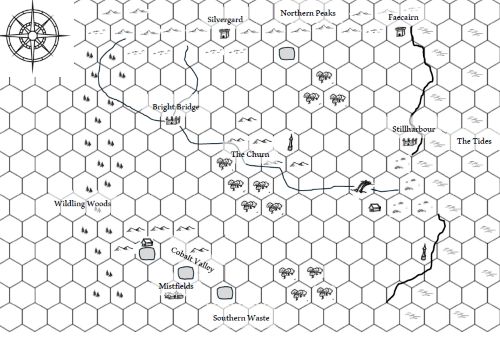
The Realm of Caer Senara

Creating the Realm of Caer Senara

As the games master, one of the joys of Mythic Bastionland is how easily it helps you create a living world. Rather than meticulously designing everything in advance, I generated most of the setting using the book’s random tables.

The result was the realm of Caer Senara, centred around Stillharbour, the coastal port and Seat of Power. Around it lie several holdings:

  • Mistfields – a valley of lakes and vineyards, ruled by a drunken lord with a sinister senechal pulling strings in the background
  • Faecairn – Watchtower where the boundary to the fey is thinner
  • Silvergard – Home of the Praetorians and taciturn and well trained military force
  • Brightbridge – Foodbowl of the realm with seas of wheat and hotbed of rebellion

To give the realm immediate tension, I also generated four myths lurking within its borders, along with a number of strange landmarks including the Sea Kings throne, a ruined monastery and a deranged alchemist. What emerged surprised me. The random tables didn’t create chaos. Instead they produced something that felt layered, mysterious, and alive.

The bones of the world came together over a couple of afternoons. However, the real magic began once the dice started rolling.

When the Realm Comes Alive

Over the first ten sessions, the knights have already shaped the fate of Caer Senara in dramatic ways.

  • The company won a grand tourney against knights forged from clockwork
  • A tidal wave once threatened to devastate the realm, forming in the mountains instead of the sea.
  • A giant boar roamed the countryside, leaving destruction in its wake.
  • Political tensions simmered among the noble houses resulting in a rebellion erupting within the realm itself.

None of these stories felt forced. They grew naturally out of the myths, locations, and the decisions of the knights. I feel that I am discovering the plot at the same time as the players.
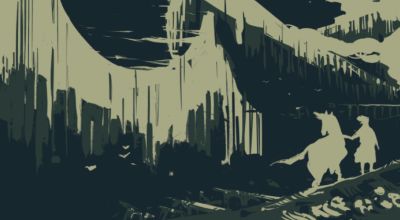
The artwork in Mythic Bastionland is thematic, intriguing and beautiful.

Entering the Second Age

Now, after ten sessions, the campaign has reached an important milestone.

We are entering the Second Age of the realm.

Time moves forward in Mythic Bastionland, and the passage of years is part of the story. The knights themselves are growing older, as they do their stats initially improve, but as they enter old age they begin to decline. Marriages have been arranged and the key holdings are now run by the players. Successors have been appointed. The political landscape has completely shifted.

New challenges loom on the horizon. This movement of time gives the campaign an epic quality. It feels like a chronicle of a realm slowly changing across generations.

A Breath of Fresh Air

Another reason I enjoy this game so much is its simplicity.

Running a campaign that isn’t Dungeons & Dragons has been surprisingly refreshing. The rules are lighter, record keeping is minimal, and the style of play is very different. Players rely more on their wits than an array of powerful abilities.

Less bookkeeping means more time for story, strange myths, and the unpredictable decisions of wandering knights.

Sharing the Realm

I’ll be making my original scrappy realm notes for Caer Senara available for anyone who is interested. You might use them as the starting point for your own campaign, or simply as an example of what a randomly generated realm can look like. Either way, they show how a few tables, a handful of myths, and a group of players can quickly grow into a living world.

And who knows. Perhaps your knights will one day ride through the misty fields of Caer Senara as well.

One Powerful Secret. Everything is D&D

collage of diverse movie posters

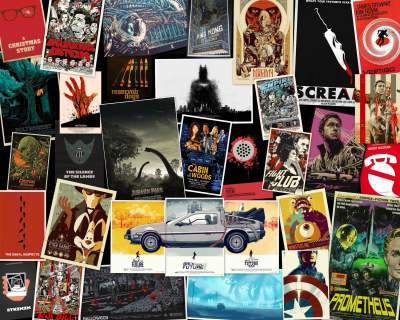
I’ve recently read The No-Prep Game Master by Matt Davids, and one particular idea lodged itself firmly in my brain: everything can be used in your RPG games. Not just fantasy novels and RPG sourcebooks. Everything is D&D.

News articles. Crime documentaries. Action movies. Office politics. Historical events. True crime podcasts. Weird conversations overheard in cafés. Every bit of media becomes potential fuel for your campaign once you start looking at the world through the lens of a Dungeon Master.

And honestly? It works.

The more I thought about it the more I realized that I’ve been doing this unconsciously for years now. Somewhere along the line, my brain stopped watching movies normally. I no longer see “a detective solving a mystery.” Instead there’s a quest structure. along with NPC motivations and faction conflict. I see a villain reveal waiting to happen three sessions from now.

The best part is that this dramatically reduces your prep.

Your Brain Becomes a Loot Goblin

Once you adopt this mindset, your brain starts hoarding story fragments. Watching a heist film? Congratulations, you now have:

  • A dungeon structure
  • A rival crew
  • A countdown timer
  • Three complications
  • A memorable villain
  • A blueprint for a one-shot

Reading about a political scandal? That’s a noble house conflict. A documentary about Everest? That’s an expedition into the frozen north. A workplace disagreement over budgets and priorities? That’s two guilds competing for influence in the capital city.

Even the nightly news can become campaign material. Strange weather events become magical disasters. Corporate mergers become kingdoms uniting through uneasy alliances. A shipping delay becomes a caravan mysteriously disappearing along a trade route.

Nothing is wasted.

Imagine this guy with a crossbow, is this your next villain?

Improvisation Gets Easier

One of the biggest challenges for newer DMs is improvisation. Players inevitably ignore your carefully prepared content and instead decide they want to interrogate the stable boy, open a theatre, or adopt the villain’s pet scorpion. When you’ve filled your head with story structures from books, films, games, and real life, improvisation becomes far less terrifying.

You stop trying to invent things from scratch. Instead, you remix.

That suspicious innkeeper? He’s suddenly borrowing traits from the bartender in that crime thriller you watched last week. The corrupt city guard captain? That’s basically Clint Eastwood as Dirty Harry. “Are you feeling lucky punk?”. The mysterious ruined tower? You based it on the abandoned castle near the village you grew up in.

Improvisation stops feeling like being a rabbit in headlights. Rather it begins to feel more like being a DJ, sampling and remixing ideas you already absorbed.

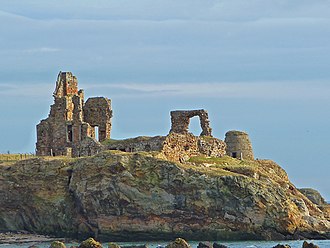
Newark Castle (near where I grew up) has appeared in a few of my campaigns

Steal the Structure, Not the Surface

One thing I’ve learned over time is that the best inspiration usually comes from stealing the bones of a story rather than copying it directly. Players definitely notice when Gandalf strides into the tavern with the One Ring. However, they usually do not notice when you quietly borrow:

  • The pacing of a thriller
  • The emotional reveal from a drama
  • The structure of a mystery
  • The escalating pressure of a disaster movie

A great D&D session often feels familiar in the same way dreams feel familiar. The shapes are recognisable, but rearranged into something new. That’s the sweet spot.

The World is a DM Toolkit

The funny thing is that once you start thinking this way, it never really turns off. You’ll watch a terrible B-grade movie and think: “This villain monologue is incredible.” That article about a missing ship morphs into an island covered in undead sailors. When the local councilors disagreements spill into the papers it turns into a fantastic low-level urban adventure.

The entire world becomes a giant DM toolkit disguised as ordinary life. And the more material you absorb, the easier your games become to run.

Prep Less, Observe More

This approach doesn’t mean you never prepare sessions. But it does mean your preparation becomes lighter and more flexible. Instead of writing thirty pages of lore nobody will read, you build a collection of ideas, scenes, characters, conflicts, and story beats gathered from everywhere around you.

Then when your players inevitably set fire to the plot and run screaming into the wilderness, you already have fuel ready to throw into the engine.

There you have it, everything is D&D. You just have to start looking for it.

GM Book Club Podcast: International Chapter

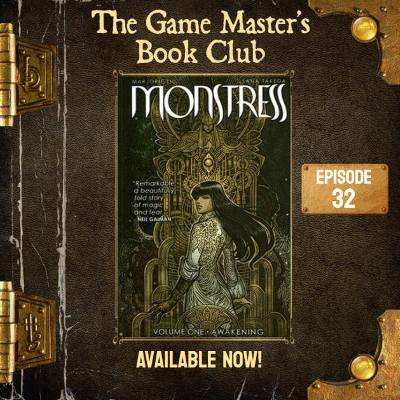
I meant to post about this over a month ago, but failed drastically. However, better late than never I suppose. (Sorry Eric). Myself and my good friends Rich and Marty were invited by the host Eric to feature on the GM Book Club podcast. This episode is called From Graphic Novels to Gaming Tables: How Monstress Inspires Adventure and is all about Monstress by Marjorie Liu.

I love graphic novels and comics and find that the stories tend to be bit wilder in this format. So it was a joy to do a deep dive on this one with the others. Eric did a masterful job of hosting and kept us all on track.

We discuss the book in the context of roleplaying and look for things to port into our games. Great fun!

If you would like to check it out choose one of the links below.

As the three of us are based in Australia, we now make up the international chapter of the podcast! I’m looking forward to recording more of these episodes in the near future and we have a couple locked in already.

For more podcasts I’ve been involved in check out my podcast page here.

Let the Dice Decide: Trusting Fate at the Table

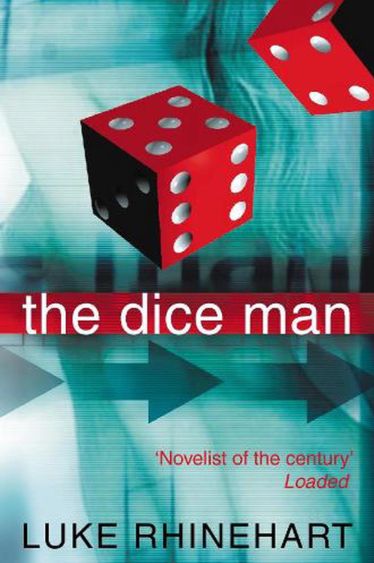
The cover of Dice Man Novel

I’ve just finished reading The Dice Man by Luke Rhinehart a cult novel from the 1970’s about a man who lives his life by rolling a dice for all decisions. It’s a strange, comedic and slightly dark book and worth a read if you like that sort of thing. However, it got me thinking about the central feature of dice in the games that we play. There’s always a quiet moment just before the dice land, especially when there’s a lot hanging on the roll.

Breath held. Glances exchanged. As the dice decide your fate.

In that moment, the story does not belong to the Dungeon Master. It does not belong to the players. Instead it belongs firmly in the hands of Lady Fate. And if you let it… it can create something far more powerful than anything you planned during your session prep.

The Temptation to Control

Every Dungeon Master knows the pull. You’ve crafted the encounter. The story arc is all there. The perfect story is unfolding… until a player makes a completely unexpected choice or the dice threaten to derail everything. Using hidden rolls becomes a quiet safety net. A nudge here, a fudge there. The story stays intact. We’ve all been there, especially at the beginning of our DM careers.

But I believe that something subtle is lost in the process. When players suspect the outcome is being managed, tension fades. Victory feels softer. Failure feels less real. The game becomes less of a shared discovery and more of a guided tour. Consequently, the fun begins to fade.

Letting the dice speak is about surrendering that control. Not recklessly like Luke Rhinehart in the Dice Man, but deliberately. (Although some might say Luke Rhinehart was also being deliberate in his dicing… read the book to find out).

Open Rolls, Open Story

Rolling in the open changes the atmosphere immediately. Now, when the villain strikes, everyone sees the number and it’s associated consequence. When the rogue attempts the impossible leap, the result is there for everyone to witness. There’s no veil, no quiet adjustment behind the screen. Success or failure, it’s all there. And this, in a game, is electric.

It means that when a character fails, it wasn’t because the DM allowed it. It means when a desperate plan succeeds, it wasn’t because the DM wanted it to. The story earns its scars and triumphs honestly. Every roll matters more.

Let the dice decide the fate of your game

Fate is a Better Writer Than You

Here’s the uncomfortable secret: the dice often tell better stories than we do. We are chock full of preconceived ideas and notions. The books we love, the movies we’ve just watched, they’re all stored in your head waiting to be let out. Of course, the dice have none of these.

Planning a heroic last stand? The dice might deliver a sudden, brutal defeat instead. Expecting a tense negotiation? The dice might turn it into an unexpected alliance or a catastrophic insult.

These moments feel real because they are unplanned. They surprise everyone at the table, including,, most importantly, you.

Surprises like these are the heartbeat of engagement for everyone at the table. A campaign where outcomes are certain and safe becomes predictable. A campaign where fate is allowed to intervene becomes legend.

The Discipline of Not Rolling

Unlike the protagonist of the Dice Man, letting the dice tell the story does not mean rolling for everything. In fact, the opposite is true. If you roll constantly, the dice become noise and if I’m bein honest, something of an irritant. Ultimately, the magic fades. The key here is restraint. Roll when:

  • The outcome is uncertain
  • The stakes matter
  • Failure would change the situation in a meaningful way

Don’t roll when:

  • Success is obvious
  • Failure would stall the game without adding tension
  • The action is trivial or purely descriptive

Think of dice as the exclamation marks of your story, not every word.

Designing for Honest Outcomes

If you’re going to let fate take the wheel, your game needs to be ready for wherever it drives. That means:

  • Flexible encounters: Avoid hinging progress on a single success
  • Fail-forward thinking: Failure should open new paths, not close doors
  • Consequences over corrections: Let outcomes reshape the world rather than trying to steer back to a plan

When the dice derail your expectations, don’t try to fix it. Go with it and see where it takes you.

Trust at the Table

Open rolling is also an act of trust. You’re telling your players: “I’m not here to beat you, and I’m not here to save you. I’m here to discover what happens with you.”

Players take bigger risks. They invest more deeply. They accept failure more readily because they know it’s real. Ultimately, the table becomes less adversarial and more collaborative. Not in the sense of controlling outcomes, but in sharing the experience of them.

Oh no a 1…

When the Dice Hurt

Of course not every roll goes the way the table wants. Characters will fall at the worst possible moment. Plans will collapse. Sometimes the story will take a darker turn than expected.

This isn’t a flaw, it adds texture to the story. If you think about it the most memorable campaigns are rarely the ones where everything went right. They’re the ones where things went wrong and the group had to respond.

The Story That Emerges

When you stop hiding rolls, when you resist the urge to intervene, when you only call for dice at the moments that matter… something remarkable happens.

The story stops being something you as the DM tells. Instead it becomes something you witness. A living thing, shaped by decisions, chance, and consequence.

You’re no longer the Wizard of Oz sitting behind the curtain. You become more of a player sitting at the table, just like everyone else, watching the dice tumble and wondering…

“What happens next?”

And that question in games like these, is where the magic lives.