
Discovering the Hidden Joy of One-Page RPGs

Roleplaying games come in all shapes and sizes. Some arrive in beautifully bound rulebooks hundreds of pages thick, complete with detailed character creation systems, extensive equipment lists, and years of accumulated lore. I love those games. But sometimes, the funnest adventures fit on a single sheet of paper. One-page RPGs occupy a special place in my gaming heart. They are unapologetically focused, delightfully weird, and incredibly accessible. In a hobby that can sometimes feel intimidating to newcomers, a one-page RPG keeps it simple: “Here’s the premise. Grab some dice. Let’s play.”

Theme Heavy, Rules Lite

The magic of a one-page RPG isn’t found in complex mechanics. It’s found in commitment to a theme. A good one-page RPG takes a single idea and runs with it at full speed. The handful of rules exist purely to support that concept. There is no attempt to simulate every possible situation. Instead, each game asks a simple question:

“What if we spent the next few hours fully embracing this particular fantasy?”

That focus creates something remarkable. Players aren’t spending the first hour learning rules or optimising character builds. They’re immediately stepping into the tone and spirit of the game. The result is often a session that feels more like an improv comedy show, a favourite movie, or a particularly chaotic stage play than a traditional campaign.

Perfect for a Single Evening

Where I think One-page RPGs really shine is as one-shots. Most can be taught in less than minutes and completed in a three to four-hour session. That makes them ideal for game nights when the full Dungeons & Dragons campaign isn’t happening, when new players are joining the table, or when you simply want to try something different.

There’s also a peculiar freedom that comes from knowing the story begins and ends in a single sitting. Players are more willing to take risks. They make bigger choices. They embrace ridiculous plans. Nobody is worried about preserving a carefully crafted character for the next two years of campaign play.

If the plan fails spectacularly, then that’s a great way to finish.

Nice Marines

One of my favourites is Nice Marines. I ran this back at MartyCon 2026 with ten minutes prep and we had a blast.

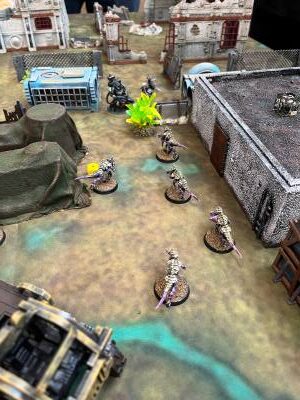
The premise is wonderfully simple. You’re genetically engineered super-soldiers in enormous power armour, capable of crushing enemies and surviving impossible odds.

Your mission? Diplomacy. Helping a planets government after the war. The contrast between the imperial murder machines and the non combat scenario became a great source of comedy.

Want to play regency era? Virtues and Scandals might be for you.

Virtues and Scandals

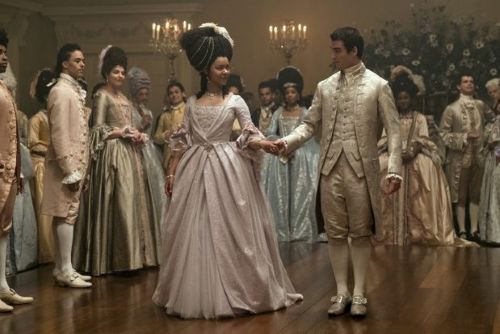
Then there’s Virtues and Scandals, which I would like to run for my current gaming group. This throws the players into a Bridgerton-esque Regency-era romance drama. Think grand balls, whispered rumours, unsuitable romances, ambitious social climbing, and enough scandal to keep society talking for months.

Here success isn’t measured by defeating monsters or collecting treasure. It’s measured by reputation, romance, influence, and whether your latest social disaster can somehow be turned into an advantage.

The stakes are completely different, yet somehow feel just as important. And for a group that enjoys the rough and tumble of combat it will make for a fun change of pace. I might even buy some cheap fans for the players to hide behind during the game.

This One Time at Bard Camp

If Virtues and Scandals is Regency drama, This One Time at Bard Camp is pure college comedy. Players take on the roles of aspiring bards attending a summer academy dedicated to music, performance, and probably causing trouble.

The game embraces all the classic teen movie tropes: rivalries, friendships, crushes, embarrassing mistakes, talent competitions, and authority figures who are somehow always one step behind the chaos.

I think this would be great fun for my group to get let loose on.

A Perfect Fit for the Workplace

One of the biggest challenges when introducing roleplaying games to a professional audience is overcoming the learning curve. Participants may only have an hour or two available, and few want to spend half that time reading rules.

That’s where one-page RPGs excel.

Explaining the rules takes minutes, allowing groups to spend the majority of their session actually playing, communicating, and solving problems together. The simplicity removes barriers and helps participants focus on the experience rather than the mechanics.

The strong themes also make it easier for people to engage quickly. Most people immediately understand the social dynamics of a Regency romance, or the chaos of a summer camp comedy. Familiar tropes give players permission to jump straight into roleplaying without worrying about getting the setting “wrong.”

For workplace conferences, training sessions, and leadership development programs, this makes one-page RPGs an ideal tool. In a single 90-minute session, participants can practise communication, teamwork, creativity, adaptability, and problem-solving while sharing plenty of laughs along the way.

In many ways, one-page RPGs demonstrate one of the greatest strengths of roleplaying games as a learning tool: meaningful experiences don’t require complex systems. Sometimes a simple premise, a clear theme, and a group of willing participants are all that’s needed to create genuine engagement and lasting memories.

Why They Matter

One-page RPGs remind us of something important about our hobby. The rules are not the point. Rather, we should be focusing on is gathering around a table with friends and collectively creating fun, memorable stories.

A one-page RPG strips away almost everything except imagination and theme. What’s left is often pure roleplaying joy. They’re easy to learn, easy to run (usually), and easy to share. As such they allow us to explore worlds and genres that would never justify a year-long campaign but make for an unforgettable evening.

Most importantly, they remind us that roleplaying games don’t need to be complicated to be memorable. Sometimes all you need is a single page, a handful of dice, and a group of players willing to embrace the premise completely.

Jump onto google. Search one-page RPGs, and find one that has a theme that appeals to you. After a quick read you can have it at the table in 15 minutes. I think you’ll enjoy the results.

Building a Realm One Session at a Time: My Fortnightly Mythic Bastionland Game

Every fortnight my gaming group gathers to play Mythic Bastionland by the talented Chris McDowall, a game about wandering knights defending their realm from strange myths and ancient dangers.

If you imagine the sweeping, generational storytelling of Pendragon, but loosen the strict expectations of chivalric codes, you are somewhere close to the spirit of the game. The knights of Bastionland are not bound to an exact interpretation of honour. Instead, they roam the realm keeping to their oaths: Seek the Myths, Honour the Seers, Protect the Realm. In doing so they confront mysterious forces that threaten the realm, shaping its fate through their deeds.

And it has been an absolute blast to run.

The Knights of the Realm

Our current band of defenders is a wonderfully strange mix of personalities and mythic archetypes:

  • Ser Steele, the Cosmic Knight, who has a fascination with the stars and enormous ambition.
  • Lady Faun, the Snare Knight, at one with nature, preferring the wilds to the slowly burgeoning civilisation.
  • Ser Aegen, the Salt Knight, hardened by sea winds and coastal hardships.
  • Ser Whynn, the Iron Knight, steadfast, laughs in the face of danger with a mead in hand.
  • Ser Perceval, the Temple Knight, devoted to sacred duty and the protection/creation of holy places.

Together they wander the realm confronting the myths that threaten the fragile stability of civilisation.

Creating characters is easy, 1D12 +1D6 for three virtues Vigour, Clarity and Spirit, roll or choose a knight and you’re off.

The Realm of Caer Senara

Creating the Realm of Caer Senara

As the games master, one of the joys of Mythic Bastionland is how easily it helps you create a living world. Rather than meticulously designing everything in advance, I generated most of the setting using the book’s random tables.

The result was the realm of Caer Senara, centred around Stillharbour, the coastal port and Seat of Power. Around it lie several holdings:

  • Mistfields – a valley of lakes and vineyards, ruled by a drunken lord with a sinister senechal pulling strings in the background
  • Faecairn – Watchtower where the boundary to the fey is thinner
  • Silvergard – Home of the Praetorians and taciturn and well trained military force
  • Brightbridge – Foodbowl of the realm with seas of wheat and hotbed of rebellion

To give the realm immediate tension, I also generated four myths lurking within its borders, along with a number of strange landmarks including the Sea Kings throne, a ruined monastery and a deranged alchemist. What emerged surprised me. The random tables didn’t create chaos. Instead they produced something that felt layered, mysterious, and alive.

The bones of the world came together over a couple of afternoons. However, the real magic began once the dice started rolling.

When the Realm Comes Alive

Over the first ten sessions, the knights have already shaped the fate of Caer Senara in dramatic ways.

  • The company won a grand tourney against knights forged from clockwork
  • A tidal wave once threatened to devastate the realm, forming in the mountains instead of the sea.
  • A giant boar roamed the countryside, leaving destruction in its wake.
  • Political tensions simmered among the noble houses resulting in a rebellion erupting within the realm itself.

None of these stories felt forced. They grew naturally out of the myths, locations, and the decisions of the knights. I feel that I am discovering the plot at the same time as the players.

The artwork in Mythic Bastionland is thematic, intriguing and beautiful.

Entering the Second Age

Now, after ten sessions, the campaign has reached an important milestone.

We are entering the Second Age of the realm.

Time moves forward in Mythic Bastionland, and the passage of years is part of the story. The knights themselves are growing older, as they do their stats initially improve, but as they enter old age they begin to decline. Marriages have been arranged and the key holdings are now run by the players. Successors have been appointed. The political landscape has completely shifted.

New challenges loom on the horizon. This movement of time gives the campaign an epic quality. It feels like a chronicle of a realm slowly changing across generations.

A Breath of Fresh Air

Another reason I enjoy this game so much is its simplicity.

Running a campaign that isn’t Dungeons & Dragons has been surprisingly refreshing. The rules are lighter, record keeping is minimal, and the style of play is very different. Players rely more on their wits than an array of powerful abilities.

Less bookkeeping means more time for story, strange myths, and the unpredictable decisions of wandering knights.

Sharing the Realm

I’ll be making my original scrappy realm notes for Caer Senara available for anyone who is interested. You might use them as the starting point for your own campaign, or simply as an example of what a randomly generated realm can look like. Either way, they show how a few tables, a handful of myths, and a group of players can quickly grow into a living world.

And who knows. Perhaps your knights will one day ride through the misty fields of Caer Senara as well.

Nice Marines: Murder Hobos try Diplomacy

There are games that arrive with binders of lore, intricate rules, and the expectation that you will prepare. Then there is Nice Marines by Grant Howitt, a free one-page RPG that asks the simple question: what if genetically engineered space marines tried to solve problems with diplomacy?

I first came across this game on my favourite actual play podcast Dungeons and Daddies. Definitely worth a listen.

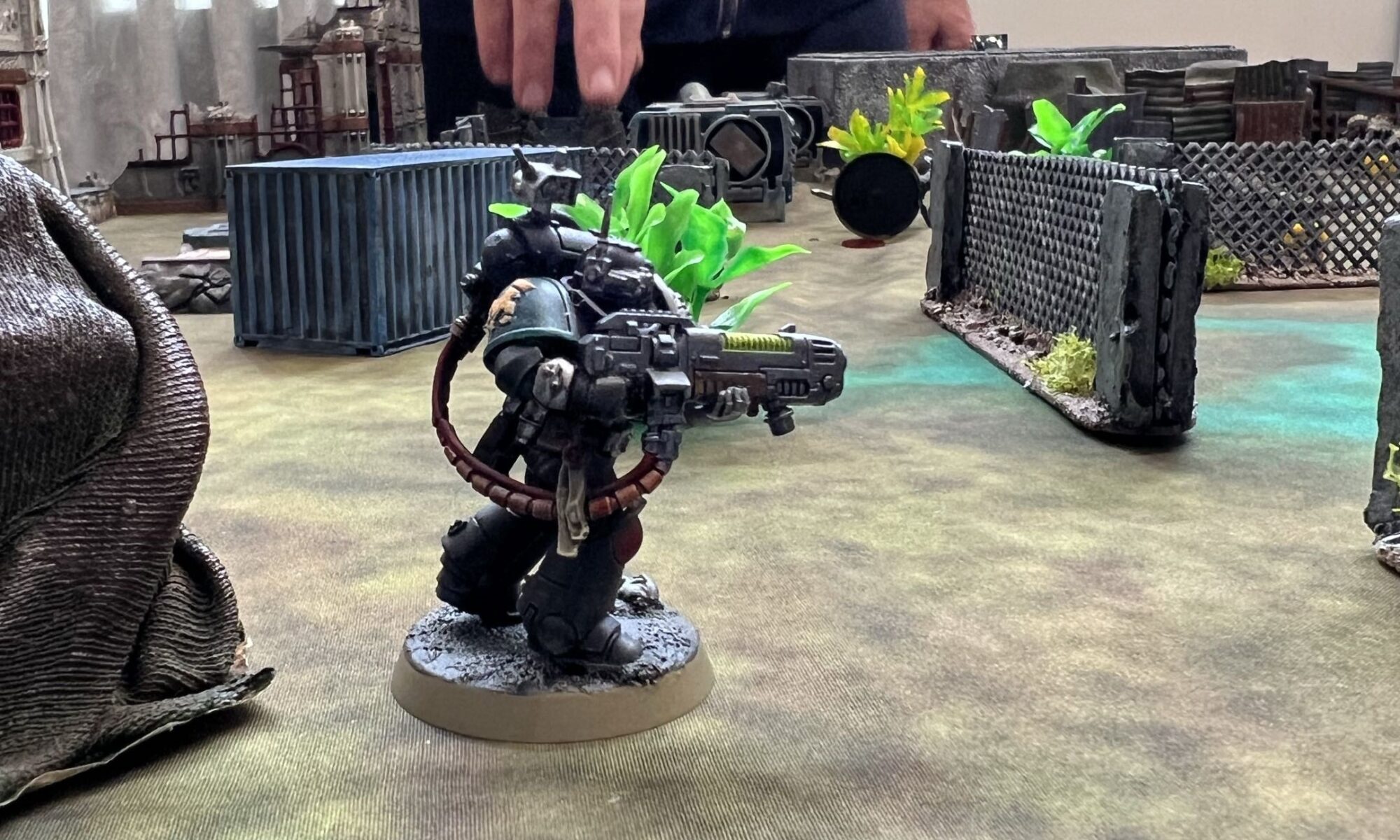
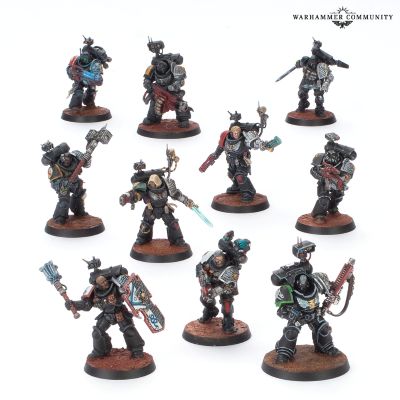
Everyone plays a kick ass, no nonsense murder machine in service to the Emperor of Mankind. Anyone who has walked past a Warhammer store knows the drill. Buzz cut, massive power armour and a very clear view on what action to take against heretics and aliens. Kill them all.

In this game the twist is that the war on this world is over and this team of murder hobos has been left to get the planet ready for the new imperial government that arrives in a weeks time. So no shooting your way out of problems. Diplomacy and tact are needed by these super soldiers who usually do their talking from the barrel of a gun.

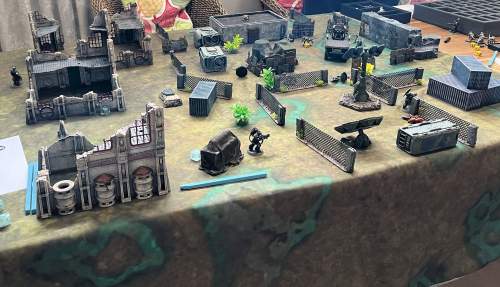
Given it was one page of rules and I’d already planned and run Shoot out at Virellion Estate that day I decided to hot the table with zero prep. No maps, stat blocks or carefully balanced encounters. Just a table, some dice, and the kind of players who are keen to lean into whatever crazy concept hits the table.

The day of gaming had been so busy that I hadn’t had a chance to worry about this lack of prep until dinner, when it suddenly dawned on me that I’d be running it…. Here’s how it went.

The Setup: Bureaucrats vs Zealots

To say I didn’t do any prep is a slight over exaggeration. Straight after dinner I sat down with the one page of rules and rolled up the two factions who needed their dispute solved.

  • The Capuleys: bureaucratic administrators, drowning in parchment and procedure
  • The Motags: religious zealots of the Imperial Church, fueled by doctrine and divine certainty

Both had the same goal: Control the Governor’s Palace, and build a statue honouring the war hero fallen Brother-Captain Valek. No deeper intrigue. No hidden twist. Just two unstoppable forces politely trying to outmaneuver each other.

Besides writing a name and two word description for the leader of each faction, that was the extent of my prep.

Making It Work (Because the Rules only give you so Much)

Being literally one page Nice Marines is extremely light on guidance for the games master. So I bolted on a simple structure:

  • Each round = one day
  • Each marine gets one action per day
  • At the end of each day, everyone meets back at base to discuss their next plan
  • The bosses return on Day 5, so everything had to be “resolved” by then

This gave the game a rhythm and clear direction to the players around how to achieve their goals. As we had eight players, it was going to be difficult to keep them all engaged. Having a structure like this meant that no-one hogged the spotlight and there was a clear area for actions and discussion stopping the analysis paralysis that sometimes plagues players.

The Dice: Agents of Glorious Ruin

The core mechanic of this game is beautifully chaotic:

  • Roll low → something bad happens
  • Roll too high → something catastrophic happens

Outright success is an unusual thing to achieve. Only different flavours of disaster.

From this…..

Highlights from the Descent into Madness

I’m lucky in that my players are always up for some silliness. And that is what we got. Here ae some of the highlights from the session.

  • The planet’s communications system was accidentally destroyed during what was meant to be a simple data gathering excercise.
  • The meat farming industry suffered a similar fate, which raised some uncomfortable logistical questions about feeding the population.
  • A political marriage was arranged between the rival families to secure unity…
  • …which led to the murder of the now inconvenient spouses.
    Yes. That escalated quickly. The tone briefly dipped into something surprisingly dark before bouncing back into absurdity.
  • A grand parade featuring jetpacks turned into a skyborne chain reaction of explosions, debris, and heroic overcompensation.

Despite causing irreparable damage to the planet our bred-for-war heroes managed to solve the dispute and prepare the planet for Imperial rule.

to this… Space Kings!

The Emperor Mechanic (House Rule Madness)

We added one rule that, frankly, stole the show. Whenever anyone praised the Emperor, everyone at the table had to immediately praise the Emperor and make the sign of the Aquila.

Last person to do it? They get a black mark.

At the end of the game, whoever had the most black marks would likely be… dealt with… by the Inquisition. This did two things:

  1. Kept everyone constantly on edge
  2. Turned casual dialogue into a reflex-testing panic sport

You haven’t lived until you’ve seen a table of grown adults snap into synchronized religious fervour because someone muttered “for the Emperor” under their breath.

Renowned author Dan Abnett knows the Aquila. He wont be talking to the inquisition any time soon.

An Unexpected Story

What surprised me most wasn’t the explosions or the chaos. It was the story that emerged. No one sat down intending to tell a tale about a forced political marriage spiralling into dark comedy. No one planned the uneasy alliance, the performative unity, or the quiet unraveling beneath it. But it happened anyway.

It seems that when you strip a game down to almost nothing, what fills the space is player ingenuity. And in this instance, morally questionable wedding planning.

Final Thoughts on Nice Marines

Nice Marines was amazing fun to run and from what I gather to play. However, it does rely on the following, which may not be every groups cup of tea.

  • Improvisation
  • Player creativity
  • A willingness to let things go completely off the rails

If you need structure or definitive rules, it will frustrate you. However, if instead you enjoy improvisational craziness and your group has a spare couple of hours definitely give it a go.

Praise the Emperor. Quickly now.