Nice Marines: Murder Hobos try Diplomacy

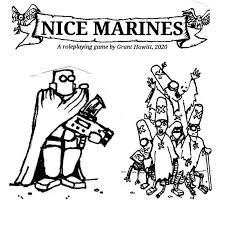
There are games that arrive with binders of lore, intricate rules, and the expectation that you will prepare. Then there is Nice Marines by Grant Howitt, a free one-page RPG that asks the simple question: what if genetically engineered space marines tried to solve problems with diplomacy?

I first came across this game on my favourite actual play podcast Dungeons and Daddies. Definitely worth a listen.

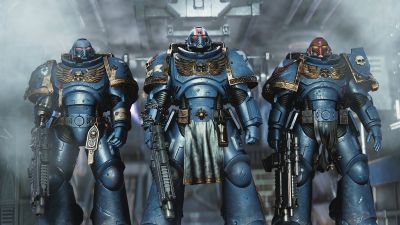
Everyone plays a kick ass, no nonsense murder machine in service to the Emperor of Mankind. Anyone who has walked past a Warhammer store knows the drill. Buzz cut, massive power armour and a very clear view on what action to take against heretics and aliens. Kill them all.

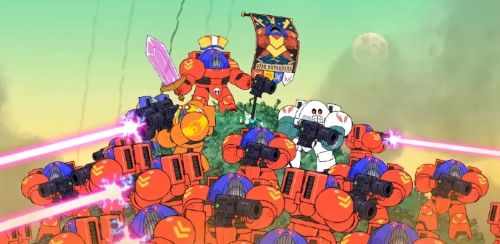
In this game the twist is that the war on this world is over and this team of murder hobos has been left to get the planet ready for the new imperial government that arrives in a weeks time. So no shooting your way out of problems. Diplomacy and tact are needed by these super soldiers who usually do their talking from the barrel of a gun.

Given it was one page of rules and I’d already planned and run Shoot out at Virellion Estate that day I decided to hot the table with zero prep. No maps, stat blocks or carefully balanced encounters. Just a table, some dice, and the kind of players who are keen to lean into whatever crazy concept hits the table.

The day of gaming had been so busy that I hadn’t had a chance to worry about this lack of prep until dinner, when it suddenly dawned on me that I’d be running it…. Here’s how it went.

The Setup: Bureaucrats vs Zealots

To say I didn’t do any prep is a slight over exaggeration. Straight after dinner I sat down with the one page of rules and rolled up the two factions who needed their dispute solved.

  • The Capuleys: bureaucratic administrators, drowning in parchment and procedure
  • The Motags: religious zealots of the Imperial Church, fueled by doctrine and divine certainty

Both had the same goal: Control the Governor’s Palace, and build a statue honouring the war hero fallen Brother-Captain Valek. No deeper intrigue. No hidden twist. Just two unstoppable forces politely trying to outmaneuver each other.

Besides writing a name and two word description for the leader of each faction, that was the extent of my prep.

Making It Work (Because the Rules only give you so Much)

Being literally one page Nice Marines is extremely light on guidance for the games master. So I bolted on a simple structure:

  • Each round = one day
  • Each marine gets one action per day
  • At the end of each day, everyone meets back at base to discuss their next plan
  • The bosses return on Day 5, so everything had to be “resolved” by then

This gave the game a rhythm and clear direction to the players around how to achieve their goals. As we had eight players, it was going to be difficult to keep them all engaged. Having a structure like this meant that no-one hogged the spotlight and there was a clear area for actions and discussion stopping the analysis paralysis that sometimes plagues players.

The Dice: Agents of Glorious Ruin

The core mechanic of this game is beautifully chaotic:

  • Roll low → something bad happens
  • Roll too high → something catastrophic happens

Outright success is an unusual thing to achieve. Only different flavours of disaster.

From this…..

Highlights from the Descent into Madness

I’m lucky in that my players are always up for some silliness. And that is what we got. Here ae some of the highlights from the session.

  • The planet’s communications system was accidentally destroyed during what was meant to be a simple data gathering excercise.
  • The meat farming industry suffered a similar fate, which raised some uncomfortable logistical questions about feeding the population.
  • A political marriage was arranged between the rival families to secure unity…
  • …which led to the murder of the now inconvenient spouses.
    Yes. That escalated quickly. The tone briefly dipped into something surprisingly dark before bouncing back into absurdity.
  • A grand parade featuring jetpacks turned into a skyborne chain reaction of explosions, debris, and heroic overcompensation.

Despite causing irreparable damage to the planet our bred-for-war heroes managed to solve the dispute and prepare the planet for Imperial rule.

to this… Space Kings!

The Emperor Mechanic (House Rule Madness)

We added one rule that, frankly, stole the show. Whenever anyone praised the Emperor, everyone at the table had to immediately praise the Emperor and make the sign of the Aquila.

Last person to do it? They get a black mark.

At the end of the game, whoever had the most black marks would likely be… dealt with… by the Inquisition. This did two things:

  1. Kept everyone constantly on edge
  2. Turned casual dialogue into a reflex-testing panic sport

You haven’t lived until you’ve seen a table of grown adults snap into synchronized religious fervour because someone muttered “for the Emperor” under their breath.

Renowned author Dan Abnett knows the Aquila. He wont be talking to the inquisition any time soon.

An Unexpected Story

What surprised me most wasn’t the explosions or the chaos. It was the story that emerged. No one sat down intending to tell a tale about a forced political marriage spiralling into dark comedy. No one planned the uneasy alliance, the performative unity, or the quiet unraveling beneath it. But it happened anyway.

It seems that when you strip a game down to almost nothing, what fills the space is player ingenuity. And in this instance, morally questionable wedding planning.

Final Thoughts on Nice Marines

Nice Marines was amazing fun to run and from what I gather to play. However, it does rely on the following, which may not be every groups cup of tea.

  • Improvisation
  • Player creativity
  • A willingness to let things go completely off the rails

If you need structure or definitive rules, it will frustrate you. However, if instead you enjoy improvisational craziness and your group has a spare couple of hours definitely give it a go.

Praise the Emperor. Quickly now.

Bullets, Bandannas, and Beautiful Nonsense: Playing 80’s Action Dudes

There are roleplaying games where you carefully track encumbrance, calculate modifiers, and debate the tactics of which spell to cast first. And then there are games where you kick down a door, fire an assault rifle one-handed, and shout something so gloriously ridiculous that reality slaps your back and gives you your hit points back.

80’s Action Dudes, created by my mate Marty, lives proudly in the second category.

Welcome to the Jungle (Bring a Soundtrack)

From the moment we sat down, the tone was locked in harder than a flexed bicep in a sleeveless vest. An 80s rock soundtrack blared in the background, all electric guitars and swagger, the kind of music that makes you feel like you could outrun an explosion purely out of principle. Marty had curated the perfect soundtrack with bands like Poison, Whitesnake and Boston, that had us all ready to play before we even created our characters.

It only took Marty 2 minutes to explain the system of 80’s Action Dudes, a clever hack of Cthulhu Dark by Graeme Walmsley. Different dice for different guns (D4, D6, D10) and the dice didn’t tell you if you hit. No way. They told you how many people you took out of action.

We came to kick ass and chew gum, and we were all out gum. Oh and we had three hit points.

Character Creation: Maximum Velocity, Zero Brakes

Character creation was also quick and easy. You needed:

  • A cool name
  • A main weapon
  • A one line description
  • Some special kit

That’s it. Vibes and testosterone.

Enter my character:

Rusty MacGregor
Ex–French Foreign Legionnaire. American as fuck.

Armed with his trusty assault rifle, razor sharp machete, and a tin of chewing tobacco, Rusty also sported a stars and stripes bandanna across his ruggedly handsome brow and was ready for action.

The Action Dude Team… you get the picture

The Crew: The Action Team

Our team was exactly what you’d hope for:

  • A Chinese ninja who moved like a shadow deadly throwing stars at the ready
  • A bare-knuckle fighter built like Van Damme with mad nunchuck skills
  • A mad radioman “Giggles”
  • Two M60 armed musclemen Rip and Butch.

Together, we were dropped into a jungle with one mission:

Take out a camp of commie insurgents. No diplomacy. Just kicking ass and shooting guns.

Mechanics That Punch You in the Face (In a Good Way)

The genius of the game wasn’t just in its theme, it was in how the mechanics fed that theme. Marty had got the balance just right.

Grenades? You didn’t roll for them. You physically threw balls into a bucket. Missed the bucket? Bad luck. That grenade is now someone else’s problem. Hit it? Boom. Cue cheering, high-fives, and a slow-motion dive.

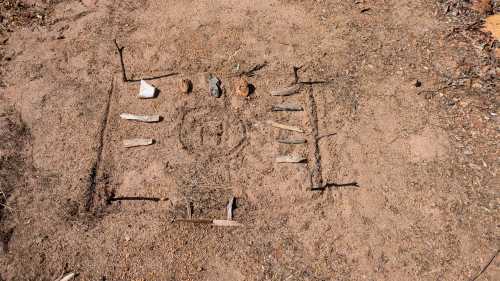
We even had a proper mud map laid out in the garden adding to the immersion of our grand tactical planning.

Mud map ready for our Action Dudes to plan their assault

Now here’s where the game transcends even further. When you took wounds, you didn’t just sit there and sulk like an unpatriotic man baby. You earned them back the only way that matters:

One-liners.

Drop something suitably punchy, and you’d claw back your health.

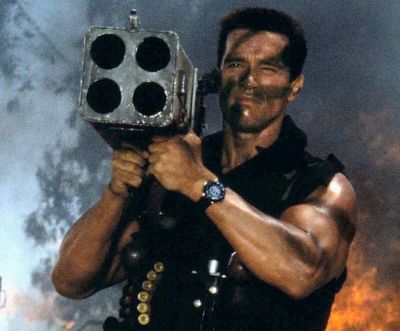
Something in the spirit of Arnie and Stallone, like:

“I eat Green Berets for breakfast. And right now, I’m very hungry!”

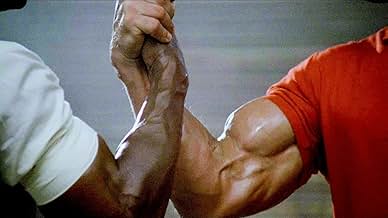
Alternatively, you could clasp hands with a teammate, lock eyes like long-lost brothers, and bellow:

“SON OF A BITCH!”

Instant recovery to full hit points!

Action dude HP recovery

Scenes That Shouldn’t Work (But Absolutely Do)

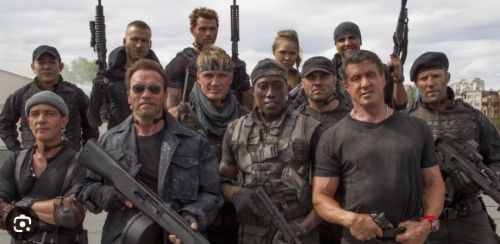
What followed was a cascade of moments that felt ripped straight out of an Expendables fever dream:

  • Rusty leaping from a creek firing into enemy reinforcements
  • The ninja appearing and disappearing like a lethal magic trick
  • Grenades arcing through the air with varying degrees of success and panic
  • Entire squads of enemies being removed from existence in single, glorious dice rolls
  • The ammo dump exploding in a tongue of flame
  • Rusty dying in a blaze of glory at the helm of a Russian attack helicopter (dont ask)

It was loud, chaotic and deeply, deeply … fun!

Why It Works

At its core, 80’s Action Dudes is a masterclass in one simple idea:

Commit to the bit.

The rules are light, but laser-focused. Every mechanic pushes you to be louder, bigger, and more ridiculous. There’s no room for hesitation, only escalation. And because everyone understands the tone, the table becomes a kind of shared action movie, where each player tries to outdo the last in sheer action-hero bravado.

The result? Eight grown adults laughing like lunatics while throwing pretend grenades and inventing increasingly terrible one-liners.

What it’s all about

Final Thoughts: Explosions Optional (But Encouraged)

What this game proves, more than anything, is that you don’t need complexity to create something unforgettable.

  • Give players a strong theme.
  • Give them permission to go all in.
  • Add a few clever mechanics that reinforce the fantasy.

Then stand back and watch the magic happen. 80’s Action Dudes wasn’t just a game., it was a riot. And Marty was an absolute legend for pulling together such a memorable game.

Nine Player Chaos: Multiplayer Space Weirdos

MartyCon was just around the corner and I had promised to run a multiplayer Space Weirdos game. I wanted to double down on the 40K style Inquisitor games, where alliances were uncertain and every protagonist had their own agenda. I love the 40K universe and all the infighting portrayed in their fiction and I’ve played with this concept before. So I really went for it this time. Here is what I came up with.

The Premise: Everyone Has a Plan. None of Them Align.

The scenario uses the gloriously lean and kinetic ruleset of Space Weirdos. This meant that the game would be fast and brutal. Every player had their own secret primary and secondary objectives, all interlocking and clashing. I had planned for chaos.

The setting: The Virellion (Imperial Governors) estate

The cast: 9+ players.
Each player controls:

  • 1 Character
  • 1 Sidekick
  • 2 Secret Objectives

This means that everyone’s go will be quick, keeping downtime for non active players to a minimum.

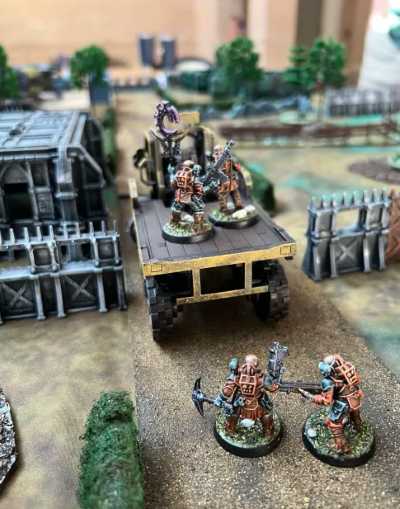
Cult of the Star Filled Maw rams the gates

Some of the Factions & Objectives

  • The Governor
    Objective: Escape the palace alive with your priceless artefact.
  • Security Chief
    Objective: Keep the Governor and his daughter alive at all costs.
  • Cultist Leader
    Objective: Kill the Governor.
  • Governor’s Daughter
    Objective: Usurp (kill) the Governor.
  • Rogue Trader
    Objective: Steal the Necron artefact, protect the Governors daughter.
  • Rebel Lieutenant
    Objective: Free the imprisoned genestealer.
  • Inquisitor
    Objective: Defend the genestealer (for future experiments) and kill all cultists.
  • Mad Priest
    Objective: Kill the Inquisitor.

While there may be obvious teams to start with. These are just temporary and everyone know betrayal is just around the corner, only they don’t know which one.

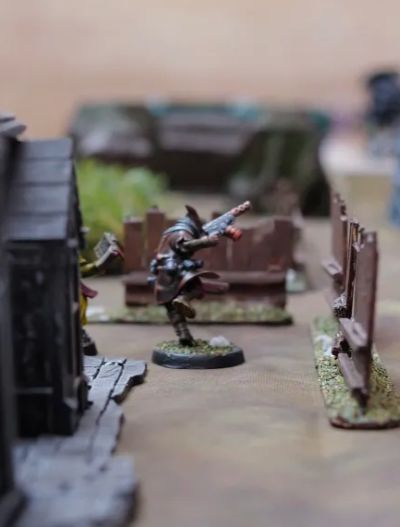
The Mad Priest dashing from the cemetery. “Ill kill that Inquisitor if it’s the last thing I do”

Design for Collision, Not Balance

I’ve experienced multiplayer games where players spend too long maneuvering politely around each other. I wanted the action to begin right from the word go. So I needed to force proximity.

The objectives would create tension, but placing the teams fairly close would make sure that the action started quickly.

In hindsight this worked well, though the main road in the center of the board did create a bit of a firing lane. In addition I think removing 6″ from the width of the board would have help create even more carnage.

Virellion Estate: peaceful and quiet…. Not for long.

How Did it Play?

All in all we had a blast. I GM’d the game and kept everything moving. I introduced paper and pens so players could send each other secret notes. These added lots of fun for those players waiting for their turns, as well as adding another layer to the uncertainty and chaos.

Shots were fired and one Genestealer cultist got killed in turn one. The Genestealers took a beating and couldn’t get anywhere near their objectives. The Rogue Trader tried to defend the Governors only to get shot for his troubles. The Inquisitor and Mad Priest had a standoff while the Governor was assassinated by his own offspring. Joint winners were the Security Team and the Governors Daughter.

The game only ran for a couple of hours before the winners were declared and we moved on to the next game of the day.

Overall it did run well. However, I think I would tweak the objectives a little to make it a bit more of a maelstrom.

I’ve dropped my very unpolished notes here with the player handouts and a few notes on the board set up.

I’ll be running another multiplayer Space Weirdos in a few months, though next time it will be a more collaborative affair.

From Band of Brothers to SAS Rogue Heroes: Inspired Kill Team Missions

There’s something timeless about small squads of soldiers through a larger conflict — tense, personal, and filled with moments of heroism and chaos. That’s what makes shows like Band of Brothers and SAS: Rogue Heroes so compelling. These are exactly the kind of stories that Warhammer 40K: Kill Team excels at telling.

In Kill Team, every operative matters. You’re not moving faceless troops around a battlefield — you’re guiding a handful of specialists, each with their own role, personality, and fate. Which makes it the perfect sandbox to reimagine iconic World War II small unit missions with a sci-fi twist.

Let’s look at how you can take inspiration from Band of Brothers and SAS: Rogue Heroes and turn those classic moments of grit and brotherhood into thrilling tabletop missions.

1. Brecourt Manor Assault (Band of Brothers)

Theme: Tactical problem-solving under fire.
The Scene: Easy Company (episode two) assaults a heavily fortified German artillery position, using initiative and teamwork to neutralize each gun in turn. In fact, this assault was so successful that they still teach it to officer candidates at West Point today.

Kill Team Mission Hook: Your squad must disable a chain of heavy weapon emplacements. Each emplacement requires a different skill test or demolition action to destroy.

  • Objective: Destroy all three artillery emplacements before the end of the battle.
  • Faction Fit:
    • Attacker: Veteran Guardsmen, Intercessors, or Pathfinders.
    • Defender: Traitor Guard, Heretic Astartes, or Necrons.

It’s a mission that rewards smart use of cover, movement, and individual heroics — exactly what Kill Team is built for.

One thing I like about this mission is that you can set up the terrain to reflect the real engagement. Do away with the balanced terrain set ups suggested in the rulebook and give this a go. You don’t have to go with Normandy bocage either, why not set up your more grim dark terrain in a similar configuration.

If you’re worried about balance, why not play the game twice. Switching attacker defender roles each time will a fun experience.

Why not set up your battlefield to reflect the real engagement?

2. Desert Airfield Ambush (SAS: Rogue Heroes)

Theme: Guerilla warfare and improvisation.
The Scene: The SAS (episode 6) raids enemy airfields deep in the desert, using speed and shock tactics to devastating effect.

Kill Team Mission Hook:
One team is guarding a space port with specific objectives (spaceship, fuel depot, pilots building), while the other launches a hit-and-run ambush.

  • Objective: The defender must prevent the attacker from destroying 2/3 of the objectives.
  • Special Rules: Limited visibility due to sandstorm reducing ranged fire; fuel dump and spaceship can explode spectacularly.
  • Faction Fit:
    • Attacker: Ork Kommandos, Kroot Farstalkers, or Ratlings.
    • Defender: Astra Militarum, Adeptus Mechanicus, or Blooded.

This mission brings cinematic chaos to the tabletop — explosions, last stands, and desperate retreats.

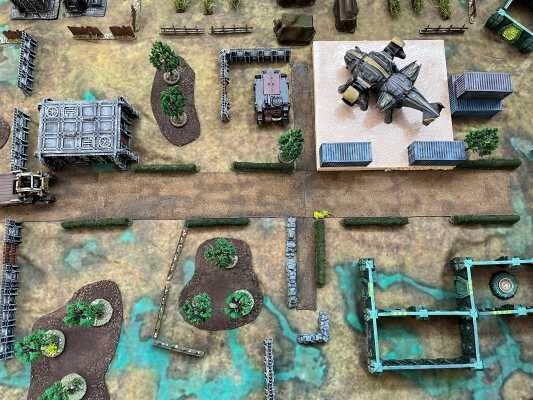
There is a great opportunity to make a themed desert table here. Build it out like an airfield/spaceport. If you have a spaceship model, why not place it front and center. Open spaces, palm trees, pilots mess hut, you get the picture.

This Bolt Action battlefield provides a good suggestion for the table layout. You can find more pics from the Warlord website.

3. Operation Market Garden (Band of Brothers)

Theme: Holding out against overwhelming odds.
The Scene: Allied paratroopers seize Eindhoven only to find themselves isolated and outnumbered as German counterattacks close in.

Kill Team Mission Hook:
A beleaguered squad must hold a key structure (like a comms tower or reactor junction) until reinforcements arrive.

  • Objective: Survive for a set number of turns while preventing the enemy from capturing the objective.
  • Special Rules: The attacker’s numbers increase each round; the defender may receive one small reinforcement drop midway through.
  • Faction Fit:
    • Defender: Imperial Navy Breachers, Inquisition Agents, or Deathwatch marines.
    • Attacker: Chaos Legionaries, Ork Kommandos, or Fellgores.

This setup should create those tense, cinematic moments where every dice roll feels like life or death.

It could be played best as a joint ops mission, with two players fighting off waves of attackers. Why not create a densely packed board to replicate the close confines of the town. Narrow streets will create the need for desperate close combat actions, adding to the difficulty of completing the mission.

Bringing It All Together

By translating these real-world (albeit hollywoodised) operations into Kill Team missions, you blend the historical tension of WWII storytelling with the gothic sci-fi of the 41st millennium. You get all the things that make Band of Brothers and SAS: Rogue Heroes so gripping — camaraderie, courage, chaos — but with plasma rifles and occasional daemon incursions.

Basing your maps on these real engagements and creating asymmetric mission objectives will help add something different to your Kill Team games. So next game night, don’t just roll for missions — tell stories. Steal from history, tweak the details, and create moments that feel like they belong in both Normandy and Necromunda.

When Rival Parties Enter the Dungeon: Competition and Time Pressure

Most of the time when we think of Dungeons & Dragons, we picture a single party of adventurers delving into a dungeon, working together, fighting monsters, and uncovering treasure. But what if there were two rival parties competing for the same goal, racing against each other in real time?

I first came across this idea listening to the excellent podcast Fear of a Black Dragon, where presenter Tom McGrenery described running the Dungeon Crawl Classics adventure Piercing the Demon’s Eye for two groups at the same time. It sounded chaotic, exhilarating, and utterly brilliant.

So of course, I had to try it.

Did it work? Read on to find out.

Two DMs, Two Rival Parties

Together with my fellow DM Rich, we set up a dungeon crawl for ten friends. The twist? Instead of one unwieldy group of ten, we’re splitting them into two rival parties, entering the dungeon (Piercing the Demons Eye) five minutes apart.

The rules of engagement are simple:

  • The dungeon closes in four real-time hours. When the clock hits zero, the dungeon magically shuts. Any characters still in there are trapped, experiencing a slow and agonizing death.
  • The party with the most loot wins. If they make it out in time.
  • We’ll keep tension high with regular real-time countdowns, making every decision feel urgent. One player from each team will be designated time keeper, reminding their team mates to keep moving, or to escape.
  • On top of that, we’re borrowing a mechanic from Blades in the Dark: each time a spell is cast, a clock ticks forward. When it fills, something catastrophic is unleashed into the dungeon.

It’s part dungeon crawl, part pressure cooker, part competitive sport.

What Does This Have to Do With Leadership?

At first glance, this might just sound like a fun twist on D&D (and it absolutely will be). But it’s also a fascinating experiment in leadership under stress. Competition changes everything. When you know another team is out there grabbing treasure, time suddenly becomes your most precious resource. Leaders in the group will have to:

  • Prioritize quickly: Is it worth taking that side passage, or should we push deeper?
  • Manage risk: Do we burn spells now, advancing faster but bringing the catastrophic clock closer to midnight?
  • Balance the team’s needs: Some players may want to fight everything. Others may want to sneak past. Good leadership will mean finding the middle path without wasting precious time.

These dynamics mirror real-world leadership challenges.

Similar scenarios could be run as part of a leadership training exercise. Imagine putting your aspiring leaders through these:

  • Two groups of scavengers in a zombie apocalypse racing to loot supplies before winter. Only one settlement will thrive.
  • Rival companies bidding for the same contract, knowing only one can succeed.
  • Disaster response teams in a crisis where resources are shared between teams and time is brutally limited.

In each case, leaders need to stay calm, make rapid but thoughtful decisions, and keep their team united under pressure.

All of these scenarios can be run using my simple, easy to run Play to Lead ruleset.

Why This Works for Leadership Training

What makes games like this so effective for leadership development is that they feel real. As Jennifer Ouellette explains in Me, Myself, and Why, our brains encode roleplaying experiences as though they genuinely happened. That means when you practice making tough calls, prioritizing under pressure, and communicating clearly in a D&D dungeon, you’re exercising the same leadership “muscles” you’ll use in the workplace.

Adding competition into the mix elevates the stakes. The stress is simulated, but the feelings of urgency, pressure, and rivalry are real enough to create meaningful growth.

Bringing It Back to Work

If you want to use this kind of scenario in a leadership training environment, here are some tweaks:

  • Theme it for your group: Instead of fantasy loot, consider one of the alternative scenarios mentioned above.
  • Make consequences clear: Limited time, limited resources, and a final score that determines success or failure.
  • Encourage reflection afterwards: The real learning happens when teams debrief what worked, what didn’t, and how leadership showed up under pressure.
The happy participants!

Running the Game

What a blast to run! Rich had booked a community hall for the event. Everyone was primed to bring two 5E D&D characters, just in case. First we used a dice bag with coloured dice to randomly assign the teams. After explaining the premise we set the 4 hour timer and we were off.

Rich and I passed each other notes as the adventurers made their way through the dungeon. The players tables were facing each other so they were always aware of the rival party and their progress. Some of the highlights from the game were:

  • One party coming upon the other and sending an owl to trail them.
  • The first party setting traps for the second.
  • One party battling for their lives, the second popped their head in the room before beating a hasty exit.
  • The slow realisation that casting spells had an impact on the dungeon clock, but not knowing quite what it was counting down to.
  • One player sifting through the treasure horde and throwing unwanted bits into oblivion.

The teams were going to be judged by how much treasure they retrieved. So I made a series of treasure cards describing what they found, but with no value written on them. At the end of the session we totaled up the value of the rescued valuables to determine a winner. There was only 100gp between the two parties!

That being said noone actually made it out alive……

This photo shows our set up. DMs back to back, the bright yellow clock countdown to the left.

Did it Work?

Absolutely it did! The players really got into the premise of the game and told us it was a completely different experience to anything else they had played. There was great banter between the tables and the debrief dinner afterwards was great fun as they pieced together what each rival party had been up to.

Rich and I worked really well as a team. Luckily we had done a load of prep before hand so we knew the module well and how we were going to handle different parts of it. Passing notes between ourselves also added additional paranoia to the players. Always a win.

One interesting thing was that the players actually engaged with the adventure faster then we though they would. Between the two teams they covered every room and trap. This is a good lesson for next time.

I also made a mistake where my group were moving much faster than the others and caught them up without me realising. So we had two parties in the same place at the same time without seeing each other. Woops. Not to worry though, once I’d worked it out I managed to stall my guys long enough for it all to settle out again.

Final Thoughts

In the end, this experiment is both a thrilling way to play D&D and a powerful way to test leadership under competition and time stress. When two parties enter the dungeon, only one comes out on top—but everyone comes out having had a different and fun experience.

If this sort of thing appeals to you I would strongly suggest grabbing a co-DM and running this for your friends. It was a memorable event for everyone, with lots of pressure, paranoia and of course laughter.