Bullets, Bandannas, and Beautiful Nonsense: Playing 80’s Action Dudes

There are roleplaying games where you carefully track encumbrance, calculate modifiers, and debate the tactics of which spell to cast first. And then there are games where you kick down a door, fire an assault rifle one-handed, and shout something so gloriously ridiculous that reality slaps your back and gives you your hit points back.

80’s Action Dudes, created by my mate Marty, lives proudly in the second category.

Welcome to the Jungle (Bring a Soundtrack)

From the moment we sat down, the tone was locked in harder than a flexed bicep in a sleeveless vest. An 80s rock soundtrack blared in the background, all electric guitars and swagger, the kind of music that makes you feel like you could outrun an explosion purely out of principle. Marty had curated the perfect soundtrack with bands like Poison, Whitesnake and Boston, that had us all ready to play before we even created our characters.

It only took Marty 2 minutes to explain the system of 80’s Action Dudes, a clever hack of Cthulhu Dark by Graeme Walmsley. Different dice for different guns (D4, D6, D10) and the dice didn’t tell you if you hit. No way. They told you how many people you took out of action.

We came to kick ass and chew gum, and we were all out gum. Oh and we had three hit points.

Character Creation: Maximum Velocity, Zero Brakes

Character creation was also quick and easy. You needed:

  • A cool name
  • A main weapon
  • A one line description
  • Some special kit

That’s it. Vibes and testosterone.

Enter my character:

Rusty MacGregor
Ex–French Foreign Legionnaire. American as fuck.

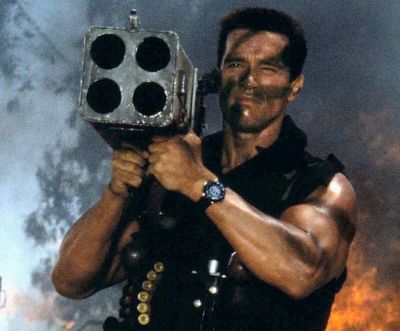
Armed with his trusty assault rifle, razor sharp machete, and a tin of chewing tobacco, Rusty also sported a stars and stripes bandanna across his ruggedly handsome brow and was ready for action.

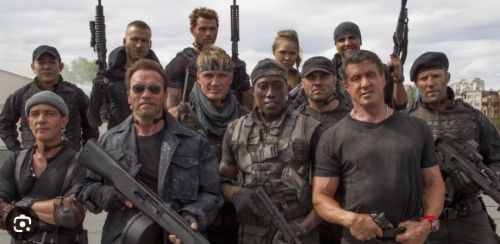
The Action Dude Team… you get the picture

The Crew: The Action Team

Our team was exactly what you’d hope for:

  • A Chinese ninja who moved like a shadow deadly throwing stars at the ready
  • A bare-knuckle fighter built like Van Damme with mad nunchuck skills
  • A mad radioman “Giggles”
  • Two M60 armed musclemen Rip and Butch.

Together, we were dropped into a jungle with one mission:

Take out a camp of commie insurgents. No diplomacy. Just kicking ass and shooting guns.

Mechanics That Punch You in the Face (In a Good Way)

The genius of the game wasn’t just in its theme, it was in how the mechanics fed that theme. Marty had got the balance just right.

Grenades? You didn’t roll for them. You physically threw balls into a bucket. Missed the bucket? Bad luck. That grenade is now someone else’s problem. Hit it? Boom. Cue cheering, high-fives, and a slow-motion dive.

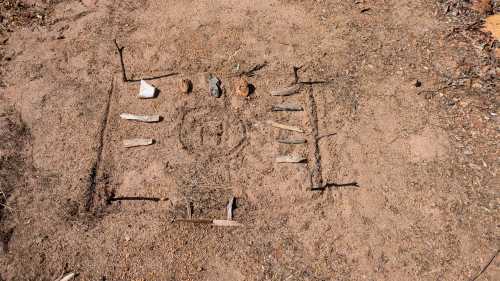
We even had a proper mud map laid out in the garden adding to the immersion of our grand tactical planning.

Mud map ready for our Action Dudes to plan their assault

Now here’s where the game transcends even further. When you took wounds, you didn’t just sit there and sulk like an unpatriotic man baby. You earned them back the only way that matters:

One-liners.

Drop something suitably punchy, and you’d claw back your health.

Something in the spirit of Arnie and Stallone, like:

“I eat Green Berets for breakfast. And right now, I’m very hungry!”

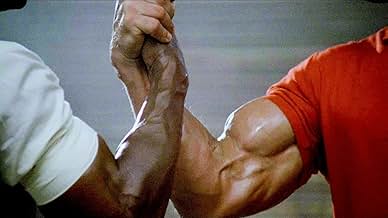
Alternatively, you could clasp hands with a teammate, lock eyes like long-lost brothers, and bellow:

“SON OF A BITCH!”

Instant recovery to full hit points!

Action dude HP recovery

Scenes That Shouldn’t Work (But Absolutely Do)

What followed was a cascade of moments that felt ripped straight out of an Expendables fever dream:

  • Rusty leaping from a creek firing into enemy reinforcements
  • The ninja appearing and disappearing like a lethal magic trick
  • Grenades arcing through the air with varying degrees of success and panic
  • Entire squads of enemies being removed from existence in single, glorious dice rolls
  • The ammo dump exploding in a tongue of flame
  • Rusty dying in a blaze of glory at the helm of a Russian attack helicopter (dont ask)

It was loud, chaotic and deeply, deeply … fun!

Why It Works

At its core, 80’s Action Dudes is a masterclass in one simple idea:

Commit to the bit.

The rules are light, but laser-focused. Every mechanic pushes you to be louder, bigger, and more ridiculous. There’s no room for hesitation, only escalation. And because everyone understands the tone, the table becomes a kind of shared action movie, where each player tries to outdo the last in sheer action-hero bravado.

The result? Eight grown adults laughing like lunatics while throwing pretend grenades and inventing increasingly terrible one-liners.

What it’s all about

Final Thoughts: Explosions Optional (But Encouraged)

What this game proves, more than anything, is that you don’t need complexity to create something unforgettable.

  • Give players a strong theme.
  • Give them permission to go all in.
  • Add a few clever mechanics that reinforce the fantasy.

Then stand back and watch the magic happen. 80’s Action Dudes wasn’t just a game., it was a riot. And Marty was an absolute legend for pulling together such a memorable game.

When Rival Parties Enter the Dungeon: Competition and Time Pressure

Most of the time when we think of Dungeons & Dragons, we picture a single party of adventurers delving into a dungeon, working together, fighting monsters, and uncovering treasure. But what if there were two rival parties competing for the same goal, racing against each other in real time?

I first came across this idea listening to the excellent podcast Fear of a Black Dragon, where presenter Tom McGrenery described running the Dungeon Crawl Classics adventure Piercing the Demon’s Eye for two groups at the same time. It sounded chaotic, exhilarating, and utterly brilliant.

So of course, I had to try it.

Did it work? Read on to find out.

Two DMs, Two Rival Parties

Together with my fellow DM Rich, we set up a dungeon crawl for ten friends. The twist? Instead of one unwieldy group of ten, we’re splitting them into two rival parties, entering the dungeon (Piercing the Demons Eye) five minutes apart.

The rules of engagement are simple:

  • The dungeon closes in four real-time hours. When the clock hits zero, the dungeon magically shuts. Any characters still in there are trapped, experiencing a slow and agonizing death.
  • The party with the most loot wins. If they make it out in time.
  • We’ll keep tension high with regular real-time countdowns, making every decision feel urgent. One player from each team will be designated time keeper, reminding their team mates to keep moving, or to escape.
  • On top of that, we’re borrowing a mechanic from Blades in the Dark: each time a spell is cast, a clock ticks forward. When it fills, something catastrophic is unleashed into the dungeon.

It’s part dungeon crawl, part pressure cooker, part competitive sport.

What Does This Have to Do With Leadership?

At first glance, this might just sound like a fun twist on D&D (and it absolutely will be). But it’s also a fascinating experiment in leadership under stress. Competition changes everything. When you know another team is out there grabbing treasure, time suddenly becomes your most precious resource. Leaders in the group will have to:

  • Prioritize quickly: Is it worth taking that side passage, or should we push deeper?
  • Manage risk: Do we burn spells now, advancing faster but bringing the catastrophic clock closer to midnight?
  • Balance the team’s needs: Some players may want to fight everything. Others may want to sneak past. Good leadership will mean finding the middle path without wasting precious time.

These dynamics mirror real-world leadership challenges.

Similar scenarios could be run as part of a leadership training exercise. Imagine putting your aspiring leaders through these:

  • Two groups of scavengers in a zombie apocalypse racing to loot supplies before winter. Only one settlement will thrive.
  • Rival companies bidding for the same contract, knowing only one can succeed.
  • Disaster response teams in a crisis where resources are shared between teams and time is brutally limited.

In each case, leaders need to stay calm, make rapid but thoughtful decisions, and keep their team united under pressure.

All of these scenarios can be run using my simple, easy to run Play to Lead ruleset.

Why This Works for Leadership Training

What makes games like this so effective for leadership development is that they feel real. As Jennifer Ouellette explains in Me, Myself, and Why, our brains encode roleplaying experiences as though they genuinely happened. That means when you practice making tough calls, prioritizing under pressure, and communicating clearly in a D&D dungeon, you’re exercising the same leadership “muscles” you’ll use in the workplace.

Adding competition into the mix elevates the stakes. The stress is simulated, but the feelings of urgency, pressure, and rivalry are real enough to create meaningful growth.

Bringing It Back to Work

If you want to use this kind of scenario in a leadership training environment, here are some tweaks:

  • Theme it for your group: Instead of fantasy loot, consider one of the alternative scenarios mentioned above.
  • Make consequences clear: Limited time, limited resources, and a final score that determines success or failure.
  • Encourage reflection afterwards: The real learning happens when teams debrief what worked, what didn’t, and how leadership showed up under pressure.
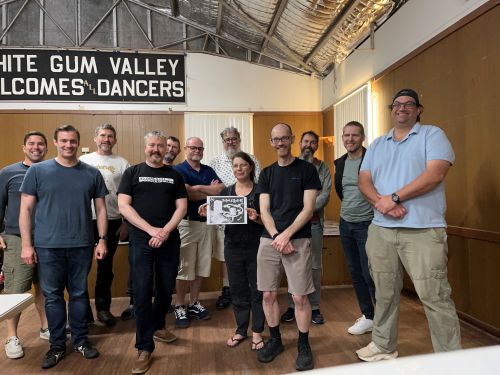
The happy participants!

Running the Game

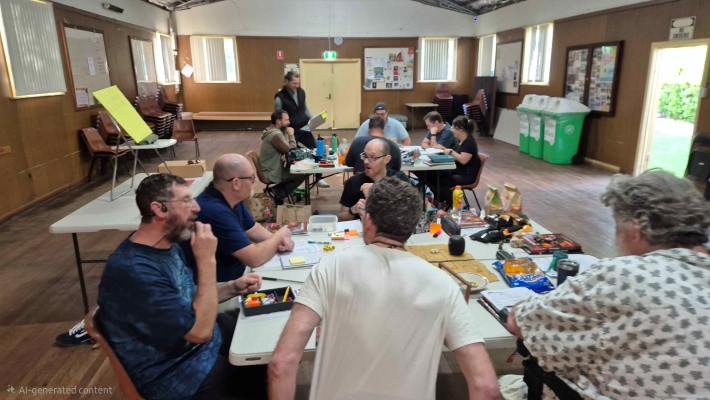
What a blast to run! Rich had booked a community hall for the event. Everyone was primed to bring two 5E D&D characters, just in case. First we used a dice bag with coloured dice to randomly assign the teams. After explaining the premise we set the 4 hour timer and we were off.

Rich and I passed each other notes as the adventurers made their way through the dungeon. The players tables were facing each other so they were always aware of the rival party and their progress. Some of the highlights from the game were:

  • One party coming upon the other and sending an owl to trail them.
  • The first party setting traps for the second.
  • One party battling for their lives, the second popped their head in the room before beating a hasty exit.
  • The slow realisation that casting spells had an impact on the dungeon clock, but not knowing quite what it was counting down to.
  • One player sifting through the treasure horde and throwing unwanted bits into oblivion.

The teams were going to be judged by how much treasure they retrieved. So I made a series of treasure cards describing what they found, but with no value written on them. At the end of the session we totaled up the value of the rescued valuables to determine a winner. There was only 100gp between the two parties!

That being said noone actually made it out alive……

This photo shows our set up. DMs back to back, the bright yellow clock countdown to the left.

Did it Work?

Absolutely it did! The players really got into the premise of the game and told us it was a completely different experience to anything else they had played. There was great banter between the tables and the debrief dinner afterwards was great fun as they pieced together what each rival party had been up to.

Rich and I worked really well as a team. Luckily we had done a load of prep before hand so we knew the module well and how we were going to handle different parts of it. Passing notes between ourselves also added additional paranoia to the players. Always a win.

One interesting thing was that the players actually engaged with the adventure faster then we though they would. Between the two teams they covered every room and trap. This is a good lesson for next time.

I also made a mistake where my group were moving much faster than the others and caught them up without me realising. So we had two parties in the same place at the same time without seeing each other. Woops. Not to worry though, once I’d worked it out I managed to stall my guys long enough for it all to settle out again.

Final Thoughts

In the end, this experiment is both a thrilling way to play D&D and a powerful way to test leadership under competition and time stress. When two parties enter the dungeon, only one comes out on top—but everyone comes out having had a different and fun experience.

If this sort of thing appeals to you I would strongly suggest grabbing a co-DM and running this for your friends. It was a memorable event for everyone, with lots of pressure, paranoia and of course laughter.

Kill Team Narrative Mission: Dinosaur Hunt Challenge

Kill Team is a fun, balanced skirmish game, with very thematic teams to choose from. Space Marines play like tough super soldiers and Orks are very anarchic. It also has a cooperative mode where players work together to beat NPOs (non player operatives) and achieve a shared objective. The range of available teams, 42 at the last count, and stats for various NPOs fills a very nice toolbox for the creation of narrative scenarios. This coupled with the fact that I’ve always wanted to play a big game hunt with dinosaurs since playing 40K as a kid has inspired me to build a kill team narrative mission. Of course there needs to be various twists and turns in there too. After all, no narrative mission is complete without secret objectives.

This mission is for six players plus a GM.

Mission Context

The Imperial Governor of Neblar Prime is celebrating his 150th birthday. Tradition dictates that he host a big game hunt as a core part of the festivities. Being useless with a gun, the Governor has engaged the famed Imperial hunter Thaddeus Ravenwick to bag a few dinosaurs for the feast. Of course, the hunters exploits will be televised across the planet so that all the citizens can share the excitement of this momentous occasion. It will be good for the morale of the workers.

However, the Governor should be more worried about the morale of the workers. Even now rebellion is fermenting, aided by a nefarious genestealer cult. The locals, who revere the dinosaurs are being stirred up and have been convinced that disrupting the hunt will spark an uprising that will overthrow their uncaring overlords once and for all!

The Imperial Hunter confronts the Young blood in thick jungles of Neblar Prime.

Factions and Objectives

This game is set for six players split into two factions, the imperial hunters and the zealous rebels/cult. A third faction, consisting of three dinosaurs will be run by the GM.

To win the imperials must kill more dinosaurs than the rebels can save. Five points each respectively. In addition each player will score three points for completing their secret objective.

Characters

Each player gets one character and one to two support operatives. I have listed them below including the equivalent Kill Team stats for each as well as their secret objective. All the Kill Team operative stats are free to download from the Warhammer website.

Team Imperial

Big Game Hunter:

  • The famous Thaddeus Ravenwick (Angels of Death Eliminator).
  • His trusty manservant Djeeves (Exaction Squad Vigilant).
  • Secret Objective: Keep your legend alive, kill at least two dinosaurs.

Long Suffering Security Detail:

  • Lt Salazza (Rogue Trader Void Master)
  • Shadowy guard (Rogue Trader Death Cult Assassin)
  • Secret Objective: Do your job, make sure Thaddeus is alive at the end of the scenario.

Imperial Scouts:

  • Lead scout Ragman (Space Marine Scout Sgt)
  • Scout (Space Marine Scout Hunter)
  • Secret Objective: Had a bar fight with the Rebel Gunna last night and need to finish what he started, make sure he is dead by the end of the scenario.

Rebels (Sneaky Genestealer Cult!)

The Boss:

  • Rebel Leader Vispoz (Wyrmblade Kelemorph)
  • Cult Brother (Brood Brother trooper)
  • Secret Objective: Make sure Thaddeus is dead by the end of the scenario and fuel the fire of the rebellion.

The Heavy

  • Gunna Bigarms (Brood Brother with grenade launcher)
  • Buddy (Brood Brother trooper)
  • Secret Objective: Had a bar fight with the Scout Ragman last night and need to finish what he started, make sure he is dead by the end of the scenario.

The Young Blood

  • Falco Soarer (Wyrmblade Primus)
  • Buddy (Brood Brother trooper)
  • Secret Objective: If The Boss doesn’t make it out alive you’ll get promoted. Make sure he doesn’t.

Kill Team Dinosaurs

The GM will control three mega fauna (dinosaurs) that the hunting party are stalking. These will be set up together in the designated area. Kill team stats as follows:

Grand Lizard (x1):

  • APL 3, Move 6″, Save 4+, Wounds 30
  • Melee Claws and Teeth Attack 6, 3+ 5/6 Relentless
  • Ignore piercing (tough hide), can attack twice per activation.

Sub Lizard (x2):

  • APL 2, Move 7″, Save 5+, Wounds 20
  • Melee Teeth Attack 4 3+ 4/5

The kill team dinosaurs operate in a simple way.

  • If they can see an operative – Charge and attack the closest.
  • If they cannot see an operative move in a random direction.
“I’m sure the lizard is around here somewhere”

Game Set Up

For this Kill Team narrative mission place thick jungle terrain across the board. Feel free to add ruined temples, abandoned hab blocks etc. Make the terrain denser than a normal Kill Team battle. A jungle stream with 2 bridges is also a fun addition. The dinosaurs start in a clearing to the right of the board. Make sure to have no firing lanes between the Imperial deployment and the dinosaur clearing.

Kill Team Narrative Mission map – play around with the set up to make something that looks thematic with limited firing lanes.

Terrain Rules

Some suggested rules for the terrain are:

  • Stream – minus 2″ to movement when crossing.
  • Jungle – blocks line of sight and gives light cover.
  • Ruins etc – heavy cover and blocks line of sight.

Playing The Mission

Players position themselves around the table in alternating order: Imperial-Rebel-Imperial-Rebel etc. Roll for initiative and play moves in the above order.

No tac ops, no crit ops. The sole mission is that described above.

Play lasts for 4 turns.

Final Thoughts

Although I’ve designed this narrative mission with Kill Team in mind this could very easily be ported to Space Weirdos or 5 Parsecs from Home. In fact I’m aiming to run this at the local club using Kill Team and Space Weirdos for the next Marty Con. I’ll write up a battle report when the dust has settled.

I’d love to hear if anyone uses this scenario. But if nothing else I hope I’ve shown that Kill Team can be used for some different narrative style missions. There is so much scope here. Lots of inspiration can be drawn from WW2 commando actions and I’m looking at how to create a 40Kified Battle of Termoli.

You can see more about the narrative Kill Team Campaign I ran here.