
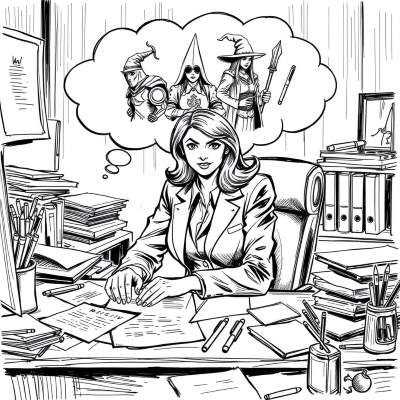
When you sit down to create a Dungeons & Dragons character, you’re not just picking stats and equipment. You’re making choices about identity. About values. About how this character will behave under pressure and what kind of presence they’ll have in a group. In short?, you’re designing a leadership identity.
Whether your character is a fearless fighter, a cunning rogue, or a quiet cleric, you’re crafting someone who will make decisions, face consequences, collaborate with others, and influence outcomes. Sound familiar?
It should—because it mirrors exactly what leaders do in the real world.
Let’s explore how character creation in D&D is not just a game mechanic but a powerful lens through which you can reflect on your own leadership style, strengths, and the values you want to embody.
The Leadership Behind the Character Sheet
At its core, character creation asks:
- What kind of person am I going to be in this world?
- How do I solve problems?
- What matters most to me—justice, glory, loyalty, freedom?
- How do I relate to others in a team setting?
These aren’t just questions for adventurers. They’re questions for leaders.
Will your paladin stand firm in the face of danger, even if it means sacrificing themselves? Does your bard lead with words, persuasion, and empathy? Perhaps your druid will observe quietly before acting, keeping a bigger picture in mind?
These traits translate seamlessly to the workplace. We’ve all seen leaders who act boldly like a barbarian, strategize like a wizard, or support others like a healer. And just like in D&D, no single style is “best.” What matters is how well you understand your own approach—and how it fits into your team.
A Safe Space to Experiment with Leadership Identity
One of the most powerful aspects of D&D is that it gives you a safe, imaginative space to try out new ways of being. Want to explore what it’s like to lead from the front rather than behind the scenes? Try playing a warlord-style fighter. Curious about what happens if you prioritize compassion over efficiency? Build a cleric who refuses to leave anyone behind.
This experimentation can be surprisingly revealing. It allows you to:
- Explore values that you’re drawn to—but haven’t fully expressed.
- Observe how others respond to those values.
- Notice which behaviours feel natural and which feel forced.
- Reflect on how your “character” influences group dynamics.
And because it’s a game, the stakes are low—but the insights are real.
How Others Perceive Your Values
It’s one thing to intend to be a fair, inspiring, or decisive leader. It’s another to be seen that way by others. Through gameplay, you can observe how your fellow players react to your character’s choices:
- Do they trust your judgement?
- Do they turn to you in a crisis?
- Do they challenge your decisions—or follow your lead?
This feedback loop—however subtle—mirrors real leadership. And it can help you see gaps between your internal values and your external impact. Just like in professional life, D&D lets you discover that sometimes your actions don’t communicate what you think they do. Remember, that’s not a failure but rather a chance to grow.
A Tool for Leadership Reflection
For this to work properly, you’ll need to take some time to reflect on your character and how they are interacting with the game and the other players. Here’s some thoughts on how you can intentionally use character creation to help reflect on your leadership development:
1. Choose a Leadership Trait to Explore: Pick something you’d like to develop—decisiveness, empathy, integrity, adaptability—and build a character who embodies that trait.
2. Journal After Sessions: Reflect on how your character handled situations. Did you live up to the values you set? How did it feel? What worked? What didn’t?
3. Ask for Player Feedback: After a few sessions, ask your fellow players how they see your character. What kind of leader do they think they are? You might be surprised at the answers.
4. Try Different Styles Over Time: Don’t just play one kind of hero. Use future campaigns to explore other leadership models—direct, supportive, democratic, visionary.
5. Translate Back to Real Life: After a breakthrough in-game, ask: How might this apply to a challenge I’m facing at work?
Final Thoughts on Exploring Your Leadership Identity
Dungeons & Dragons isn’t only about casting spells and swinging swords. It teaches us about who we are when faced with decisions, when part of a group, and when given the chance to lead. In character creation, we see reflections of our real-life selves—our hopes, our strengths, our blind spots. And by exploring leadership in a game world, we gain insights, that help us grow in the real one.
So next time you sit down to build a character, ask yourself:
What kind of leader do I want to be?