When People Disagree — Lessons from Leadership and the DM’s Chair

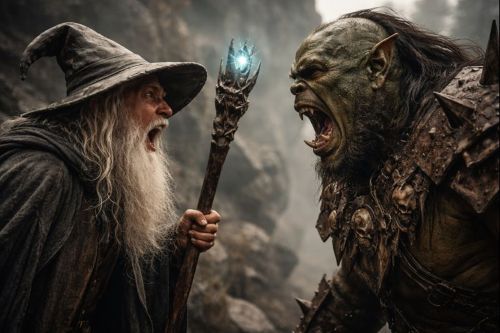
an orc and a wizard shouting at each other in disagreement

No matter how experienced you are, there’s one truth every leader (and every Dungeon Master) has to face: people won’t always agree with you. It might be a team member who challenges a decision you’ve made, or a player who doesn’t like the way a campaign is going. Disagreement is inevitable — but it isn’t necessarily a bad thing. In fact, learning how to handle it well is one of the most important skills a leader or DM can develop.

Of course, the goal isn’t to avoid disagreement. It’s to create an environment at work or at the gaming table, where people can disagree safely and constructively, without damaging trust or momentum.

Let’s look at how that plays out in both leadership and Dungeons & Dragons.

Leadership: Turning Disagreement into Growth

When someone disagrees with you as a leader, your instinct might be to defend your decision or to convince them you’re right. After all, you’ve probably spent time thinking through your reasoning and believe it’s the best course.

But disagreement isn’t opposition — it’s information. It’s a sign that someone cares enough to speak up, and that’s worth paying attention to.

Good leaders understand that healthy conflict strengthens teams. It surfaces blind spots, tests assumptions, and builds buy-in when handled respectfully. The key is to stay curious instead of defensive.

Some things to consider when someone disagrees:

  • Pause and listen. Don’t rush to explain. Let them talk, and make sure they feel heard.
  • Seek to understand the “why.” Is it about the decision itself, the process, or how it impacts them personally?
  • Acknowledge what’s valid. You don’t have to agree entirely to recognise a good point.
  • Decide and explain. If you still believe your decision is right, explain your reasoning transparently. People can handle “no” much better than silence or inconsistency.

Handled this way, disagreement becomes part of a healthy culture of trust — where people feel safe to challenge ideas without fear of reprisal. That’s the kind of culture where real innovation happens.

At the D&D Table: Disagreement Behind the Screen

If you’ve ever been a DM, you’ll know that players disagree with you from time to time — and that’s okay. It might be about how a rule is interpreted, a story decision, or a choice you’ve made for an NPC.

Just like in leadership, how you respond sets the tone.

A defensive DM can make players feel shut down. But a DM who listens, stays open, and keeps the focus on shared fun can turn disagreement into collaboration.

Here are a few ways to keep things healthy when conflict arises at the table:

  • Remember the goal: shared fun. The rules and the story are tools to help everyone have fun — not weapons to win arguments.
  • Listen before ruling. Let players make their case. Sometimes they’re right, or at least have a fair point you hadn’t considered.
  • Make a call, but explain it. The DM’s decision is final in the moment, but explaining your reasoning builds trust.
  • Revisit later if needed. If something still feels unresolved, talk about it after the session when emotions have cooled.

I’m very collaborative as a DM and if someone questions a ruling we discuss it openly at the table. If it’s going to slow down gameplay, I sometimes make a ruling at the time with the proviso that we look up what we need to after the session and make a decision then.

Common Ground: Leadership and DMing

The parallels between leadership and being a DM are striking when it comes to handling disagreement. Both roles put you in a position of authority, but both work best when that authority is rooted in trust, not control.

In both spaces:

  • Disagreement shows engagement — people care enough to speak up.
  • Listening builds credibility far more than arguing.
  • Transparency about your reasoning helps others understand and respect your decisions.
  • Humility — admitting when you got it wrong — earns lasting respect.

Disagreement handled well doesn’t weaken your authority. It strengthens it. It shows confidence, empathy, and maturity.

The Takeaway

Whether you’re leading a project team or running a D&D campaign, disagreement is part of the journey. It can be uncomfortable, sure — but it’s also where growth happens.

As a leader, your job isn’t to eliminate conflict, but to model how to handle it well. As a DM, your goal isn’t to control every outcome, but to guide the story collaboratively.

In both cases, the secret is simple: listen deeply, decide clearly, and care genuinely. When people see that you value their input — even when you disagree — they’re far more likely to trust your leadership and follow your lead into the next big adventure.

Because whether it’s in the boardroom or at the gaming table, leadership isn’t about always being right. It’s about creating the kind of space where everyone feels they belong, even when they don’t all agree.

Stories Lived. Stories Told Podcast

A few months ago I recorded an episode of the Stories Lived. Stories Told. podcast hosted by Abbie VanMeter. Abbie was an excellent host, who made the experience very straightforward and the kept the conversation flowing. We talked about D&D in the context of leadership and communication. Heres the official blurb:

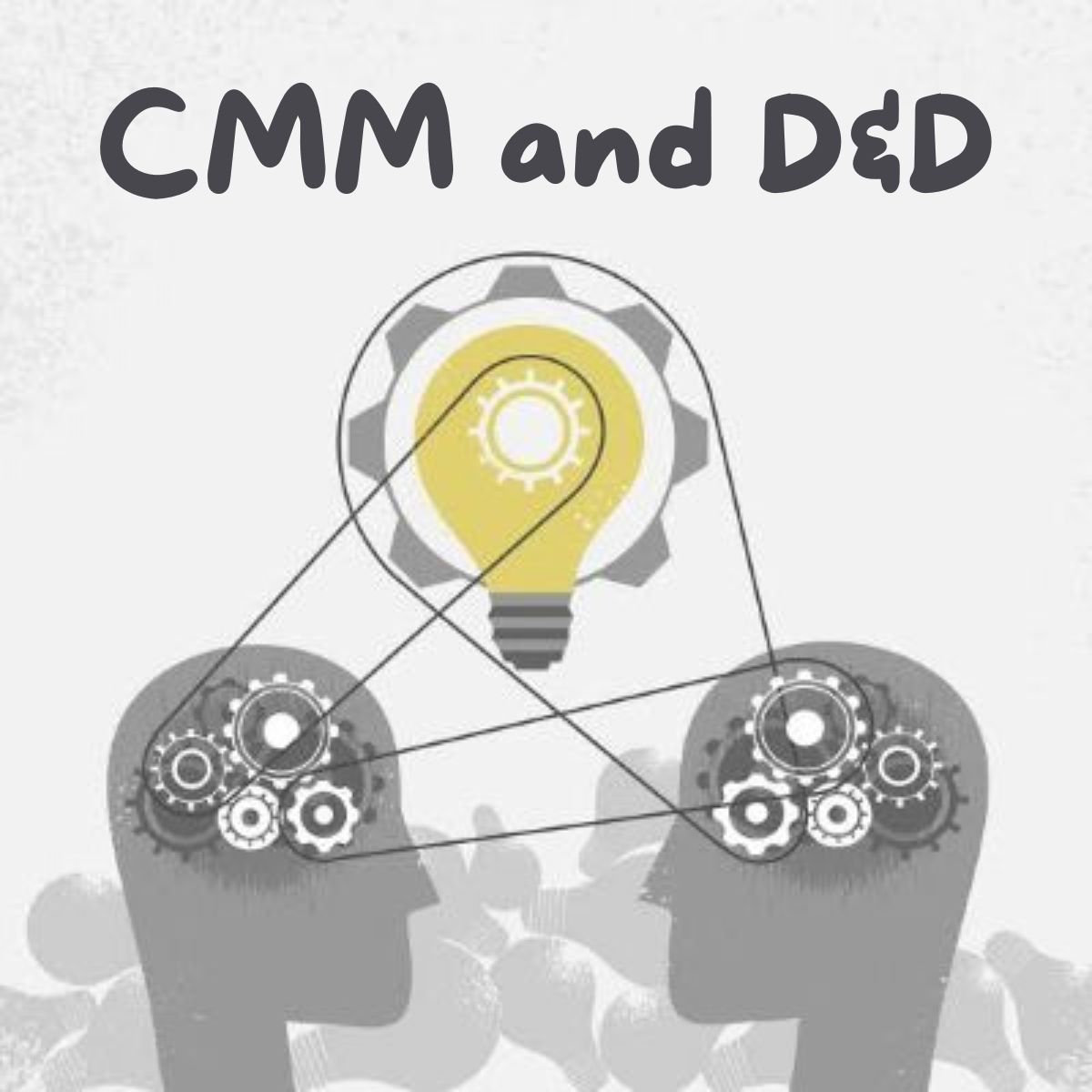
How do games like Dungeons and Dragons enable us to practice a CMM-informed way of relating, participating, and communicating?

Today, Abbie and Tom explore Dungeons and Dragons (D&D) as a powerful practice and metaphor for developing more relational, emergent, and collaborative ways of being and leading, touching on the value of experiental learning in scenarios our brains will remember as real; the need (both in game and out) to coordinate across different meanings being made in each of our own imaginations; and the opportunity to transform and be transformed by collective storytelling and world building.

I had a great time recording the episode and we covered a lot of ground. You can find it by following the links below:

Spotify: https://open.spotify.com/episode/4RDvlAgU0CdgiXk8KtTfAC?si=5004742137b043df

Apple Podcasts: https://podcasts.apple.com/us/podcast/stories-lived-stories-told/id1610827437?i=1000722748681

Substack: https://open.substack.com/pub/cmminstitute/p/on-practicing-leadership-playing?r=3momjn&utm_campaign=post&utm_medium=web&showWelcomeOnShare=true

YouTube: https://youtu.be/9m4Bhtjme14

And the SLST website: https://www.storieslivedstoriestold.com/podcast

I’d love for you to check it out!

For other podcasts that DnD at Work has appeared on check out our page here.

Difficult Conversations in Dungeons and Dragons, More than Comms

Difficult conversations are an inevitable part of life. Unfortunately both Dungeons and Dragons (D&D) and the business world are not exempt from this. In this post, we explore how the Dungeon Master (DM) and players engage in and navigate challenging discussions within the game. Before looking at how these experiences can serve as valuable practice for effective business leadership.

Effective Communication: Setting the Stage for Productive Dialogue

In D&D, the DM and players rely on effective communication to convey ideas, share information, and coordinate actions. The game hinges on the participants talking to one another. The DM must describe the world and situation that the players face. In turn the players need to be clear about how their characters are interacting. If the communication breaks down, the game breaks down.

Similarly, in the business world, leaders must master the art of communication to convey their vision, provide feedback, and resolve conflicts. How else do their teams know what they are trying to achieve. Without easy to understand feedback there is no indication of the quality of their work. Business is built on communication. Many failures could have been avoided if staff communicated better.

By practicing communication skills within the context of D&D, leaders can develop clarity, empathy, and articulation, enabling them to navigate difficult conversations more effectively in the professional realm.

Emotional Intelligence: Understanding and Managing Emotions

Through the nature of the game, D&D often elicits strong emotions, including excitement, frustration, or disappointment. Beating a difficult foe, or losing a beloved character can create strong highs and lows. Both the DM and players must be attuned to their emotions and those of others to create a positive and inclusive environment. Treating others emotions with respect becomes a core part of what makes a fun D&D group.

Emotional intelligence is also vital in business leadership. It helps leaders navigate sensitive topics, recognize and manage emotions, and foster a supportive workplace culture. Understanding the emotional state of your team allows leaders to communicate with tact. It also helps leaders to look after their staffs well being.

Working on difficult conversations in Dungeons and Dragons provides a platform to develop emotional intelligence, facilitating its application in real-world leadership scenarios.

Conflict Resolution: Finding Common Ground

The freeform nature of D&D adventures can introduce conflicts and disagreements among players. Whether deciding a course of action or style of play emotions can get heated. Resolving these conflicts requires effective conflict resolution strategies, such as active listening, seeking understanding, and finding common ground. This resolution falls to all players at the table not just the DM. Sometimes taking a break from the game and having a frank discussion is needed. One thing for certain is that shying away from the difficult conversations usually results in unhappy participants and ultimately the game folding.

Hankerin Ferinale from Rune Hammer Games suggests using a Tribunal type set up where the group meet outside the usual game session to discuss issues openly together. Determine what is working and what is not and then, if needed make change.

Similarly, leaders in the business world often encounter conflicts that demand resolution. Whether in your team, with other teams or clients contentious issues will arise. Having the courage to have a difficult conversation early and actively trying to understand each sides perspective will more often than not solve the problem. At the very least it starts the journey towards resolution.

By engaging in difficult conversations in D&D, leaders can practice conflict resolution techniques, hone their negotiation skills, and foster an environment of collaboration and understanding within their teams.

Finding common ground is a good way to resolve conflict

Active Listening: Honoring Different Perspectives

Running a D&D sessions involves active listening, as players contribute ideas, voice concerns, and share their experiences. The DM must attentively listen to player input to shape the narrative. Players must pay attention to the DM and the other players. This keeps everyone actively involved in growing the game together.

When players don’t practice active listening the game immersion and excitement diminishes. One of the biggest contributors to this is the mobile phone. There is nothing worse than when a player sits at the table on their phone. There is no engagement with the game or the other players and when it is their turn to interact they have no idea what is going on. Committing to active listening during a game session makes the game better for everyone.

Active listening is equally crucial in business leadership, where leaders must hear diverse perspectives, understand the needs of their team members, and encourage open dialogue. If you are talking to a team member pay real attention to what they are saying. Asking relevant questions lets you gain deeper understanding but also shows the team member that you are listening to them and engaged. Practicing active listening in the workplace will grow your reputation as a leader who cares.

Using D&D sessions to practice active listening, leaders strengthen their ability to listen empathetically, cultivate trust, and foster a culture of inclusivity and psychological safety.

Final Thoughts on Difficult Conversations in Dungeons and Dragons

Difficult conversations in Dungeons and Dragons offer valuable practice for business leaders in navigating challenging discussions, fostering effective communication, and promoting a positive team dynamic. By honing communication skills, developing emotional intelligence, practicing conflict resolution, and fostering actively listening within the game, leaders can gain valuable experience and refine their approach to difficult conversations in the business world. By applying the lessons learned from D&D, leaders can foster productive dialogue, build strong relationships, and lead their teams with empathy, clarity, and authenticity.