Another year gone. I cant believe I’ve been writing this blog for over a year and a half. What a journey. Explored some great concepts and I’ve found that I’m really firming up my thinking on using D&D and other rpgs to gain experiential leadership learning. I’ve also met with some amazing people and had thoroughly enjoyable conversations. Good times! This retrospective showcases a few highlights from 2024.
Is it hard to be a dungeon master? One of my most popular posts where I discuss the challenges of DMing as well as providing some tips to get you started. Given the popularity of this article I’m wondering whether a series of DM tips and tricks might not be a good idea for 2025. Watch this space.
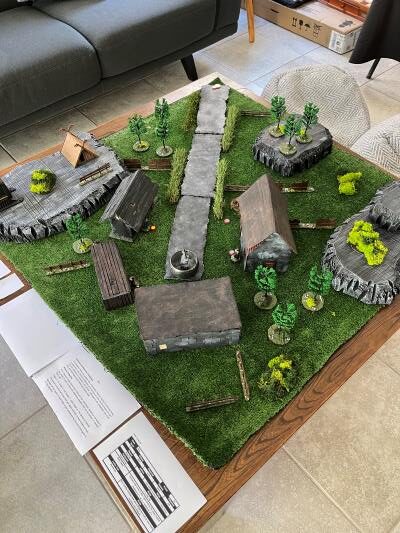
One of the Echoes of Xenos game board set ups
One of the great things about writing around leadership and D&D is designing and playing games that explore these concepts. I designed and ran the Echoes of Xenos event for a group of friends. I took elements of D&D, megagames and miniature wargames to encourage emergent play. Did everyone have fun? Yes. Did it work as planned? Not quite. But I’m taking the learnings and designing a similar event that I will be writing more about soon. I’ll also be designing and playing more games this coming year.
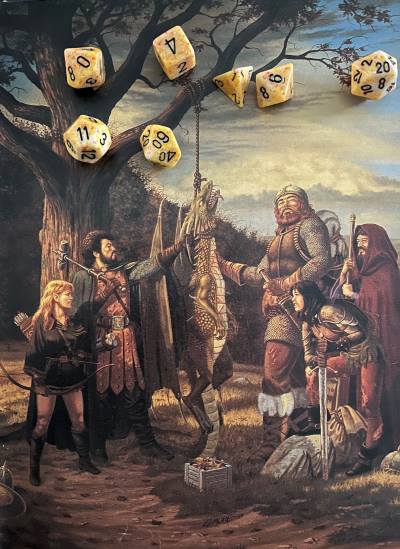
Larry Elmore’s Dragon Slayers and Proud of it.
Another popular post was my take on Larry Elmore’s painting Dragon Slayers and Proud of It. This shows a low level party of adventurers showing off their latest victory. I related it back to celebrating the little wins. Advice that I still need to heed from time to time. It was really fun to explore such an iconic piece of art.
Another fun aspect of this adventure was being invited onto a couple of podcasts to talk about my journey so far. If you want to hear me talk about these topics, my hobby origin story and the campaigns I run listen here:
Finally, 2024 has been a good year for Dungeons and Dragons at Work. But it wouldn’t be possible without people reading it. So thank you to all who stop by and have a read. I hope you are enjoying the content. Feel free to drop suggestions or feedback in the comments below.
Happy New Year and wishing you all a fantastic 2025!
As the festive season approaches, it’s the perfect time to think about gathering friends and family for shared experiences that bring joy, laughter, and a bit of magic. Most people think of Christmas as a time for gift-giving, decorations, and hearty meals. But, it’s also a fantastic opportunity to embark on an epic Dungeons & Dragons adventure. After all, D&D has a lot in common with the spirit of Christmas: camaraderie, storytelling, and imagination.
The Magic of Storytelling
Christmas is steeped in stories—from classic tales like A Christmas Carol to the folklore of Santa Claus. In the same way, Dungeons & Dragons is built on the power of storytelling. Whether you’re a veteran dungeon master or a first-time player, the season provides a perfect backdrop for creating memorable moments. Much like the stories that get passed down during the holidays.
Bringing People Together
The holidays are all about gathering with loved ones. Of course, D&D is one of the best ways to bring people together in a meaningful way. Much like sitting around the Christmas tree or the dinner table, gathering around a D&D table (or even a virtual one) invites everyone to collaborate, strategize, and have fun together. Dungeons & Dragons fosters teamwork and deepens relationships, making it a wonderful way to share quality time with friends and family during the holiday season.
You could even run a special holiday-themed campaign: perhaps a quest to recover stolen gifts from a mischievous goblin or an epic journey through a winter wonderland to stop an ancient frost spirit. With D&D, the possibilities are as endless as your imagination, and the festive setting can add an extra layer of magic to your adventure.
I ran a Christmas themed adventure based loosely on the original Klaus comic book where the party were transported to a magical realm to help the mage Nikmas defeat a villainous overlord. We had great fun and the party ended up burning the overlords castle to the ground. In our campaign world Nikmas is celebrated at the end of every year and castle effigies burned on bonfires. As players we wish each other Merry Nikmas too. This tradition has now been going on for years.
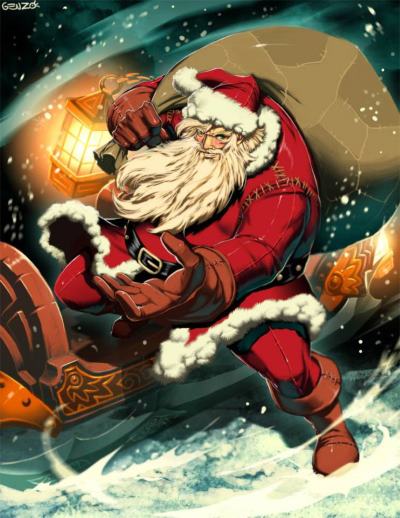
Amazing inspiration for a Christmas themed D&D session.
Giving the Gift of Adventure
Another beautiful parallel between Dungeons & Dragons and Christmas is the act of giving. When you’re a Dungeon Master, you’re constantly crafting experiences for your players—moments of triumph, tension, and laughter. In a way, every session is a gift that unfolds as the game progresses. And for players, they give back with their creativity, problem-solving, and dedication to the story.
This season, consider giving the gift of adventure. Whether it’s a new D&D starter set, custom dice, or even just the time to run a one-shot for a group of friends. Dungeons & Dragons is the gift that keeps on giving, long after the last piece of tinsel has been packed away.
Wishing You a Festive Season of Fantasy
Whether you’re sleighing dragons or just relaxing with hot cocoa and character sheets, Dungeons & Dragons offers a perfect way to add a little more adventure to your Christmas celebrations. So this year, consider gathering your party and diving into a world of magic, heroism, and fun.
Wishing you and your loved ones a joyful, imaginative, and festive season filled with laughter, warmth, and epic quests. Happy holidays, and may your dice always roll high!
I’ll be taking a break from writing to enjoy some time off with family and friends (with some gaming mixed in I hope). Normal service will resume in January.
Characters in roleplaying games are an extension of each player. Which is why character death is more than just a game mechanic—it’s a powerful tool for storytelling, tension, and personal growth. When a beloved character meets their end, it can be devastating for players. Yet, these moments also provide an opportunity to build resilience. In real life, failure often feels like a setback, but it’s actually a critical part of growth. The same is true in D&D: loss, adversity, and even death create some of the most cinematic and unforgettable moments in the game.
In my long-running campaign, we’ve had our fair share of tragic yet unforgettable character deaths. One of my favorites was a dwarf pugilist who heroically fought his last battle, only to be turned into a statue—immortalized in stone, a symbol of both his strength and vulnerability. A halfling midwife was vaporized in a split second by a green dragon, a gut-wrenching moment of loss that haunted the party for sessions afterward. A tiefling warlock sacrificed her very existence to save the rest of the group. Her selfless act transforming the party dynamic forever. These deaths were heartbreaking, but they were also cinematic, exciting, and pivotal moments in the campaign.
Medusa, a regular source of character death
Character death, like failure in life, can feel like an ending. But in D&D, it is also a beginning—a chance to reflect, grow, and adapt. Just like the stories we tell in the game, our failures in real life can become part of a larger journey. They don’t define us, but they do shape us. The more we play, the more we learn that resilience is key to both the game and to life.
Three Tips for Building Resilience Through D&D
1. Embrace the Story, Not Just the Success
Death and failure are part of the journey. While everyone loves a victorious ending, the setbacks and losses are what make the victories truly memorable. When your character falls, think of it as an opportunity to add depth to your story. How does your party react? How does the world remember your character? By embracing these moments, you develop the ability to face and process loss, which is key to resilience.
Resilience Tip: Take time to reflect on what the character meant to you and the story. Honor their journey, even in their demise. The emotional impact will deepen your connection to the game and make your next character all the more meaningful.
2. Adapt and Overcome
Of course, the death of a character doesn’t mean the end of the campaign, and it shouldn’t mean the end of your engagement with the story. Whether it’s rolling up a new character or finding creative ways to re-enter the narrative (perhaps through a descendant or a resurrected version with lingering consequences), the game challenges you to adapt. This builds mental flexibility and teaches you to face challenges head-on rather than giving up.
Resilience Tip: When a character dies, brainstorm new ways to stay involved in the story. Maybe your next character can help the party move forward, or you can shift your focus to supporting other players’ stories. This ability to adapt strengthens resilience, both in the game and in real life.
3. Celebrate the Failure
Character deaths can feel like a failure, but often they’re the most memorable part of the game. Lean into those moments—remember them, share them, and laugh about them. Some of the greatest stories come from plans going wrong or characters meeting unexpected ends. Just as in life, failure is a stepping stone to growth, and those hard moments often lead to the most rewarding learning experiences.
Resilience Tip: After a character death, take time to celebrate the story of the character and what they achieved before their demise. Talk to your fellow players about the impact of the moment. By turning failure into a point of celebration, you can shift your mindset toward seeing challenges as opportunities for growth.
Final Thoughts
Dungeons & Dragons, like life, is filled with ups and downs. Character death and failure are inevitable, but they’re also invaluable. They teach us to roll with the punches, adapt to change, and find meaning in the struggle. The next time your character faces their doom, take a deep breath and remember: it’s all part of the journey. Through these moments, both in the game and in life, we build the resilience that carries us forward.
Resilience isn’t about avoiding failure; it’s about embracing it, learning from it, and continuing the adventure. So, let your character’s death become part of your legacy—because, in the end, the stories we tell about our failures are often the ones that shape us the most.