Three-player skirmish games can be very tricky to design. Without careful planning, you risk two players ganging up on the third, one player getting stuck waiting for the others to resolve their turns, or the action becoming lopsided. In this scenario, set in the grim darkness of the 41st millennium, I aimed to create a balanced and engaging experience where all three players remained in the thick of the action.
The Scenario: “The Saint’s Fate”
As you probably know, I love adding narrative flavor to my games. Whether D&D or Warhammer an engaging narrative creates much more opportunity for emergent play. I’ve recently developed a loose setting for my 40K inspired games as a way to develop an interesting and ongoing narrative. Consequently, I wanted to set this scenario in the same setting. For more information on Mordax Prime follow the link here. As for the scenario…
A miraculous manifestation has occurred. A Saint touched by the power of the God Emperor, has manifested among the ranks of the Adepta Sororitas, but her fate is uncertain. The Inquisition, ever wary of uncontrolled power, has dispatched a team of Lancet Hereticus Space Marines to capture her for interrogation. Meanwhile, a force of Chaos Plague Marines, the Ferrymen, seeks to claim the Saint for a dark ritual, hoping to summon a daemon of the Warp into realspace.
The Sisters of Battle, unaware of what forces are closing in, have fortified their shrine compound to protect the Saint. What follows is a brutal three-way battle where each faction must act quickly to achieve victory.
Board Setup
Board Size: 3ft x 3ft
The Saint: Begins inside the shrine compound, positioned on one half of the board.
Deployment:
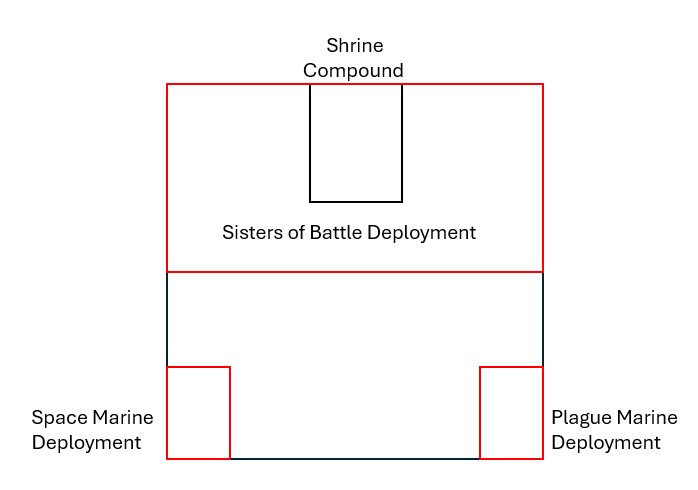
Sisters of Battle are entrenched in and around the shrine compound.
The Lancet Hereticus Space Marines deploy in one corner opposite the shrine.
The Chaos Plague Marines deploy in the other opposite corner.
Table deployment map
Victory Conditions
At the start of Turn 4, an escape shuttle may arrive at the compound on a roll of 5 or 6.
Each turn after that, the roll threshold decreases (4+ on Turn 5, 3+ on Turn 6, etc.).
The player who has control of the Saint and gets her to the escape shuttle wins the game.
Note that the Saint begins in the possession of the Sisters of Battle.
Key Design Features
1. Balanced Start & Player Equality
The two marine factions begin an equal distance from the objective (the Saint in the shrine), ensuring no player has an immediate advantage.
Sisters of Battle start in a strong defensive position but must react to two incoming threats.
Both invading forces must contend with the Sisters and each other.
2. Quick Action & Continuous Engagement
The short board size (3ft x 3ft) ensures combat starts early, preventing long movement phases where nothing happens.
The Sisters’ defensive position means they will likely be fighting by Turn 1.
Since the Saint is stationary at the beginning, players must maneuver aggressively and fight over control.
The time limit ensures that all players must take action in order to win.
3. Preventing “Two vs. One” Situations
Both the Inquisition and Chaos forces have competing objectives, preventing an easy alliance.
The victory condition forces all players to engage—hoarding forces in a corner will not secure a win.
The randomized escape shuttle arrival means players must remain flexible; camping a spot isn’t a viable strategy.
Final Thoughts on the Three Player Scenario
This three player scenario creates a dynamic battlefield where all players are constantly engaged. It prevents downtime, discourages ganging up, and forces strategic decision-making. The next blog post will explore how this scenario played out in actual gameplay—did it live up to expectations, or were there unexpected twists? Stay tuned!
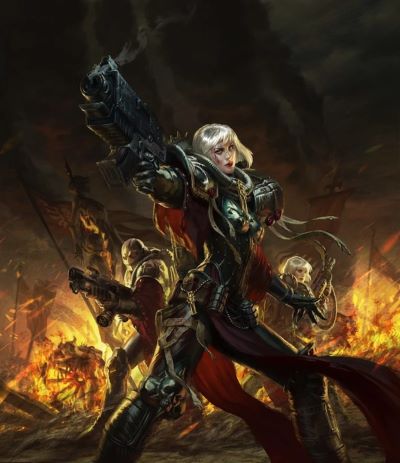
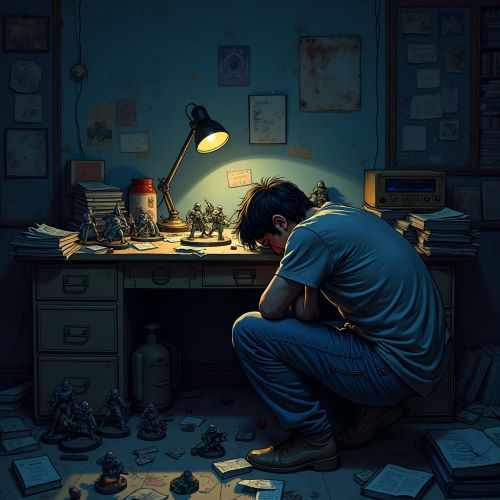
Title image is Sister of Battle by Anna Steinbauer. For more of her awesome art visit her site here.
Just after Christmas, some friends and I had the exhilarating experience of participating in a Dungeons & Dragons competition. But by their nature roleplaying games aren’t a competition, I hear you say. Normally, I would agree. However, we thought we’d give it a go. You don’t get many opportunities to pit your D&D skill against other parties. After reading this you may see some merit in competitive D&D.
The tournament saw multiple groups navigating through the legendary Gary Gygax adventure: The Lost Caverns of Tsojconth. Although we missed the official tournament sign-up, our friend Rich, who was DMing at the event, graciously agreed to run a separate session for us. The event was organized by the local group DnD Fremantle, who have done a fantastic job fostering a vibrant D&D community in our local area.
The Challenge
The competition was structured in two intense 2-hour blocks, requiring rapid decision-making and strategic thinking. Initially, we struggled with the limited time to familiarize ourselves with our character sheets, spells, and abilities—only 15 minutes! It was a challenging start, but we quickly adapted to the fast-paced environment.
Rich, our DM, used a scoring system to evaluate our progress, awarding points for achieving specific goals in each encounter. The objective was to traverse as much of the adventure as possible within the 4-hour limit. In the real tournament 5 groups all ran through the adventure at the same time and their scores totaled at the end to determine the winning team.
The Party
From memory, we had 6 pre-generated characters to choose from: monk, wizard, warlock, fighter, cleric and rogue. As mentioned above, we had 15 mins to choose our characters and understand how they worked. Our final party comprised four level 9 adventurers:
Ethelrede, a stalwart human fighter
Cathartic, a devoted human cleric
Weslocke, a cunning Tiefling warlock
Dunil, a resourceful halfling rogue
There should have been five, but unfortunately one of our players was ill on the day.
Key Encounters
The adventure was very “old-school”, with seemingly random creatures dotted around an underground cave system. It did mean that you never quite knew what was around the corner. Some of our memorable encounters included:
The Mud Golem: Early in the adventure, we faced a formidable mud golem guarding a magical sword. This creature could only be damaged by magical means, which significantly limited our options. It was a close call, especially for my character, Dunil, who nearly perished in the encounter (only 2hp left).
Gem-Hauling Statue Faces: We successfully navigated a trap-laden room filled with gem-inlaid statues, managing to extract the gems without losing any limbs.
Friendly Pechs: In a refreshing twist, we encountered Pechs—goblin-like creatures who turned out to be friendly allies. This encounter provided a brief respite from the relentless dungeon hazards.
Chuuls’ Deadly Ambush: Crossing a river proved fatal as we were ambushed by paralyzing crab-like creatures, the Chuuls. This encounter ended in a total party kill (TPK), forcing us to restart. It was a humbling experience but one that bonded our team.
Fierce Formian Battle: Our session concluded with a fierce battle against Formians, ugly ogre like creatures with sinister eyes. This encounter tested our combat strategies and teamwork to the limit.
The incredible trophy made for the actual tournament!!
Lessons Learned
Pre-Game Planning: It’s crucial to allocate more time for character selection and understanding character abilities. Knowing who will play which type of character and having a strategy for dungeon interaction can save valuable time.
Team Urgency: The competition format instilled a heightened sense of urgency. Quick decision-making and effective communication became our focus, improving our overall gameplay.
Adaptation: Adapting to the competition’s fast pace was challenging but ultimately rewarding. By the second half, we found our rhythm, coordinating efficiently as we navigated the labyrinthine caverns.
We ended the adventure with a score of 8 points, which included a -5 penalty for the TPK. While this might seem modest compared to the winning team’s 18 points, we considered it a solid performance for our first competitive run. More importantly, the experience was incredibly fun, thanks to Rich’s masterful DMing.
More Competitive D&D?
This competition has whetted our appetite for more. We’re already planning to enter the next tournament with lessons learned and a renewed sense of strategy. If you’re considering a competitive D&D experience, we highly recommend teaming up with friends and diving into the challenge. It’s an unforgettable way to test your skills and deepen your love for the game.
Tabletop hobbies like Dungeons & Dragons (D&D) and Warhammer often come with a reputation for being pricey. Between rulebooks, miniatures, dice, paints, and accessories, it’s easy to see why. But how does the cost of D&D and Warhammer stack up against other pastimes? More importantly, are they really as expensive as they seem when you consider the value they provide?
Let’s break it down and explore why these hobbies might just give you the best bang for your buck.
That Initial Sticker Shock
When you’re starting out, the cost of D&D and Warhammer can feel like a big investment:
Warhammer: A starter set can range from $100–$200, and paints, brushes, and additional miniatures can easily push your spend to $500 or higher.
That’s no small sum. But let’s compare this to other popular leisure activities.
Cost Comparisons: Hobby vs. Entertainment
1. Cinema Nights
A single movie ticket averages around $15. Add popcorn, a drink, and maybe a snack, and you’re looking at $25–$30 for about two hours of entertainment.
Annual Cost: If you go to the cinema twice a month, that’s $600+ a year.
Value: While a great movie is enjoyable, the experience is fleeting, and you leave with nothing tangible.
2. Video Games
A new video game costs about $60, and you might buy 3–4 games a year. Factor in subscriptions like Xbox Game Pass or PlayStation Plus ($120/year), and your annual expense can climb to $300–$400.
Value: Video games can provide dozens of hours of entertainment, but they’re often solo experiences and offer limited creative engagement.
3. Sports and Fitness
Joining a gym or a fitness class can cost over $100 per month, depending on where you live. That’s in excess of $1,200 a year. If you play a team sport, equipment and league fees can add hundreds more.
Value: Great for health and social interaction, but the cost often doesn’t include tools for creative or intellectual growth.
D&D and Warhammer are actually good bang for your buck!
The Bang-for-Your-Buck Advantage of D&D and Warhammer
Dungeons & Dragons
Initial Cost: $150–$200 for core books and dice.
Recurring Costs: Minimal. Many players stick with the same materials for years, and free resources (like online tools and community content) reduce the need for further purchases.
Hours of Fun: A single campaign can last months or even years, with weekly sessions that provide hours of entertainment.
The Math: If your group plays weekly for a year (50 sessions), and your setup cost is $200, that’s $4 per session. Compare that to a $15 movie ticket for just two hours!
Reduce your Costs: As a player the cost of D&D can be minimized. You can get away with buying only the players handbook and some dice. There are always second hand versions available reducing the initial cost even more.
Warhammer
Initial Cost: $300 for a starter set, paints, and brushes.
Recurring Costs: New miniatures and paints can add to the cost, but many players focus on building their collection gradually over time.
Hours of Fun: Painting and customizing models alone can provide dozens of hours of creative enjoyment, not to mention the hours spent playing battles with friends.
The Math: If you spend 50 hours painting and 50 hours playing in a year, a $300 investment works out to just $3 per hour. That’s incredible value for a hobby that combines art, strategy, and social interaction.
Reduce your Costs: Of course there is a thriving second hand market for all things Warhammer. Facebook market place and Ebay have huge discounts on pre-loved armies and units. Another way to reduce cost is to start with a smaller game like Kill Team. This skirmish game needs only 10-12 models for an army reducing the initial set up to below $80.
What You Get That Other Hobbies Don’t
1. Creative Engagement
Both D&D and Warhammer are deeply creative hobbies. Writing campaigns, role-playing characters, painting miniatures, and designing battle strategies engage your mind in ways passive entertainment simply can’t.
2. Social Connection
These hobbies are built around shared experiences. Whether it’s laughing with friends at the gaming table or bonding over a close-fought battle, the social value is immense.
3. Lifelong Skills
D&D: Enhances storytelling, improvisation, teamwork, and leadership.
Warhammer: Builds patience, artistic skills, and strategic thinking.
4. Tangible Rewards
When you finish painting a miniature or complete a campaign journal, you have something to show for your time—something you created with your own hands and imagination. There aren’t many (if any) mainstream entertainment activities that can give you that.
Finding Value on Any Budget
You don’t need to break the bank to enjoy these hobbies. Ways you can further reduce your costs include:
For D&D: Free rules are available online, and many campaigns can be played with just a few dice and a borrowed handbook. Theater-of-the-mind play eliminates the need for minis or maps.
For Warhammer: Start small with a single squad or box of miniatures. Community groups often trade or sell models, and plenty of budget-friendly paints and tools are available.
The True Value of Hobby Time
Yes, the cost of D&D and Warhammer can be expensive up front. But when you break it down, the cost per hour of enjoyment is actually incredibly low compared to other forms of entertainment. Even better, these hobbies offer something that movies, video games, and gym memberships can’t: a blend of creativity, community, and personal growth.
So, next time someone raises an eyebrow at the price of a rulebook or a box of miniatures, remind them of this: the value of a hobby isn’t just in dollars spent—it’s in the countless hours of joy, connection, and self-expression you get in return.
The worlds of the roleplaying and gaming hobbies are filled with thrilling stories, deep characters, and endless creative opportunities. Whether you’re slinging spells or battling for survival, these games have drawn people in for decades. Yet, many enthusiasts find themselves concealing their passion, feeling hesitant to share it with others because of a phenomenon known as “hobby shame.” I should know, as I’ve experienced this strongly at different periods in my life.
What is Hobby Shame?
Hobby shame is that nagging feeling of embarrassment or self-consciousness about a pastime that doesn’t fit societal norms. People may feel pressured to hide hobbies that are perceived as “childish” or “geeky” by some, like painting miniatures, designing dungeon maps, or discussing the lore of a fantasy world in detail.
For D&D and Warhammer fans, hobby shame might come from a misconception that these games are outdated, escapist, or frivolous pursuits. However, we know that the reality is far different—these hobbies offer rich opportunities for creativity, social connection, and skill-building that go beyond mere escapism.
My Hobby Shame
As a kid I loved all things fantasy and quickly gravitated to Dungeons & Dragons and Warhammer. The sense of having another world at your very fingertips was intoxicating for me. It’s difficult to pinpoint when I started to feel shame about my hobby. However, I think it was early in high school.
Adolescence is a difficult at the best of times. Trying to understand your place in the world and fit in can be excruciating. For me, like most other people, I struggled to find the balance. Of course, roleplaying and wargames were very much a niche past time. While I loved all things D&D and miniature games gave me a huge kick, I found it incredibly difficult to open up about it at school, mainly I think, due to a fear of ridicule. While I did game with some friends, I hung with another crowd with did not. This was compounded at home with my Dad regularly making fun of the hobby. While not malicious, this made me split my world in two. The secret gaming side and the other skateboarding person.
Knowing what I know now, I’m sure it wouldn’t have been a big deal. But there was a huge reticence in wearing my D&D heart on my sleeve.
This continued through to University, where despite joining the RPG Society and gaming every Sunday I was still reluctant to share my hobby outside of that circle. Fast forward to my thirties. I finally didn’t care what people thought and am open about my passion for gaming with friends and colleagues. Of course this blog helps get it out there. As such I’ve made some great friends who I game with regularly and even converted a few non-gaming friends. Funnily enough most people are really interested in the hobby. Only one friend takes the piss, and he is now very much outnumbered.
Where Hobby Shame Comes From
I find it difficult to pinpoint where this feeling of “hobby shame” came from for me. It’s probably a mix of the following:
Societal Expectations: Fantasy gaming has historically been niche, associated with stereotypes about “nerds” and “geeks.” Society has often stigmatized fans of fantasy games as lacking social skills or living in an imaginary world.
Age Stereotypes: Some people see these hobbies as things you “grow out of.” The image of painting miniatures or playing a tabletop RPG is often pigeonholed as a teenage or college-age activity rather than a fulfilling, lifelong pursuit.
Misunderstandings About Complexity: To an outsider, a complex game like Warhammer or D&D can look intimidating, making the appeal difficult to understand. People unfamiliar with the games may wonder, “How can something with such intricate rules and detailed worlds be fun?” This lack of understanding can lead to dismissive or judgmental attitudes.
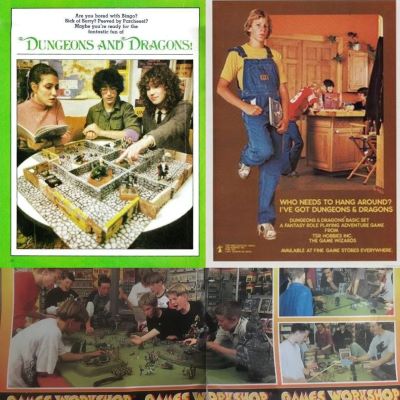
Some of the ads from back in the day.
Why We Shouldn’t Be Ashamed of Our Hobbies
There are lots of reasons why we shouldn’t accept hobby shame. Luckily we now live in a world where D&D, video games and miniature gaming are at all time popularity highs. Societal norms are much more accepting and people are beginning to understand the benefits of a hobbies like ours, including:
Fostering Creativity: Whether painting Warhammer miniatures or designing a D&D campaign, these hobbies involve significant creativity. Crafting a D&D storyline involves weaving together characters, setting, and narrative arcs, much like a writer or filmmaker. In Warhammer, painting armies and building terrains allows players to express their artistic vision. Creativity isn’t just child’s play—it’s a skill with tangible mental health benefits and real-world applications.
Building Social Connections: Both D&D and Warhammer are fundamentally social. In D&D, players work together to overcome challenges, requiring teamwork and communication. Warhammer is no different; players build friendships with fellow hobbyists as they share tips on tactics, painting, and lore. These games foster strong bonds, often forming communities that are inclusive, supportive, and diverse.
Learning Problem-Solving and Strategy: Far from being mindless pastimes, D&D and Warhammer encourage players to think strategically. In D&D, players tackle complex problems, often working together to find creative solutions. Warhammer’s tactical depth requires planning, patience, and resilience. These problem-solving skills translate into professional and personal life, developing qualities like patience, adaptability, and resilience.
Encouraging Emotional Resilience: Losing a cherished character in D&D or seeing a meticulously painted Warhammer squad defeated in battle can be a test of emotional resilience. Players learn to accept failure and understand that setbacks are part of the experience. Resilience is a valuable trait, helping us navigate challenges in real life.
The Joy of Play: As we get older life becomes much more serious. The real world demands so many responsibilities that we forget the joy of play. Immersing ourselves in hobbies like these allows us to reconnect to play, which has huge benefits to our mental health. To learn more about Play check out the National Institute of Play. I’ll definitely be exploring this more in a future article.
Embracing and Sharing Our Hobbies
The key to overcoming hobby shame is to take pride in what these games offer and to share that pride with others. Here are a few ways to do this:
Build Confidence Through Community: By connecting with other D&D or Warhammer fans, you’ll find a supportive group of people who understand the hobby’s unique value. Attend local meetups, join online forums, or visit gaming shops. Being part of a community makes it easier to let go of feelings of shame.
Explain the Benefits: When people outside the hobby question it, try explaining what you love about it. Sharing stories of teamwork in D&D or showing off a well-painted miniature can help others see the value and creativity involved.
Integrate the Hobby Into Your Routine: Try small actions like proudly displaying a painted miniature at work or mentioning a memorable D&D session. Making the hobby a normal part of your life can help ease feelings of shame, turning it into something you enjoy openly.
Reclaiming the Joy
Dungeons & Dragons and Warhammer are so much more than escapist fantasies. They’re platforms for creative expression, emotional growth, and meaningful social connections. Embracing these games openly can help dispel the misconception that they’re childish or strange and help foster a richer community of people who share in this imaginative pursuit.
By challenging hobby shame, we can make the gaming table a space not just for fantastic adventures but for real-world growth, resilience, and joy. Whether you’re rolling dice in a dungeon or painting your latest squad, know that your hobby has value—both to you and to the world around you.
Another year gone. I cant believe I’ve been writing this blog for over a year and a half. What a journey. Explored some great concepts and I’ve found that I’m really firming up my thinking on using D&D and other rpgs to gain experiential leadership learning. I’ve also met with some amazing people and had thoroughly enjoyable conversations. Good times! This retrospective showcases a few highlights from 2024.
Is it hard to be a dungeon master? One of my most popular posts where I discuss the challenges of DMing as well as providing some tips to get you started. Given the popularity of this article I’m wondering whether a series of DM tips and tricks might not be a good idea for 2025. Watch this space.
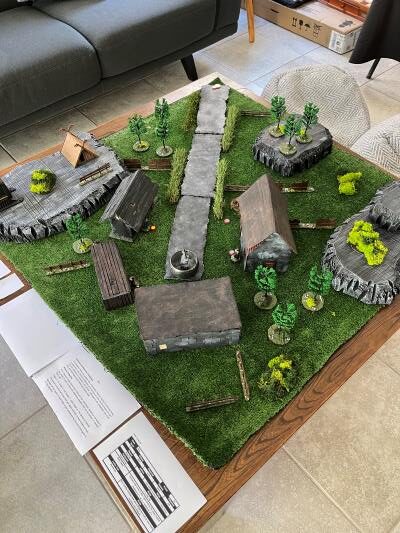
One of the Echoes of Xenos game board set ups
One of the great things about writing around leadership and D&D is designing and playing games that explore these concepts. I designed and ran the Echoes of Xenos event for a group of friends. I took elements of D&D, megagames and miniature wargames to encourage emergent play. Did everyone have fun? Yes. Did it work as planned? Not quite. But I’m taking the learnings and designing a similar event that I will be writing more about soon. I’ll also be designing and playing more games this coming year.
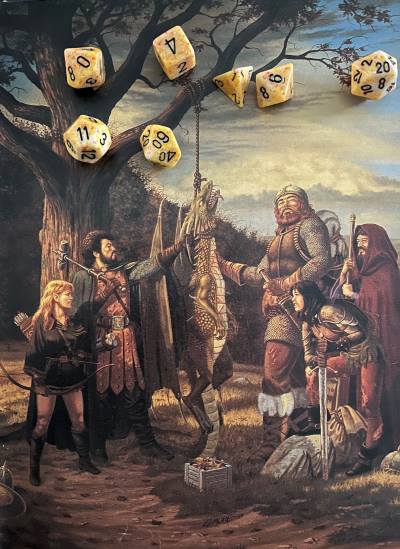
Larry Elmore’s Dragon Slayers and Proud of it.
Another popular post was my take on Larry Elmore’s painting Dragon Slayers and Proud of It. This shows a low level party of adventurers showing off their latest victory. I related it back to celebrating the little wins. Advice that I still need to heed from time to time. It was really fun to explore such an iconic piece of art.
Another fun aspect of this adventure was being invited onto a couple of podcasts to talk about my journey so far. If you want to hear me talk about these topics, my hobby origin story and the campaigns I run listen here:
Finally, 2024 has been a good year for Dungeons and Dragons at Work. But it wouldn’t be possible without people reading it. So thank you to all who stop by and have a read. I hope you are enjoying the content. Feel free to drop suggestions or feedback in the comments below.
Happy New Year and wishing you all a fantastic 2025!