
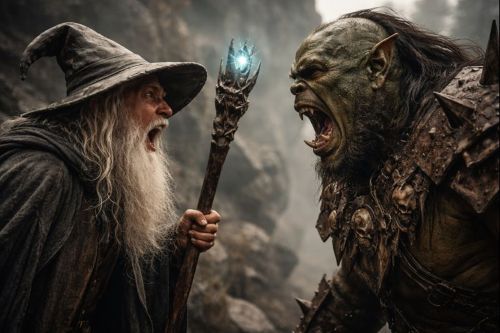
No matter how experienced you are, there’s one truth every leader (and every Dungeon Master) has to face: people won’t always agree with you. It might be a team member who challenges a decision you’ve made, or a player who doesn’t like the way a campaign is going. Disagreement is inevitable — but it isn’t necessarily a bad thing. In fact, learning how to handle it well is one of the most important skills a leader or DM can develop.
Of course, the goal isn’t to avoid disagreement. It’s to create an environment at work or at the gaming table, where people can disagree safely and constructively, without damaging trust or momentum.
Let’s look at how that plays out in both leadership and Dungeons & Dragons.
Leadership: Turning Disagreement into Growth
When someone disagrees with you as a leader, your instinct might be to defend your decision or to convince them you’re right. After all, you’ve probably spent time thinking through your reasoning and believe it’s the best course.
But disagreement isn’t opposition — it’s information. It’s a sign that someone cares enough to speak up, and that’s worth paying attention to.
Good leaders understand that healthy conflict strengthens teams. It surfaces blind spots, tests assumptions, and builds buy-in when handled respectfully. The key is to stay curious instead of defensive.
Some things to consider when someone disagrees:
- Pause and listen. Don’t rush to explain. Let them talk, and make sure they feel heard.
- Seek to understand the “why.” Is it about the decision itself, the process, or how it impacts them personally?
- Acknowledge what’s valid. You don’t have to agree entirely to recognise a good point.
- Decide and explain. If you still believe your decision is right, explain your reasoning transparently. People can handle “no” much better than silence or inconsistency.
Handled this way, disagreement becomes part of a healthy culture of trust — where people feel safe to challenge ideas without fear of reprisal. That’s the kind of culture where real innovation happens.
At the D&D Table: Disagreement Behind the Screen
If you’ve ever been a DM, you’ll know that players disagree with you from time to time — and that’s okay. It might be about how a rule is interpreted, a story decision, or a choice you’ve made for an NPC.
Just like in leadership, how you respond sets the tone.
A defensive DM can make players feel shut down. But a DM who listens, stays open, and keeps the focus on shared fun can turn disagreement into collaboration.
Here are a few ways to keep things healthy when conflict arises at the table:
- Remember the goal: shared enjoyment. The rules and the story are tools to help everyone have fun — not weapons to win arguments.
- Listen before ruling. Let players make their case. Sometimes they’re right, or at least have a fair point you hadn’t considered.
- Make a call, but explain it. The DM’s decision is final in the moment, but explaining your reasoning builds trust.
- Revisit later if needed. If something still feels unresolved, talk about it after the session when emotions have cooled.
I’m very collaborative as a DM and if someone questions a ruling we discuss it openly at the table. If it’s going to slow down gameplay, I sometimes make a ruling at the time with the proviso that we look up what we need to after the session and make a decision then.
Common Ground: Leadership and DMing
The parallels between leadership and being a DM are striking when it comes to handling disagreement. Both roles put you in a position of authority, but both work best when that authority is rooted in trust, not control.
In both spaces:
- Disagreement shows engagement — people care enough to speak up.
- Listening builds credibility far more than arguing.
- Transparency about your reasoning helps others understand and respect your decisions.
- Humility — admitting when you got it wrong — earns lasting respect.
Disagreement handled well doesn’t weaken your authority. It strengthens it. It shows confidence, empathy, and maturity.
The Takeaway
Whether you’re leading a project team or running a D&D campaign, disagreement is part of the journey. It can be uncomfortable, sure — but it’s also where growth happens.
As a leader, your job isn’t to eliminate conflict, but to model how to handle it well. As a DM, your goal isn’t to control every outcome, but to guide the story collaboratively.
In both cases, the secret is simple: listen deeply, decide clearly, and care genuinely. When people see that you value their input — even when you disagree — they’re far more likely to trust your leadership and follow your lead into the next big adventure.
Because whether it’s in the boardroom or at the gaming table, leadership isn’t about always being right. It’s about creating the kind of space where everyone feels they belong, even when they don’t all agree.