Bad Behaviour at the Table? Sort it out

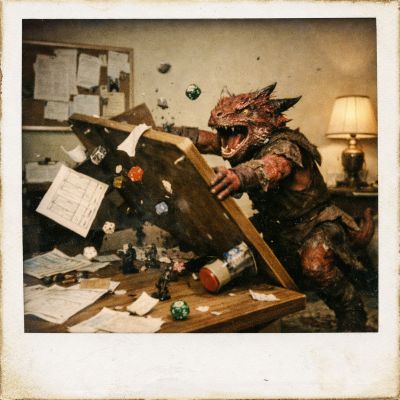
Kobold flipping gaming table in a rage

At some point in every long running campaign, bad behaviour at the table happens. A player goes rogue. Not in the charming backstab-the-dragon way. But in the rules-lawyering, spotlight-hogging, eye-rolling, group-fracturing way. The table energy shifts. Shared fun begins to ebb.

If you run games long enough, you will face this moment. If you lead people long enough, you will too.

The parallels between managing bad behaviour at a roleplaying table and leading a team in the workplace are surprisingly tight. Both require the courage to act before the whole party wipes. Here are three stages to handle it, whether you are behind the DM screen or at the head of a meeting table.

Stage One: The Quiet Word by the Campfire

In the Dungeons & Dragons Player’s Handbook, there is an implicit social contract. The game assumes cooperation. It assumes you are not actively trying to ruin the experience for others. When a player starts derailing sessions, dominating decisions, or treating fellow players like NPCs, your first move cannot be a thunderbolt from the heavens.

It is a quiet conversation. Private. Calm. Specific.

  • “Hey, I’ve noticed you’re interrupting others a lot during planning scenes.” This is preventing them from getting involved.
  • “I’ve seen some frustration when rulings don’t go your way.” This slows down play and creates a bit of a weird atmosphere with myself and the other players.

This is not an accusation. It is feedback. You are describing behaviour and explaining impact.

At the gaming table, most problems live in the land of misunderstanding. Someone may not realise they are hogging spotlight. Someone may think the aggressive banter is funny when others find it draining.

The same is true in the workplace. As a leader, stage one is informal and early. You do not wait for the team to fracture. You address behaviour before it calcifies into culture. Make your expectations clear. The impact must be understood and the request for change cannot be ambiguous.

Most people, when treated like adults, respond like adults.

Stage Two: The Formal Warning Scroll

If behaviour continues after the informal chat , you have to escalate. At the table, this might mean a more direct conversation.

  • “We spoke about this last month. It’s still happening. If it continues, you may not be able to stay in this campaign.”

Now the stakes are visible.

In a group where you are all friends this can be a difficult conversation to navigate. But it doesn’t have to be confrontational. Reiterate the way the group likes to play and that the problem players style is different and not gelling.

In leadership, this is where structure matters. Documentation. Formal performance conversations. Clear consequences. Alignment with policy. Compliance with employment law. You are no longer just nudging behaviour. You are protecting the team.

In both spaces, the key elements are:

  • Clear examples of behaviour
  • Clear expectations going forward
  • Clear consequences if change does not occur
  • A genuine opportunity to improve

You cant escape the fact that this stage is uncomfortable. It requires backbone. Leaders often avoid it because they fear conflict. But avoidance is not kindness. It is deferred damage. Every time you fail to address ongoing bad behaviour, you send a signal to the rest of the group that this behaviour is is acceptable.

And that signal causes more damage than you would imagine.

Stage Three: Removing the Player from the Table

Sometimes, despite every effort, the behaviour does not change. At a gaming table, the final step is simple in principle, but very difficult in practice:

You ask them to leave the campaign. You do not do it lightly. Keep emotion out of it. Do it because the health of the group matters more than the comfort of one individual. Ultimately, it is a leadership decision.

In the workplace, this stage becomes formal performance management that may result in termination. This must comply with employment law, company policy, and procedural fairness. There must be evidence, the employee must have an opportunity to respond. There must be consistency.

But the principle remains the same. A team cannot thrive if one person consistently erodes trust, morale, or performance.

Letting someone go is not failure if you have:

  • Communicated clearly
  • Provided support
  • Given reasonable opportunity to change
  • Acted fairly and consistently

Sometimes the most responsible act of leadership is protecting the many.

The Deeper Lesson

Whether you are running a dungeon or running a department, leadership is not about avoiding conflict. It is about stewarding the experience. In a roleplaying game, you are safeguarding fun, safety, and shared storytelling. While in the workplace, you are safeguarding culture, productivity, and psychological safety.

Both require:

  • Early intervention
  • Honest conversations
  • Escalation when necessary
  • Courage to act

Ignore bad behaviour at the table long enough and it becomes the campaign setting. Unchecked and your game will stop being fun, players will leave and it will eventually implode. Ultimately, following the adage that no D&D is better than bad D&D.

Address the behaviour with clarity and fairness, and you show your players that they are important and that the game matters.

Quick Note: checking bad behaviour at the table doesn’t have to rest on the shoulders of the DM. Rather it can be dealt with by any player. Remember, having fun is a shared responsibility.

When People Disagree — Lessons from Leadership and the DM’s Chair

an orc and a wizard shouting at each other in disagreement

No matter how experienced you are, there’s one truth every leader (and every Dungeon Master) has to face: people won’t always agree with you. It might be a team member who challenges a decision you’ve made, or a player who doesn’t like the way a campaign is going. Disagreement is inevitable — but it isn’t necessarily a bad thing. In fact, learning how to handle it well is one of the most important skills a leader or DM can develop.

Of course, the goal isn’t to avoid disagreement. It’s to create an environment at work or at the gaming table, where people can disagree safely and constructively, without damaging trust or momentum.

Let’s look at how that plays out in both leadership and Dungeons & Dragons.

Leadership: Turning Disagreement into Growth

When someone disagrees with you as a leader, your instinct might be to defend your decision or to convince them you’re right. After all, you’ve probably spent time thinking through your reasoning and believe it’s the best course.

But disagreement isn’t opposition — it’s information. It’s a sign that someone cares enough to speak up, and that’s worth paying attention to.

Good leaders understand that healthy conflict strengthens teams. It surfaces blind spots, tests assumptions, and builds buy-in when handled respectfully. The key is to stay curious instead of defensive.

Some things to consider when someone disagrees:

  • Pause and listen. Don’t rush to explain. Let them talk, and make sure they feel heard.
  • Seek to understand the “why.” Is it about the decision itself, the process, or how it impacts them personally?
  • Acknowledge what’s valid. You don’t have to agree entirely to recognise a good point.
  • Decide and explain. If you still believe your decision is right, explain your reasoning transparently. People can handle “no” much better than silence or inconsistency.

Handled this way, disagreement becomes part of a healthy culture of trust — where people feel safe to challenge ideas without fear of reprisal. That’s the kind of culture where real innovation happens.

At the D&D Table: Disagreement Behind the Screen

If you’ve ever been a DM, you’ll know that players disagree with you from time to time — and that’s okay. It might be about how a rule is interpreted, a story decision, or a choice you’ve made for an NPC.

Just like in leadership, how you respond sets the tone.

A defensive DM can make players feel shut down. But a DM who listens, stays open, and keeps the focus on shared fun can turn disagreement into collaboration.

Here are a few ways to keep things healthy when conflict arises at the table:

  • Remember the goal: shared fun. The rules and the story are tools to help everyone have fun — not weapons to win arguments.
  • Listen before ruling. Let players make their case. Sometimes they’re right, or at least have a fair point you hadn’t considered.
  • Make a call, but explain it. The DM’s decision is final in the moment, but explaining your reasoning builds trust.
  • Revisit later if needed. If something still feels unresolved, talk about it after the session when emotions have cooled.

I’m very collaborative as a DM and if someone questions a ruling we discuss it openly at the table. If it’s going to slow down gameplay, I sometimes make a ruling at the time with the proviso that we look up what we need to after the session and make a decision then.

Common Ground: Leadership and DMing

The parallels between leadership and being a DM are striking when it comes to handling disagreement. Both roles put you in a position of authority, but both work best when that authority is rooted in trust, not control.

In both spaces:

  • Disagreement shows engagement — people care enough to speak up.
  • Listening builds credibility far more than arguing.
  • Transparency about your reasoning helps others understand and respect your decisions.
  • Humility — admitting when you got it wrong — earns lasting respect.

Disagreement handled well doesn’t weaken your authority. It strengthens it. It shows confidence, empathy, and maturity.

The Takeaway

Whether you’re leading a project team or running a D&D campaign, disagreement is part of the journey. It can be uncomfortable, sure — but it’s also where growth happens.

As a leader, your job isn’t to eliminate conflict, but to model how to handle it well. As a DM, your goal isn’t to control every outcome, but to guide the story collaboratively.

In both cases, the secret is simple: listen deeply, decide clearly, and care genuinely. When people see that you value their input — even when you disagree — they’re far more likely to trust your leadership and follow your lead into the next big adventure.

Because whether it’s in the boardroom or at the gaming table, leadership isn’t about always being right. It’s about creating the kind of space where everyone feels they belong, even when they don’t all agree.

Powerful Reflection: a Lesson for D&D and Leadership

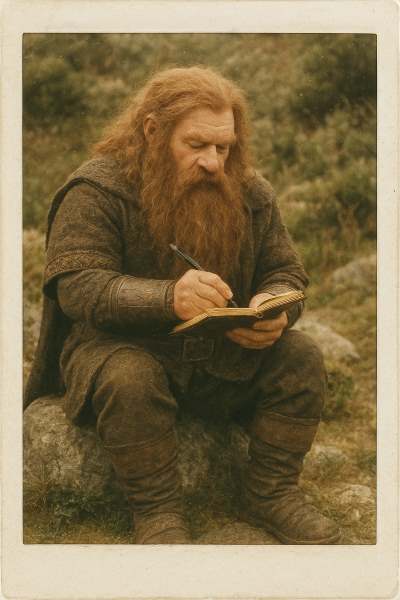
Dwarf sitting on a rock practicing reflection into a notebook

When the dice are packed away and the session is over, the story doesn’t stop. For many Dungeons & Dragons groups, they gain more depth to the experience after the game—when the group practices reflection on what just happened.

“Can you believe we actually pulled that off?”
“Next time we really need to think twice before splitting the party.” (how many times have we heard that one…)
“That negotiation worked because you spoke up at just the right time.”

These post-game reflections aren’t just fun—they’re powerful. They help players process what happened, celebrate victories, and learn from mistakes. And if that sounds familiar, it’s because leaders benefit from the exact same practice: regular self-reflection.

Reflection in D&D

In roleplaying games, reflection helps players and Dungeon Masters alike:

  • Consolidate learning: What worked well in combat or problem-solving? How well are the characters working together?
  • Spot improvement areas: Did communication break down? Did someone feel unheard?
  • Celebrate the journey: Acknowledging character growth or a clever solution reinforces the group’s bond. Giving players a shout out for the cool things they’ve done.
  • Sharpen future play: Reflection makes the next session smoother and more fun.

Without this pause, the game can feel rushed or fragmented. With it, the story feels richer, and ultimately the teamwork stronger.

Reflection in Leadership

If you’ve been reading this blog for a while you’ll already recognize that the same principle applies in the workplace. Leaders who make time for regular reflection gain:

  • Clarity: Understanding not just what happened in a meeting or project, but why.
  • Awareness: Recognizing your own blind spots or how your actions affect others.
  • Growth: Identifying patterns of behavior—both strengths and weaknesses—that shape your leadership.
  • Resilience: Reflection provides perspective, turning setbacks into lessons rather than failures.

As with D&D, the habit of looking back makes the next challenge easier to face. It also gives you clarity around what you should be focusing on next.

Why Reflection Matters

Jennifer Ouellette, in her book Me, Myself, and Why, notes how our memory encodes imagined experiences as though they were real. That means when you reflect on your character’s tough choices in D&D, your brain is practicing the same skills you’ll need as a leader. You’re rehearsing decision-making, empathy, and problem-solving in a safe, playful environment.

Then, when you reflect on your real-world leadership, you reinforce those same muscles.

Building Reflection into Your Routine

Here are a few ways to bring structured reflection into both D&D and leadership:

  • Ask good questions: After a session or a meeting, try “What went well? What could we do differently next time?”
  • Make it a habit: Don’t wait for a crisis—reflect regularly to keep learning consistent. This is really critical in making reflection work properly.
  • Celebrate wins: Reflection isn’t just about improvement. Recognizing achievements builds morale and confidence.
  • Invite feedback: In both games and work, others see things you can’t.

My friend Rich takes 10 minutes after every D&D session to reflect on what went well and what needs improvement. He also takes this time to ruminate on what happened in the session and what this means for the wider campaign world and the next session.

For me, I tend to do wait for a few days before sitting with my notebook and reflecting on the session. In my role as a leader in the real world I schedule quiet time every week to grab a coffee away from the office and reflect on how we are going as a business and what we need to be working on next. I also use this time to consider my effectiveness as a leader.

The Takeaway

Dungeons & Dragons shows us how valuable it is to pause, look back, and learn. Leaders who practice the same habit in their daily lives grow stronger, more self-aware, and more effective.

So whether you’re finishing a dungeon crawl or a work project, take a moment to reflect. The lessons you uncover will guide you to even greater adventures.