There are roleplaying games where you carefully track encumbrance, calculate modifiers, and debate the tactics of which spell to cast first. And then there are games where you kick down a door, fire an assault rifle one-handed, and shout something so gloriously ridiculous that reality slaps your back and gives you your hit points back.
80’s Action Dudes, created by my mate Marty, lives proudly in the second category.
Welcome to the Jungle (Bring a Soundtrack)
From the moment we sat down, the tone was locked in harder than a flexed bicep in a sleeveless vest. An 80s rock soundtrack blared in the background, all electric guitars and swagger, the kind of music that makes you feel like you could outrun an explosion purely out of principle. Marty had curated the perfect soundtrack with bands like Poison, Whitesnake and Boston, that had us all ready to play before we even created our characters.
It only took Marty 2 minutes to explain the system of 80’s Action Dudes, a clever hack of Cthulhu Dark by Graeme Walmsley. Different dice for different guns (D4, D6, D10) and the dice didn’t tell you if you hit. No way. They told you how many people you took out of action.
We came to kick ass and chew gum, and we were all out gum. Oh and we had three hit points.
Character Creation: Maximum Velocity, Zero Brakes
Character creation was also quick and easy. You needed:
- A cool name
- A main weapon
- A one line description
- Some special kit
That’s it. Vibes and testosterone.
Enter my character:
Rusty MacGregor
Ex–French Foreign Legionnaire. American as fuck.
Armed with his trusty assault rifle, razor sharp machete, and a tin of chewing tobacco, Rusty also sported a stars and stripes bandanna across his ruggedly handsome brow and was ready for action.
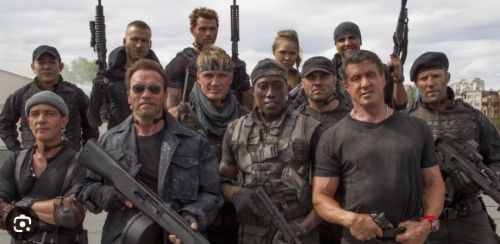
The Crew: The Action Team
Our team was exactly what you’d hope for:
- A Chinese ninja who moved like a shadow deadly throwing stars at the ready
- A bare-knuckle fighter built like Van Damme with mad nunchuck skills
- A mad radioman “Giggles”
- Two M60 armed musclemen Rip and Butch.
Together, we were dropped into a jungle with one mission:
Take out a camp of commie insurgents. No diplomacy. Just kicking ass and shooting guns.
Mechanics That Punch You in the Face (In a Good Way)
The genius of the game wasn’t just in its theme, it was in how the mechanics fed that theme. Marty had got the balance just right.
Grenades? You didn’t roll for them. You physically threw balls into a bucket. Missed the bucket? Bad luck. That grenade is now someone else’s problem. Hit it? Boom. Cue cheering, high-fives, and a slow-motion dive.
We even had a proper mud map laid out in the garden adding to the immersion of our grand tactical planning.

Now here’s where the game transcends even further. When you took wounds, you didn’t just sit there and sulk like an unpatriotic man baby. You earned them back the only way that matters:
One-liners.
Drop something suitably punchy, and you’d claw back your health.
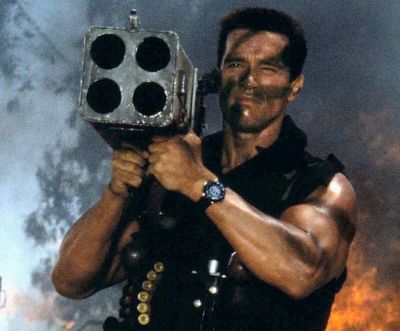
Something in the spirit of Arnie and Stallone, like:
“I eat Green Berets for breakfast. And right now, I’m very hungry!”
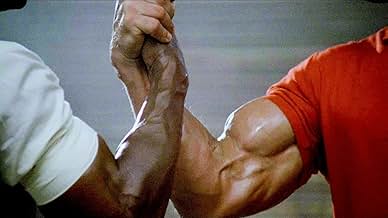
Alternatively, you could clasp hands with a teammate, lock eyes like long-lost brothers, and bellow:
“SON OF A BITCH!”
Instant recovery to full hit points!
Scenes That Shouldn’t Work (But Absolutely Do)
What followed was a cascade of moments that felt ripped straight out of an Expendables fever dream:
- Rusty leaping from a creek firing into enemy reinforcements
- The ninja appearing and disappearing like a lethal magic trick
- Grenades arcing through the air with varying degrees of success and panic
- Entire squads of enemies being removed from existence in single, glorious dice rolls
- The ammo dump exploding in a tongue of flame
- Rusty dying in a blaze of glory at the helm of a Russian attack helicopter (dont ask)
It was loud, chaotic and deeply, deeply … fun!
Why It Works
At its core, 80’s Action Dudes is a masterclass in one simple idea:
Commit to the bit.
The rules are light, but laser-focused. Every mechanic pushes you to be louder, bigger, and more ridiculous. There’s no room for hesitation, only escalation. And because everyone understands the tone, the table becomes a kind of shared action movie, where each player tries to outdo the last in sheer action-hero bravado.
The result? Eight grown adults laughing like lunatics while throwing pretend grenades and inventing increasingly terrible one-liners.

Final Thoughts: Explosions Optional (But Encouraged)
What this game proves, more than anything, is that you don’t need complexity to create something unforgettable.
- Give players a strong theme.
- Give them permission to go all in.
- Add a few clever mechanics that reinforce the fantasy.
Then stand back and watch the magic happen. 80’s Action Dudes wasn’t just a game., it was a riot. And Marty was an absolute legend for pulling together such a memorable game.