Leaving a Legacy — as a Leader and as a Dungeon Master

When people talk about leaving a legacy, it often sounds grand — the kind of word reserved for visionary founders, political figures, or historical heroes. But in truth, legacy doesn’t have to be about something monumental or world-changing. It can be quieter, more personal, and built moment by moment through the people we influence and the culture we create.

As a leader, I think about legacy not as an accolade or a plaque on the wall, but as a living thing. It’s the ripple effect that continues long after you’ve stepped away. It’s the culture you build, the behaviours you reward, and the sense of belonging that people carry with them long after they’ve left your business.

A Leadership Legacy Built on Culture

For me, legacy begins with culture. I want to build a workplace where people genuinely enjoy what they do and who they work with. Where collaboration and kindness aren’t seen as soft skills, but as strengths that drive performance. Where people are trusted, supported, and encouraged to grow — not just into better employees, but into better leaders themselves.

If you can build that kind of culture — one that values connection, creativity, and care — it doesn’t stay contained within your walls. Over time, the people who thrive in it take those values with them. They share them in new teams, new organisations, and new industries. That’s how a leadership legacy grows: not through policies or slogans, but through people.

When I think about my own leadership legacy, I want it to be something that continues to live in others. I want to know that years down the line, someone who worked with my business or team is leading a team of their own — and that the positive culture we built together influenced how they lead. That’s how real change happens — not in a single moment, but through a chain of shared values that spreads quietly and steadily.

The DM’s Legacy: Building Worlds, Friendships, and Escape

Strangely enough, that idea of leaving a legacy — of creating something that lives on through people — feels very familiar to me. Because I’ve seen it before, at the Dungeons & Dragons table.

When you’re a Dungeon Master, you put a lot of energy into building worlds, crafting encounters, and bringing characters to life. You think your legacy might be the epic storyline you’ve designed or the clever twist you’ve hidden behind a screen. But in the end, that’s not what people remember.

What lasts are the friendships that form around the table. The laughter that comes from an unexpected dice roll. The moments when everyone forgets their phones and the outside world because they’re fully immersed in the story you’re telling together. That’s your true legacy as a DM — creating a shared experience that gives people a break from everyday life and connects them in a meaningful way.

I’ve seen players who started in my games go on to run their own campaigns, taking inspiration from the way we told stories or the sense of inclusion they felt at the table. Just like in leadership, the culture you create as a DM doesn’t stop when the session ends. It spreads — through new games, new friendships, and new worlds imagined by others.

Building a Lasting Legacy

When I think about leaving a legacy now — whether as a leader or a DM — I think of it less as an outcome and more as a community. It’s about creating something that feels safe, inspiring, and empowering, and then letting others carry it forward in their own way.

In leadership, that might mean building a team that lives your values long after you’ve moved on. In D&D, it might mean a circle of friends who still share stories and inside jokes years after the campaign ended.

Ultimately, both are about people and the stories we build together. The kind of legacy that matters most isn’t written down — it’s remembered, retold, and relived.

So whether it’s through the people I lead or the players I guide, my hope is the same: that something about the experience stays with them. That they take what we’ve built — the culture, the connection, the sense of possibility — and carry it into whatever comes next.

Because that’s what leaving a legacy is all about. Not the mark you leave on the world, but the spark you leave in others.

From Band of Brothers to SAS Rogue Heroes: Inspired Kill Team Missions

There’s something timeless about small squads of soldiers through a larger conflict — tense, personal, and filled with moments of heroism and chaos. That’s what makes shows like Band of Brothers and SAS: Rogue Heroes so compelling. These are exactly the kind of stories that Warhammer 40K: Kill Team excels at telling.

In Kill Team, every operative matters. You’re not moving faceless troops around a battlefield — you’re guiding a handful of specialists, each with their own role, personality, and fate. Which makes it the perfect sandbox to reimagine iconic World War II small unit missions with a sci-fi twist.

Let’s look at how you can take inspiration from Band of Brothers and SAS: Rogue Heroes and turn those classic moments of grit and brotherhood into thrilling tabletop missions.

1. Brecourt Manor Assault (Band of Brothers)

Theme: Tactical problem-solving under fire.
The Scene: Easy Company (episode two) assaults a heavily fortified German artillery position, using initiative and teamwork to neutralize each gun in turn. In fact, this assault was so successful that they still teach it to officer candidates at West Point today.

Kill Team Mission Hook: Your squad must disable a chain of heavy weapon emplacements. Each emplacement requires a different skill test or demolition action to destroy.

  • Objective: Destroy all three artillery emplacements before the end of the battle.
  • Faction Fit:
    • Attacker: Veteran Guardsmen, Intercessors, or Pathfinders.
    • Defender: Traitor Guard, Heretic Astartes, or Necrons.

It’s a mission that rewards smart use of cover, movement, and individual heroics — exactly what Kill Team is built for.

One thing I like about this mission is that you can set up the terrain to reflect the real engagement. Do away with the balanced terrain set ups suggested in the rulebook and give this a go. You don’t have to go with Normandy bocage either, why not set up your more grim dark terrain in a similar configuration.

If you’re worried about balance, why not play the game twice. Switching attacker defender roles each time will a fun experience.

Why not set up your battlefield to reflect the real engagement?

2. Desert Airfield Ambush (SAS: Rogue Heroes)

Theme: Guerilla warfare and improvisation.
The Scene: The SAS (episode 6) raids enemy airfields deep in the desert, using speed and shock tactics to devastating effect.

Kill Team Mission Hook:
One team is guarding a space port with specific objectives (spaceship, fuel depot, pilots building), while the other launches a hit-and-run ambush.

  • Objective: The defender must prevent the attacker from destroying 2/3 of the objectives.
  • Special Rules: Limited visibility due to sandstorm reducing ranged fire; fuel dump and spaceship can explode spectacularly.
  • Faction Fit:
    • Attacker: Ork Kommandos, Kroot Farstalkers, or Ratlings.
    • Defender: Astra Militarum, Adeptus Mechanicus, or Blooded.

This mission brings cinematic chaos to the tabletop — explosions, last stands, and desperate retreats.

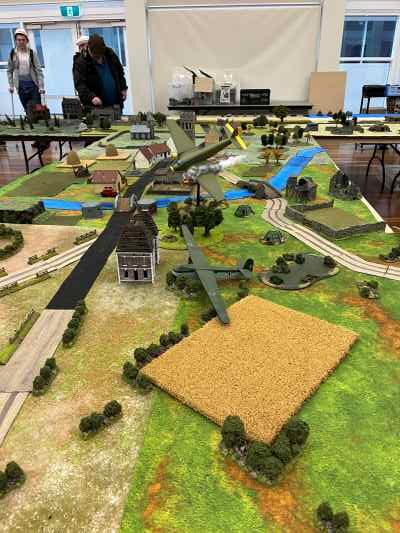
There is a great opportunity to make a themed desert table here. Build it out like an airfield/spaceport. If you have a spaceship model, why not place it front and center. Open spaces, palm trees, pilots mess hut, you get the picture.

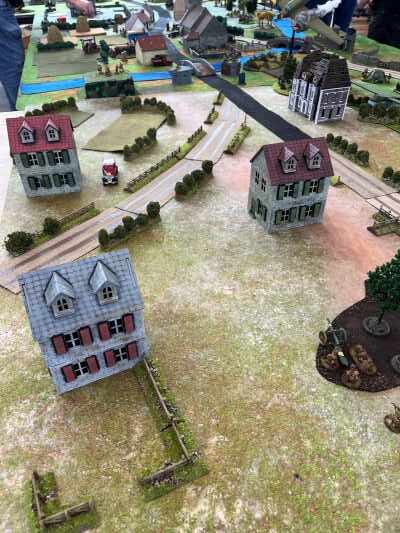
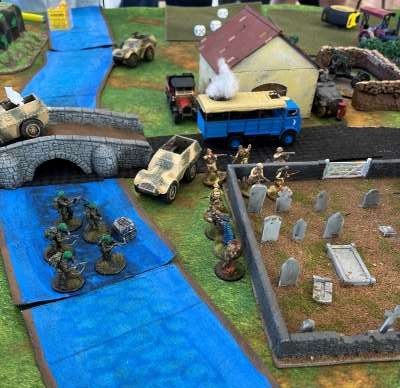
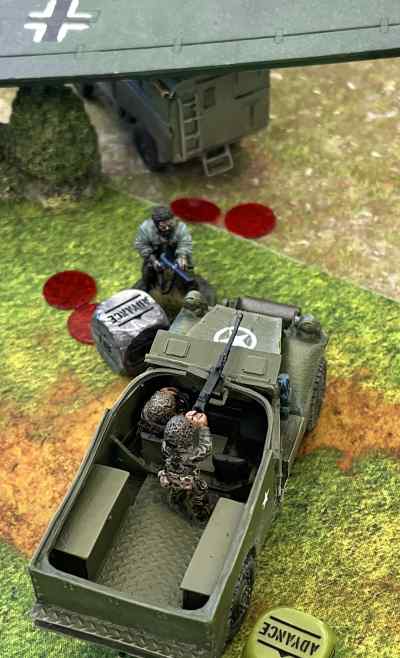
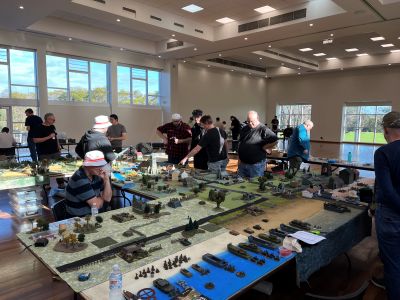
This Bolt Action battlefield provides a good suggestion for the table layout. You can find more pics from the Warlord website.

3. Operation Market Garden (Band of Brothers)

Theme: Holding out against overwhelming odds.
The Scene: Allied paratroopers seize Eindhoven only to find themselves isolated and outnumbered as German counterattacks close in.

Kill Team Mission Hook:
A beleaguered squad must hold a key structure (like a comms tower or reactor junction) until reinforcements arrive.

  • Objective: Survive for a set number of turns while preventing the enemy from capturing the objective.
  • Special Rules: The attacker’s numbers increase each round; the defender may receive one small reinforcement drop midway through.
  • Faction Fit:
    • Defender: Imperial Navy Breachers, Inquisition Agents, or Deathwatch marines.
    • Attacker: Chaos Legionaries, Ork Kommandos, or Fellgores.

This setup should create those tense, cinematic moments where every dice roll feels like life or death.

It could be played best as a joint ops mission, with two players fighting off waves of attackers. Why not create a densely packed board to replicate the close confines of the town. Narrow streets will create the need for desperate close combat actions, adding to the difficulty of completing the mission.

Bringing It All Together

By translating these real-world (albeit hollywoodised) operations into Kill Team missions, you blend the historical tension of WWII storytelling with the gothic sci-fi of the 41st millennium. You get all the things that make Band of Brothers and SAS: Rogue Heroes so gripping — camaraderie, courage, chaos — but with plasma rifles and occasional daemon incursions.

Basing your maps on these real engagements and creating asymmetric mission objectives will help add something different to your Kill Team games. So next game night, don’t just roll for missions — tell stories. Steal from history, tweak the details, and create moments that feel like they belong in both Normandy and Necromunda.

The Joy of the One-Shot: Give it a Go

When most people think of roleplaying games like Dungeons & Dragons, they think of sprawling campaigns that run for months—or even years. Long-running campaigns are fantastic, but every now and then, it’s refreshing to step off the well-worn path and dive into something shorter, sharper, and wildly different: the humble one-shot.

One-shots are self-contained RPG adventures that begin and end in a single session (or two, at most – I’m looking at you Rich!). And while they might not carry the same narrative weight as a years-long campaign, they come with a kind of joy that is entirely their own.

A Breath of Fresh Air

The first thing a one-shot offers is a shift in tempo, style, and genre. If your regular campaign is a slow-burn epic full of politics, world-saving, and carefully crafted character arcs, a one-shot can throw all that out the window. Suddenly, you might find yourself desperately battling cultists in a forgotten temple, unraveling a noir mystery, or, in my case recently, trying to survive in deep space with something very nasty lurking in the shadows.

This change of pace keeps the roleplaying experience vibrant. It’s like taking a holiday from your main campaign—you’ll return with fresh energy and inspiration.

A Chance for Someone Else to DM

For many groups, the Dungeon Master role is filled by the same person week after week. A one-shot is a great excuse to swap seats. Maybe one of your players has been itching to try DMing but doesn’t want the responsibility of running a campaign. A one-shot is the perfect low-stakes playground to give it a go.

Even if you’re the regular DM, you’ll find it refreshing to step into a player role for once, rolling dice for your own character instead of a horde of goblins. Seeing the game from the players perspective gives massive insight into your own DMing, which ultimately benefits the whole group.

Testing Out New Character Concepts

One-shots are a brilliant way to try something you’d never risk in a long campaign. Maybe you’ve always wanted to play a reckless barbarian, a scheming bard, or a wizard with a terrible personality flaw. A one-shot is your opportunity to experiment—if it works, great! If it doesn’t, no harm done.

Because the stories are short and sweet, you get to test-drive character voices, quirks, and playstyles without committing to them for the next three years. I played a character in a recent one-shot who I gave an Irish accent. I soon realized that maintaining the accent for a whole campaign might be stretching my roleplaying skills. Fun for the one-shot session though.

Turning the Danger Up to Eleven

In a campaign, character death is often something to be carefully weighed. Players invest in their heroes, and DMs don’t want to wreck long-term plans. But in a one-shot, the rules shift. Characters are often more expendable, and the danger levels can be pushed much higher. Suddenly, every choice feels riskier, and every encounter has real tension.

It’s really liberating knowing that not everyone is guaranteed to make it out alive.

Great ruleset for One-Shots!

My Own Example: Into the Dark

In my long-running D&D campaign, a couple of regular players recently couldn’t make a session. Instead of skipping the week, I decided to run something completely different: Those Dark Places.

I’ve written about this game before, but in case you missed it, this game, heavily inspired by Alien and other sci-fi horror classics, is all about mystery, survival, and the unknown. I ran The Ed-Ward Report, a scenario written by the game’s own author (Jonathan Hicks), which you can grab for just a couple of bucks on DriveThruRPG.

Character creation takes five minutes flat, and then it’s straight into the thick of things. The rules are quick, the setting is tense, and the danger feels very real. Running this kind of game is a total change of scenery from D&D’s fantasy realms—it’s claustrophobic, unsettling, and sci-fi in all the right ways.

The adventure had the players investigating an space station where all comms had ceased. Their job was to get the station back up and running. What the corporates weren’t telling them was the type of research being undertaken there and what had gone wrong…

For both me and my players, it was a thrilling palate cleanser before we dive back into swords, sorcery, and dragons.

Why You Should Try a One-Shot

If you’ve never run or played a one-shot before, give it a try. They’re fun, fast, and flexible, and they often leave your group buzzing long after the session ends. They can:

  • Refresh your group with a new tempo and genre
  • Give new DMs a chance to shine
  • Let players test out wild new character ideas
  • Crank up the danger for maximum tension

And best of all, they remind us that RPGs aren’t tied to one system, one world, or one style of play. At the heart of it, they’re about gathering together, telling stories, and rolling dice—whether you’re slaying dragons, surviving alien horrors, or anything in between.

So next time your campaign takes a break—or you just feel the itch for something different—line up a one-shot. You might just discover it’s the most fun you’ve had in ages.