Choose Your Class: How D&D Shapes Your Leadership Identity

leadership identity

When you sit down to create a Dungeons & Dragons character, you’re not just picking stats and equipment. You’re making choices about identity. About values. About how this character will behave under pressure and what kind of presence they’ll have in a group. In short?, you’re designing a leadership identity.

Whether your character is a fearless fighter, a cunning rogue, or a quiet cleric, you’re crafting someone who will make decisions, face consequences, collaborate with others, and influence outcomes. Sound familiar?

It should—because it mirrors exactly what leaders do in the real world.

Let’s explore how character creation in D&D is not just a game mechanic but a powerful lens through which you can reflect on your own leadership style, strengths, and the values you want to embody.

The Leadership Behind the Character Sheet

At its core, character creation asks:

  • What kind of person am I going to be in this world?
  • How do I solve problems?
  • What matters most to me—justice, glory, loyalty, freedom?
  • How do I relate to others in a team setting?

These aren’t just questions for adventurers. They’re questions for leaders.

Will your paladin stand firm in the face of danger, even if it means sacrificing themselves? Does your bard lead with words, persuasion, and empathy? Perhaps your druid will observe quietly before acting, keeping a bigger picture in mind?

These traits translate seamlessly to the workplace. We’ve all seen leaders who act boldly like a barbarian, strategize like a wizard, or support others like a healer. And just like in D&D, no single style is “best.” What matters is how well you understand your own approach—and how it fits into your team.

A Safe Space to Experiment with Leadership Identity

One of the most powerful aspects of D&D is that it gives you a safe, imaginative space to try out new ways of being. Want to explore what it’s like to lead from the front rather than behind the scenes? Try playing a warlord-style fighter. Curious about what happens if you prioritize compassion over efficiency? Build a cleric who refuses to leave anyone behind.

This experimentation can be surprisingly revealing. It allows you to:

  • Explore values that you’re drawn to—but haven’t fully expressed.
  • Observe how others respond to those values.
  • Notice which behaviours feel natural and which feel forced.
  • Reflect on how your “character” influences group dynamics.

And because it’s a game, the stakes are low—but the insights are real.

How Others Perceive Your Values

It’s one thing to intend to be a fair, inspiring, or decisive leader. It’s another to be seen that way by others. Through gameplay, you can observe how your fellow players react to your character’s choices:

  • Do they trust your judgement?
  • Do they turn to you in a crisis?
  • Do they challenge your decisions—or follow your lead?

This feedback loop—however subtle—mirrors real leadership. And it can help you see gaps between your internal values and your external impact. Just like in professional life, D&D lets you discover that sometimes your actions don’t communicate what you think they do. Remember, that’s not a failure but rather a chance to grow.

A Tool for Leadership Reflection

For this to work properly, you’ll need to take some time to reflect on your character and how they are interacting with the game and the other players. Here’s some thoughts on how you can intentionally use character creation to help reflect on your leadership development:

1. Choose a Leadership Trait to Explore: Pick something you’d like to develop—decisiveness, empathy, integrity, adaptability—and build a character who embodies that trait.

2. Journal After Sessions: Reflect on how your character handled situations. Did you live up to the values you set? How did it feel? What worked? What didn’t?

3. Ask for Player Feedback: After a few sessions, ask your fellow players how they see your character. What kind of leader do they think they are? You might be surprised at the answers.

4. Try Different Styles Over Time: Don’t just play one kind of hero. Use future campaigns to explore other leadership models—direct, supportive, democratic, visionary.

5. Translate Back to Real Life: After a breakthrough in-game, ask: How might this apply to a challenge I’m facing at work?

Final Thoughts on Exploring Your Leadership Identity

Dungeons & Dragons isn’t only about casting spells and swinging swords. It teaches us about who we are when faced with decisions, when part of a group, and when given the chance to lead. In character creation, we see reflections of our real-life selves—our hopes, our strengths, our blind spots. And by exploring leadership in a game world, we gain insights, that help us grow in the real one.

So next time you sit down to build a character, ask yourself:
What kind of leader do I want to be?
Building a Party That Works — Unlocking the Secrets of Team Composition with D&D

Building a Party

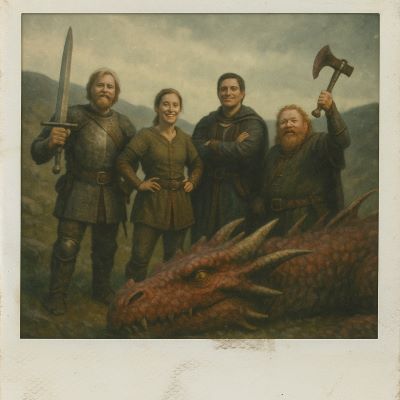
In games of Dungeons & Dragons, survival isn’t guaranteed by brute strength alone. It’s the party—a team of adventurers with varied skills and personalities—that determines success. A well-balanced party navigates danger, solves puzzles, negotiates with kings, and defeats dragons. Building a party that is poorly balanced? They get wiped out in the first dungeon.

This isn’t just fantasy. Building a good party is a powerful metaphor for creating real-world teams—whether in business, education, or community leadership. Let’s explore how the lessons of D&D party composition can help you build more effective, resilient, and exciting teams.

The Classic Roles: Diversity of Function

In most D&D parties, players naturally fall into a few core roles:

  • The Fighter (or Tank) – Soaks up damage, leads from the front, keeps the team safe.
  • The Healer (or Support) – Keeps the team alive, fixes problems mid-battle, often overlooked until things get desperate.
  • The Arcane Master (or Wizard) – Wields immense power, but fragile. A thinker and planner.
  • The Thief (or Rogue) – Deals precision damage, scouts ahead, solves traps. Agile and clever.
  • The Negotiator (or Face) – Talks the party through problems. Reads the room, persuades the crowd, calms the chaos.

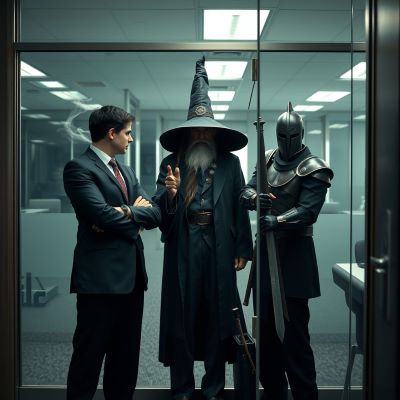
Each of these roles plays a critical part in a party’s success. And just like in the workplace, it’s dangerous to build a team with only one type of thinker or doer. A team of fighters might get stuck on a puzzle. A group of wizards might collapse under pressure. True strength comes from complementary roles—from people doing different things well, not the same thing better.

Unique Players, Unique Takes

But D&D is never just about archetypes. Each player adds their own twist to their role. Of course, one fighter might be a stoic knight. Another, a reckless brawler. One rogue might be a sly thief with a heart of gold, another an acrobat who only steals for sport. A cleric might be a devout priest—or a cynical medic who just happens to carry a holy symbol (“I’m a doctor, not a bricklayer”) .

These personal touches matter. They affect how players interact, solve problems, and support one another. In leadership, we call this individual agency within a role. Just because two people have the same job title doesn’t mean they’ll approach it the same way—and that’s a strength, not a flaw.

Encouraging individuality within roles allows team members to take ownership, play to their strengths, and bring their full selves to the work. You don’t want five clones with different names. You want five distinctive voices working together.

The Magic of Synergy

Some of the most memorable D&D moments come from synergy—when players combine their abilities in surprising ways:

  • The rogue distracts the guards with sleight of hand while the wizard casts invisibility on the fighter, who then sneaks into the vault
  • The druid wild shapes into a blue ring octopus and is thrown by the fighter, on the end of a spear into the villain, poisoning him fatally (yes, this really happened).
  • The barbarian takes all the hits while the healer stacks buffs and the bard inspires everyone with a heavy metal song.

These combos aren’t in the rulebook. They come from understanding what your teammates can do and planning together. In other words, collaboration.

In leadership, encouraging synergy means helping people know each other’s strengths, build trust, and experiment together. Cooperation like this doesn’t just increase output—it creates those unforgettable “we did it!” moments that build lasting team culture.

Who will make up your party?

Building Your Party in the Real World

So how do you use the concepts of building your party in your own team or organization?

  1. Define Your Roles Clearly
    Just like D&D characters have classes, your team members need to understand their roles—not just their job titles, but how they contribute to the team’s overall success. This can be done individually as people step into a new role. However, it can also be done as a group where everyone’s role is defined collectively.
  2. Value Diversity of Skills
    Don’t hire or assign roles based on sameness. Bring in people who think differently, act differently, and bring different types of magic to the table. You want to avoid groupthink at all costs, get diversity into your team quicksmart.
  3. Let People Own Their Role
    Encourage creativity. Let team members adapt their roles to suit their strengths and interests. Don’t just assign tasks—give ownership. Watching a team member make a role their own is one of the joys of leadership.
  4. Foster Collaboration, Not Competition
    Create a culture where people look for combo moves, not solo glory. Reward teamwork over individual brilliance. Collaboration and teamwork should be the norm. Don’t encourage or reward Lone Wolf behaviour.
  5. Make Time for Storytelling
    In D&D, parties bond over shared adventures. In real life, teams need time to reflect, celebrate wins, laugh over failures, and tell the story of what they’ve achieved together.

Final Thoughts on Building a Party

Whether you’re storming a goblin-infested ruin or navigating a complex project at work, success rarely comes from going it alone. It comes from assembling a party that works—people with different talents, unique styles, and a shared goal.

Leadership, then, isn’t about being the strongest character. It’s about building the right party, helping each person shine, and creating the space where together you can do something extraordinary.

And honestly? That’s where the real adventure begins.

Stories Lived. Stories Told Podcast

A few months ago I recorded an episode of the Stories Lived. Stories Told. podcast hosted by Abbie VanMeter. Abbie was an excellent host, who made the experience very straightforward and the kept the conversation flowing. We talked about D&D in the context of leadership and communication. Heres the official blurb:

How do games like Dungeons and Dragons enable us to practice a CMM-informed way of relating, participating, and communicating?

Today, Abbie and Tom explore Dungeons and Dragons (D&D) as a powerful practice and metaphor for developing more relational, emergent, and collaborative ways of being and leading, touching on the value of experiental learning in scenarios our brains will remember as real; the need (both in game and out) to coordinate across different meanings being made in each of our own imaginations; and the opportunity to transform and be transformed by collective storytelling and world building.

I had a great time recording the episode and we covered a lot of ground. You can find it by following the links below:

Spotify: https://open.spotify.com/episode/4RDvlAgU0CdgiXk8KtTfAC?si=5004742137b043df

Apple Podcasts: https://podcasts.apple.com/us/podcast/stories-lived-stories-told/id1610827437?i=1000722748681

Substack: https://open.substack.com/pub/cmminstitute/p/on-practicing-leadership-playing?r=3momjn&utm_campaign=post&utm_medium=web&showWelcomeOnShare=true

YouTube: https://youtu.be/9m4Bhtjme14

And the SLST website: https://www.storieslivedstoriestold.com/podcast

I’d love for you to check it out!

For other podcasts that DnD at Work has appeared on check out our page here.