
Dragon Slayers and Proud of It: Celebrating the Little Wins

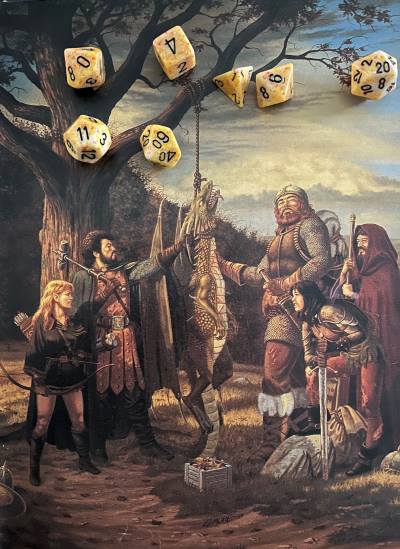
One of my favorite Dungeons and Dragons paintings is the classic “Dragon Slayers and Proud of it” by the incredibly talented Larry Elmore. This shows an adventuring party proudly standing next to a dragon that they have just slain. The look of satisfaction on their faces is very real. However, the joy for me comes from the size of the dragon. It is pretty small. Not the heroic villain expected. To me they are celebrating their first win together. It doesn’t matter that it wasn’t an epic show down. A win is a win. Something that has brought the team closer together.

This got me thinking about our role as leaders. Why is it that so much communication tends to focus on compliance and improvement. Why don’t we celebrate the wins, regardless of size, with the team on a regular basis. Below I explore a few reasons why we should be celebrating the little wins in both D&D and as leaders in the real world.

Embracing Progress

In Dungeons & Dragons, success isn’t solely determined by defeating the final boss or completing a quest; it’s also about the smaller victories that pave the way. Perhaps your characters learn the part of the Villains grand plan. Or, maybe they make a new ally or buy a tavern. Whatever it is , it’s worth celebrating. Taking a moment to acknowledge the success together at the table helps bring the group closer.

Similarly, in business and life, progress often comes in incremental steps. Whether it’s mastering a new skill, completing a project milestone, or achieving a personal goal, each small win contributes to overall success. As a leader make sure to take the time to acknowledge these victories both with the individuals involved and the wider team. This will give your employees a great sense of achievement and let them know that their efforts are appreciated.

Building Momentum

Just as in D&D where every successful encounter builds momentum for the party, celebrating little wins in business and life can generate positive momentum. In game this could mean getting one step closer to saving the world. Alternatively, in business it can be the next milestone to reaching the annual objectives.

Big goals, on their own often seem insurmountable or impossible. Recognizing and acknowledging achievements, no matter how small, boosts morale and motivation. Letting people know that we will get there. Ultimately, propelling individuals and teams forward with renewed energy and enthusiasm.

Fostering Collaboration

Collaboration and teamwork are the cornerstones of D&D. Each player contributes their unique skills and abilities to overcome challenges. Looking at the team in Larry Elmore’s painting shows a group comprising strong fighters, stalwart clerics and an arcane magic user. Together, they have used their disparate skills to overcome their foe and get a win. Alone, a victory like this would never have been possible.

In business and life, celebrating little wins fosters a sense of camaraderie and collaboration. Recognizing the contributions of team members and acknowledging shared achievements strengthens bonds and encourages continued collaboration. When you succeed as a team, the team becomes stronger. Cultural touch points appear around the journey the team has taken together. For example, remembering the time the team pulled an all nighter to get a project out on time becomes a core part of the team identity, bringing everyone closer together.

Cultivating Resilience

When playing at the tabletop, setbacks and obstacles are inevitable. But it’s how adventurers respond to these challenges that define their journey. In the painting the heroes display cuts, ripped clothing and battle damage. Although small, the dragon they have conquered was no easy fight. If it was easy, there’s no reason to celebrate.

Similarly, in work teams and in life, encountering setbacks is all part of the process. By celebrating little wins, individuals cultivate resilience and develop the mindset needed to persevere in the face of adversity. Ultimately bouncing back stronger and more determined than before. Acknowledging when things are tough and working together to push through makes everyone stronger.
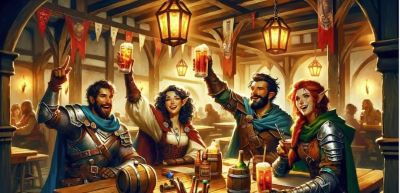
Celebrate the little wins as a team!

Savoring the Journey

D&D campaigns are epic adventures filled with twists and turns. But it’s the smaller moments of triumph that make the journey memorable. In many games the best memories are often the smaller improvised encounters that emerge from play. Perhaps it is a hireling they picked up in a village. Or their interactions with a bard who wants to write their story. No amount of planning by the DM can make these memorable moments. Rather it is playing together at the table.

Likewise in life, savoring the journey and celebrating the little wins adds richness and depth to the overall experience. Maybe it’s a junior project manger finishing her first project, or onboarding a new client or even finding the best coffeeshop near the office! By taking the time to appreciate the small victories along the way, individuals can find joy and fulfillment in the process, not just the end result.

Final Thoughts on Dragon Slayers

Have a look at the painting again. Are there any other details that speak to you? Perhaps the tiny box of treasure or the look of satisfaction on the heroes faces. Larry Elmore has really created an image with depth and meaning.

For me the painting highlights that in the epic tale of life, celebrating the little wins is not just about acknowledging achievements. It’s about embracing progress, building momentum, fostering collaboration, cultivating resilience, and savoring the journey. Whether in Dungeons & Dragons, business endeavors, or everyday life, recognizing and celebrating these small victories is essential for team cohesion, personal growth, and fulfillment. So, let’s raise a toast to the little wins and revel in the magic they bring to our adventures, both big and small.

Now go slay your dragon – no matter how small it is!

For another take on how awesome Larry Elmore’s painting is check out this video from Bardic Broadcasts.

Unlock Team Resilience With Dungeons & Dragons

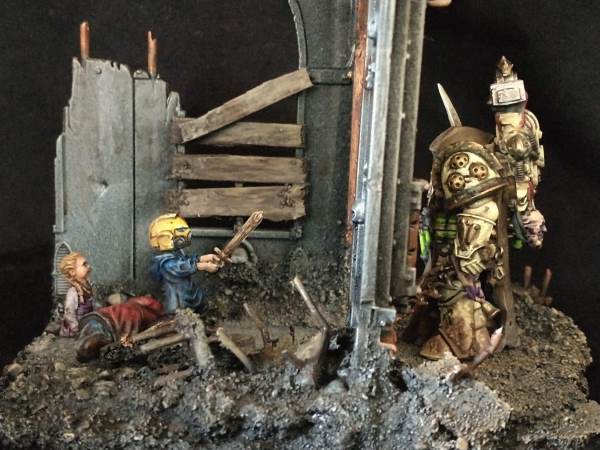
Amazing diorama by James Paxon

Teamwork and resilience are essential qualities for success in both the adventures of Dungeons and Dragons (D&D) and the challenging world of business. Sources of inspiration include the grueling Navy SEALs Hell Week, where team resilience is key. We examine the elements of adversity, collaboration, perseverance, and growth that can be emulated through D&D gameplay.

On another note, the featured image on todays post is a miniature diorama by the talented James Poxon.

Creating an Adversarial Environment

D&D adventures can be designed to introduce challenges and obstacles that push players to their limits. By crafting scenarios that test their problem-solving abilities, strategic thinking, and emotional resilience, the DM can create a simulated environment of adversity. This can be as simple as rolling dice in the open. Letting players know that the danger they are facing is not being fudged by the DM. Additionally making scenarios that are genuinely hard, with significant in-world consequences ramp up the adversity and pressure. Navy SEALs and other special forces teams undergo rigorous training to prepare for real-world challenges. Similarly, D&D allows teams to face adversity in a controlled and collaborative setting.

Teamwork and Collaboration

D&D is inherently a cooperative game, requiring players to work together as a team to overcome challenges. Team members must communicate effectively, leverage each other’s strengths, and collaborate to achieve shared goals. The simulated team adversity in D&D provides an opportunity for teams in the business world to practice and refine their collaborative skills. With the additional benefit of fostering a culture of effective teamwork and synergy.

Perseverance and Grit

Adversity often tests an individual’s perseverance and resilience. In D&D, players experience setbacks, encounter formidable foes, and face unexpected obstacles. By persevering through these challenges, players develop a sense of grit—a combination of passion, resilience, and determination. Emulating the Navy SEALs Hell Week, where candidates push through physical and mental barriers, D&D allows teams to practice and cultivate the perseverance and grit necessary to overcome adversity in the business world.

Problem-Solving and Creative Thinking

D&D requires players to think critically and creatively to navigate complex situations. In the face of adversity, players must analyze problems, explore innovative solutions, and adapt their strategies. The simulated team adversity in D&D provides a platform for teams to sharpen their problem-solving and creative thinking skills, enabling them to approach real-world business challenges with ingenuity and adaptability.

Growth and Learning from Failure

Failure is an integral part of both D&D and the business world. In D&D, setbacks and failures serve as opportunities for growth and learning. Similarly, in business, failures can be powerful teachers if embraced with the right mindset. Through the simulated team adversity in D&D, teams develop the resilience to learn from failure, adapt their strategies, and continuously improve. This growth mindset fosters innovation, adaptability, and a culture of learning within the business environment.

Use games to help create a sense of team camaraderie

Building Trust and Camaraderie

Team adversity in D&D provides a platform for teams to build trust and camaraderie. Just as Navy SEALs forge unbreakable bonds during Hell Week, D&D enables teams to develop trust through shared challenges, mutual support, and reliance on one another. This trust and camaraderie transfer to the business world, fostering strong relationships, effective collaboration, and a sense of unity within the team.

Final Thoughts on Team Resilience

D&D offers a unique opportunity to simulate team adversity, providing teams with invaluable experiences and lessons that strengthen their resilience. By creating an adversarial environment and fostering teamwork, teams can harness the game to prepare for and overcome the challenges they face. Through this immersive and transformative experience, teams can emerge stronger and more cohesive. Ultimately, better equipped to thrive in the dynamic and demanding business landscape.

I have built a framework for a scenario experience that could be used for your team. To learn more check it out here.

The Secrets of Teamwork and D&D – Everyone Has a Different Role

Dungeons and Dragons (D&D) is renowned for its party-based gameplay. Involving groups of diverse characters coming together to embark on epic adventures. In this article, we delve into the roles that each player’s character assumes in a D&D party, exploring how these roles mirror the dynamics of a business team. By examining the unique contributions of each party member, we can uncover valuable insights. Effectively, helping build successful teamwork in the business world.

The featured pic above is from Life of the Party comic strip by the talented Travis Hanson.

The Tank – The Guardian and Protector

In D&D, the Tank is the heavily armored character who excels at protecting the rest of the party. They often put themselves in harms way to help the group achieve their goal. Think heroic knights or paladins.

Similarly, in business, there are team members who act as the guardians and protectors, ensuring the smooth operation of projects and shielding others from potential obstacles. They possess the ability to handle high-pressure situations, maintain stability, and provide support when needed. These professionals take the well-being of the team very seriously and can often be found leading teams. As such, fostering teamwork amongst the other team members becomes a core part of their offering.

The DPS – The High Damage Dealer

The DPS (Damage Per Second) character in D&D is responsible for dealing high amounts of damage to enemies. They possess exceptional offensive capabilities and excel in combat situations. This could be a battle mage slinging lightning bolts across the battle field or a lean barbarian with extreme sword mastery.

In the workplace, certain team members are analogous to DPS characters. They bring a strong skill set and expertise to the table, enabling them to tackle complex challenges head-on and generate significant impact through their specialized abilities. These take the form of technical specialists who are known to be experts in their field.

The Healer – The Support and Problem Solver

The Healer in D&D is vital for sustaining the party’s health, curing ailments, and providing support in critical moments. Without this character the group faces a much higher chance of losing team members or even risking a total party kill!

In a business team, the role of the Healer is fulfilled by those individuals who possess excellent problem-solving skills. They also have significant empathy, and the ability to provide support to team members during challenging times. They excel at diffusing conflicts, offering guidance, and ensuring the overall well-being of the team. These members of the team often act as mentors to the rest of the group.

It’s not wrong…

The Buffer – Enhancing Team Performance

Buffers in D&D possess skills that enhance the performance of their fellow party members. They provide buffs, bonuses, and support abilities that elevate the effectiveness of the entire group. The stereotype of this role is the Bard. Playing his lute to inspire his friends to greater acts of heroism. As such, the bard is often the central figure to the teamwork of the squad.

At work, individuals who play the role of Buffers are those who possess strong leadership and motivational skills. They inspire and empower team members, foster a positive work environment, and boost overall team performance through their guidance and encouragement. While they have leadership skills in abundance these professionals don’t have to be actual leaders in the organization. It is possible to lead without holding a position of authority. Of course, team enhancing behaviors like this often mean promotion is just around the corner.

The Skill Monkey – Versatility and Adaptability

The Skill Monkey in a D&D party is known for their versatility and wide range of abilities. They excel in various non-combat scenarios, such as diplomacy, negotiation, and problem-solving. These are often rogue characters, including spies, diplomats and bards who have multiple skills and are expert at the more social interactions.

In a business team, the Skill Monkey is the member who possesses a diverse skill set, adaptability, and the ability to wear multiple hats. They are comfortable navigating different roles, stepping up when needed, and bringing a fresh perspective to diverse situations. This could be a project manager with a strong technical skillset. Or, a technician who is great at client interactions and winning work. Their skill lets them bridge multiple roles, ultimately making the team a stronger unit.

Final Thoughts

The D&D party dynamic provides valuable insights into team dynamics. Just as each character has a unique role to play in completing an adventure, every team member contributes their specialized skills and expertise towards achieving common goals. Recognizing and appreciating the diverse roles within a team fosters collaboration, enhances problem-solving abilities, and allows for the effective utilization of individual strengths. By understanding the importance of each role in a D&D party and applying these teamwork principles to their teams, organizations can foster a harmonious and high-performing environment, driving success and achieving extraordinary results.