
Promethium War Campaign Wrap Up – Did it Work?

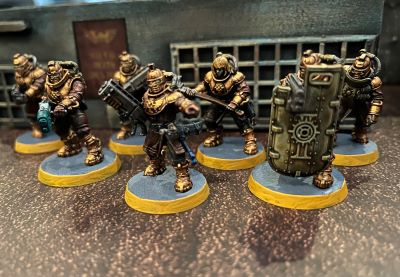
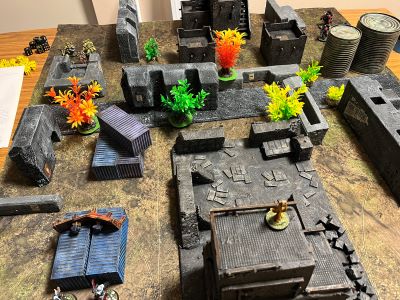
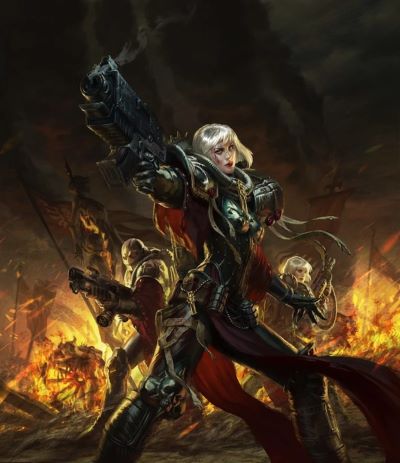
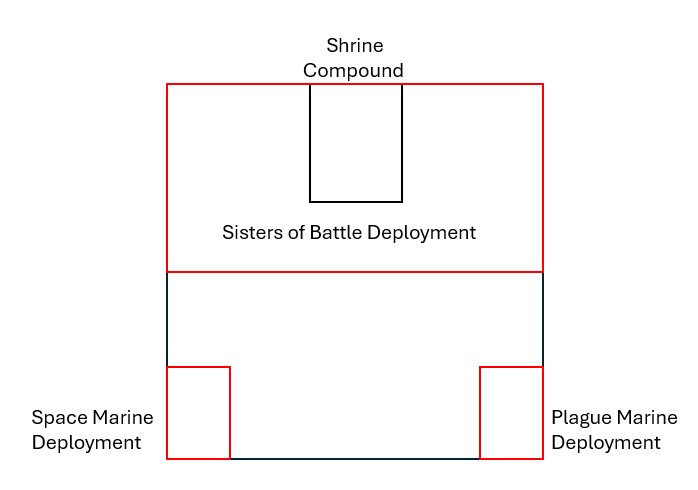
Back in April and May I ran a narrative Kill Team event called Promethium War. We had 12 players all fighting over the Promethium rich world of Pyrothis V. The aim of the campaign was to keep it simple, push the narrative side of the game and see what it is like to run an experience like this. I purposely kept it short at 4 weeks so that I could dip my toe in the water and understand what works and what doesn’t. Of course, I also wanted to make sure people at the club were really interested.

Did it work and what lessons did I learn? Lets find out.

What Worked?

To start with we had 12 club goers sign up for the campaign. So there was real interest in the narrative side of the game. People were excited about giving more meaning to their casual Wednesday night games.

Having factions and teams working together created lots of banter and feedback from the participants rated this as an enjoyable part of the whole experience. The exception to this was the different win conditions for the Xenos team, which didn’t really work as well as I had hoped.

Most of the players really engaged with the narrative elements of the campaign and wrote up fun battle reports. They weren’t shy about putting their own spin on the campaign events, resulting in some really creative additions.

All in all, lots of engagement, fun banter and some great narrative. An all round win. However, there were some elements that could have gone better.

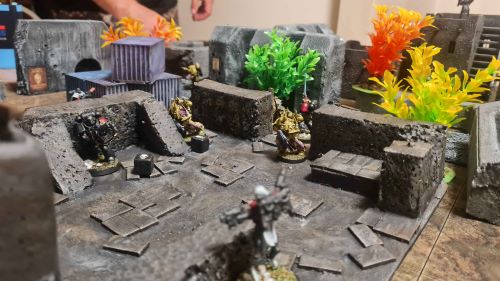
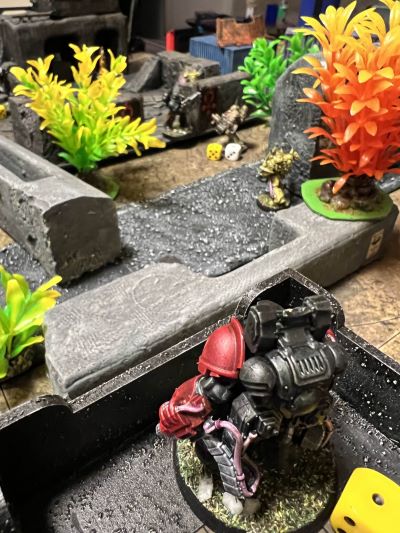
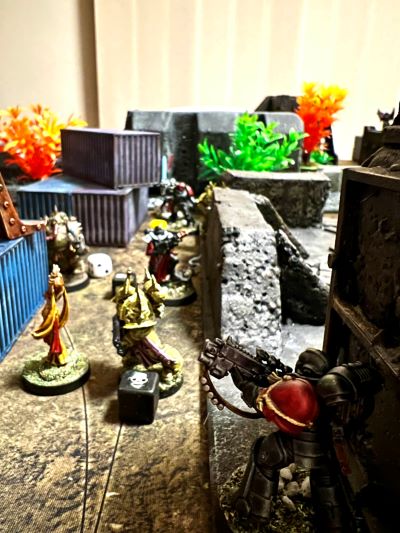
Close fought battle from week 4

What Didn’t Work?

As mentioned above the Xenos faction win condition was confusing and actually difficult to pull off. To their credit the Xenos players leaned into it well, but if I were to do it again I would have their win condition be more aligned with the other two factions.

Scoring was based only on wins. Looking back, I think that points should be scored for playing games as well, not just the win. this encourages players to get more games in and removes the sting of defeat a little.

During Promethium War all the narrative elements were collected as stories in the discord and the weekly campaign journal. Having a map would have grounded the games even more with actual territory being fought over. Whether this needs actual mechanics associated with it or stays as a tool to aid the narrative remains to be seen.

In my set up of the campaign I added a couple of bespoke crit ops. However, I feel like I missed a trick here. Having a strong of specific ops can really help tell the story of the campaign. The scientist mission I included was a real hit. Having things like this that deviate from the regular game set up gave additional life to the campaign.

Campaign Journal

Inspired by the old Necromunda newsletters from the 1990s White Dwarf magazine, I wrote a series of campaign journals. These were intended to tell the story of the campaign, including results and missions. These took a fair bit of work to compile and I’m not sure that the players really engaged with them. From an effort/reward point of view I’m not sure they are worth it. Next time I think I will do something similar but a lot shorter.

If you want to follow the campaign here are the journals from Week 1 to the finale:

Lessons Learned from Promethium War

From my own experience and from my player survey there are a few things I’d do next time. these include:

  • Include a map to fight over (though with limited mechanics)
  • Keep multiple factions, but keep win conditions more aligned
  • Appoint Faction Captains to encourage engagement and narrative
  • Include secret missions for Factions to give a sense of mystery
  • Have a specific mission for each week that follows the arc of the campaign
  • Include environmental rules to make battles feel different
  • Have a reduced campaign journal, rely on players and captains to provide the narrative
  • Include specific events during the campaign with special missions and multiplayer games to maintain interest and give different experiences throughout
  • Make it longer than 4 weeks to give more of a feeling of a larger scale campaign.

Final Thoughts on Promethium War

Did Promethium War work? Yes it did. The players were engaged and had fun, which is after all the purpose of the whole experience. Additionally I learned a lot about the effort required and other things that the players were looking for.

Would I run another narrative campaign? Definitely! Would I recommend running your own narrative campaign? Definitely again. However, the set up does take quite a bit of work. Watching players engage with your material and make it there own is a very satisfying experience.

While writing this I already have the makings of the next campaign already forming. Get ready for Succession War (working title) later in the year. Cant wait to see what story emerges.

Planning a Kick-Ass D&D Campaign with Minimal Effort

Planning a Dungeons & Dragons campaign can feel overwhelming, especially for Dungeon Masters who want to keep their preparation time manageable. However, by borrowing concepts from Dungeon World Fronts and embracing minimalist planning, you can create a dynamic, player-driven experience that feels rich and engaging without requiring hours of prep work. I use this methodology in many of my own campaigns and I can say from experience that it works a treat.

What Are Dungeon World Fronts?

Dungeon World, a narrative-driven RPG, uses Fronts as a way to organize campaign threats and storylines without rigid scripting. Instead of planning each session in detail, you create major factions, events, and dangers that will evolve naturally based on player actions. These Fronts act as living forces in the world, ensuring the story unfolds dynamically.

Step 1: Define Your Fronts

A Front is a significant force or conflict that drives the game’s narrative. Examples include:

  • A Rising Cult – A mysterious order gathers followers to summon an ancient deity.
  • A Warlord’s Ambition – A power-hungry warlord seeks to conquer the region.
  • A Failing Empire – The once-great kingdom crumbles due to internal corruption.
  • A Forgotten Curse – An ancient evil begins to stir beneath the land.

Each Front has:

  1. A Core Threat – The central danger or goal of the Front.
  2. Grim Portents – Steps showing how the Front advances if unchecked.
  3. Impending Doom – The final, catastrophic outcome if players fail to intervene.

It is best to have 2-3 Fronts in play. This creates interesting moral dilemmas for the players. Do we find the rising cults source of power, or stop the Warlords ambition in the border lands? Combatting one will leave the other unchecked for a time and closer to reaching it’s impending doom.

Example of Dungeon World fronts used for a Castle Ravenloft campaign

Step 2: Keep Session Prep Minimal

Instead of spending hours scripting intricate encounters, use situation-based preparation:

  • What’s Happening Right Now? – Consider what the antagonists are currently doing.
  • What Might Happen Next? – Think about the logical consequences of past events.
  • What Questions Need Answers? – Let player curiosity drive exploration.

This method of play does require getting comfortable with improvisation. For some tips on upping your improve game you can check out my previous article on the subject.

Step 3: Build NPCs and Factions, Not Plots

Rather than rigid story arcs, create motivated NPCs with clear goals. If you establish what each faction or villain wants, they will naturally push the world forward, reacting to the players’ choices.

This keeps the game very fluid and flexible. It will actually create intricate and compelling stories without the rigidity and time spent on creating these beforehand.

Step 4: Use Player Backstories for Hooks

Weave your players’ backgrounds into the campaign. A character’s lost sibling, old rival, or mysterious prophecy can become central elements of the story, creating organic engagement without extra planning.

Step 5: Let the World React

One of the best ways to keep a campaign like this engaging is to make the world feel alive. To do that use the following:

  • Actions Have Consequences – If players ignore a threat, it advances.
  • Factions and NPCs Adapt – Enemies respond to failures and successes.
  • The Story Evolves – The campaign unfolds based on player choices, not a fixed script.

Final Thoughts

By using Dungeon World Fronts, embracing minimal prep, and letting players drive the story, you can create a rich, immersive D&D campaign without hours of meticulous planning. While this type of campaign can seem too freewheeling, it does in fact take less effort while creating adventures that the players get fully engaged with. By focusing on dynamic factions, evolving conflicts, and player-driven narratives, and you’ll have an unforgettable game that practically runs itself.

The Downside of Darkvision: It Takes the Fear Out of D&D

Darkness has always been a powerful storytelling tool, evoking mystery, fear, and uncertainty. It limits perception, raises tension, and forces players to make choices based on limited information. However, in Dungeons & Dragons, Darkvision—a trait possessed by many races—often removes that tension entirely, making darkness little more than a minor inconvenience. I believe that the prevalence of characters with Darkvision greatly diminishes the immersive horror and suspense that darkness is meant to bring to the game.

The Problem with Darkvision

Here are a few of the issues I have with Darkvision.

  1. Eliminates the Fear of the Unknown – In a game where exploration and mystery are key elements, darkness should be a real obstacle. When most of the party can see in the dark, the natural fear of the unknown is drastically reduced. Instead of inducing tension at the table, entering what should be a forbidding cavemouth becomes rather meaningless.
  2. Renders Torches and Light Spells Unnecessary – Traditionally, adventurers needed torches, lanterns, or spells like Light to navigate the depths of dungeons. But when the majority of the party has Darkvision, these become redundant, reducing strategic planning and logistical concerns. The decision to risk going deeper with a limited number of light resources is now completely gone.
  3. Breaks Immersion in Horror and Survival Themes – Darkness should be oppressive and unsettling, especially in horror or survival-focused campaigns. When creatures lurking in the dark can be seen as easily as those in daylight, that eerie sense of tension disappears. Think of the film Alien. You hardly ever see the monster, instead only suggestions of it. This keeps the sense of fear really high. Fully revealing the monster evaporates the fear.
  4. Unfair to Humans and Other Non-Darkvision Races – In most campaigns, humans and other races without Darkvision are at a clear disadvantage. This often leads to everyone choosing a Darkvision-capable race to avoid being the only one struggling in the dark.
Alien uses the dark to great effect. Use films like this for inspiration for your own games.

How to Restore the Fear of the Dark

If you want to bring back the eerie uncertainty of darkness in your D&D game, consider the following house rules and strategies.

  1. Make Darkness More Than Just Visibility – Even with Darkvision, creatures might have trouble distinguishing details, reading text, or perceiving color. Enforce these limitations more strictly to make darkness feel more oppressive.
  2. Introduce Supernatural Darkness – Spells like Darkness create magical darkness that Darkvision cannot penetrate. Incorporating such effects more often makes light sources necessary.
  3. Limit the Effectiveness of Darkvision – In my home games we house-rule that Darkvision only allows creatures to see in grayscale, with reduced clarity and range. This forces players to rely on additional light sources for full visibility.
  4. Use Monsters That Thrive in Darkness – Creatures like Shadow Demons or Underdark predators (e.g. shadows, darkmantles and ropers) may have advantages when attacking creatures relying on Darkvision alone. Using ambush tactics and stealthy enemies can make darkness truly threatening again.
  5. Encourage Light Sources for Roleplay and Strategy – Give players reasons to carry torches or lanterns. Maybe certain symbols or texts are only visible under torchlight, or enemies are repelled by bright flames. Reward creativity in using light as a tool, rather than letting Darkvision replace it entirely.

Final Thoughts on Darkvision

Darkness should be more than just a mild inconvenience—it should be a challenge that adds depth and immersion to your D&D game. Darkvision ruins this. By reintroducing the unknown, enforcing visibility limitations, and making darkness more than just a lack of light, you can bring back the tension and excitement of exploring the shadows. After all, what’s an adventure without a little fear of the dark?