How often do you watch a movie or read a book, and think, this would make an awesome D&D adventure? If you are like me, all the time! The rich narratives found in books and movies offer a treasure trove of inspiration for creating compelling adventures. By adapting these stories into the D&D adventure framework, Dungeon Masters (DMs) can craft adventures that resonate with players, offering familiar yet novel experiences. Let’s explore how to convert the plots of the movie Alien and the book Sharpe’s Rifles into engaging D&D adventures.
My favorite movie of all time. I remember watching it as a 16 year old on a rocking chair in my parents house. I kept the lights off, which coupled with the creaking of the old house added to the scary atmosphere. The bleak industrial sci fi, kick ass heroine and beleaguered crew had a big impact on me. Despite the fact there is an Alien RPG and others like Mothership and Those Dark Places I’ve always though that Alien is also great fodder for a D&D adventure.
Synopsis: In Alien, a spaceship crew responds to a distress signal on a distant planet, only to encounter a deadly extraterrestrial creature that picks them off one by one.
Conversion into a D&D Adventure
Setting the Stage: The adventure begins with the party receiving a distress call from a remote outpost or a derelict ship. The setting could be a mystical planes jumping vessel, a forgotten temple, or an ancient dungeon.
Initial Exploration: As the party investigates, they discover signs of an unknown threat—strange symbols, remnants of battles, or cryptic messages left by the previous inhabitants.
The Threat: Introduce a powerful, terrifying creature that stalks the party. This could be a homebrew monster or an adaptation of an existing creature like a mind flayer or a remorhaz.
Survival and Escape: The focus of the adventure shifts to survival. The party must use their wits and resources to outmaneuver the creature. The tension rises as they realize direct confrontation might not be the best option.
Climactic Escape: The adventure culminates in a high-stakes escape, where the party must make critical decisions to ensure their survival while sealing or destroying the creature to prevent further harm.
I can already picture the experience at the table. Slow dawning dread as they uncover the clues. Followed by a frenetic, time pressured escape. I want to play this already! In fact I will be including this in my regular campaign at some point in the future. So if any of my players are reading this, you better beware when you come across that ancient temple…
Bernard Cornwell’s books have plenty of D&D adventure inspiration
As a boy/adolescent in the 1990’s the Sharpe books and subsequent TV movies were a staple part of my media diet. Tales of derring-do aplenty with lots of inspiration for D&D shenanigans.
Synopsis:Sharpe’s Rifles follows Richard Sharpe, a soldier in the British Army during the Peninsular War. After a series of setbacks, Sharpe takes command of a group of riflemen and leads them on a daring mission to rally Spanish allies and defeat a superior French force.
Conversion into a D&D Adventure
Setting the Stage: Place the party in a war-torn region where they are part of a larger conflict. They are separated from their main force and must navigate enemy territory to regroup with allies. The enemies could be anything from a chaotic orc horde to well disciplined Drow.
Leadership Challenge: One of the party members (or a trusted NPC) must step into a leadership role, rallying a group of local militia or refugees. The focus here is on building trust and cohesion within the group.
Skirmishes and Guerrilla Warfare: The adventure includes a series of skirmishes against enemy patrols. The party must employ guerrilla tactics, using the terrain and local knowledge to outsmart a superior force.
Rallying Allies: The party seeks out local leaders or resistance fighters to bolster their numbers. This involves diplomacy, persuasion, and perhaps a daring rescue or theft.
Final Battle: The adventure culminates in a strategic battle where the party and their allies confront the enemy. The players’ earlier choices affect the strength and morale of their forces, adding weight to the final confrontation.
I envisage this adventure being played in the sandbox style. The players are provided with a map of the area. Potential ally and enemy locations are detailed. Now the party must decide where to rally allied troops and where to enact guerilla actions. The final battle could be at the key strategic location being held by the villains. Perhaps a cross roads, bridge over a chasm or a magical portal. Played as a short campaign this gives plenty of opportunity for player dilemmas and cinematic scenes. I know exactly where this sort of adventure can fit into my current campaign.
Final Thoughts
Adapting plots from books and movies into D&D adventures allows DMs to introduce players to thrilling, narrative-rich experiences. By drawing on the suspense of Alien or the military strategy of Sharpe’s Rifles, DMs can create adventures that challenge players in new and exciting ways. The key is to capture the essence of the original story while allowing for the flexibility and creativity that makes D&D unique. By thinking about the inspirations above I now have two potentially awesome adventures to run my players through. I cant wait.
Where are your go to sources of inspiration for your D&D adventures?
One of things I love about Dungeons and Dragons campaigns is the worldbuilding. Particularly when the world advances and changes through the player actions and creativity. My long standing Salkire campaign evolved from a ruined city to a huge world with kingdoms, factions and villains vying for attention. All formed through gameplay and collaboration between my players and me, as DM. Over the last couple of years I have rediscovered sci fi wargaming with a particular focus on Warhammer 40K lore. I discovered the incredible Corvus Cluster, a long running blog tying together a groups games into one long running and immersive campaign. Ultimately, not too dissimilar to a long term D&D campaign really. Using this as inspiration I wanted to do similar worldbuilding for my own 40K inspired games. Mordax Prime is the result.
What is Mordax Prime
Mordax Prime a sector of space in the Warhammer 40K universe that I have developed as a narrative backdrop for my 40K inspired games. While I have retrofitted some of my previous games into this Sector, future games will be informed by and change the setting. My hope is that the setting begins to take a life of it’s own. Dictated by the outcomes of games and player actions. As mentioned previously this is narrative focused, providing colour and setting to our games. Players will know that game outcomes will have impact and I hope that this will add flavour not present in a normal game.
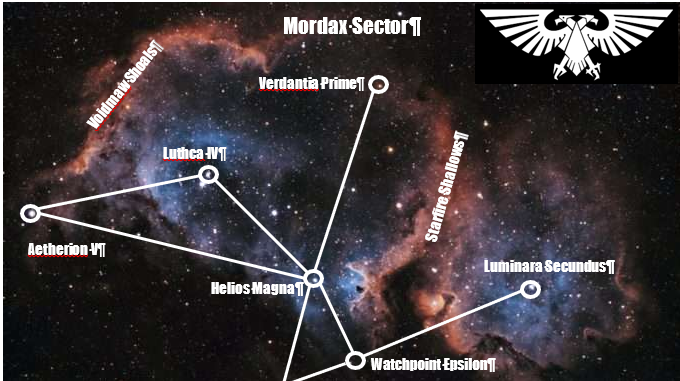
Star chart of Mordax Prime. A good starting place.
The Mordax Sector begins the campaign under Imperial control. Of course, this is likely to change as the narrative progresses.
Current Worlds
These were easy to develop using AI prompts as well as additions from my own imagination. I knew that I needed Luthca IV and a jungle death world, based on previous skirmish games I’d run. Other than that I was open to other 40K tropes like the forge and hive worlds. The last addition was the navy watch station. As I’d had pirate captain Mad Claw make an appearance in a game I want to explore this narrative a bit more. An Imperial naval port is exactly the location needed to help it play out in an exciting way.
So far, Mordax Prime comprises the following worlds. Of course new worlds and clusters may appear over time as the narrative dictates. As you can see from the descriptions below there is plenty of scope for conflict already.
Helios Magna (Hive World and Sector capital)
Description: A sprawling, industrial hive world teeming with millions of souls and the Administratum center for the system. Its vast manufactorums supply weapons and armor for the Imperial Guard. The towering spires of the hive cities are hotspots for intrigue and rebellion, making it a critical point of interest for both Imperial and Chaos forces.
Strategic Importance: Helios Magna’s output is vital for sustaining Imperial war efforts. Control of this planet secures supply lines and access to vast manpower resources.
Challenges: Frequent underhive uprisings and the ever-present threat of Genestealer Cult infiltration.
Verdantia Prime (Death World)
Description: A lush, verdant world filled with dangerous flora and fauna. The thick jungles are a perfect hiding place for renegades and xenos. It’s rumored to be home to ancient artifacts of great power.
Strategic Importance: Control of Verdantia Prime offers access to rare resources and strategic defensive positions. It’s also a key site for potential xeno-archaeological discoveries. Thought to house a top secret Dark Angels training facility.
Challenges: Navigating treacherous terrain and dealing with constant ambushes from Tyranid bioforms or feral Chaos cultists.
Aetherion V (Forge World)
Description: A heavily fortified forge world, Aetherion V is known for its production of advanced weaponry and vehicles. It is a linchpin in the sector’s defenses, equipped with formidable orbital platforms and ground-based macro-cannons.
Strategic Importance: Control of Aetherion V ensures a steady flow of high-quality wargear and defensive capabilities. It’s also a prime target for sabotage by the Chaos Space Marines.
Challenges: Infiltration by Chaos cults and the risk of large-scale conflicts breaking out in its production facilities.
Luthca IV (Industrial World)
Description: Highly productive factorium world built over ancient ruins. Supplies nearby sectors with manufacturing and agricultural machinery. Caches of archaeotech are thought to lie hidden deep within the Cinder Desert and in the roots of the hive cities.
Strategic Importance: While of lower manufacturing importance than Luminara Secundus, Luthca IV is the focus of many expeditions looking for ancient artefacts thought to provide great power..
Challenges: Both Chaos cults and Xenos vie with Imperial and Mechanicus agents in the search for forbidden tech. It is also rumoured that a Chaos gate lies buried deep beneath Hive Secundo.
Watchpoint Epsilon (Imperial Port)
Description: Key naval station providing patrols of nearby warp lanes.
Strategic Importance: Home of Watchfleet Epsilon, key in the defense of the Sector and nearby warp lanes.
Challenges: Seen as a backwater posting has led to dissatisfaction and potential heresy amongst some of the officer cadre.
Luminara Secundus (Pleasure World/Trade Hub)
Description: Known for its beautiful landscapes and luxury, Luminara Secundus serves as a retreat for the sector’s elite and a bustling trade hub. Its relative tranquility makes it an ideal location for diplomacy or covert operations.
Strategic Importance: Though less militarized, control of Luminara Secundus provides economic leverage and a base for Rogue Traders. It also serves as a critical node for intelligence gathering.
Challenges: The planet’s affluence attracts both political machinations from Imperial Nobles and covert infiltration by Chaos agents.
Active Factions
A number of factions are thought to be active within Mordax Prime. These are listed below with significant personalities coming from previous games and player invention.
Inquisition: Rooting out heresy and maintaining order.
Inquisitor Jaegermann: Ordo Hereticus seeking out daemonic influences with the Imperial hierarchy.
Rogue Traders: Seeking profit and ancient relics.
Benedictus Sixtus: notorious Rogue Trader known to play all sides. Fond of tall tales.
Imperial Nobles: Defending their estates and political power.
The Duchess: Leader of the most powerful family on Helios Magna.
Sisters of Battle: Purging heretics and xenos.
Enclave of the Veiled Light: Located on Helios Magna.
Space Marines: Responding to major threats with precision strikes.
Dark Angels: Secret training base in the jungles of Verdantia Prime.
Lancet Hereticus: Elements of this Inquisition controlled chapter thought to be active in this sector.
Imperial Guard: Garrisoning key locations and mounting large-scale defenses.
Tyranids: Emerging from hidden bio-ships, consuming everything in their path.
Possibly identified on Verdantia Prime. Thought to be connected to the researches of the late radical Inquisitor Tiberious Glaze.
Genestealer Cult: Sowing rebellion from within.
Heralds of the Star Children: active on Luthca IV, threat level high. Currently being investigated by Dark Angels and agents of the Inquisition.
Forces of Chaos: Undermining Imperial control and seeking to bring the sector into the warp.
Acolytes of the Red Mist: active on Luthca IV threat level unknown.
Mad Claw Crew: notorious pirate currently working from a secret location in the Starfire Shallows.
Plenty of scope for interesting battles, with room enough for additional factions as play progresses.
Current Campaign Log
This was a really fun part of the worldbuilding for me. Placing past games into the sector started uncovering links between factions and planets. Consequently, Mordax Prime is beginning to feel more than a map with some planet names. Life has been breathed into it.
356.658.M41 Unrest on Luthca IV
During a period of unrest on Luthca IV an Inquisitor, Enforcers, Planetary Guard, Acolytes of the Red Mist, Mining Guild and Infractionist gangs fought a vicious skirmish. Each group was making the most of the unrest to pursue their own agendas. Ultimately, Inquisitor Jaegermans retinue won the firefight retrieving the infamous Chaos artefact “Belial Goblet”.
Gangers face off in the streets of Luthca IV
357.020.M41 Echoes of Xenos
Located in the nearby Lupin Sector, Rogue Trader Benedictus Sixtus competed with various Inquisitors and Adeptus Mechanicus to retrieve heretical research of the late Ordo Xenos Inquisitor Tiberious Glaze. The battle raged over a number of sectors and moons as the warbands pursued the trail of clues. Despite battling an emergent Xenos threat Sixtus escaped with the research and fled to the Mordax Sector intent on finding a buyer.
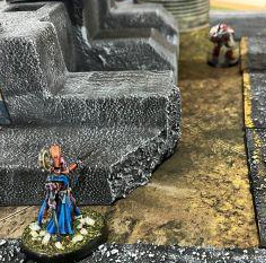
Gun servitor covers an Inquisitor as he explores the depths of an orbital gun platform
357.125.M41 Jungle Hunt
Imperial troopers of the navy and guard pursued the downed vessel of the notorious pirate captain Mad Claw into the jungles of the death world Verdantia Prime. A vicious firefight broke out between the renegades and the brave Imperial patrol. The noise of the firefight awoke some xenos terrors of the jungle, who grabbed combatants from both sides from the leafy darkness. Those lost were never seen again. Unfortunately, Mad Claw and his allies applied superior tactics and fought their way to freedom. The Captain and his crew are thought to be hiding in the Starfire Shallows nursing their hunger for revenge.
It is rumoured that some of the research uncovered by Benedictus Sixtus has made its way to the planet surface. But how or why is unknown.
A brave naval trooper hides as a xenos monster stalks the jungle
357.450.M41 Potential Heresy on Helios Magna
A small but lethal force of suspected Dark Angel space marines assaulted an Ecclesiarchy compound on Helios Magna. The garrison of Adepta Sororitas (Order of the Veiled Light) scrambled quickly to defend. However, could not match the firepower of the marines and their formidable dreadnought. By the time reinforcements arrived the Dark Angels had disappeared as mysteriously as they had appeared, their objective unknown.
Dark Angels capture the objective under the heavy yet ineffective fire from the Sisters of Battle
357.556.M41 The Heist: Luthca IV
On the edge of Hive Secundo a multitude of gangs competed to retrieve a dangerous xenos artefact from the convoy of a Mechanicus expedition. What started as a tense standoff erupted into extreme violence as the hivers made and broke alliances while mercilessly blasting one another. Before order could be restored the artefact was opened releasing a powerful daemonic entity onto the planet. Few survivors lived to tell the tale. Yet, the Planetary Governor has requested aid to eliminate the creature.
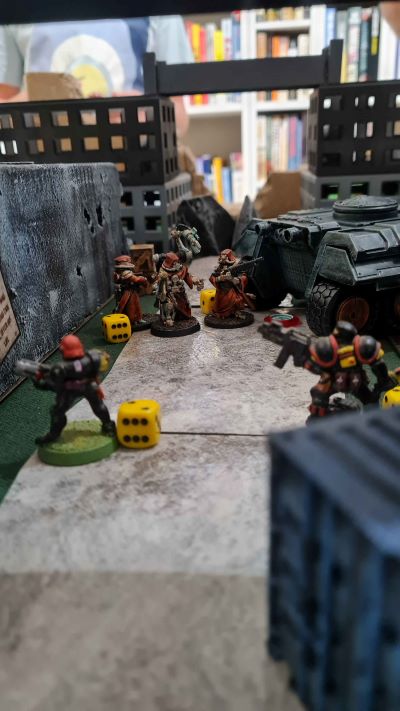
Tense standoff before the firefight erupted
The warp daemon materializes causing mass panic!
357.790.M41 Verdantia Prime Ambush
A Dark Angels patrol was ambushed by an unidentified xenos threat whilst on a training exercise in an abandoned outpost on Verdantia Prime. The space marines fought with characteristic courage obliterating the opposing force. Needless to say, agents of the Inquisition are currently investigating the source of this surprising incursion. It is rumoured amongst those who know that the xenos threat is connected to the research purloined by Benedictus Sixtus and his crew. This incident has been linked to the Xenos discovered during the pursuit of Mad Claw and his gang.
A group of unidentified xenos approach the Dark Angel position
357.800.M41 Heralds of the Star Children Bomb threat
Local enforcers on Luthca IV uncovered a plot to destroy the primary administratum building on Hive Primus. Members of the Heralds of the Star Children placed a large explosive device with the vicinity. Fortunately, it wasn’t set properly giving a small Dark Angels detachment the chance to intercept.
A vicious firefight erupted within the shadowed streets below the administratum. The Heralds employed a psyker of note giving the space marines a difficult time of things. Fortunately, the heroes of the Imperium killed wiped out the xenos heretics and diffused the bomb, saving the Hive from a terrible fate. Inquisitor Mattias Criese has been assigned the investigation of the rogue psyker and this cult, which are both now more than just minor annoyances.
Children of the Star Children advance through the empty streets intent on reaching the bomb first
357.850.M41 Xenos Hunt
Following the recent thwarted bomb threat on Luthca IV by Dark Angels Forces, Inquisitor Criese has been actively investigating the Heralds of the Star Children. In an effort to prevent any further insurrection the Inquisitor has dispatched a crack team of agents to take out Magos Drevender the revered leader of the cult.
The kill team tracked him down into the depths of Hive Primus. But before they could raid the xenos cult an unseen sentry alerted the Magos. Cult members frenziedly assaulted the agents trying to buy time for their illustrious leader to escape. However, Drevender couldn’t quite get there. Instead, he was gunned down by two agents in a hail of bolter shells.
So ended the uprising of the Star Children. The next battle will explore a different narrative from Mordax Prime.
Drevender flees round the corner towards a battle hardened agent of the inquisition, and ultimately his own doom!
Final thoughts on Worldbuilding
This exercise in worldbuilding has been a lot of fun. Tying together the battles into a narrative was much easier than expected and the sector began to take on a life of its own. Are the remnants of the Star Children thirsting for revenge? Will teh Sisters of Battle start investigating the Dark Angels? Where will Mad Claw and his pirates raid next? Is the chaos gate open and what came through? Will the Tyranid presence on Verdantia Prime summon a larger invasion fleet? So many options for exciting games ahead.
Spending a bit of time developing a campaign world for your games is a fun exercise and adds a fantastic narrative aspect to your games. I highly recommend.
How have you had success developing campaign backgrounds?
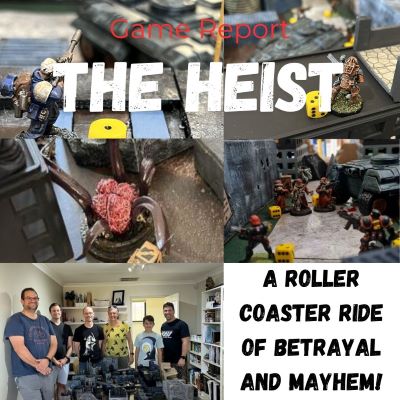
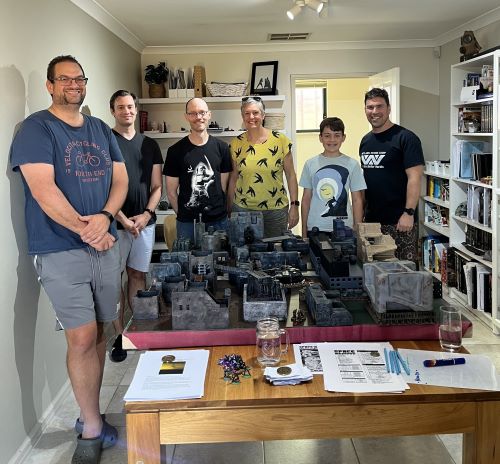
Late last year I finally managed to get my scenario “The Heist” to the table. We ended up with six players, one of whom had never played miniatures games before. You can find out about the scenario design here and download the players pack here. Our heist game report gives the exciting detail below. In summary, we had a blast. The game narrative was introduced as follows:
We return to Luthca IV an Imperial world beset by heresy and peril.
Rich in mineral deposits Luthca IV was designated an Industrial World by the Administratum 1000 years ago. Now the planet is covered in strip mines and huge factory complexes pumping noxious fumes into the atmosphere. What remains of the once lush environment is bare trees, acidic mud and heavily polluted oceans. Three Hive Spires shield the population from the worst of the toxins and provide workers who keep the production lines on schedule.
The Imperial Governor and his staff sit at the top of Crown Spire far above the thick clouds of polluted air. High Imperial tithes continue to put pressure on the factories and mines to produce more than ever before. The guilds are stretched, and the Hive cities seethe with discontent. It is all the Governor can do to hold the peace.
The Silent Trade is the illegal trade of xenos commodities and technology by unscrupulous individuals who deal with the alien either for profit or for survival’s sake. Though highly-frowned upon by the Inquisition, many of these items are not considered outright illegal in the Imperium of Man due to the impossibility of categorising and banning every item, device, or object that may or may not have been made by nonhuman hands. What’s more they fetch a staggeringly high price when sold to the right people.
One such item has come to light.
An archotechnology expedition of the Adeptus Mechanicus uncovered something valuable out in the polluted sands of the Cinder Desert. This ancient artefact known only as the endless light is whispered to bestow great power to those who use it. But at what cost?
The expedition sent the artefact in an armoured convoy headed for the Adeptus Mechanicus conclave in Hive Secundo. But it was ambushed on the outer reaches of the hive and the guards massacred. Before the bandits could secure their loot a terrible maelstrom roared in from the desert, killing the hapless villains and leaving the priceless artefact unguarded.
Word spread fast.
Whoever could get their hands on this artefact would be rich beyond their wildest dreams. Buying themselves out of the grim existence of the underhive.
But there is a complication. The Adeptus Mechanicus were not born yesterday, they have secured their valuable find in a secure vehicle that requires a code to open. Despite the best efforts of the Fixers and Data Thieves only parts of the code have come available. The freebooters chasing this prize must work together if there is any hope of untold wealth.
Not only that, but the maelstrom has stirred up the Rad Ghouls from the Cinder Desert. Nothing a little las fire can’t take care of…
The race is on.
So how did the game unfold? Did the players feel the pressure around their decisions? Let’s find out.
Set Up
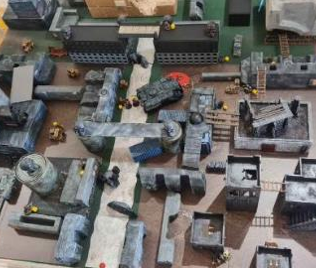
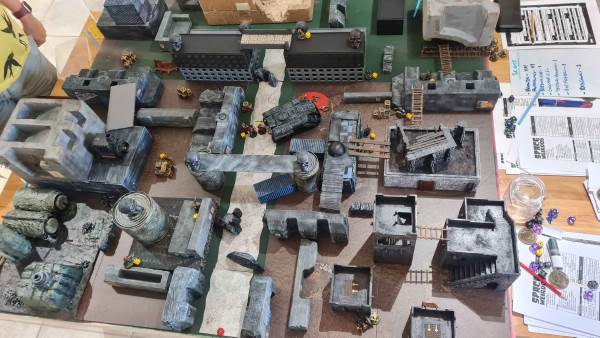
As per my scenario introduction I set the table up with the crashed APC dead center. The crew entry points (red tokens) were distributed around the edge with terrain placed to ensure it was a relatively safe place to join the game from. Of course, the remaining terrain was placed to resemble a claustrophobic under hive setting reminiscent of games like Necromunda.
Heist board mid play. Note the crews positioning themselves around the central objective.
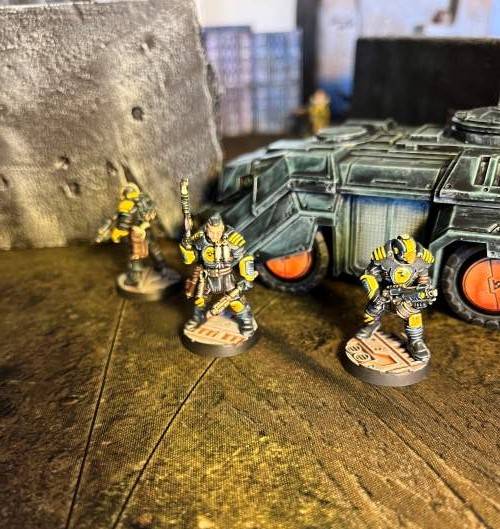
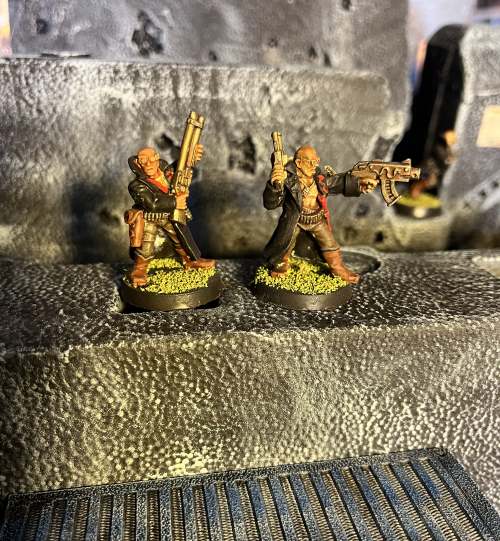
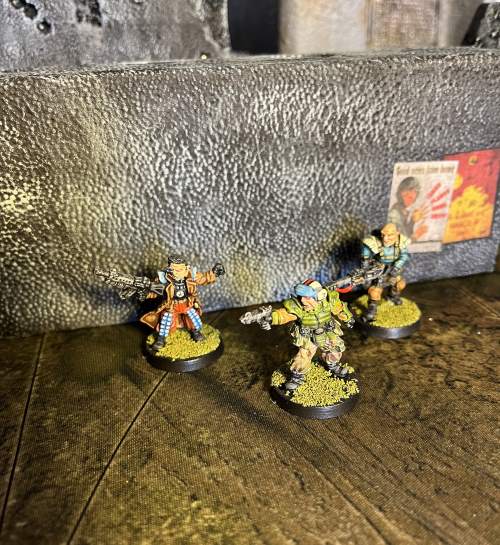
Each player was given a crew sheet and chose a trio of miniatures to represent their team. Next, they had to name their crew and state their faction affiliation (Inquisition, Criminal Underworld, Adeptus Mechanicus or Evil Cult). As always, my players were pretty creative. Here are the crews:
The Professionals (criminal underworld)
Cognitive C’s (adeptus mechanicus)
Heralds of the Star Children (evil cult)
Hectors Hellions (inquisition, but secretly evil cult)
Bleeding Eyes (secretly affiliated to the evil cult)
Hive fighters (affiliation unknown)
Perhaps unsurprisingly, the evil cult was a tad over represented…
With the crews were named, starting locations allocated and paper provided for secret messaging, the game was afoot.
Tension Builds
Almost immediately secret messages started flying around the table as fledgling alliances were brokered. In addition, the crews were cautiously moving towards the central objective. It began to play out like an old western shootout. Protagonists circling one another but not drawing their weapons until the last possible moment.
A surprisingly large horde of ravening rad ghouls entered play after the first turn throwing more chaos and panic into the mix.
Tension increased dramatically over the following turns as alliances were firmed up and crew members got closer and closer to the prize. Rad ghouls maintained their pressure, harrying lone crew from the edges of the board.
Cognitive C’s and Hectors Hellions face off at the rear of the crashed APC (main objective)
All Hell Breaks Loose
A couple of players (Hectors Hellions and Cognitive C’s) broke the tension, declaring their true intentions too early. Consequently, the shooting started and didn’t really stop. Crew members went down left and right, alliances went out of the window and a bloodbath ensued.
The alien artefact was recovered. However, the last remaining member of the Hive Fighters decided to open it, seeking immortality. Changing the game forever.
I want to make it clear, during game setup I had warned the participants that opening the artefact would probably be a bad thing. So there should have been no surprises when….
Survival Horror
The unsuspecting Hive Fighters unleased a horror. In a scene reminiscent of Raiders of the Lost Ark, our witless crewman turned into a warp fueled abomination and began hunting those few remaining team members. This invincible monstrosity began teleporting around the board to the horror of the other players. Not many escaped before we called the game and tallied up the scores.
The horrific warp entity joins the fray.
Feedback
The game ended up being really close, with the Bleeding hearts winning by one point. Excitement right up until the end.
But did we get emergent play and did the players wrestle with decision making?
Yes and yes!
Feedback afterwards included:
Desperate to get to the artifact and open it I tried to make a few alliances with others but was always wary that I might get back stabbed. Probably because I was going to do a bit myself.
Love the narrative based skirmish as it just adds a little more to the one off battles and gets me invested in my gang as I make stories up about them and why they are getting into the fight.
I absolutely loved the end of the game with the great warp entity being ripped onto the table and chasing everyone down. So freekn cool!!!!!
Regarding alliance forming. It was strong at the start. I had a hunch on my neighbours plans and so took the light touch approach. The alliances had no bearing on the second stage of the game with just a mad panic to get away.
Decision making was fraught with risk. I wanted to position myself furthest away from the prize because getting the artefact was going to be tricky. So I let the other crews sort it out. The cooperative element makes it so much more fun.
The rad-ghouls gave a great element of randomness and we had to watch lots of sides.
The warp creature was a perfect surprise, flipping the game on its head.
All up, changing dynamics, great narrative and tons of fun.
Happy players, which is ultimately what it is all about.
Wrap Up
Emergent play definitely came to the fore with players creating personalities for their gangs. Additionally, uncertain alliances, secret messages and tension building to a cinematic gunfight also played out in unique ways. The monster ending completely flipped that game which was unexpected but which the players completely got on board with.
Decision making for the players was intended to be difficult and I think I succeeded here. Multiple decision points had to be wrestled with including:
Who to ally with and whether to declare alliances openly
If and when to break alliances
Whether to pursue the artefact early or late in the game
Use crew members to guard against possible rad ghoul incursions
Safest route through the board towards the objective
Whether to open the artefact (despite being warned it was a bad thing)
Last Thoughts
Ultimately, this scenario succeeded. Players had fun, which should of course be the priority. Decision making was tough and emergent gameplay rose to the surface.
One thing that worked really well was the opening of the artefact. Despite warning players of the potential dangers of doing so, it was still opened. Which of course, was a fantastic result. To encourage the players to open it I had a sealed envelope with new rules inside that would be opened by the player who took this choice. I positioned this on a shelf above the board in full view. Having this prop definitely piqued the players curiosity, ultimately creating the survival horror endgame to take place. Needless to say, I will be using props in this way in future.
So, a joy to design, run and play. I cant wait to run the next one!
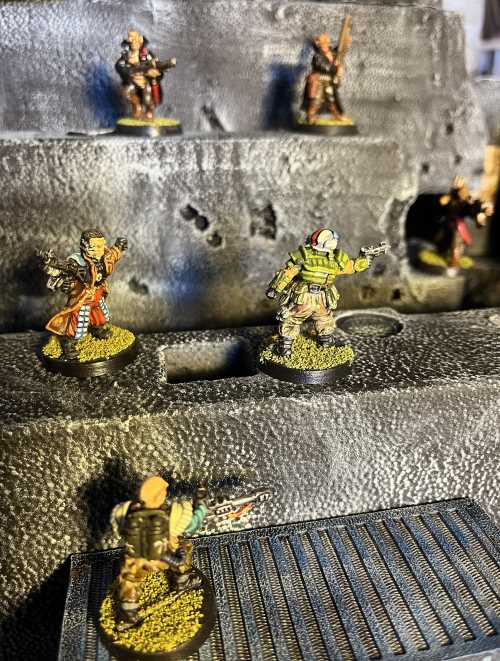
In the gritty world of the underhive, where law is loose and loyalty looser, rumors of a rare alien artifact have sent shockwaves through the criminal underworld. This isn’t just any artifact. It’s whispered to bestow immortality on those who use it. The scene is set for a deadly skirmish as gangs scramble to claim it, but there’s a twist: they can’t do it alone. Welcome to The Heist, a skirmish wargame scenario designed to encourage emergent play, where player-driven decisions and interactions take center stage.
This idea builds on a number of gaming sessions where I have been trying to encourage the emergent play of roleplaying games in skirmish wargaming. These examples have all been set in the grimdark Warhammer 40K universe and have been well received by my players. You can read more about these experiences here,here and here. I want to take my lessons learned and create a new multiplayer scenario that maximizes engagement. This is what I’ve come up with:
The Heist Scenario
An Imperial security vehicle has been ambushed and disabled deep in the underhive. Inside, the artifact lies under heavy lock and key, guarded by three security enforcers tasked with guarding it with their lives. But that’s not all—word of the ambush has spread like wildfire, and now multiple gangs are converging on the scene to grab the prize.
However, no gang can unlock the security vehicle on its own. To crack it open, members of two different gangs must be present at the same time. This forces players to navigate temporary alliances while eyeing each other warily—after all, betrayal could be just as profitable.
Adding to the chaos are rad zombies, creatures mutated by the toxic waste of the underhive. They’ll randomly enter the battlefield each turn, keeping players on their toes and preventing anyone from staying static for too long.
Gang members moving in towards the beleaguered APC, as part of the heist scenario
Encouraging Emergent Play
Emergent play is all about creating situations where the story unfolds naturally from player decisions, rather than being dictated by strict game rules. In The Heist scenario, this is encouraged through several design elements:
Gang Identity: Each player will create their gang’s backstory, choosing a name, leader, and reputation. Is your gang known for ruthless efficiency? Or are they a scrappy underdog outfit that’s always two steps behind the bigger players? The identity of each gang will influence their approach to the scenario. Some might bargain and form temporary alliances, while others might rush in guns blazing.
Forced Cooperation: The artifact cannot be obtained by one gang alone. To unlock the security vehicle, two gangs must cooperate. This creates a natural tension where players must balance collaboration with their need to score points through combat. Will they form fragile truces, or will betrayals happen as soon as the vehicle is open?
Rad Zombie Threat: The random appearance of rad zombies adds another layer of unpredictability. These threats could push gangs to work together briefly, or they could be a useful distraction, allowing an opportunistic gang to slip in and make a move on the artifact.
Endgame Choices: The gang that holds the artifact at the end of the game gets a powerful narrative decision—who do they sell it to? Players will choose between an Imperial Inquisitor, a Mysterious Underhive Cult, or an Offworld Rogue Trader Captain, each of which could shape future games. The outcome of this scenario will ripple through the campaign, giving players a sense of consequence and long-term impact.
Victory Points and Competition
To keep things competitive, victory points (VP) are awarded based on a variety of actions:
Hold the artifact at the end of the game: 15 VP
Blow open the security vehicle: 10 VP to each gang involved
Kill an enemy gang leader: 5 VP
Kill an enemy gang member: 2 VP
Kill a rad zombie: 1 VP
This scoring system incentivizes a mix of cooperation and conflict. Players need each other to unlock the vehicle and share points, but they also need to eliminate threats to rack up individual points. The shuffling rad zombies, though worth less VP, are ever-present distractions that could make or break a gang’s plans.
A rival mercenary team getting in on the action
The Artifact’s Dark Secret
The alien artifact can be activated, but its effects are unknown to the players. I won’t spoil what happens (just in case any of my players are reading this), but let’s just say turning it on could have major consequences. This secret adds an element of mystery and risk, offering players another decision to weigh—do they risk using it, or play it safe?
The Ruleset: Space Weirdos
As in previous scenarios, I’ll be using the Space Weirdos ruleset, which is perfect for quick and intense skirmishes. Each gang will consist of a leader and two gangers, making the game fast-paced but still strategic. The small team sizes also allow players to focus on individual characters, adding a personal touch to the emergent narratives that unfold.
Firefight!
Emergence and Tension
The beauty of The Heist scenario lies in the tension between cooperation and competition. Gangs must work together to unlock the artifact, but they’re constantly weighing whether it’s worth turning on their temporary allies. Meanwhile, the rad zombies and the looming threat of the artifact’s mysterious power ensure that no plan is ever safe.
This scenario offers a playground for emergent play, where player choices drive the action and create memorable stories. Whether through alliances, betrayals, or desperate last stands, no two games of The Heist scenario will ever be the same. So gather your gang, trust no one, and get ready to fight for (potential) immortality—if you survive long enough to claim it.
As some of you may know, I have been developing a rules-lite roleplaying game specifically for leadership development. It is tentatively called Play to Lead and you can find the latest version here. One of my key design philosophies is that teamwork and collaboration are core to the game function. As such, there needs to be a mechanic that centers on this aspect. Currently, I’ve included a simple advantage style roll, similar to that used in the current iteration of Dungeons and Dragons. Effectively, if you work as a team to solve a problem roll two dice and take the best result. But, this doesn’t encapsulate the team dynamic that I am looking for. When writing a previous post on the subject I’ve realized that there has to be a more engaging way.
Therefore, I’ve decided to introduce the team dice pool, to add a new layer of strategic depth and reinforce the importance of working together. This article explores how the dice pool mechanic works, why it encourages collaboration, and how it transforms group dynamics into meaningful gameplay.
What Is the Team Dice Pool Mechanic?
In Play to Lead the team dice pool is a shared resource that players contribute to and draw from during the game. At the start of the game, add one die to the pool for each player, plus one extra. Place the dice in the middle of the table, within easy reach of everyone. Whenever the team faces a challenge, they can choose to add any number of team dice to aid the roll, but only if all players agree. Once used, team dice are removed from the pool. The team must decide whether to use the dice now or save them for future challenges in the adventure.
For example, the team are trying to fix a snowmobile to allow them to escape the Arctic research station. The mechanic suggests that they work together to mend the engine and add two team dice to the roll. A discussion ensues. Some players want to save the team dice for later in the adventure when they brave the Arctic wastes on the journey home, whilst others argue that without the engine there will be no escape. Finally they agree to use two team dice from their pool of four, leaving some in reserve for the journey ahead.
Generally, the team dice pool should be a finite resource. However, if the players do something out of left field or display great leadership or teamwork, the games master can award a dice back into the pool. Us this sparingly, as the decisions about when to use the pool are harder when the resource is finite.
Team Dice Pool Summary
When undertaking a challenge where more than one player is involved, team may add any number of team dice to the roll. Roll the dice and take the highest number.
All team members (players) must agree on when and how many dice should be used.
When players do something spectacular the games master may replenish a die back into the pool (use sparingly).
This mechanic gives the team a shared resource that they must allocate together. Ultimately, forcing team discussion and collaboration.
A Team Dice Pool enhances the teamwork aspect of any roleplaying game.
How It Encourages Collaboration
In Play to Lead, the team dice pool is not just about numbers—it’s about strategy, trust, and communication. Here are a few ways the mechanic encourages teamwork:
Strategic Contributions Each player brings something unique to the table. When faced with a challenge, they’ll need to decide how many dice they can afford to contribute based on the current situation. However, they must balance this with the need to save resources for future challenges. Players have to talk things through, strategize together, and decide as a team how to best approach each obstacle and whether to use the dwindling pool of dice to enhance their chances of success.
Sharing Success and Failure Whether the roll succeeds or fails, the outcome reflects the team’s combined effort. If they succeed, everyone feels that accomplishment because they collectively decided to use the dice pool. If they fail, it’s a shared experience, too, prompting discussions about what went wrong and how they can better support each other in the future. This shared responsibility strengthens the group dynamic and fosters a sense of collective ownership over the game’s progress.
Building Trust and Leadership The dice pool also presents opportunities for leadership within the team. Players will need to rely on and trust each other’s judgment about when and how to use those resources. This builds in-game leadership and teaches players to recognize each other’s strengths and weaknesses. It’s a subtle but powerful way to develop trust—essential in both the game and real-world teamwork.
Promoting Balance and Equity No single player can hog the spotlight in Play to Lead. The team dice pool is a shared resource, and everyone has a stake in its management. This ensures that even quieter or less experienced players get a chance to contribute meaningfully. The mechanic naturally balances the dynamics between stronger and weaker characters, encouraging all players to work together, regardless of individual power levels.
Making Decisions as a Team
One of the core ideas behind the team dice pool mechanic is that important decisions shouldn’t be made in a vacuum. If the team needs to figure out how many dice to commit to a challenge, they must openly discuss their take on the situation and overall goals. This creates natural moments for team-building as players assess risks, talk through options, and align on the best path forward.
It’s not just about dice—it’s about building consensus, making informed choices as a group, and learning how to lead or follow when necessary.
Fostering Communication in Play to Lead
At its heart, Play to Lead is a game about communication. Whether it’s communicating during the game to decide the best use of resources, or reflecting on the outcome of a roll and figuring out how to improve next time, this dice pool mechanic brings team communication to the forefront.
This dynamic creates a natural, in-game space for conversations about leadership, trust, and collaboration, aligning with the game’s mission to teach these real-world skills through play.
Final Thoughts
The team dice pool mechanic in Play to Lead is more than just a gameplay feature—it’s a tool to foster teamwork, enhance communication, and build trust among players. By having a shared resource that gives significant advantage on in game challenges, it encourages players to work together, strategize, and support one another.
This mechanic not only makes the game more fun but also brings the game’s central message of collaboration and leadership to life in a tangible, engaging way. In Play to Lead, the team’s success isn’t just about individual accomplishments—it’s about what the group can achieve together.
While I have written this article about my own ruleset, I believe this mechanic could also work in other roleplaying games. In D&D a team dice pool of D20’s could be used to confer advantage for team based challenges. What do you think? Would you try implementing a team dice pool in your own games? Let me know how it works for you!