Strengthen Teamwork With An Innovative Dice Pool Mechanic

dice pool

As some of you may know, I have been developing a rules-lite roleplaying game specifically for leadership development. It is tentatively called Play to Lead and you can find the latest version here. One of my key design philosophies is that teamwork and collaboration are core to the game function. As such, there needs to be a mechanic that centers on this aspect. Currently, I’ve included a simple advantage style roll, similar to that used in the current iteration of Dungeons and Dragons. Effectively, if you work as a team to solve a problem roll two dice and take the best result. But, this doesn’t encapsulate the team dynamic that I am looking for. When writing a previous post on the subject I’ve realized that there has to be a more engaging way.

Therefore, I’ve decided to introduce the team dice pool, to add a new layer of strategic depth and reinforce the importance of working together. This article explores how the dice pool mechanic works, why it encourages collaboration, and how it transforms group dynamics into meaningful gameplay.

What Is the Team Dice Pool Mechanic?

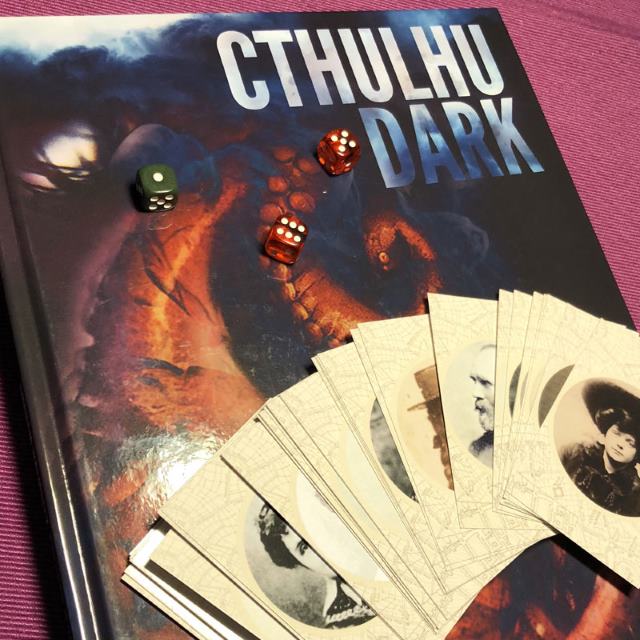
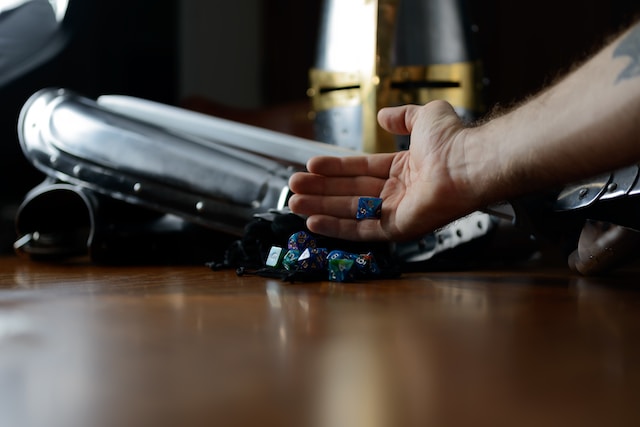
In Play to Lead the team dice pool is a shared resource that players contribute to and draw from during the game. At the start of the game, add one die to the pool for each player, plus one extra. Place the dice in the middle of the table, within easy reach of everyone. Whenever the team faces a challenge, they can choose to add any number of team dice to aid the roll, but only if all players agree. Once used, team dice are removed from the pool. The team must decide whether to use the dice now or save them for future challenges in the adventure.

For example, the team are trying to fix a snowmobile to allow them to escape the Arctic research station. The mechanic suggests that they work together to mend the engine and add two team dice to the roll. A discussion ensues. Some players want to save the team dice for later in the adventure when they brave the Arctic wastes on the journey home, whilst others argue that without the engine there will be no escape. Finally they agree to use two team dice from their pool of four, leaving some in reserve for the journey ahead.

Generally, the team dice pool should be a finite resource. However, if the players do something out of left field or display great leadership or teamwork, the games master can award a dice back into the pool. Us this sparingly, as the decisions about when to use the pool are harder when the resource is finite.

Team Dice Pool Summary

  • When undertaking a challenge where more than one player is involved, team may add any number of team dice to the roll. Roll the dice and take the highest number.
  • All team members (players) must agree on when and how many dice should be used.
  • When players do something spectacular the games master may replenish a die back into the pool (use sparingly).

This mechanic gives the team a shared resource that they must allocate together. Ultimately, forcing team discussion and collaboration.

A Team Dice Pool enhances the teamwork aspect of any roleplaying game.

How It Encourages Collaboration

In Play to Lead, the team dice pool is not just about numbers—it’s about strategy, trust, and communication. Here are a few ways the mechanic encourages teamwork:

  1. Strategic Contributions
    Each player brings something unique to the table. When faced with a challenge, they’ll need to decide how many dice they can afford to contribute based on the current situation. However, they must balance this with the need to save resources for future challenges. Players have to talk things through, strategize together, and decide as a team how to best approach each obstacle and whether to use the dwindling pool of dice to enhance their chances of success.
  2. Sharing Success and Failure
    Whether the roll succeeds or fails, the outcome reflects the team’s combined effort. If they succeed, everyone feels that accomplishment because they collectively decided to use the dice pool. If they fail, it’s a shared experience, too, prompting discussions about what went wrong and how they can better support each other in the future. This shared responsibility strengthens the group dynamic and fosters a sense of collective ownership over the game’s progress.
  3. Building Trust and Leadership
    The dice pool also presents opportunities for leadership within the team. Players will need to rely on and trust each other’s judgment about when and how to use those resources. This builds in-game leadership and teaches players to recognize each other’s strengths and weaknesses. It’s a subtle but powerful way to develop trust—essential in both the game and real-world teamwork.
  4. Promoting Balance and Equity
    No single player can hog the spotlight in Play to Lead. The team dice pool is a shared resource, and everyone has a stake in its management. This ensures that even quieter or less experienced players get a chance to contribute meaningfully. The mechanic naturally balances the dynamics between stronger and weaker characters, encouraging all players to work together, regardless of individual power levels.

Making Decisions as a Team

One of the core ideas behind the team dice pool mechanic is that important decisions shouldn’t be made in a vacuum. If the team needs to figure out how many dice to commit to a challenge, they must openly discuss their take on the situation and overall goals. This creates natural moments for team-building as players assess risks, talk through options, and align on the best path forward.

It’s not just about dice—it’s about building consensus, making informed choices as a group, and learning how to lead or follow when necessary.

Fostering Communication in Play to Lead

At its heart, Play to Lead is a game about communication. Whether it’s communicating during the game to decide the best use of resources, or reflecting on the outcome of a roll and figuring out how to improve next time, this dice pool mechanic brings team communication to the forefront.

This dynamic creates a natural, in-game space for conversations about leadership, trust, and collaboration, aligning with the game’s mission to teach these real-world skills through play.

Final Thoughts

The team dice pool mechanic in Play to Lead is more than just a gameplay feature—it’s a tool to foster teamwork, enhance communication, and build trust among players. By having a shared resource that gives significant advantage on in game challenges, it encourages players to work together, strategize, and support one another.

This mechanic not only makes the game more fun but also brings the game’s central message of collaboration and leadership to life in a tangible, engaging way. In Play to Lead, the team’s success isn’t just about individual accomplishments—it’s about what the group can achieve together.


While I have written this article about my own ruleset, I believe this mechanic could also work in other roleplaying games. In D&D a team dice pool of D20’s could be used to confer advantage for team based challenges. What do you think? Would you try implementing a team dice pool in your own games? Let me know how it works for you!

The Magic of Emergent Play: Crafting Encounters Without Set Solutions

When we think of a classic Dungeons & Dragons session, it’s easy to imagine meticulously planned encounters, intricate puzzles with specific solutions, and a dungeon master (DM) who knows every twist and turn in advance. However, there’s a different approach that can lead to some of the most memorable and dynamic gameplay: emergent play.

If you’ve been following this blog for a while you will know that I am a serious fan of this type of play. In fact, I design all my adventures with emergent play in mind.

Emergent play embraces the unpredictable nature of collaborative storytelling, allowing both players and the DM to experience genuine surprises. By designing encounters and puzzles without a predetermined solution, you create an environment where creativity flourishes, and every decision matters. In this article, we’ll explore how to incorporate emergent play into your D&D sessions and offer ideas for encounters tailored to a work-based D&D group.

What is Emergent Play?

Emergent play refers to a style of gameplay where outcomes are not entirely scripted, allowing new and unexpected possibilities to arise from the interactions between players, the environment, and the rules of the game. In D&D, this means creating scenarios where the players’ actions and decisions directly shape the story, often in ways that even the DM couldn’t have anticipated.

This requires a shift in mindset: rather than guiding players toward a specific outcome, the DM sets the stage and lets the players’ creativity lead the way. The result is a dynamic (chaotic), organic narrative that can evolve in real-time, keeping everyone at the table on their toes.

The Art of Writing Encounters with No Set Solution

Designing encounters and puzzles without predetermined solutions can be challenging, but it’s also incredibly rewarding. I believe that it’s actually significantly more satisfying than developing an adventure with everything though out. Here’s how you can do it:

Focus on the Situation, Not the Outcome

When crafting an encounter, begin by imagining a compelling and exciting situation rather than a specific end result. For example, instead of creating a puzzle with a single correct answer, think of a scenario that presents a problem the players need to solve. This problem can have multiple solutions, each depending on the players’ ingenuity. For me, the joy comes from the players creativity, rather than from my own perceived cleverness.

Example: The players stumble upon a village suffering from a mysterious curse. The curse could be lifted by several means: finding and destroying a cursed artifact, negotiating with a local spirit, or even making a difficult moral choice. The key is to avoid designing the “correct” solution in advance—let the players discover their own path.

Leverage the Players’ Skills and Backgrounds

Encourage players to use their characters’ unique skills and backgrounds to interact with the environment. When players feel that their choices and character traits genuinely impact the story, they’re more likely to engage deeply with the game.

Example: If the party includes a bard with a talent for persuasion, a fighter with a deep knowledge of military tactics, and a druid connected to nature, create scenarios where these skills can shine. The players might convince a rival faction to join forces, devise a clever ambush, or call upon local wildlife for help—all valid and rewarding solutions.

Introduce Dynamic Elements

Consider adding elements to the encounter that change based on the players’ actions or even based on random rolls. This can create a sense of unpredictability that keeps the session exciting.

Example: The players are attempting to navigate a treacherous mountain pass during a storm. The storm’s intensity could be both randomized and influenced by the players’ actions, such as using magic to calm the winds or making a risky decision to push forward despite the danger. The environment itself becomes a living, reactive part of the encounter.

Embrace Improvisation

By its very nature emergent play thrives on improvisation. As a DM, you have to be open to ideas and solutions that you hadn’t anticipated. Listen to your players, build on their suggestions, and use your improv skills to keep the story flowing. Often I create puzzles or encounters with absolutely no preconceived notions of how they might be solved. Instead, relying on improvisation alone to find the solution based on the reactions of the players.

Example: The players might decide to solve a puzzle by using an item or spell in a completely unexpected way. Instead of shutting down their idea because it wasn’t part of your plan, consider how it might work in the context of the game world. This approach not only rewards creative thinking but also reinforces the collaborative nature of D&D.

For some advice on improving your improv skills in a DnD context check out this video by Bob WorldBuilder.

Improvised DnD, essential for emergent play!

Emergent Encounter Ideas for a Work-Based D&D Group

Given the nature of this blog I want to tie in some thoughts about using these concepts in a work-based D&D group. Here, you often have players with diverse levels of experience and varying amounts of time to dedicate to the game. Perhaps the normal tropes of the game aren’t apparent to the participants. Here are a couple of emergent encounter ideas that can engage everyone, regardless of their familiarity with D&D:

The Office Heist

The party is tasked with retrieving a critical piece of information from a well-guarded office building. The twist? Each player is assigned a different role within the company (e.g., security, HR, IT) and must use their “workplace skills” to navigate the environment. There’s no set way to achieve the goal—players can collaborate to come up with a plan that leverages their “professional expertise.”

The Corporate Rivalry

Two powerful companies are vying for control over a lucrative contract. The players must decide whether to sabotage the rival, broker a deal, or come up with a third option that benefits both parties. The encounter evolves based on the players’ decisions, alliances, and even office politics. To make this even more emergent, why not have the rival company played by an accomplice. This would give the negotiations an air of realism, while adding additional unpredictability to the encounter.

The Joy of the Unexpected

Emergent play in D&D transforms the game into a living, breathing narrative where anything can happen. By designing encounters without a fixed solution, you invite players to take the reins of the story, leading to unforgettable moments of creativity, collaboration, and surprise.

For work-based D&D groups, this approach can make sessions more inclusive. Also, engaging players at all skill levels and allowing them to contribute in unique ways. Whether you’re navigating a corporate heist or negotiating a corporate rivalry, the possibilities are endless when you let the story emerge naturally.

So next time you sit down to plan a session, consider leaving a few loose ends. Where will the adventure take you? You might just find that the best stories are the ones you never planned!

Encouraging Terrific Teamwork in D&D: Mechanics and Tips

Dungeons & Dragons (D&D) and other games like it, are praised for their ability to bring players together in a shared narrative. While individual character development and heroic moments are highlights, the real magic, at least from my perspective, lies in the collaborative storytelling and problem-solving that happens at the table. Emphasizing teamwork and communication not only enhances the experience but also ensures that players feel a strong connection to both the story and each other.

While writing this blog, I have also been developing a simple RPG ruleset that can be used in the workplace. (You can download a free working copy of Play to Lead and a sample adventure here.) I showed the draft to Rich, a very good friend of mine, and he made a great observation.

“If you’re writing a game to help encourage teamwork, why isn’t there a mechanic that encourages teamwork?”

I was gob smacked. Rich was absolutely right!

In an effort to improve Play to Lead I want to explore a few ideas that aid in the teamwork aspect of roleplaying games. While I am looking to incorporate some of these into my ruleset you can use these ideas to elevate the cooperative nature of your own games.

Team-Based Objectives

The first step would be designing scenarios and challenges where success depends on the entire team working together. For instance, create objectives that require multiple skill sets or abilities to complete, such as a puzzle that needs both intellectual and physical solutions. I’ve tried to incorporate this in the design of my adventure The Lost Temple. Each character has specific skills and equipment that need to be used together to complete the challenges.

As the Dungeon Master/designer it is important that no single character can resolve these objectives alone. Encourage players to discuss and strategize as a team, highlighting the value of each member’s contribution.

Synergy Bonuses

From the game mechanic point of view synergy bonuses are pretty simple to implement. Essentially, these are bonuses where characters gain extra benefits when they combine their abilities or work in tandem. For example, if one character uses a defensive ability while another attacks, they both receive a temporary boost to their effectiveness.

Dungeons and Dragons has an excellent mechanic already in place. When characters pool their resources or assist each other advantage is applied. That means you get to roll two dice and choose the best result. This is excellent in the context of that game. But for Play to Lead I want teamwork to be at the forefront. Therefore anyone who assists on a task gets to roll their dice. The highest roll from all participants then constitutes the final result. Hopefully players will look for interesting ways to work together to gain this bonus.

As a Dungeon Master make sure to provide visual or narrative feedback when these bonuses trigger, reinforcing the idea that collaboration leads to greater outcomes. Regardless of the system players must be aware of the mechanical advantage that teamwork gives them.

Mechanics including rolling additional dice, or using a pool of dice can really highlight the teamwork and communication in game

Shared Resources

Another idea is to implement a shared resource pool that players can draw from for special abilities or actions. This could be a pool of “teamwork points” that accumulates based on cooperative actions or successful team-based objectives. Having a physical pool of teamwork dice that actually gets bigger before their eyes could really keep the idea of teamwork front and center. The additional twist here is that the team have to agree when these additional dice get to be used.

When running your games encourage players to manage these resources together, discussing when and how to use them for maximum impact. This promotes communication and planning, making teamwork an integral part of gameplay.

Role-Based Interactions

When designing the adventure assign specific roles within the team that complement each other. These could includes a leader who provides direction, a scout who gathers information, and a support character who buffs others. These roles should be flexible but designed to work best when used in concert.

As an example, I’ve used this in my adventure Lost Temple which includes the roles below.

  • Archaeologist – professor of the ancient world. Equipped with a lantern. Read hieroglyphics, understand artefacts, high level of knowledge
  • Climber – working at heights professional. Equipped with a 50m rope. Climbing, ropework, high level of agility
  • Engineer – technical specialist. Equipped with a shovel and axe. Construction, demolition, high level of practical know how
  • Navigator – directional expert. Equipped with a compass. Map and compass skills, unerring sense of direction
  • Pilot – helicopter pilot. Equipped with a lantern. Piloting vehicles of all types, radio use, electronics master
  • Expedition Leader (optional) – no specialist skills. Equipped with a knife. Must facilitate the team working together

As you can see, each role has very distinct skills and equipment. Only by combining these skills together can the team hope to escape the lost temple.

For games where you aren’t providing the characters consider guiding players in choosing roles that suit their play style but also encourage them to think about how their character’s strengths can benefit the group. Make sure to create moments in the game where these roles can shine, showing the value of each position.

Communication Challenges

Create in-game challenges that require clear and effective teamwork and communication to overcome. For example, a puzzle that involves different players receiving different pieces of information that they must share and interpret together. The most simple of these could be a simple cypher or map split into multiple parts and the team need to work together to fit them together. Another idea would be to make the puzzle verbal. Players need to take it in turns to speak parts of the solution in the correct order to pass.

Use these challenges to subtly teach players about the importance of listening and sharing information. Encourage out-of-character discussion if needed, but make sure the challenge requires in-character communication to succeed. Using the children’s game “Chinese Whispers” to pass complicated messages between themselves could work really well in this instance.

Narrative-driven Collaboration

In addition to having team-based objectives for your scenarios consider designing narrative arcs that require the players to create plans together and execute them as a team. These could be heists, diplomatic missions, or large-scale battles where every character’s role is vital to the outcome. During these moments, focus on the story implications of teamwork. Highlight how their collaboration influences the world and the NPCs around them, making their teamwork feel impactful beyond the mechanics.

Final Thoughts on Teamwork

In Play to Lead, making teamwork and communication central to gameplay can turn a good game into a great one. Presently I have a teamwork mechanic in place. However, I’m going to spend more time thinking about how a team dice pool can be incorporated as I love the idea of having a physical representation of teamwork at the table. I’ll also make sure to have teamwork as a central theme to all future Play to Lead adventures.

Make sure to keep the ideas above in mind when designing your adventures. Having players working together makes for a much more satisfying experience.