Last weekend I was lucky enough to be interviewed by Andrew Sommerfeld of the Legends, Loot & Lore podcast. We talk all things leadership and D&D. A great discussion. If you’d like to see the whole 56 minute discussion you can check it out below:
Leadership plays a pivotal role in both the immersive world of Dungeons and Dragons (D&D) and the dynamic landscape of the business world. Today, we explore some of the leadership styles observed during D&D gameplay. Before examining how these styles can be translated and applied to leadership in a business context. Understanding the strengths, limitations, and effects of different leadership styles is the first step. Individuals can then use the game to experiment with and practice their leadership skills, adapting their approach to various real word and fantastical scenarios.
I believe having a safe space to experience leadership situations lets the student understand the impact of their actions with much more clarity than a theoretical lecture. Believe it or not the act of leading a team in defeating a dragon develops similar leadership muscle needed for dealing with a competitor in business. Letting aspiring leaders make mistakes in a simulation will ultimately make them stronger leaders with their teams in the workplace.
The Commanding Leader: Strength in Authority
In D&D, some leaders naturally assume a commanding role, taking charge and guiding the party decisively. They provide clear directions, make authoritative decisions, and inspire confidence in their abilities. This leadership style can be effective in situations where quick decisions and strong direction are needed. However D&D, at it’s heart is a collaborative game. Falling in to this type of style too regularly can make the other members of the party feel left out and disgruntled.
Translating this style to the business world, commanding leaders can thrive in crisis management or situations requiring a strong, authoritative presence. However, they must take care when the pressure is off. As this style can often translate into micromanagement and dictatorial behaviors. Ultimately this can lose the trust and loyalty of the team.
There is a reason that leaders who do well in wartime, where fast crisis management is required, often perform badly in times of peace. The Duke of Wellington and Winston Churchill are two excellent examples of this.
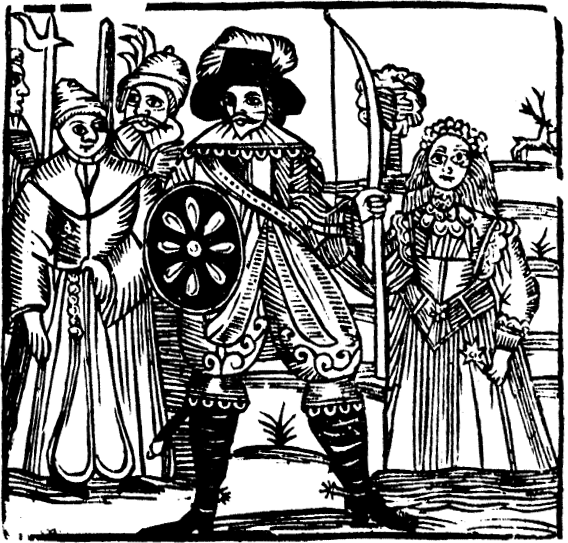
Robin Hood, an example of a visionary leader in D&D
The Visionary Leader: Inspiring with Purpose
Certain D&D leaders embody a visionary style, inspiring their party members with a grand vision and a sense of purpose. They articulate a compelling narrative, foster enthusiasm, and motivate others to pursue shared goals. For example, a party member might have an purpose to do good in the world, overthrowing all oppressors. Think Robin Hood, stealing from the rich and giving to the poor. The rest of the group might really get on board with this vision. The party then have a strong purpose that they can all align to, giving strength to their actions and decision making.
In the business world, visionary leaders inspire their teams with a clear vision of the future, instill a sense of purpose, and drive innovation and growth. Steve Jobs and Elon Musk of Apple and Tesla fame respectively, are both prime examples of visionary leaders. They are setting out to change the world. People align with their purpose and their Why. As such team members are motivated beyond material worth and come to work with a sense of purpose envied by other companies and leaders.
The Servant Leader: Empowering and Supporting
The servant leader in D&D focuses on empowering and supporting their party members. They prioritize the needs of others, actively listen, and provide guidance and assistance when required. This often falls to the most experienced player of the group. Instead of leading brashly from the front they will focus on making sure that everyone is having a good time, engaging with the story and making the most of their time at the table.
This leadership style emphasizes collaboration, trust, and empathy. In the business world, servant leaders create a supportive environment, nurture talent, and prioritize the growth and development of their team members, fostering high levels of engagement and productivity. Nelson Mandela is a good example of a servant leader.
One of the main disadvantages of servant leadership is the time required to do it well. Servant leaders need to invest a lot of time and energy in listening to and serving the needs of their followers, as well as in developing and mentoring them. This can mean that they cannot do their other tasks as well as they like. Or, in the D&D sense not get as much from the game as the other players at the table.
The Democratic Leader: Facilitating Collective Input
Democratic leaders in D&D emphasize inclusivity and collective decision-making. They actively seek input from team members, encourage open dialogue, and value diverse perspectives. By doing so the spotlight at the table is shared and the players all feel part of the team and story. This style is great for keeping everyone engaged with the game and is a real bonus at every table.
This leadership style fosters a sense of ownership and engagement within the team. As such, in the business world, democratic leaders encourage participation, involve team members in decision-making processes, and tap into the collective intelligence of the group to drive innovative solutions. However, this does not mean delegation of the hard decisions. Ultimately, having engaged with and listened to the team, the leader still has to make the call. Taking responsibility for the tough calls is all part of the role.
The adaptive leader in D&D demonstrates versatility by adapting their leadership style to fit the needs of the party and the situation at hand. They can switch between different styles, effectively utilizing each one as needed. This is an essential style for every DM out there. The game shifts in style and tone on a regular basis. Whether investigating a murder or battling a horde of goblins the expectations on the players is different. A good DM has to adapt accordingly, keeping the game moving and keeping everyone engaged.
This dynamic leadership style is essential in the ever-changing business world, where leaders must be flexible and adaptive to navigate diverse challenges and contexts. This last decade has seen an inordinate amount of disruption in almost every industry. AI, electric vehicles, internet of things, autonomous vehicles are just the tip of the iceberg. Being able lead your organization through these disruptions is an important element of leadership. Don’t be like Kodak and miss the boat.
The Steward Leader: Fostering Long-Term Success
This is the leadership style I most identify with. As a DM it is your role to make sure everyone enjoys the game and you are effectively the steward of the experience. You want to make the experience engaging and enjoyable so that the game and group have the potential to last for a long time.
Similarly, as a leader I believe you have a role to look after the team over the long term. You are the Steward of the business, division or team. It is up to you to set them up for long term success. It is not about flash in the pan success. Rather setting things in motion now so that the business is still strong and thriving ten years from now.
Final Thoughts on Leadership Styles
Leadership in D&D showcases a range of styles, each with its own strengths and applications. By observing and understanding the leadership dynamics within the game, individuals can develop valuable insights into real world leadership styles. Of course, leaders aren’t one or the other style. Rather they are a blend, with different styles taking the forefront as the situation needs.
Whether it’s commanding authority, inspiring with vision, empowering as a servant, facilitating as a democrat, adapting to different situations, or stewarding for the long term, leaders can draw inspiration from their D&D experiences to enhance their leadership skills and effectively navigate the complexities of the business landscape.
Maybe your next leadership training should be centered around D&D!
In the world of business, charting the rise and fall of companies offers valuable lessons for aspiring leaders. One such cautionary tale is the story of Tactical Studies Rules (TSR), a renowned game company that revolutionized the tabletop role-playing game industry. TSR’s journey from a small basement operation to a cultural phenomenon, and eventually its tragic demise, presents valuable insights into leadership. In this post, we delve into the rise and fall of TSR and extract three crucial leadership lessons to be learned from their journey.
Who were TSR?
TSR was a company that made a significant impact on the gaming landscape. Forever, changing the landscape of table top games through the publishing of their iconic game, Dungeons & Dragons (D&D). Founded in 1973 by Gary Gygax and Don Kaye, TSR pioneered the concept of role-playing games, immersing players in rich fantasy worlds where they could create their own stories and adventures.
TSR started as a small basement operation, with Gygax and Kaye initially self-publishing their games. However, in 1974, they released Dungeons & Dragons, a groundbreaking game that would change the gaming industry forever. D&D quickly gained popularity and amassed a dedicated following. TSR’s success grew rapidly, and the company expanded its product line, introducing additional game modules, rulebooks, and merchandise.
Gary Gygax, founder of TSR and inventor of D&D
Lessons from the Rise
There are some key lessons we can take from the early growth of TSR that can be applied to our own leadership journeys.
Vision and Innovation: TSR’s success stemmed from Gygax and Kaye’s visionary leadership. They introduced a groundbreaking concept and created an immersive gaming experience that resonated with their target audience. As leaders, having a clear vision and fostering a culture of innovation are essential for long-term success.
Adaptability and Expansion: TSR’s ability to adapt to market demands and expand their product offerings played a crucial role in their rise. They recognized the need for diverse game modules and continually expanded their portfolio to cater to different player preferences. Effective leaders understand the importance of adapting to changing market dynamics and expanding their offerings to meet customer needs.
Nurturing a Passionate Community: TSR cultivated a passionate and engaged community around their games. They actively encouraged player engagement, organized conventions, and supported fan-generated content. This community became the backbone of TSR’s success, contributing to the longevity of their games and the company. Leaders should prioritize building and nurturing a passionate community around their products or services, as it creates a sense of loyalty and advocacy.
Lessons from the Fall
Despite their early triumphs, TSR faced several challenges that led to their downfall. The company suffered from financial mismanagement, internal conflicts, and an oversaturation of products. These factors, combined with a changing gaming landscape, ultimately resulted in TSR’s decline. In 1997, TSR filed for bankruptcy and was acquired by Wizards of the Coast for a reported $25M.
Financial Prudence and Stability: TSR’s downfall serves as a stark reminder of the importance of financial prudence and stability. Leaders must prioritize sound financial management, maintain a healthy cash flow, and be cautious when expanding too rapidly. Neglecting financial aspects can jeopardize even the most innovative and successful ventures.
Effective Communication and Collaboration: Internal conflicts and lack of effective communication were contributing factors to TSR’s demise. Leaders must foster a culture of open communication, collaboration, and mutual respect among team members. Encouraging transparency and addressing conflicts promptly can help prevent internal divisions that may undermine the organization’s success.
Market Relevance and Adaptation: TSR’s failure to adapt to the changing gaming landscape played a pivotal role in their downfall. The rise of video games and digital entertainment presented new challenges that TSR struggled to address adequately. Leaders must remain vigilant and continually assess market trends, embracing innovation and adaptation to stay relevant in an ever-evolving business landscape.
There are many leadership lessons to be learned from TSR
Final Thoughts
The rise and fall of TSR offer invaluable leadership lessons for entrepreneurs and executives alike. TSR’s success stemmed from visionary leadership, adaptability, and community engagement. Conversely, their downfall underscores the significance of financial stability, effective communication, and market adaptation. By learning from TSR’s journey, leaders can navigate the challenges of running a business and chart a course towards long-term success while avoiding potential pitfalls along the way.
Today I want to discuss a failed negotiation that occurred in my Thursday night Dungeons and Dragons group. While the players were roleplaying their characters to the hilt, making some questionable decisions, I thought that there were some real learnings to be gleaned in the art of negotiation.
As Dungeon Master I had set up what I thought was a straight forward in-game negotiation. One that would take up half an hour at best. What transpired was a crazy rollercoaster of demands, ultimatums, alley chases and moral dilemmas. Three hours later and the Party was no closer to achieving their goal.
So what went down and what lessons can we learn?
Keep in mind that this was part of an ongoing campaign with well established characters. The players were heavily leaning into these characters, definitely not looking for the optimal outcome. Even so I think this example shows how you can gain real world leadership learnings through the medium of role playing games.
What Went Down
So as not to bore you I’m going to give you the basic framework of what went down. Ultimately, the player characters (PC) are the leaders of a now influential street gang. They needed the location of a key. The only person with this knowledge was the local Fence “Old Mog”. Go to Mog, find out what she wants, negotiate, get the location, move on. Simple. Or not! Here’s what happened:
Start discussions with Mog, fairly confrontational straight out of the gate, thinly veiled threats, posturing etc
Mog is open about what she wants (safety, by becoming part of the PCs street gang)
Party react aggressively and dive straight into an ultimatum
Mog demands a counter offer, as none is forthcoming
Counter offer does not take into account what Mog wants
Becomes clear that Mog is also negotiating with their arch enemies (shock, disbelief, anger)
Tempers flare, more ultimatums and threats are thrown around
Negotiations break down and Mog cuts a deal with the enemy
PC’s walk away empty handed.
Interestingly it seems like the PC’s treated the negotiation as a competition that ended in frustration and failure. So what could they have done differently? What can we, as learning leaders, gain from this experience.
BATNA
Firstly, what is BATNA? BATNA is an acronym that stands for Best Alternative To a Negotiated Agreement. This is what the best outcome would be if no agreement between the two parties can be reached. When entering a negotiation it is important to state what this is amongst your team. Understanding your BATNA gives you the ramifications of not reaching a deal.
Negotiating with a car salesman for example, the BATNA might be having to take public transport over the next week.
In the above D&D example the group didn’t even consider a BATNA to begin with. However, the consequences of not reaching an agreement was they wouldn’t get the location of the key they needed. Pretty straight forward. But not considered.
This meant that there was no strategy or no direction going in.
Understand What the Other Side Wants
The first part of any negotiation should be finding out what the other side of the negotiation wants. Often this may not be obvious at the very beginning. At this point all assumptions should be checked. As they may not be accurate. Once this understanding has been found it’s much easier to start crafting a mutually beneficial solution.
In the D&D negotiation example above, the Party did ask what Mog wanted. They got a response. She wanted to join their organization and feel safe in the area of her home. Unfortunately, this need from Mog was overshadowed by the competitive nature brought out by the act of negotiating. Which neatly leads to my next point.
Becoming overly competitive can lead to a failed negotiation
It’s Not a Competition
A negotiation is not a point scoring contest. It is not about having a winner or a loser. It’s about getting what you need and not agreeing to an outcome worse than your identified BATNA.
The problem can be that the act of negotiating brings out competitiveness in people. I remember an international Chief Sales Officer arguing for hours that in every negotiation there had to be a winner and a loser. He obviously didn’t think very highly of his customers, which is probably why he got fired a few months later. Ego takes over and the actual value of the outcome gets lost.
Back to the game. The Party didn’t define a BATNA, ignored what Mog wanted and went straight into competitive behavior. This included bullying, threats and ultimatums. Who wants to make a deal with people like that? Of course, Mog considered her BATNA and joined the opposition where she would be safe.
The result. A massive fail for our heroes.
Don’t let your ego lead to a failed negotiation. Stay calm and focused. Don’t lose your cool.
Final Thoughts on the Failed Negotiation
Despite the fact that this gaming session wasn’t being run as a Learning-RPG there are definitely some real world learnings to be taken from it.
If I was to run this type of scenario with leadership development in mind I would be tempted to have Mog played by a different person, not by me the DM. I’d give Mog a simple BATNA and guidance on motivations. I could then facilitate rather than be the focus of the players attention.
I would also give a clearer briefing to the players, defining set goals for their team. Lastly, a debrief after the scenario would put everyone’s actions into perspective.
Running the team through multiple negotiation scenarios with increasing levels of hostility and emotion from the opposition would provide an excellent experiential learning experience.
Lots of food for thought. I feel that this example really highlights the potential of using rpgs for experiential leadership learning.
In the world of business, the importance of strategic planning and risk mitigation cannot be overstated. To fortify their defenses against potential threats and gain valuable insights into their vulnerabilities, organizations are increasingly turning to redteaming exercises. These simulations, designed to challenge existing security systems and processes, play a crucial role in identifying weaknesses and enhancing preparedness. While traditional red-teaming approaches exist, this post highlights the unique value of incorporating roleplaying games into these exercises. We delve into three key reasons why utilizing roleplaying games can bring immense benefits to businesses seeking to improve their defensive strategies.
Enhanced Realism and Engagement
Roleplaying games (RPGs) provide a level of immersion and realism that surpasses traditional red-teaming methods. Firstly, by adopting a game-like approach, businesses can replicate real-world scenarios and engage participants on multiple levels. Secondly, RPGs offer a dynamic environment where individuals assume specific roles. Allowing representation of adversaries or internal actors, to challenge existing security measures.
There is huge potential in bringing outside “red teams” to take part in the game to give additional realism. Of course, this experiential learning approach encourages participants to think critically, adapt their strategies, and respond to unexpected situations. Additionally, working together against a common enemy can enhance the esprit de corps of the in house blue teams. By blending the elements of storytelling, character development, and problem-solving, RPGs create an engaging platform that mirrors real-life challenges.
Unleashing Creativity and Diverse Perspectives
Red teaming exercises aim to identify blind spots and vulnerabilities that may not be evident through standard assessments. RPGs foster creativity and encourage participants to think outside the box, enabling them to uncover unique perspectives and approaches. In these games, participants are encouraged to embody different roles and personas, including hackers, disgruntled employees, or even corporate spies. By allowing participants to step into the shoes of adversaries, organizations gain valuable insights into potential threats and vulnerabilities from an insider’s perspective. The collaborative and interactive nature of RPGs facilitates the exploration of innovative solutions that may not have been considered through traditional methods.
Red Team participants can roleplay different antagonists enhancing the experience
Training and Skill Development
The application of RPGs in red teaming exercises provides a valuable opportunity for skill development and training. Participants can enhance their problem-solving abilities, critical thinking skills, and strategic planning capabilities by navigating complex scenarios within the game. RPGs also enable individuals to familiarize themselves with the intricacies of cybersecurity, social engineering, and risk management, among other pertinent areas.
Developing Learning-RPG scenarios with opposing red and blue teams can provide a fantastic learning environment. Participants can really get in the shoes of potential antagonists. Importantly, letting them find gaps in their own systems and procedures. Consequently, by practicing in a controlled environment, players can refine their decision-making skills. Making them more adept at identifying, assessing, and mitigating potential risks. This immersive training approach ensures that individuals are better prepared to handle real-world incidents, reducing response times and minimizing the impact of security breaches.
Final Thoughts on Using RPGs for Red Teaming
In an era where organizations face ever-evolving threats, it is crucial to embrace innovative approaches to fortify their defenses. Roleplaying games offer a unique and valuable avenue for conducting red-teaming exercises in businesses. By providing enhanced realism and engagement, fostering creativity and diverse perspectives, and enabling skill development and training, RPGs prove to be an effective tool for identifying vulnerabilities and improving defensive strategies. As businesses strive to stay one step ahead of adversaries, harnessing the power of RPGs in red-teaming exercises becomes an essential component of their risk management arsenal. In conclusion, embracing the immersive and transformative nature of RPGs lets you unlock strategic insights and fortify your organization against potential threats.
How might you use a red teaming RPG to enhance your business?