What Secrets D&D Can Teach Us About Servant Leadership

Leaders Eat Last by Simon Sinek book cover

Simon Sinek’s Leaders Eat Last is one of those rare leadership books that sticks with you long after you’ve finished reading it. Its central message is simple but powerful: great leaders put their people first. They create environments of trust and safety, where individuals feel valued and supported. In doing so, they unlock a team’s potential to achieve incredible things — not through fear or pressure, but through loyalty, belonging, and shared purpose.

As I was reading it, I couldn’t help but think how relevant those same ideas are to running a game of Dungeons & Dragons. Because at its heart, being a good Dungeon Master (DM) isn’t about control or clever storytelling. It’s about creating a space where players feel safe, engaged, and inspired — the exact same principles that Sinek says define great leadership.

The Circle of Safety

One of the most memorable ideas from Leaders Eat Last is the “Circle of Safety.” Sinek explains that in strong organisations, leaders create an environment where their people feel protected from external threats — a workplace where they can focus on doing their best work rather than looking over their shoulder.

For a DM, that’s the game table. The “Circle of Safety” in D&D is the world you build and the tone you set. It’s the trust your players have that you’re not out to “win” the game, but to tell a story with them.

When players know they can take risks, roleplay boldly, or make bad decisions in character without being punished for it, they flourish. They start to create moments that surprise you, and the game world becomes richer as a result. Just like a great leader, a great DM doesn’t eliminate risk — they make it safe to fail.

Putting Players First

Sinek’s title comes from an old military tradition: leaders eat last, ensuring their people are fed before they are. It’s a symbolic act of service — a reminder that leadership is about responsibility, not privilege.

The same mindset can make a DM truly exceptional. Running a D&D session takes effort — prepping adventures, tracking NPCs, remembering rules — but the role’s real heart is service. You’re there to give your players an amazing experience.

That might mean letting go of your clever plot twist when the players come up with a better idea. It might mean adjusting encounters on the fly to keep the story balanced. It might even mean stepping back entirely and letting the group spend an hour talking in character because they’re genuinely enjoying themselves.

A great DM, like a great leader, measures success not by how perfectly their plan goes, but by how much their people grow and enjoy themselves.

Building Trust and Belonging

Sinek argues that humans are hardwired for cooperation, but that cooperation only happens when people feel safe and valued. Leaders build trust through empathy, consistency, and integrity.

In D&D, trust is everything. Players need to know the DM is fair, that their characters’ actions matter, and that the story responds honestly to their choices. A DM who favours certain players, ignores others, or uses their power to “win” the game quickly erodes that trust.

But when you build a table where everyone’s voice matters — where every player feels part of something — the magic happens. People open up. They collaborate. They invest emotionally in the story and in each other. That’s not just a good game; that’s good leadership in action.

The Power of Purpose

At the core of Leaders Eat Last is the idea that great teams share a sense of purpose. When people understand why they do what they do, they’ll work harder, care more, and stick together even when things get tough.

That’s true for adventuring parties too. The best D&D campaigns aren’t just a string of random quests — they’re driven by shared purpose. Whether it’s protecting a village, saving a friend, or uncovering a forgotten truth, a unifying goal binds the group together.

A wise DM helps the party find that purpose. You don’t hand it to them — you help them discover it, nurture it, and make it matter. When you do, you create something more powerful than a game. You create a shared story of belonging and achievement.

Leading from Behind the Screen

Ultimately, Leaders Eat Last reminds us that leadership is about service, trust, and shared purpose. The best leaders — and the best DMs — don’t crave the spotlight. They shine it on others.

When you run a D&D session, you’re leading from behind the screen. You’re giving people a space to take risks, to collaborate, to be creative, and to feel a sense of belonging. You’re eating last — making sure everyone else at the table is fed first, in the form of fun, connection, and storytelling.

And if you do it right, the impact lasts long after the session ends. Players carry that experience — that feeling of being supported, seen, and part of something bigger — into their everyday lives. Just like the best leadership, it ripples outward.

Powerful Reflection: a Lesson for D&D and Leadership

Dwarf sitting on a rock practicing reflection into a notebook

When the dice are packed away and the session is over, the story doesn’t stop. For many Dungeons & Dragons groups, they gain more depth to the experience after the game—when the group practices reflection on what just happened.

“Can you believe we actually pulled that off?”
“Next time we really need to think twice before splitting the party.” (how many times have we heard that one…)
“That negotiation worked because you spoke up at just the right time.”

These post-game reflections aren’t just fun—they’re powerful. They help players process what happened, celebrate victories, and learn from mistakes. And if that sounds familiar, it’s because leaders benefit from the exact same practice: regular self-reflection.

Reflection in D&D

In roleplaying games, reflection helps players and Dungeon Masters alike:

  • Consolidate learning: What worked well in combat or problem-solving? How well are the characters working together?
  • Spot improvement areas: Did communication break down? Did someone feel unheard?
  • Celebrate the journey: Acknowledging character growth or a clever solution reinforces the group’s bond. Giving players a shout out for the cool things they’ve done.
  • Sharpen future play: Reflection makes the next session smoother and more fun.

Without this pause, the game can feel rushed or fragmented. With it, the story feels richer, and ultimately the teamwork stronger.

Reflection in Leadership

If you’ve been reading this blog for a while you’ll already recognize that the same principle applies in the workplace. Leaders who make time for regular reflection gain:

  • Clarity: Understanding not just what happened in a meeting or project, but why.
  • Awareness: Recognizing your own blind spots or how your actions affect others.
  • Growth: Identifying patterns of behavior—both strengths and weaknesses—that shape your leadership.
  • Resilience: Reflection provides perspective, turning setbacks into lessons rather than failures.

As with D&D, the habit of looking back makes the next challenge easier to face. It also gives you clarity around what you should be focusing on next.

Why Reflection Matters

Jennifer Ouellette, in her book Me, Myself, and Why, notes how our memory encodes imagined experiences as though they were real. That means when you reflect on your character’s tough choices in D&D, your brain is practicing the same skills you’ll need as a leader. You’re rehearsing decision-making, empathy, and problem-solving in a safe, playful environment.

Then, when you reflect on your real-world leadership, you reinforce those same muscles.

Building Reflection into Your Routine

Here are a few ways to bring structured reflection into both D&D and leadership:

  • Ask good questions: After a session or a meeting, try “What went well? What could we do differently next time?”
  • Make it a habit: Don’t wait for a crisis—reflect regularly to keep learning consistent. This is really critical in making reflection work properly.
  • Celebrate wins: Reflection isn’t just about improvement. Recognizing achievements builds morale and confidence.
  • Invite feedback: In both games and work, others see things you can’t.

My friend Rich takes 10 minutes after every D&D session to reflect on what went well and what needs improvement. He also takes this time to ruminate on what happened in the session and what this means for the wider campaign world and the next session.

For me, I tend to do wait for a few days before sitting with my notebook and reflecting on the session. In my role as a leader in the real world I schedule quiet time every week to grab a coffee away from the office and reflect on how we are going as a business and what we need to be working on next. I also use this time to consider my effectiveness as a leader.

The Takeaway

Dungeons & Dragons shows us how valuable it is to pause, look back, and learn. Leaders who practice the same habit in their daily lives grow stronger, more self-aware, and more effective.

So whether you’re finishing a dungeon crawl or a work project, take a moment to reflect. The lessons you uncover will guide you to even greater adventures.

Revealing the True Secret of Dungeons & Dragons – Shared Fun

A Venn diagram highlighting shared fun in the middle

If you’ve spent any time in the world of roleplaying games, you’ll know it’s a hobby full of rulebooks, lore, mechanics, dice, and drama. It’s easy to get pulled into debates about optimal builds, perfect session prep, or whether a DM should fudge dice rolls (the answer to the last one is no!). But beneath all the complexity and creativity, the point (or why) of the game often gets forgotten. Which is of course shared fun.

Not individual fun.
Not “DM fun at the expense of the players” fun.
Or “I’m having a good time even if everyone else is confused” fun.
Shared fun. The kind that’s created together, moment by moment, at the table.

Let’s dig a little deeper into why I think this simple goal matters so much.

Fun Is a Team Sport

D&D isn’t like other games. There’s no winning, no leaderboard, no end credits. It’s a cooperative storytelling experience where the enjoyment of every person at the table is interconnected.

A player may love optimisation, another may love roleplaying emotional scenes, and another might just be here to crack jokes and roll big crits. The magic of D&D is finding the overlap between these styles—where each person not only has fun but adds to the fun of others.

Shared fun is the glue that holds the adventure together.

Fun Grows in Collaboration

Every iconic D&D moment—every story told years later in pubs, Discord chats, or workplace kitchens—comes from collaboration.

  • That time the party defeated a dragon by skydiving off a magic carpet
  • The moment the party released a demon from the hanging tree
  • When our druid tried to steal the cloak from the terrifying vampire, on her own…

These moments don’t come from one person performing or pushing for their idea. They come from everyone leaning in, saying “yes, and…,” and contributing something unexpected.

Shared fun means creating space for others to shine.

Shared Fun Helps Solve Problems at the Table

A lot of common D&D issues melt away when the group keeps shared fun as its guiding principle.

Rules arguments?

Shift the focus from “What’s correct?” to “What keeps the game enjoyable for everyone right now?”

Spotlight imbalance?

Ask yourself: “Is everyone having a chance to contribute to the fun?”

Playstyle clashes?

Frame the conversation around finding the overlap of what makes each person enjoy the session.

When fun together becomes the priority, decisions get much easier.

The DM Isn’t the Entertainer (And Also Isn’t the Enemy)

One of the biggest misconceptions about D&D is that the Dungeon Master must juggle everything and personally provide entertainment. That’s a fast track to burnout.

Likewise, the DM isn’t there to “win” or “beat” the players.

The DM’s real role?
Facilitate shared fun.
Not own it. Not control it.
Just create the space where the group can enjoy themselves collectively.

Players bring just as much to the fun—through decisions, jokes, collaboration, and embracing the unexpected. Everyone is co-creating the experience and everyone needs to take responsibility for it.

Fun Comes from Meaningful Engagement, Not Constant Laughter

It’s worth clarifying that shared fun doesn’t always mean non-stop humour. Some of the best D&D sessions are deep, tense, moving, or downright heartbreaking.

Fun can look like:

  • Emotional investment in a character arc
  • Being gripped by a mystery
  • Feeling the adrenaline of a dangerous combat
  • Overcoming insurmountable odds
  • Celebrating when a clever plan works
  • Sensing the group’s collective “we’re all in this together”

Shared fun is whatever keeps the table emotionally engaged in the same moment.

Boromir is not wrong!

So, How Do You Aim for Shared Fun?

Here are a few guiding principles:

1. Talk about expectations openly.

What does “fun” look like for each person? What kind of game do you want to play?

2. Celebrate each other’s moments.

Cheer the crits, laugh at the failures, admire bold choices.

3. Build the story together.

The best adventures are collaborative, not prescriptive.

4. Stay flexible.

Plans break. Dice betray. Characters derail plots. Lean into it—it’s often where the best stories emerge.

5. Keep kindness at the table.

Fun dies quickly in environments with judgment, rules-lawyering, or spotlight hogging.

On the flip-side, if you are not having fun, perhaps the groups style isn’t what you enjoy, you can always politely leave the game. But I think that might be a topic for a different article.

D&D Works Best When Everyone Leaves the Table Smiling

At the end of the night—whether you slayed a dragon, failed every roll, or spent two hours trying to open a door—you want everyone to step away thinking:

“That was fun. I can’t wait to play again.”

That’s the true aim of Dungeons & Dragons and what makes it truly unique.
Not levelling up, not mastering rules, not crafting perfect narratives.

Shared fun.
The kind only a group of imaginative people can create together.

Leaving a Legacy — as a Leader and as a Dungeon Master

When people talk about leaving a legacy, it often sounds grand — the kind of word reserved for visionary founders, political figures, or historical heroes. But in truth, legacy doesn’t have to be about something monumental or world-changing. It can be quieter, more personal, and built moment by moment through the people we influence and the culture we create.

As a leader, I think about legacy not as an accolade or a plaque on the wall, but as a living thing. It’s the ripple effect that continues long after you’ve stepped away. It’s the culture you build, the behaviours you reward, and the sense of belonging that people carry with them long after they’ve left your business.

A Leadership Legacy Built on Culture

For me, legacy begins with culture. I want to build a workplace where people genuinely enjoy what they do and who they work with. Where collaboration and kindness aren’t seen as soft skills, but as strengths that drive performance. Where people are trusted, supported, and encouraged to grow — not just into better employees, but into better leaders themselves.

If you can build that kind of culture — one that values connection, creativity, and care — it doesn’t stay contained within your walls. Over time, the people who thrive in it take those values with them. They share them in new teams, new organisations, and new industries. That’s how a leadership legacy grows: not through policies or slogans, but through people.

When I think about my own leadership legacy, I want it to be something that continues to live in others. I want to know that years down the line, someone who worked with my business or team is leading a team of their own — and that the positive culture we built together influenced how they lead. That’s how real change happens — not in a single moment, but through a chain of shared values that spreads quietly and steadily.

The DM’s Legacy: Building Worlds, Friendships, and Escape

Strangely enough, that idea of leaving a legacy — of creating something that lives on through people — feels very familiar to me. Because I’ve seen it before, at the Dungeons & Dragons table.

When you’re a Dungeon Master, you put a lot of energy into building worlds, crafting encounters, and bringing characters to life. You think your legacy might be the epic storyline you’ve designed or the clever twist you’ve hidden behind a screen. But in the end, that’s not what people remember.

What lasts are the friendships that form around the table. The laughter that comes from an unexpected dice roll. The moments when everyone forgets their phones and the outside world because they’re fully immersed in the story you’re telling together. That’s your true legacy as a DM — creating a shared experience that gives people a break from everyday life and connects them in a meaningful way.

I’ve seen players who started in my games go on to run their own campaigns, taking inspiration from the way we told stories or the sense of inclusion they felt at the table. Just like in leadership, the culture you create as a DM doesn’t stop when the session ends. It spreads — through new games, new friendships, and new worlds imagined by others.

Building a Lasting Legacy

When I think about leaving a legacy now — whether as a leader or a DM — I think of it less as an outcome and more as a community. It’s about creating something that feels safe, inspiring, and empowering, and then letting others carry it forward in their own way.

In leadership, that might mean building a team that lives your values long after you’ve moved on. In D&D, it might mean a circle of friends who still share stories and inside jokes years after the campaign ended.

Ultimately, both are about people and the stories we build together. The kind of legacy that matters most isn’t written down — it’s remembered, retold, and relived.

So whether it’s through the people I lead or the players I guide, my hope is the same: that something about the experience stays with them. That they take what we’ve built — the culture, the connection, the sense of possibility — and carry it into whatever comes next.

Because that’s what leaving a legacy is all about. Not the mark you leave on the world, but the spark you leave in others.

From Band of Brothers to SAS Rogue Heroes: Inspired Kill Team Missions

There’s something timeless about small squads of soldiers through a larger conflict — tense, personal, and filled with moments of heroism and chaos. That’s what makes shows like Band of Brothers and SAS: Rogue Heroes so compelling. These are exactly the kind of stories that Warhammer 40K: Kill Team excels at telling.

In Kill Team, every operative matters. You’re not moving faceless troops around a battlefield — you’re guiding a handful of specialists, each with their own role, personality, and fate. Which makes it the perfect sandbox to reimagine iconic World War II small unit missions with a sci-fi twist.

Let’s look at how you can take inspiration from Band of Brothers and SAS: Rogue Heroes and turn those classic moments of grit and brotherhood into thrilling tabletop missions.

1. Brecourt Manor Assault (Band of Brothers)

Theme: Tactical problem-solving under fire.
The Scene: Easy Company (episode two) assaults a heavily fortified German artillery position, using initiative and teamwork to neutralize each gun in turn. In fact, this assault was so successful that they still teach it to officer candidates at West Point today.

Kill Team Mission Hook: Your squad must disable a chain of heavy weapon emplacements. Each emplacement requires a different skill test or demolition action to destroy.

  • Objective: Destroy all three artillery emplacements before the end of the battle.
  • Faction Fit:
    • Attacker: Veteran Guardsmen, Intercessors, or Pathfinders.
    • Defender: Traitor Guard, Heretic Astartes, or Necrons.

It’s a mission that rewards smart use of cover, movement, and individual heroics — exactly what Kill Team is built for.

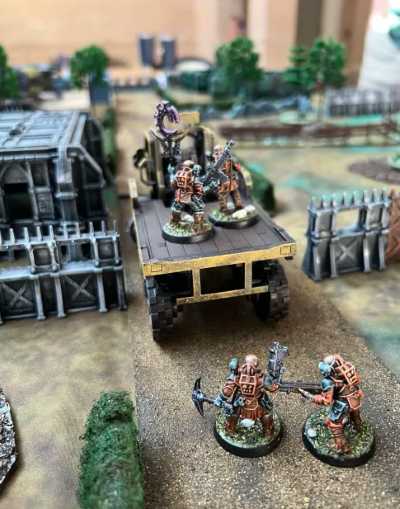
One thing I like about this mission is that you can set up the terrain to reflect the real engagement. Do away with the balanced terrain set ups suggested in the rulebook and give this a go. You don’t have to go with Normandy bocage either, why not set up your more grim dark terrain in a similar configuration.

If you’re worried about balance, why not play the game twice. Switching attacker defender roles each time will a fun experience.

Why not set up your battlefield to reflect the real engagement?

2. Desert Airfield Ambush (SAS: Rogue Heroes)

Theme: Guerilla warfare and improvisation.
The Scene: The SAS (episode 6) raids enemy airfields deep in the desert, using speed and shock tactics to devastating effect.

Kill Team Mission Hook:
One team is guarding a space port with specific objectives (spaceship, fuel depot, pilots building), while the other launches a hit-and-run ambush.

  • Objective: The defender must prevent the attacker from destroying 2/3 of the objectives.
  • Special Rules: Limited visibility due to sandstorm reducing ranged fire; fuel dump and spaceship can explode spectacularly.
  • Faction Fit:
    • Attacker: Ork Kommandos, Kroot Farstalkers, or Ratlings.
    • Defender: Astra Militarum, Adeptus Mechanicus, or Blooded.

This mission brings cinematic chaos to the tabletop — explosions, last stands, and desperate retreats.

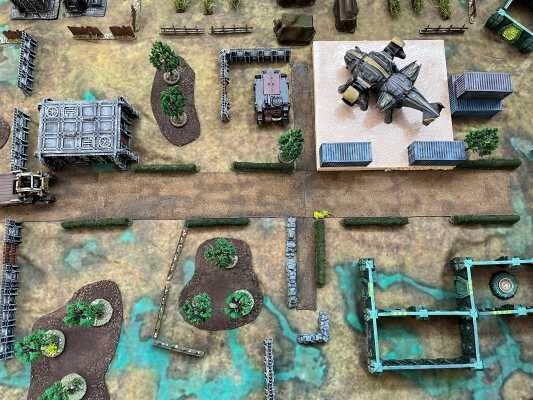
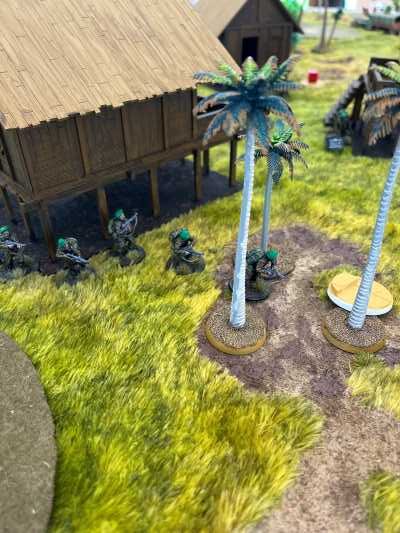
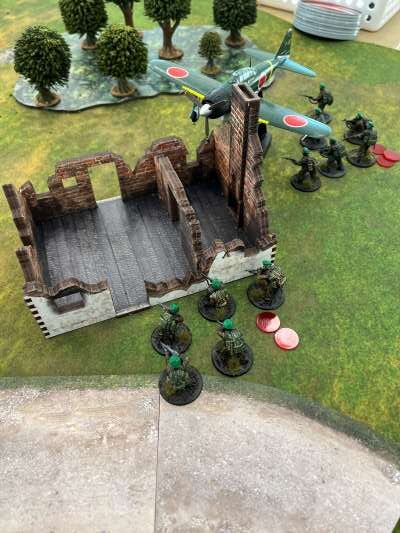
There is a great opportunity to make a themed desert table here. Build it out like an airfield/spaceport. If you have a spaceship model, why not place it front and center. Open spaces, palm trees, pilots mess hut, you get the picture.

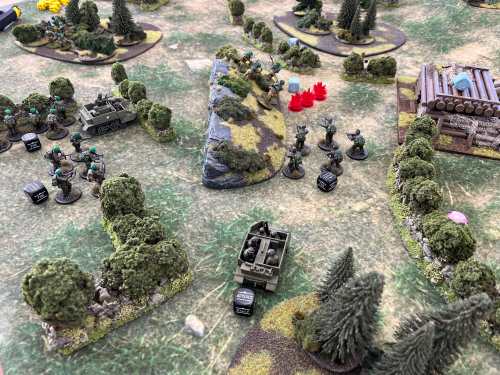
This Bolt Action battlefield provides a good suggestion for the table layout. You can find more pics from the Warlord website.

3. Operation Market Garden (Band of Brothers)

Theme: Holding out against overwhelming odds.
The Scene: Allied paratroopers seize Eindhoven only to find themselves isolated and outnumbered as German counterattacks close in.

Kill Team Mission Hook:
A beleaguered squad must hold a key structure (like a comms tower or reactor junction) until reinforcements arrive.

  • Objective: Survive for a set number of turns while preventing the enemy from capturing the objective.
  • Special Rules: The attacker’s numbers increase each round; the defender may receive one small reinforcement drop midway through.
  • Faction Fit:
    • Defender: Imperial Navy Breachers, Inquisition Agents, or Deathwatch marines.
    • Attacker: Chaos Legionaries, Ork Kommandos, or Fellgores.

This setup should create those tense, cinematic moments where every dice roll feels like life or death.

It could be played best as a joint ops mission, with two players fighting off waves of attackers. Why not create a densely packed board to replicate the close confines of the town. Narrow streets will create the need for desperate close combat actions, adding to the difficulty of completing the mission.

Bringing It All Together

By translating these real-world (albeit hollywoodised) operations into Kill Team missions, you blend the historical tension of WWII storytelling with the gothic sci-fi of the 41st millennium. You get all the things that make Band of Brothers and SAS: Rogue Heroes so gripping — camaraderie, courage, chaos — but with plasma rifles and occasional daemon incursions.

Basing your maps on these real engagements and creating asymmetric mission objectives will help add something different to your Kill Team games. So next game night, don’t just roll for missions — tell stories. Steal from history, tweak the details, and create moments that feel like they belong in both Normandy and Necromunda.