Unleashing Attributes: Translating D&D Abilities into the Business World

Dungeons and Dragons (D&D) is not only a game of fantasy and adventure but also a platform that explores the diverse abilities that define characters. In today’s article, we delve into the six primary attributes of D&D—Strength (STR), Dexterity (DEX), Constitution (CON), Wisdom (WIS), Intelligence (INT), and Charisma (CHA). Ultimately, with the aim of uncovering their relevance to the business world. As a player in D&D, understanding these abilities and their impact on the game allows creation of a character that has a strong chance of success. Likewise, by understanding how each attribute relates to essential qualities and skills in business, individuals can harness their own strengths and develop a well-rounded approach to professional success.

Strength (STR): Power in Action

Strength in D&D represents physical prowess, raw power, and the ability to overcome challenges. Characters with high STR scores would be Conan the Barbarian, Buffy the Vampire Slayer or Aragorn from Lord of the Rings.

In the business world, strength translates into action-oriented leadership, resilience, and the ability to navigate and overcome obstacles. Individuals with high STR traits exhibit determination, drive, and the physical and mental fortitude required to persevere in demanding and competitive environments. Entrepreneurs and construction managers exhibit this trait, as leaders dealing with fast paced highly fluid situations every day.

Dexterity (DEX): Agility and Adaptability

The Dexterity attribute encompasses agility, nimbleness, and reflexes. Sneaky rogues and accurate archers are characters with high DEX. Think Robin Hood or Jyn Erso from Rogue One.

In leadership, DEX translates into adaptability, quick thinking, and the ability to respond swiftly to changing circumstances. Individuals with high DEX traits exhibit flexibility, strategic thinking, and the capacity to navigate complex situations with grace and efficiency. Development managers in the IT sector and project managers of all scales must have high DEX to succeed.

Constitution (CON): Resilience and Endurance

Constitution reflects resilience, stamina, and the ability to withstand physical and mental challenges. Within the game this equates to more hit points and thus makes your character harder to kill. Ellen Ripley from Alien and Ethan Hunt from Mission Impossible display huge levels of constitution and fortitude.

In the real world, CON translates into resilience, perseverance, and the capacity to endure setbacks and overcome adversity. Individuals with high CON traits exhibit determination, emotional stability, and the ability to maintain focus and performance in high-pressure situations. Successful leaders with high CON bounce back from failure stronger than ever before. For real world examples think Elon Musk or JK Rowling of Harry Potter fame.

A great explanation of D&D abilities, referencing tomatoes…

Wisdom (WIS): Insight and Decision-Making

Intuition, perception, and the ability to make sound judgments fall out of a high WIS attribute. From a players perspective these characters are often Clerics, wise in the ways of the world. In fiction characters with high WIS often take the form of mentors. Dumbledore and Yoda are great examples from popular culture and need no introduction. A character with high WIS who is most definitely not a mentor is Tyrion Lannister from Game of Thrones. Throughout the series Tyrion displays great wisdom, finding inner peace where his flaws are concerned and recognizing his great power lies in his ‘smart brain’.

WIS translates into insightful decision-making, problem-solving, and the capacity to evaluate situations holistically. In the business world, individuals with high WIS traits possess keen observation skills, intuition, and the ability to navigate ambiguity and make informed choices. Often leaders with high WIS act as mentors. However, positions where a large number of conflicting stakeholders are involved also need this attribute. Any leadership position in a government department or other bureaucracy must have this to succeed.

Intelligence (INT): Knowledge and Analytical Thinking

Intelligence for a D&D character signifies intellectual acumen, knowledge, and the ability to process information. Since the first days of the game INT has bee important for Wizards as they research the arcane. Over time this has ported to alchemists, artificers and bards. It comes as no surprise that fictional characters like Gandalf, Spock and Hermione Granger display intelligence as their primary attribute.

When looking at real world professionals, INT translates into analytical thinking, strategic planning, and the capacity to gather and apply knowledge effectively. Individuals with high INT traits exhibit strong problem-solving skills, critical thinking abilities, and the capacity to make informed decisions based on data and insights. Leaders with this primary attribute excel in running teams and projects with a high level of technical complexity. They should also be included when formulating long term strategic plans for the business or division.

Charisma (CHA): Influence and Relationship-Building

Charisma in D&D represents charm, persuasiveness, and the ability to influence others. In the game this is often used to avoid deadly combat situations. Fast talking Bards, inspirational Paladins and silver tongued Warlocks all benefit from having a high CHA attribute. In the business world, CHA translates into effective communication, relationship-building, and the capacity to inspire and motivate others. In the movies Tony Stark, James Bond, Jack Sparrow and Princess Leia all have high CHA scores.

Leaders with high CHA abilities possess strong interpersonal skills, the ability to communicate ideas effectively, and the capacity to build rapport and influence outcomes. This is particularly important if you have a large team so that messages are clear and easily understood. A leader with the ability to communicate a strong and compelling vision to his team can create strong loyalty and collaboration. Think Elon Musk or Steve Jobs and see what they have achieved by using this attribute.

Final Thoughts

The six abilities of Dungeons and Dragons—Strength, Dexterity, Constitution, Wisdom, Intelligence, and Charisma—hold valuable lessons for leaders. By understanding and harnessing these attributes, individuals can identify their strengths and develop the qualities necessary for success. Whether it’s leveraging physical and mental fortitude, adapting to changing circumstances, building resilience, making informed decisions, applying analytical thinking, or fostering effective communication and relationship-building, the attributes of D&D can empower individuals to thrive and excel as leaders in the real world.

Unlikely Mentors: Three Surprising Lessons We Can Learn from Orcs

In the often outlandish realm of Dungeons and Dragons (D&D), valuable leadership insights are found in the most unlikely of places. Surprisingly, even the brutish and seemingly chaotic orcs can teach us a thing or two about leadership.

For those who don’t know, orcs are aggressive humanoid creatures with green skin, prominent tusks, and a tribal, warlike culture. They are often organized into tribes or clans led by powerful chiefs. Orcs are skilled warriors, typically wielding melee weapons, and are commonly portrayed as chaotic or evil. They serve as common adversaries in D&D campaigns, offering challenges to player characters at various levels. The Lord of the Rings films give an excellent portrayal of these foes.

Let’s delve into the world of D&D and uncover unexpected leadership lessons from these misunderstood creatures.

Unity in Diversity: Harnessing Strengths in a Horde

Orcs, often depicted as a chaotic horde, exemplify the strength that arises from diversity. Within orc communities, various tribes boast a range of skills, from fierce warriors to cunning strategists. Effective orc leaders recognize and harness the diverse strengths of their horde, fostering a sense of unity.

In the business world, leaders can learn from orcs by embracing the unique talents and perspectives within their teams. Just as different orc tribes contribute to the overall strength of the horde, diverse skills and backgrounds among team members can lead to innovative solutions and increased productivity.

An unstoppable orc horde – Strength in unity!

Resilience in the Face of Adversity: Embracing the Warrior Spirit

Orcs are renowned for their resilience in battle. No matter the odds, they face adversity with a tenacious warrior spirit. Leaders can draw inspiration from this quality, understanding that resilience is key to overcoming challenges and achieving long-term success.

In the corporate landscape, leaders must navigate uncertainties, setbacks, and fierce competition. Adopting the orcish warrior spirit involves instilling a mindset of perseverance, encouraging teams to learn from failures, and pressing forward with determination. Just as orcs rise again after defeat, resilient leaders inspire their teams to bounce back and continue the fight towards their goals.

Hierarchical Leadership: Strength in Leadership Structure

Orc society is often structured hierarchically, with powerful leaders at the top guiding their tribes. While the orcish hierarchy may seem brutal, it emphasizes the importance of clear leadership structures. Consequently, in Dungeons and Dragons, strong leaders among orcs command respect, and their authority rarely questioned.

In the corporate world, effective leaders establish clear hierarchies and communication channels within their organizations. A well-defined leadership structure promotes accountability, ensures efficient decision-making, and fosters a sense of direction among team members. Of course, I’m not advocating for a rigid or oppressive structure. However, orcish leadership structures remind us of the importance of clarity and order in achieving collective goals.

Final Thoughts on Orcs

Dungeons and Dragons, with its rich lore and diverse creatures, serves as an unexpected source of inspiration for leadership principles. Orcs, often dismissed as mere antagonists, provide valuable insights into the strength of diversity, the importance of resilience, and the benefits of clear leadership structures. Therefore, as we roll the dice in our own leadership journeys, let us glean wisdom from the unlikeliest of mentors. Before applying these lessons to lead our teams to victory in the corporate adventure.

Go the Orcs!

Secrets Behind the Screen: What Does a Dungeon Master Do?

In the Dungeons & Dragons (D&D) role-playing game, the Dungeon Master (DM) is the game organizer and participant in charge of creating the specifics and encounters of a game session, while maintaining a realistic continuity of events.

If you’ve ever found yourself enchanted by the world of tabletop roleplaying games, you’ve likely heard whispers of the enigmatic figure known as the Dungeon Master. But what exactly does a Dungeon Master do, and how can you embark on this thrilling journey yourself? Let’s delve into the depths of this captivating role and uncover some tips for aspiring DMs.

Deciphering the Dungeon Master’s Role

At its core, the Dungeon Master serves as the architect, narrator, and referee of the game experience. Here’s a closer look at the multifaceted responsibilities that come with the title:

1. World Building

One of the DM’s primary duties is to craft a rich and immersive world for players to explore. From sprawling cities to treacherous dungeons, every corner of the realm is yours to shape and mold.

2. Storytelling

As the master storyteller, you’ll weave together narrative threads, concocting tales of heroism, intrigue, and peril. Your words breathe life into the world, painting vivid pictures that captivate the imaginations of your players.

3. Roleplaying

Channeling a cast of colorful characters, both allies and adversaries, is a cornerstone of the DM’s role. From grizzled mercenaries to cunning villains, you’ll don a variety of hats to bring the world to life.

4. Rule Adjudication

While the rulebooks provide a framework for gameplay, it’s the DM’s duty to interpret and enforce these rules. Whether resolving disputes or improvising on the fly, you’ll act as the final arbiter of the game’s mechanics.

5. Fostering Creativity

Above all else, the DM is a catalyst for creativity, inspiring players to embark on epic adventures and forge unforgettable memories together.

Matt Mercer is a world renowned DM, but don’t be put off, he’s had decades of experience at the table and as an actor.

Tips for Getting Started as a Dungeon Master

I remember returning to DMing after a long break. It felt daunting and nerve wracking. But as soon as we started and I could see that all of us were having fun all my fears evaporated. While not easy, embarking on your journey as a Dungeon Master is extremely satisfying and worthwhile. With a bit of preparation and a sprinkle of courage, you’ll be well on your way to crafting legendary tales. Here are some tips to help you get started:

1. Start Small

Begin with a simple one-shot adventure or pre-made module to familiarize yourself with the basics of DMing. As you gain confidence, you can gradually expand your repertoire and tackle more ambitious campaigns.

Don’t worry too much about world building. Beginning with a small village with a haunted castle nearby is enough to start with. You can then expand your world together with the players as you go.

2. Know the Rules (But Don’t Be Afraid to Bend Them)

Familiarize yourself with the rules of your chosen game system, but don’t let them constrain your creativity. Remember that storytelling takes precedence, and it’s okay to bend or modify rules to serve the narrative.

During my 5 + years D&D campaign I relied heavily on the players knowledge of the rules. If I didn’t know I’d ask. As DM, I still had the final word on a rule. However, playing this way definitely made the game feel even more collaborative. So don’t worry if you don’t know the rules word for word.

3. Embrace Improvisation

No matter how meticulously you plan, players will inevitably throw curveballs your way. Embrace the chaos and hone your improvisational skills, ready to adapt and react to unexpected twists and turns.

In fact, this happens to me every single session. It’s all part of the fun. Not knowing what’s going to happen makes the game even more exciting for the DM and players alike.

4. Communicate with Your Players

Establish open lines of communication with your players, soliciting feedback and addressing any concerns or expectations they may have. Collaborate with your group to ensure everyone is on the same page and having fun.

A good friend of mine periodically sends his players surveys. This lets him capture direct feedback from the players away from the table. He then adjusts his game removing any niggles that the players might have. This is something I’m intending to do for my own games in the near future.

5. Learn from Experience

Like any skill, mastering the art of Dungeon Mastering takes time and practice. Don’t be discouraged by setbacks or mistakes. Instead, view them as learning opportunities to grow and improve as a storyteller.

I’ve made lots and lots of mistakes as a DM. But we’re all there to have fun. As such my players are all very forgiving. Remember, everyone at the table has a role in making the game enjoyable and memorable. It doesn’t fall on the shoulders of the DM alone.

Final Thoughts on Dungeon Mastering

For me there is nothing more satisfying and rewarding than running the game. Helping spark players creativity and helping lead them through adventures is a fantastic experience. As I’ve shown above it’s not that difficult to get started. Grab a rulebook or started set, a couple of interested friends and you’re off.

What’s holding you back from giving it a go?

Unlock Team Resilience With Dungeons & Dragons

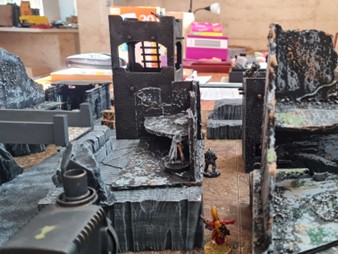
Amazing diorama by James Paxon

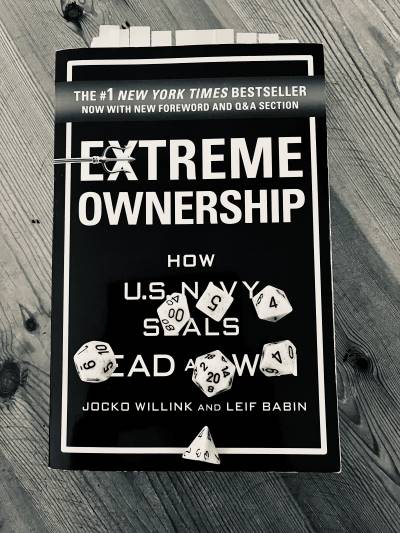
Teamwork and resilience are essential qualities for success in both the adventures of Dungeons and Dragons (D&D) and the challenging world of business. Sources of inspiration include the grueling Navy SEALs Hell Week, where team resilience is key. We examine the elements of adversity, collaboration, perseverance, and growth that can be emulated through D&D gameplay.

On another note, the featured image on todays post is a miniature diorama by the talented James Poxon.

Creating an Adversarial Environment

D&D adventures can be designed to introduce challenges and obstacles that push players to their limits. By crafting scenarios that test their problem-solving abilities, strategic thinking, and emotional resilience, the DM can create a simulated environment of adversity. This can be as simple as rolling dice in the open. Letting players know that the danger they are facing is not being fudged by the DM. Additionally making scenarios that are genuinely hard, with significant in-world consequences ramp up the adversity and pressure. Navy SEALs and other special forces teams undergo rigorous training to prepare for real-world challenges. Similarly, D&D allows teams to face adversity in a controlled and collaborative setting.

Teamwork and Collaboration

D&D is inherently a cooperative game, requiring players to work together as a team to overcome challenges. Team members must communicate effectively, leverage each other’s strengths, and collaborate to achieve shared goals. The simulated team adversity in D&D provides an opportunity for teams in the business world to practice and refine their collaborative skills. With the additional benefit of fostering a culture of effective teamwork and synergy.

Perseverance and Grit

Adversity often tests an individual’s perseverance and resilience. In D&D, players experience setbacks, encounter formidable foes, and face unexpected obstacles. By persevering through these challenges, players develop a sense of grit—a combination of passion, resilience, and determination. Emulating the Navy SEALs Hell Week, where candidates push through physical and mental barriers, D&D allows teams to practice and cultivate the perseverance and grit necessary to overcome adversity in the business world.

Problem-Solving and Creative Thinking

D&D requires players to think critically and creatively to navigate complex situations. In the face of adversity, players must analyze problems, explore innovative solutions, and adapt their strategies. The simulated team adversity in D&D provides a platform for teams to sharpen their problem-solving and creative thinking skills, enabling them to approach real-world business challenges with ingenuity and adaptability.

Growth and Learning from Failure

Failure is an integral part of both D&D and the business world. In D&D, setbacks and failures serve as opportunities for growth and learning. Similarly, in business, failures can be powerful teachers if embraced with the right mindset. Through the simulated team adversity in D&D, teams develop the resilience to learn from failure, adapt their strategies, and continuously improve. This growth mindset fosters innovation, adaptability, and a culture of learning within the business environment.

Use games to help create a sense of team camaraderie

Building Trust and Camaraderie

Team adversity in D&D provides a platform for teams to build trust and camaraderie. Just as Navy SEALs forge unbreakable bonds during Hell Week, D&D enables teams to develop trust through shared challenges, mutual support, and reliance on one another. This trust and camaraderie transfer to the business world, fostering strong relationships, effective collaboration, and a sense of unity within the team.

Final Thoughts on Team Resilience

D&D offers a unique opportunity to simulate team adversity, providing teams with invaluable experiences and lessons that strengthen their resilience. By creating an adversarial environment and fostering teamwork, teams can harness the game to prepare for and overcome the challenges they face. Through this immersive and transformative experience, teams can emerge stronger and more cohesive. Ultimately, better equipped to thrive in the dynamic and demanding business landscape.

I have built a framework for a scenario experience that could be used for your team. To learn more check it out here.

Victory without Violence – Taking the Combat Out Of Dungeon & Dragons

Today’s article is a guest post by the talented Craig Robertson, focused on scenarios that might be more appropriate to the workplace.

Dungeons and Dragons has a long and bloody history, full of epic battles and crushing defeats. Since its creation in the 1970’s, billions of orcs, goblins, and kobolds have died at the hands of brave and/or foolhardy adventurers. And the carnage goes both ways. Old-school gamers such as myself fondly remember the heroic demise of beloved characters, not to mention the occasional dreaded TPK (total party kill).

This makes sense when you look at the literary and gaming inspirations from which Dave
Arneson and Gary Gygax drew when creating D&D. On the literary side, D&D grew out of the heroic mythology of the ancient Babylonians, Greeks, Romans, Celts, and other cultures. In these traditions, a hero such as Hercules, King Arthur, or Beowulf faced mortal danger with sword (or club or axe) in hand. In fact, some weapons are as famous as the heroes who bore them, such as Arthur’s Excalibur or Thor’s Mjölnir. As for its gaming roots, D&D started out as an extension of a medieval wargame ruleset called Chainmail. Since then, the attack roll has been a core mechanic of most roleplaying games, and even now, most RPG rulebooks feature full chapters devoted to combat and weaponry.

Why Limit Violence in D&D?

However, in a workplace setting, there are good reasons to limit violence or even remove it
altogether from the game. First, many players (and organizations) may have moral or philosophical objections to using force to solve problems. Second, some of your players may have endured traumatic experiences that involve violence. These people may have been refugees, combat veterans, or victims of crime or abuse. Finally, the unfettered use of violence in many roleplaying games doesn’t correspond to the types of solutions available to corporate problem-solvers. In fact, unfettered violence is not even available to military personnel, who have to work within the rules of engagement. In my experience, most HR departments strongly discourage bringing flamethrowers and battleaxes to business meetings.

On the other hand, there are positive reasons to encourage nonviolent approaches to
challenges. First, peaceful solutions often work out better in the long run, enabling rivals and opponents to eventually find common ground. Secondly, those solutions are often rooted in or lead to a deeper understanding of the root causes of the problem. Finally, the use of force isn’t particularly creative in itself, and the added challenge of finding a nonviolent solution just makes the game more fun.

Baking Peaceful Solutions into your Game

The simplest solution to this dilemma is to just ban violence at the table. However, there is a
better option: Build nonviolent solutions directly into the scenario. A creative GM has several options for removing combat from a scenario, including using the physical environment as the primary adversary, making combat detrimental to mission success, and creating situations in which a peaceful solution is inherently necessary.

Dungeons and Dragons does not have to be combat focused, why not bake in some peaceful solutions.

Struggling against a hostile environment:

Shipwrecks, plane crashes, and sudden storms are staples of literature and films such as Alive or The Poseidon Adventure. Another type of hostile environment can be manmade, such as toxic spills or nuclear meltdowns. Finally, the D&D staple of dungeon traps and hazards also falls into this category. The Death Star trash compactor in Star Wars: A New Hope is a perfect example of a dungeon trap. You can try these scenarios:

  • An alpine glacier begins growing at an unnatural pace, threatening a small mountain village. The players must negotiate the shifting, treacherous ice as they travel to perform the ritual that will restore the glacier to its original state.
  • A scientific research station has begun to descend into the lower layers of a gas giant. So far, the hull is managing to maintain its integrity, but for how long?
  • The barrier between faerie and the mundane world is beginning to thin, bending the rules of reality around the players. They must struggle to maintain their sanity as the work to strengthen the barrier and return each world to its rightful place.

Violence will make things worse:

Perhaps using force may be possible, but circumstances or mission parameters make it a counterproductive choice. For instance, a patron or employer may require that the mission be completed without causing injury or damage to bystanders or the environment. In other cases, such as espionage or infiltration, the ruckus caused by a firefight or melee will lead to discovery and the failure of the mission. Some scenarios could include:

  • A benevolent ruling family has been deposed and imprisoned after a coup. The players are hired to rescue them, but since the family still loves their nation and people, they reject any effort that may hurt or kill any of their former subjects.
  • “The Company” hires the party to recover an automated mining base which has been taken over by a rogue AI. However, since the Company has invested considerable sums into the base, the players are forbidden to do anything which may cause damage to the base or its equipment.
  • During a scientific expedition, a gargantuan creature swallows the players. They have a limited time to escape the belly of the beast before being slowly and painfully digested. Unfortunately for the party, the creature is unique or endangered and killing it would be an ecological tragedy.

Violence is not a viable option:

Some problems inherently preclude a forceful solution. This includes investigations, diplomatic missions, first-contact scenarios, and any other situation that requires persuasion as a key skill set. Try the following as examples:

  • The players are selected as neutral brokers during a tense border dispute. In order to earn the trust of the rival nations, they must complete a series of challenges to prove their strength, intelligence, and character.
  • The party encounters a destructive poltergeist. Since they lack the ability to physically affect or harm the intangible haunt, they must rely on investigation and persuasion to discover what the doomed soul needs in order to move on to its final rest.
  • The players must infiltrate a crime syndicate’s secure computer system to disrupt an imminent cyberattack. Since all the action is remote, the players’ skills are front and center.

Reducing the lethality of D&D games at work can be a challenge, but it’s a good way to test
your creativity. However, increased player engagement and direct, real world problem-solving applications will make it worth the effort.

Craig Robertson is a technical writer and former Chief Game Developer for 1A Games. He has been playing and running D&DTraveller, and other RPGs since the early 80’s. His chief export is opinions, of which he has many.

Thanks to Craig for such a thoughtful article. If any of our readers would like to submit an article feel free to reach out via the usual channels.