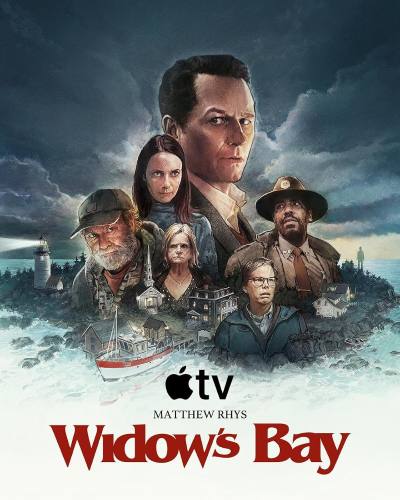
Call of Cthulhu usually gives investigators a reason to poke around in places where sensible people would turn around and go home. A strange letter, missing academic or a suspicious death. An ancient book discovered in a dusty attic. But what if your investigators aren’t detectives, professors or private investigators? What if they are the local council? That was the thought I had while watching the first few episodes of Apple TV’s Widows Bay. I won’t spoil anything beyond those opening episodes, but the combination of an isolated island, strange events, secrets and an increasingly uncomfortable atmosphere immediately made me think that this would make a fantastic Call of Cthulhu adventure. Not an adaptation of the show, exactly. More a case of taking the ingredients and putting them into the cosmic-horror blender.
And what comes out is something particularly nasty.
Welcome to the Island
Using the premise of the show the investigators are all members of the local council on a remote island. This could be set anywhere, remote Scotland, off the coast of Canada or Australia. Having it local to your actual real world location can really add to the player engagement.
Of course, the island is beautiful. It has rugged coastlines, spectacular scenery, historic buildings and a desperate need for economic opportunities. Unfortunately, it also has a problem. Nobody comes here. The council has decided that tourism is the answer. Someone has created a shiny new website and the ferry service has been expanded. A festival of the Sun is planned. Investors are interested. The council is finally beginning to believe that the island might have a future.
Then the ferry arrives.
Start in Media Res
Don’t begin the adventure with a council meeting. Avoid spending twenty minutes having the players introduce their councillors around a table while discussing the tourism budget.
Start with the ferry.
The characters are standing on the dock as the first significant group of tourists arrives on the island. There is excitement. Cameras. Children running around. The mayor is giving an enthusiastic speech about the island’s bright future.
And then there is an accident. Something falls. Someone disappears beneath the water. Screams cut through the festival atmosphere.
And when the councillors finally see what has happened, they realise that the accident is far worse than anyone can possibly know. An onlooker has been dragged beneath the water, by something indescribable.
The council has a problem. Without the tourists the economy of the island will collapse. If the visitors on the ferry see the tragedy all will be lost. A cover up is needed. Fast.
Don’t Tell Anyone
This is where the premise gets particularly fun. The investigators now have three goals:
- Protect the public.
- Enhance the island’s reputation by keeping the tourism campaign alive.
- Work out what actually happened.
Of course there are plenty of juicy complications to keep the players on their toes. Obviously, the police want to investigate, while the victims relatives are calling conspiracy to anyone that will listen. A couple of tourists are posting photographs online. Meanwhile, somewhere in the background, someone is quietly removing evidence.
Initially the investigators have every reason to believe they’re dealing with an ordinary disaster. Then things start becoming wonderfully strange.
- An old fisherman tells them they should stop.
- A local family refuses to cooperate.
- Someone mentions an old story about the island, something about sacrifice and witchcraft.
- One of the investigators notices an ancient symbol carved into the dock.
Just as in episode 2 of widows Bay, the mystery deepens very quickly.
Let the Dread Build
Now’s the time for the session to take a darker turn. The first disappearance should be pretty much explainable. The second should be suspicious. Of course the third should be impossible. By this time it becomes abundantly clear that the tourists aren’t merely disappearing. They’re being taken.
Chaos erupts. The ferry is sabotaged and panicked tourists demand to leave. The council must maintain calm and order.
The Island Itself Becomes the Monster
A great way to run this adventure would make the island feel increasingly hostile as play continues. Birds disappear. Fish wash ashore. The tides become strange. Old wells start producing salt water. The sea glows at night. People begin dreaming about enormous things moving beneath the earth.
Uncomfortably, the investigators start finding the same symbol everywhere.
- On gravestones.
- Inside old houses.
- Under layers of paint.
- Carved into fishing boats.
- Hidden in the council archives.
- Perhaps even beneath the foundation of the council building itself.
The island has been living with this thing for centuries.
The Tourism Campaign Becomes Horrifyingly Relevant
Of course, the council has spent months trying to attract visitors. And now they have succeeded. Unfortunately, the island needs visitors.
All these tourists descending on the island isn’t simply creating a problem. It is fulfilling part of an ancient plan. One involving sacrifices of incomers. Every new tourist group brings the island closer to its ultimate ancient god -raising goal.
Hopefully this creates a wonderful final dilemma reminiscent of the mayor keeping the beach open in Jaws. Do they shut down tourism and evacuate the island? Or keep everything quiet while they attempt to stop whatever is coming?
The Final Act
Eventually, the investigators discover what the islands end game. The missing tourists haven’t been killed. They have been taken to a crumbling temple beneath the island, where something ancient and evil awaits to be woken.
Will the investigators stop this terrible calamity and at what price?
The Inspiration Blender
As you can see, from watching 3 episodes of Widows Bay we can create a compelling one-shot or even short campaign for Call of Cthulhu, or even Ten Candles. What makes this premise particularly appealing is that it doesn’t need to come from Widows Bay alone. You can throw all sorts of influences into the pot. The Wicker Man, The Shadow Over Innsmouth, Jaws, X-files, can all add to the flavour.
So next time you sit down to watch a new show, think about how it might port onto your gaming table. You might be surprised with what you come up with.
Now remember, sometimes the most terrifying thing isn’t discovering that there is an ancient god beneath your island.
It’s discovering that you invited everyone over to meet it.