
For many, roleplaying games serve as a delightful escape filled with dragons, wizards, and epic quests. However, beyond the tabletop adventures lies a treasure trove of skills and experiences that can significantly impact your professional life. In this article, we explore the top three ways that indulging in RPGs can actually help grow your career.
Strategic Thinking and Decision-Making
When playing games like D&D, every choice has consequences. Players quickly learn the art of strategic thinking and decision-making. Whether it’s navigating a treacherous dungeon or negotiating with an in-game character. Players evaluate risks, consider potential outcomes, and make decisions that impact the entire party.
Application to Career
Strategic Planning: RPGs cultivate an ability to think strategically, a skill invaluable in roles that require long-term planning and goal setting.
Decision-Making: Practicing decision-making in a low-risk environment helps build confidence and sharpens critical thinking skills, directly applicable to real-world scenarios.
Team Collaboration and Leadership
Roleplaying games are inherently collaborative, requiring players to work together to achieve common goals. Each party member brings unique skills to the table. Successful campaigns hinge on effective communication and teamwork. Additionally, players often find themselves in leadership roles within the game, responsible for guiding the group through challenges.
Application to Career
Teamwork: RPGs foster a collaborative spirit, teaching players how to work with diverse personalities, a valuable skill in any workplace.
Leadership Development: Taking on leadership roles in-game translates to enhanced leadership capabilities in the workplace, as players learn to inspire and guide their team to success.
Teamwork ultimately makes you a better employee (and dragon slayer!)
Creativity and Problem-Solving
Creativity is the lifeblood of RPGs. Players constantly find themselves in unforeseen situations, requiring them to think outside the box to overcome challenges. From creating intricate character backgrounds to improvising solutions on the fly, RPGs encourage players to flex their creative muscles.
Application to Career
Innovative Thinking: RPGs nurture a creative mindset, fostering the ability to approach problems from multiple angles and develop innovative solutions.
Adaptability: Dealing with unexpected plot twists and adapting to dynamic game scenarios teaches adaptability, a critical skill in today’s fast-paced and ever-changing work environments.
Final Thoughts
So, can playing D&D help my career?
Yes! As you embark on your next RPG adventure, take a moment to remember that the skills and experiences gained at the table can be powerful assets in your professional journey. From strategic thinking to teamwork and creativity, the lessons learned in the fantastical realms of RPGs can translate seamlessly into the challenges and opportunities of the real world. So, roll those dice with confidence; your career may just thank you for it.
For more information on this topic why not look at how and why to put D&D on your CV or Resume.
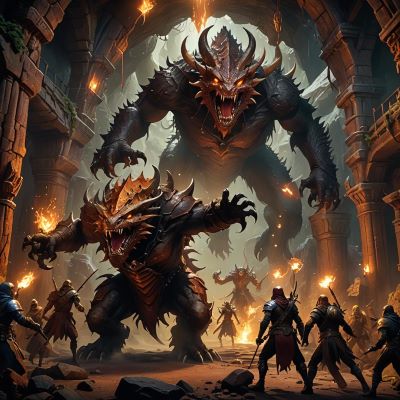
In the sometimes strange world of Dungeons & Dragons (D&D), few creatures evoke as much intrigue and terror as the mind flayers. Many a brave adventurer has been lost to the machinations of these fearsome foes. These enigmatic beings possess formidable psychic abilities, preying on the minds of their victims with chilling efficiency. Yet, beyond their menacing facade lies a wealth of leadership inspiration. Delving into the nature of mind flayers and dissecting their modus operandi, we can glean valuable lessons on influence, strategy, and the pursuit of power in the realm of leadership.
Understanding the Mind Flayer: Masters of Influence
Mind flayers are humanoid creatures with octopus-like heads, adorned with writhing tentacles that they use to extract and consume the brains of their prey. Possessing powerful psionic abilities, they exert control over lesser creatures through manipulation and domination. At first glance, their methods may seem cruel and tyrannical. In fact, their methods are cruel and tyrannical. But a closer examination reveals a nuanced approach to leadership that transcends brute force.
Mastering Influence Through Persuasion
Mind flayers excel at manipulating the thoughts and emotions of others, bending them to their will without the need for overt displays of power. This makes them formidable enemies who work through the actions of others.
In leadership, the ability to influence others through persuasion and diplomacy is invaluable. Now, unlike the Mind Flayer, this is not done from a place of subterfuge and manipulation. Instead, leaders who master the art of persuasion can rally support for their vision, build alliances, and navigate complex interpersonal dynamics with finesse.
Strategic Thinking and Long-Term Planning
Mind flayers are strategic thinkers, meticulously planning their actions and schemes to achieve their goals. Their patient approach to conquest involves laying intricate traps, manipulating events from behind the scenes, and biding their time until the moment is ripe for action.
Leadership requires a similar strategic mindset, but without the sinister intent. Great leaders need to learn long-term planning, foresight, and the ability to anticipate and adapt to changing circumstances.
Strategic thinking, the mind flayer way
Embracing Diversity and Collaboration
Despite their penchant for domination, mind flayers recognize the value of collaboration and diversity among their thralls. They form alliances with other creatures, leveraging their unique abilities to further their goals. Keep in mind that these creatures alliances tend to be one sided, with the mind flayers holding all the cards.
In contrast, leaders should embrace fostering a diverse and inclusive team environment cultivates innovation, creativity, and resilience. Leaders who adopt diversity empower their team members to contribute their unique perspectives and talents, driving collective success. Additionally, alliances made with the express intent of achieving a win-win outcome for the participants is going to forge stronger and long lasting relationships. Which will give your team an edge that your competitors will find difficult to beat.
Resilience in the Face of Adversity
Mind flayers are resilient creatures, capable of surviving in the harshest of environments and overcoming formidable foes. Their indomitable will and unwavering determination enable them to persevere in the face of adversity, adapting their strategies to overcome challenges. Their preferred residence is deep underground in caverns populated by dangerous monsters and other hazards. Resilience for these adversaries is critical.
Similarly, effective leaders exhibit resilience, bouncing back from setbacks, learning from failures, and leading with confidence in the midst of uncertainty. Keeping calm and stepping up to lead during a crisis is the hall mark of a great leader. Of course, this is difficult to achieve if you don’t have resilience. Finding ways to improve your mental strength is essential for those looking to lead.
Balancing Ambition with Ethical Considerations
While mind flayers are driven by a relentless ambition for power and domination, their methods often come at a grave ethical cost. In fact, this is what makes them such excellent villains for the heroes to challenge.
Leaders can learn from this cautionary tale by balancing ambition with ethical considerations. True leadership entails a sense of moral responsibility, empathy, and integrity. Leaders who prioritize ethical conduct and consider the well-being of their followers foster trust, loyalty, and long-term success.
Final Thoughts on Mind Flayers
The enigmatic, and of course villainous, mind flayers offer a paradoxical glimpse into the complexities of leadership. While their methods may be chilling and their motives dubious, the lessons they impart on influence, strategy, collaboration, resilience, and ethical leadership are invaluable. By studying the mysterious ways of the mind flayer, aspiring leaders can glean insights that transcend the realms of fantasy, guiding them on a path towards mastery and enlightenment in the realm of leadership.
People who don’t game often ask: “What is the point of Dungeons and Dragons?” The core of D&D is about storytelling. The group of players essentially tell a collective story, guiding their heroes through treacherous quests to search for loot, battle deadly enemies, and even carry out daring rescues. Most excitingly, the experience is only limited by the imagination of the players around the table.
In a world where entertainment options seem to grow exponentially by the day, Dungeons and Dragons (D&D) is standing the test of time. Far more than just a game, it has woven itself into the fabric of social gatherings and creative expression. It influences movies, books, art and perhaps surprisingly, it is also entering both leadership and personal development. But what exactly is the point of Dungeons and Dragons, and why does it continue to enchant players worldwide?
Understanding the Mechanics
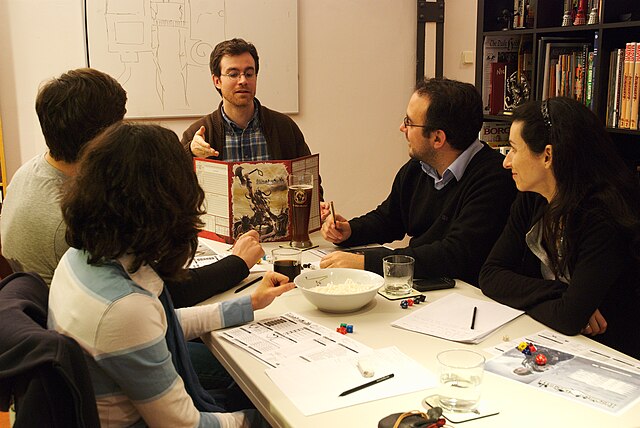
At its core, Dungeons and Dragons is a tabletop role-playing game where players create characters and embark on adventures guided by a Dungeon Master (DM). The DM acts as a narrator, describing the world, setting challenges, and playing the roles of various characters the players encounter. The game relies heavily on imagination, with players making decisions and resolving actions through a combination of dice rolls and storytelling.
Players assume different roles within the game, each with its own set of abilities, strengths, and weaknesses. Cooperation and strategic thinking are essential as players navigate treacherous dungeons, solve puzzles, battle monsters, and interact with a richly crafted world.
Social and Creative Benefits
One of the most significant draws of Dungeons and Dragons lies in its social aspect. Gathering around a table with friends or strangers fosters camaraderie and builds bonds as players collaborate to overcome obstacles and achieve shared goals. The game encourages communication, teamwork, and compromise, promoting positive social interactions in an immersive and imaginative setting.
Moreover, D&D serves as a fertile ground for creativity. Players have the freedom to shape their characters’ personalities, backstories, and motivations, breathing life into their creations through role-playing. As they navigate the game world, players contribute to a collective narrative, weaving tales of heroism, intrigue, and adventure. The game sparks the imagination, encouraging players to think outside the box and explore endless possibilities.
Some of the social benefits gained from playing D&D
Hone Leadership Skills
Interestingly, Dungeons and Dragons also offers a unique platform for honing leadership skills. As players navigate complex scenarios and confront challenges, leadership naturally emerges within the group dynamic. The role of the Dungeon Master, in particular, requires strong leadership qualities such as creativity, adaptability, and the ability to guide and inspire others.
Players who take on leadership roles within the game often find themselves making critical decisions under pressure, delegating tasks, and motivating their fellow adventurers. They learn to assess risks, weigh consequences, and adapt strategies on the fly—a valuable skill set applicable to real-world leadership scenarios. Of course, this is what this blog is all about.
Furthermore, D&D encourages empathy and understanding as players inhabit diverse characters with varying perspectives and experiences. Leaders emerge not only through commanding presence but also through empathy, diplomacy, and the ability to foster cooperation among team members.
Final Thoughts
In essence, the point of Dungeons and Dragons transcends mere entertainment; it encompasses social interaction, creative expression, and leadership development. Through collaborative storytelling and immersive gameplay, D&D offers a unique avenue for personal growth and interpersonal connection. As players embark on epic adventures together, they forge bonds that extend far beyond the gaming table, proving that the magic of Dungeons and Dragons lies not just in playing the game, but in the hearts and minds of those who dare to explore it.
In leadership, a nuanced concept often overlooked is Leadership Capital—a currency comprising the intangible assets accrued through actions, decisions, and interactions. Drawing parallels from the social aspects of Dungeons & Dragons (D&D), we delve into the strategies for accumulating and depleting Leadership Capital, offering insights into effective leadership.
What is Leadership Capital?
Leadership Capital refers to the collective resources, credibility, influence, and goodwill that a leader accrues over time. It is accrued specifically through the leaders actions, decisions, and interactions with others. It encompasses a leader’s reputation, trustworthiness, expertise, and ability to inspire and motivate others. While seemingly intangible, Leadership Capital enables a leader to effectively lead and influence their team by leveraging their credibility and trust to implement change, make tough decisions, and achieve organizational goals. Effective leaders continuously invest in and nurture this concept through consistent and ethical leadership practices, transparent communication, and building strong relationships with stakeholders.
Actions and Decisions: The Currency of Leadership
In D&D, every action and decision shapes the trajectory of the adventurers’ journey. Additionally, they also shape the campaign world and the working relationships with the other characters. Imagine the Cleric who tries to keep all the magical loot for themselves. After a while this behavior wears thin with the rest of the party and when said Cleric reaches out for help, it may well not be forthcoming.
Similarly in the workforce, leaders accumulate Leadership Capital through decisive actions and thoughtful decisions. Acts of courage, strategic maneuvers, and ethical choices yield dividends in the form of increased trust and respect from followers. Conversely, reckless decisions or betrayals significantly erode your count, diminishing influence and credibility.
Quests and Challenges: Opportunities for Growth
A large part of joy in the game, quests and challenges are opportunities for adventurers to demonstrate their prowess and accrue valuable rewards. If each character plays their part in overcoming the evil villain they gain Leadership Capital with each other. As such, theywill work more closely as a team moving forward.
Likewise, leaders thrive when facing formidable challenges head-on. Successfully navigating crises, overcoming obstacles, and achieving milestones contribute to the accumulation of Leadership Capital. Each triumph reinforces trust and confidence in the leader’s abilities.
Alignment and Integrity: Upholding Principles
Alignment in D&D reflects a character’s moral compass and ethical principles. While it can be fun to play chaotic or morally ambiguous characters on occasion, consistently playing with a lack of integrity loses Leadership Capital very quickly. Do you always try to steal the treasure ahead of other players, or perhaps the character always tries to kill first and ask questions later. Wanting to hog the spotlight also has a negative impact. This very one-sided approach to the game results in other players disgruntlement as well as pushback reactions from the DM. If not handled carefully it can completely derail the game for everyone.
Of course, leaders uphold their integrity as a cornerstone of Leadership Capital. Consistent adherence to principles, transparency in decision-making, and alignment of actions with values foster trust and credibility. Leaders who stray from their moral compass risk depleting their Leadership Capital, as trust erodes in the face of inconsistency or duplicity.
Playing D&D is a great way to practice using Leadership Capital
NPC Interactions: Influence and Diplomacy
Non-player characters (NPCs) in D&D provide opportunities for interaction, negotiation, and diplomacy. During play characters gain and lose Leadership Capital through their interactions with them. Good DMs keep a rough track of this concept held by different NPCs and can quickly gauge their reactions to the characters in game. Getting help from the city Mage with a low Leadership Capital count is going to be very difficult indeed. Conversely, asking the gang of rogues who your party have provided work and a safe place to live will get a more positive response.
Effective leaders master the art of interpersonal relationships, leveraging influence and diplomacy to build alliances and garner support. Skillful negotiation, active listening, and empathy increase Leadership Capital by fostering trust and collaboration. Conversely, abrasive interactions or broken promises diminish this valuable resource.
Critical Hits and Failures: Impactful Moments
In D&D, critical hits and failures have profound consequences, altering the course of the adventure and in some cases even the long term campaign. This often form milestones and touchpoints for the journey of the players, their characters and the party.
Additionally, impactful moments define a leader’s legacy and influence Leadership Capital. Successfully navigating crises, seizing opportunities, or inspiring breakthroughs amplify this concept. Conversely, catastrophic failures or ethical lapses inflict significant damage, eroding trust and credibility.
Final thoughts
In the tapestry of leadership, the accumulation and depletion of Leadership Capital shape the trajectory of a leader’s journey. By understanding the mechanics of gaining and losing this invaluable resource—drawing parallels from the intricate dynamics of Dungeons & Dragons—leaders can embark on a quest for greatness, inspiring others to join them on the path to success.
Feedback is a vital component of personal and professional growth, and its value extends beyond the confines of the business world. A strong leader should be able to give and receive feedback graciously without getting emotional. In this post, we explore how the experience of receiving feedback while playing Dungeons and Dragons (D&D) can cultivate valuable skills that are applicable well beyond the game. We look at the art of giving and receiving feedback, active listening, self-reflection, adapting to constructive criticism, and fostering a culture of continuous improvement.
The Art of Giving and Receiving Feedback
D&D provides a rich environment for feedback exchange. Players often offer feedback on each other’s decisions, role-playing, or overall gameplay experience. After a session has finished the players will often talk about what happened. This includes the actions taken by players, their consequences and how things could have gone differently. Of course, this feedback is not mean spirited. Rather a way to collectively learn from mistakes and learn how to work together better.
By learning to provide constructive feedback and receiving it with openness, players develop skills in giving and receiving feedback effectively. This fosters an atmosphere of trust, respect, and growth that can be mirrored in the business world. However, giving and receiving feedback about the game is less likely to make you feel bad. After all, mistakes in game are often the best source of stories and shared reminiscing.
Feedback, whether constructive or positive should be given and received through the lens of growth (more on this later). Both help you grow and improve as an individual.
Focus on enhancing rather than improving performance
If you are having to give feedback and are unsure how to frame it try using the SBI model. Situation – Behavior-Impact. It focuses on the behavior rather than the actual person preventing it being misread as a personal attack. As a simple explanation you would frame your conversation as follows:
Situation- describe the situation. For example, our party was resting at the village only to wake up to discover a horde of orcs besieging us in the morning.
Behavior- Upon seeing the orcs outside the gates you immediately yelled your battlecry and charged.
Impact- The orcs countercharged, breached the walls, razed the village to the ground while our party barely escaped with our lives. In addition, we had to leave the cart of loot behind. As a result the mage, bard and thief are furious and will need some calming down.
Behavior-What behaviors would help avoid the impact? This is where you get the impetuous fighter to think of alternatives.
Impact- What might the new impacts have been?
This method removes the worry of having to think on your feet when giving feedback. I’ve used this model very effectively in my own leadership journey. Check out the link for a more detailed explanation.
Active Listening and Empathy
In D&D, active listening is vital for understanding the narrative, fellow players, and the DM. When players receive feedback, they have an opportunity to practice active listening, showing empathy, and understanding diverse perspectives.
These skills are invaluable in the business world, where leaders must listen attentively to their team members, clients, and stakeholders to make informed decisions and foster strong relationships. A leader who doesn’t practice active listening will miss vital information. Their team may come to consider them uncaring, effectively eroding any leadership capital you may have stored.
Despite mirrors often being used as traps in game, self-reflection is essential in improving your game and professional life
Self-Reflection and Growth Mindset
Playing D&D encourages self-reflection as players analyze their choices, actions, and impact on the game. Receiving feedback from the DM and other party members prompts players to reflect on their strengths, weaknesses, and areas for improvement. This cultivates a growth mindset—a belief that abilities can be developed through dedication and effort.
Similarly, in leadership individuals who embrace self-reflection and a growth mindset are more open to feedback, eager to learn, and resilient in the face of challenges. So much so that teaching self-reflection in leadership courses and MBAs is mandatory across the world.
I’ve tried to practice self-reflection throughout my leadership journey to date. I’ve found it lets me analyze my mistakes while preventing me from repeating them. On the other side self reflection has allowed me to understand where my strengths lie. Ultimately, this has led me to pursue a leadership career rather than sticking to my technical roots.
Adapting to Constructive Criticism
Of course, not all feedback is positive. If you have a table of players with a growth mindst D&D offers opportunities to receive constructive criticism that can help refine gameplay or role-playing skills. Learning to accept and embrace constructive criticism enables players to grow and enhance their performance. In my role as Dungeon Master I often ask my players how they found the session. Of course as part of this I receive constructive criticism. Rather than getting upset, I look at this as an opportunity to make the game more fun. Of course, this is much easier to do when you know that those giving the feedback are coming from a positive standpoint. Regardless, this is the most productive angle to take.
This skill translates directly to leadership, where professionals must be receptive to feedback to refine their skills, improve processes, and drive organizational success. If you are given constructive criticism in a professional setting thank the individual. Then reflect on it. Take time to consider why they might be presenting this to you, is it real and what can you do. Don’t just dismiss it out of hand. Treat it as a gift.
Applying Feedback for Personal and Professional Growth
The experience of receiving feedback in D&D not only improves your game, but can also serve as a springboard for personal and professional growth. By actively applying feedback, we can refine our decision-making, communication, problem-solving, and leadership skills within the game. AS we’ve learned, these skills directly transfer to the business world, enabling individuals to adapt, learn, and improve their performance. Win-Win.