The Power of the Party: Collaboration in D&D

Collaboration is a fundamental element of success in both the immersive world of Dungeons and Dragons (D&D) and the dynamic world of business. A huge amount of the fun gained from playing the game is working together to overcome obstacles. Likewise, significant satisfaction at work can be gained from being part of a high performing team. Today, we explore the significance of collaboration in D&D and its application to business professionals. We delve into the principles of teamwork, and fostering a collaborative culture that drives success in both the realms of play and work.

The Heart of Collaboration in D&D

D&D is a cooperative game that requires players to work together towards common goals. While each player has a character with special skills and abilities, successful D&D parties understand the importance of collaboration. Pooling individual strengths, skills, and resources to overcome challenges lets the group overcome seemingly insurmountable odds. Through shared decision-making, strategic planning, and effective communication, players experience first-hand the transformative power of collaboration. In fact they live it, every time they play.

Effective Communication and Active Listening

Collaboration thrives on effective communication and active listening. In D&D, players must communicate their intentions, share information, and coordinate their actions with the team. The synergies between characters can only be discovered and acted upon through effective communication and listening. This experience hones the players ability to express ideas clearly, actively listen to others, and ensure that everyone is aligned and informed.

A skilled DM can create experiences where time pressures and the environment inhibits communication. I’ve been there. Our party had carefully planned an infiltration of a bandit camp. But we fell into an ambush. Pressure was on, decisions had to be made quickly. We completely forgot the plan and the session descended into chaos. Of course, this made for a fun experience a the table. But also served as a great learning for me about working and communicating as a team under pressure.

Such communication skills are indispensable in the business world, where effective collaboration relies on open and transparent communication among team members. An organization wont survive without it. Clear, Concise, Communication is key in getting information from the leadership to the frontline and back again.

Synergy and Leveraging Individual Strengths

In D&D, each player assumes a unique role and character class, bringing diverse strengths and abilities to the party. These can be anything from a spell slinging mage, stalwart fighter or a sneaking rogue. Collaboration involves recognizing and leveraging these individual strengths to maximize overall performance. Parties who excel in D&D understand the importance of synergy, coordinating actions and combining abilities to achieve extraordinary results.

Similarly, in business, collaborative teams recognize and capitalize on the diverse strengths of their members. Fostering an environment where everyone’s contributions are valued and utilized to their full potential is key. Good leaders recognize this strength in diversity and build teams accordingly.

Critical Role – D&D collaboration on steroids. Not only collaborating in game, but also in the production of their show. A great example of D&D porting into the business world!

Shared Decision-Making and Consensus Building

Collaboration in D&D extends to shared decision-making. In most games there is no party leader. Instead, players must discuss options, consider different viewpoints, and reach consensus on the best course of action. This process encourages active participation, fosters a sense of ownership among party members, and enhances the quality of decisions. In turn, this makes sure players feel part of the group and enjoy the session.

Likewise, in the business world, effective collaboration relies on shared decision-making. Regardless whether there is a leader or not, strong collaborative teams should regularly have input into the decision making process. Team members who contribute their insights, expertise, and perspectives help deliver well-informed and collectively supported decisions.

Problem Solving and Creative Collaboration

D&D adventures present players with complex problems and puzzles that require collaborative problem-solving. Often these problems involve pressure: crack the code as the monstrous horde descends, steal the gem without waking up the behemoth, or unlock the door before the room fills with quicksand. Failure can have significant impact on the campaign world or mean the loss of a party member. Parties must think critically, analyze situations from various angles, and develop innovative strategies to overcome obstacles. This encourages creative collaboration, where ideas are shared, refined, and built upon to find the most effective solutions.

Translating this to business, collaborative teams can tackle challenges with agility, harnessing the collective intelligence and creativity of the group to drive innovative solutions. Successes and failures at the gaming table can really nurture these skillsets

Fostering a Collaborative Culture

In D&D, successful parties cultivate a collaborative culture that encourages trust, respect, and inclusivity. They celebrate individual successes, support each other through setbacks, and foster an environment where everyone feels valued and empowered to contribute. You can spot a successful party a mile off. The table is having fun being supportive and getting joy from playing together. This collaborative culture drives motivation, engagement, and the collective pursuit of success.

Business organizations spend a lot of money trying to foster a similar collaborative culture. Creating an atmosphere where teams thrive, ideas flow freely, and individuals are inspired to collaborate and innovate, lets them achieve remarkable results. I believe D&D could really help teams grow this culture.

Final Thoughts on Collaboration

Collaboration is a cornerstone of success in both Dungeons and Dragons and the business world. By embracing effective communication, leveraging individual strengths, fostering synergy, engaging in shared decision-making, nurturing creative problem-solving, and fostering a collaborative culture, teams can unlock the transformative power of collaboration. The lessons learned at the table playing D&D—working together towards common goals, harnessing diverse strengths, and fostering a collaborative mindset—empower individuals and teams to excel in the complex and dynamic landscape of business.

Have you ever thought of your teams through some D&D scenarios to get them collaborating better?

5 Secrets Essential for Every Learning RPG

Role-playing games (RPGs) have long captivated our imaginations, allowing us to embark on epic adventures and explore fantastical worlds. However, they can offer more than just entertainment. They also serve as powerful tools for learning and personal development. In particular, an RPG ruleset designed with a focus on leadership learning can provide players with valuable opportunities to enhance their decision-making, critical thinking, and ingenuity. In this post, I explore the key principles required for an RPG ruleset that enables leadership learning, while ensuring simplicity, adaptability, and a limited complexity for easy comprehension and application.

Ideally a ruleset of this nature can be used with professionals who know nothing of roleplaying. It should be learned fast and not get in the way of the learning experience.

Simplicity in Under 5 Minutes

An effective leadership-oriented RPG ruleset should be easily understood within a short timeframe, ideally within five minutes. Clear and concise rules ensure that players can quickly grasp the fundamental mechanics of the game, allowing them to focus on developing their leadership skills rather than getting bogged down in complex rulebooks. By providing a straightforward framework, players can immerse themselves in the game world and concentrate on making meaningful decisions.

This also means keeping the dice types simple. Although I love the polyhedral dice used in D&D (I own far too many), it adds a level of complication to the game that isn’t needed. Instead, we know most people will be familiar with the six-sided dice. Most family board games have them. Keeping that familiarity is a good way to remove the barriers of entry for new players.

Limited Complexity – Rules Lite

To foster a focus on leadership development, the ruleset should be “rules lite.” This means avoiding unnecessary complexity and heavy reliance on intricate mechanics that plague many RPGs. By stripping away excessive rules, the game encourages players to think creatively, adapt to various situations, and make decisions based on critical thought. This is much better than relying solely on dice rolls or random chance. A rules lite approach empowers players to take ownership of their characters and their choices, fostering a sense of agency and leadership.

Critical Thought over Dice Rolls

Chance and randomness have their place in RPGs. However, a leadership-oriented ruleset should prioritize decision-making based on critical thought rather than relying solely on dice rolls. This approach emphasizes the development of strategic thinking, problem-solving skills, and evaluating consequences. By encouraging players to analyze situations, consider alternative approaches, and weigh risks and rewards, the ruleset cultivates leadership qualities such as foresight, adaptability, and effective decision-making.

Force the players to use their minds, keep dice rolling to a minimum.

Keep dice rolling to a minimum

Adaptability Across Genres and Situations

A versatile leadership-focused RPG ruleset should be easily adaptable to various genres and situations. By providing a flexible framework, players can explore diverse settings, from medieval fantasy realms to futuristic space colonies or even contemporary corporate environments. This adaptability allows players to transfer their leadership skills and strategies from one context to another, expanding their ability to lead and navigate different challenges effectively.

This means that you can choose the genre that best fits the team. In the corporate setting there may be a preference to keep scenarios contemporary. However, pushing the team into a new genre might be the key to unlocking untapped creativity. For example running a team of environmental scientists through a scenario involving a crashing spaceship may get them to react in ways that differ from their normal working day.

Fostering Ingenuity

One of the most captivating aspects of RPGs is the freedom they provide for creative problem-solving and ingenuity. An effective leadership-oriented ruleset should encourage players to think outside the box, rewarding innovative solutions and approaches. By providing a supportive environment for experimentation and rewarding ingenuity, the ruleset fosters leadership qualities such as adaptability, resourcefulness, and the ability to inspire and motivate others.

Your learning RPG ruleset needs to foster ingenuity

Final Thoughts

Incorporating a leadership learning focus into an RPG ruleset offers a unique and engaging way to develop essential skills and qualities. By adhering to the principles of simplicity, limited complexity, critical thought over dice rolls, adaptability, and fostering ingenuity, such a ruleset can create an immersive and transformative experience for players. Whether you aspire to enhance your decision-making abilities, refine your critical thinking skills, or become a more effective leader, engaging with an RPG ruleset designed for leadership learning can provide a rewarding journey of growth and development.

In future posts I will use these principles to develop a ruleset for leadership development. My mind is already bubbling away with ideas and I’m excited to see where this will lead.

Are there any other principles that should be incorporated?

Powerful Debriefing for Leadership and D&D

In the realm of learning and development, the importance of debriefing cannot be overstated. Whether it’s a classroom setting, a training program, or even a recreational activity. The process of reflecting on experiences and extracting valuable insights plays a crucial role in deepening understanding and fostering growth. In this post, we explore the significance of debriefing after a learning experience. Focusing on the powerful impact it can have when applied to teaching leadership skills through roleplaying games.

The Role of Roleplaying Games in Leadership Development

Roleplaying games, such as Dungeons & Dragons (D&D) or simulation-based scenarios, provide an immersive platform for individuals to step into different roles and navigate complex challenges. Assuming leadership roles within these games, participants exercise decision-making, problem-solving, communication, and teamwork skills. Roleplaying games offer a safe environment to experiment, learn from mistakes, and gain valuable insights about leadership dynamics.

Debriefing: Enhancing Learning and Application

Debriefing serves as the bridge between experience and learning. It involves a structured reflection process that enables participants to examine their actions, behaviours, and outcomes, thereby uncovering valuable lessons. When applied to roleplaying games, debriefing sessions offer an avenue for participants to explore their leadership strategies, analyse their decision-making processes, and evaluate the effectiveness of their communication and collaboration.

Playing the game, then debriefing, to really cement the learning experience

Key Benefits of Debriefing in Leadership Development

a) Self-Awareness: Debriefing encourages individuals to reflect on their strengths, weaknesses, and areas for improvement. Of course, it enables them to gain a deeper understanding of their leadership style and its impact on others, fostering self-awareness that can lead to personal growth.

b) Transferable Insights: Debriefing sessions extract valuable insights from the roleplaying experience that can be applied to real-life leadership scenarios. Participants can identify patterns, techniques, and strategies that proved effective, allowing them to transfer and adapt these skills to various professional and personal contexts.

c) Feedback and Perspective: Debriefing facilitates feedback exchanges between participants, allowing them to share observations and perspectives on each other’s leadership approaches. This promotes constructive dialogue, encourages peer learning, and broadens one’s understanding of diverse leadership styles and techniques.

d) Continuous Improvement: By regularly engaging in debriefing sessions, individuals can continuously refine their leadership skills. They can identify areas where adjustments are needed, experiment with different strategies, and measure their progress over time.

Best Practices for Effective Debriefing

To maximize the benefits of debriefing in leadership development through roleplaying games, consider these best practices:

  • Create a safe and non-judgmental environment that encourages open and honest reflection.
  • Focus on specific incidents or actions within the game to facilitate targeted discussions.
  • Encourage participants to share their observations, insights, and questions.
  • Utilize effective questioning techniques to guide the debriefing process.
  • Set actionable goals for participants to apply their learnings outside the game.

The DM running a D&D style leadership simulation has enough going on, keeping the players engaged and the scenario flowing. It is good practice to have someone else observing the group. Their role is leading the debrief afterwards. Keeping notes of pivotal moments in the scenario and feeding this back to the players greatly enhances the learning experience.

Final Thoughts

Debriefing is an essential tool for transforming learning experiences into valuable insights and tangible growth. When applied to teaching leadership skills through roleplaying games, debriefing after each session unlocks the potential for individuals to develop their leadership competencies, gain self-awareness, and refine their approaches. By embracing the power of the debrief, we can equip emerging leaders with the skills and mindset necessary to thrive in the complex and dynamic world of leadership.

Give Your Team the Edge with Dungeons and Dragons Leadership Simulation

Dungeons and Dragons (D&D) is not only a thrilling game but also a powerful tool for simulating and navigating complex situations. In this post, we explore how a Dungeons and Dragons leadership simulation tool can be used to tackle difficult situations that frequently arise in the business world. We delve into role-playing, decision-making, strategic planning, teamwork, and problem-solving, highlighting how these elements can be applied to real-life business challenges.

The military use exercises and simulations to give their soldiers the best chance of success on the real mission. So why cant we use games like D&D to simulate experiences in the world of leadership and business.

Role-Playing: Stepping into Different Perspectives

One of the most fun aspects of D&D is players assuming the roles of diverse characters with unique abilities and personalities. Literally walking in someone else’s shoes can be both liberating and enlightening. What decisions do you make , how you interact with others can all be very different to the way you normally operate.

This aspect of role-playing can be leveraged in a business context using a Dungeons and Dragons leadership simulation to replicate stakeholders, such as customers, employees, or competitors. Stepping into different roles, professionals can gain insights into the needs, motivations, and challenges of different parties. Enhancing empathy and promoting more informed decision-making.

Decision-Making: Consequences of Choices

D&D presents players with decision points that can significantly impact the course of the game. In my regular home campaign, player’s choices from years ago are still impacting our game world today. These decisions often involve evaluating risks, rewards, and potential consequences.

Similarly, in the business world, measured decision-making carries significant weight. After all, what is leadership but a constant stream of decisions often with serious ramifications. By simulating decision-making scenarios in D&D, professionals can practice assessing risks, analyzing data, considering multiple perspectives, and making informed choices that align with their business objectives. Ramping up the stress by limiting information and introducing tight deadlines simulates decision making under pressure. But in a safe environment of course.

Using a Dungeons and Dragons leadership simulation to practice decision making frameworks like the OODA loop and debriefing after each scenario will massively increase ability and skill.

Using a dungeons and dragons leadership simulation can really boost strategic and tactical decision making

Strategic Planning: Balancing Long-Term Vision and Immediate Actions

Running D&D adventures well requires strategic planning to achieve overarching goals. But it also needs a high level of agility while responding to immediate challenges. Player choices and the randomness associate with dice means that your session will never go exactly as planned. Just like real life.

This dynamic mirrors the need for strategic planning in business. By using D&D as a simulation tool, professionals can practice balancing long-term vision with short-term actions, developing strategic thinking skills, and enhancing their ability to adapt plans based on changing circumstances. Throwing dynamic scenarios into the mix with rapid change will have participants be forced to adapt their strategy and short term actions accordingly.

Teamwork and Collaboration: Leveraging Diverse Skills

Teamwork and collaboration is core to D&D. Players must combine their unique abilities to overcome big challenges. Working together to rid the world of an ancient evil, or survive a zombie apocalypse is incredibly rewarding.

We all know, yet some do forget, that effective teamwork is crucial in the business world. Simulating team dynamics in D&D, professionals can strengthen their collaboration skills, practice effective communication, build trust, and learn to leverage diverse talents to achieve shared goals.

Imagine forming a new team. Running them through a few sessions of a Dungeons and Dragons Simulation scenario, where they face adversity and learn to work together will greatly enhance team cohesion. Speeding up the forming-storming-norming-performing process.

Problem-Solving: Creativity and Innovation

DMs present players with intricate puzzles, complex challenges, and unexpected obstacles that require creative problem-solving. Often in ways that are completely surprising. Another joy of running D&D is watching the players creatively out think problems.

These problem-solving skills have direct applications in the business world. Using D&D as a simulation tool, professionals can hone their creative thinking, explore innovative solutions, and develop a mindset that embraces challenges as opportunities for growth and innovation. Scenarios don’t have to be relevant to work. Getting the problem solving juices flowing in a different context can still port back to the work day.

Learning from Failure: Iteration and Improvement:

Failure is an integral part of D&D, real life and the business world. In D&D, players learn from unsuccessful encounters, iterate their strategies, and grow stronger. Defeats include taking on enemies that are too strong or failing to work together. These examples get the players to pay more attention to the game world and pull together as a team.

Likewise, in the business world, learning from failure is crucial for success. By using D&D as a simulation tool, professionals can develop resilience, learn to embrace failure as a learning opportunity, and cultivate a growth mindset that drives continuous improvement.

For example any scenario you run where the team fails include a debrief unpicking why. Failures often teach more than success. Therefore, take the time to give the team proper understanding. Ultimately this approach will prevent them making similar mistakes in the future or in the real world.

Why not get the dice out at work to upskill your leaders?

Final Thoughts on Using a Dungeons and Dragons Leadership Simulation

Dungeons and Dragons offers a unique and immersive platform for simulating and addressing difficult situations that professionals encounter in the business world. By harnessing the power of role-playing, decision-making, strategic planning, teamwork, and problem-solving within the game, professionals can gain valuable experience, develop crucial skills, and enhance their ability to navigate complex challenges.

Integrating D&D as a business simulation tool enables individuals and teams to practice and refine their approaches. Fostering innovation, collaboration, and strategic thinking. By leveraging the lessons learned from D&D, professionals can equip themselves with the tools and mindset necessary to thrive in the ever-evolving landscape of business.

Have you ever considered running roleplaying games in the work place to give your leaders and teams more experience?

The Worlds’ Greatest Game: What is Dungeons and Dragons?

Imagine a world where you can create your own adventures, where you can embark on epic quests, and where your imagination comes to life. Welcome to the world of Dungeons & Dragons, often abbreviated to D&D. This tabletop role-playing game (RPG) has captivated millions of players around the world for decades and has experienced a remarkable resurgence in recent years.

But what exactly is Dungeons & Dragons? How does it work? And why has it seen such a huge growth in popularity? In this post, we will explore the origins, mechanics, and the incredible rise of Dungeons & Dragons.

Origins of Dungeons & Dragons

Dungeons & Dragons was first published in 1974 by Gary Gygax and Dave Arneson, two avid gamers and fantasy enthusiasts. Drawing inspiration from tabletop war games and fantasy literature, Gygax and Arneson created a revolutionary game that allowed players to assume the roles of characters in a fictional world and embark on adventures guided by a game master (GM) who controls the story and the non-player characters (NPCs).

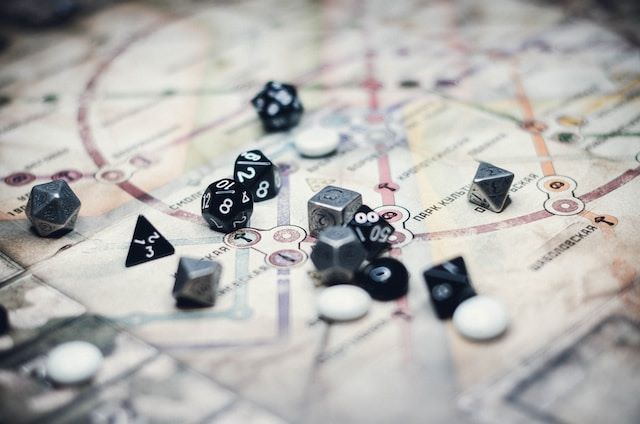
The game quickly gained a devoted following, and over the years, it has evolved and expanded with multiple editions and supplements, each building upon the rich lore and rules of the game. The game’s core mechanics are based on rolling polyhedral dice to determine the outcome of actions and encounters, with players using their characters’ abilities, skills, and creativity to navigate through a story-driven campaign.

How Dungeons & Dragons Works

At its core, Dungeons & Dragons is a collaborative storytelling experience. Players create characters by choosing from various races, classes, and backgrounds, before venturing into a fantasy world where the story unfolds. The game master serves as the narrator, describing the world and controlling the NPCs, while the players take on the roles of their characters, making decisions and taking actions that shape the outcome of the story.

Dungeons & Dragons uses a system of rules to resolve actions and conflicts. The most common way to determine success or failure is by rolling a 20-sided die, also known as a d20, and adding relevant modifiers based on the character’s abilities, skills, and equipment. This determines whether an action, such as attacking an enemy, casting a spell, or picking a lock, is successful or not.

Characters in Dungeons & Dragons have attributes such as strength, dexterity, constitution, intelligence, wisdom, and charisma, which affect their abilities and skills. They also have classes, such as warrior, wizard, rogue, or cleric, which determine their abilities, spells, and playstyle. Progressing through the game, characters gain experience points (XP) and level up, becoming more powerful and unlocking new abilities.

The Growth of Dungeons & Dragons

Dungeons & Dragons has experienced a remarkable resurgence in recent years, with a rapidly growing player base and increased mainstream visibility. The game has become a cultural phenomenon, with players of all backgrounds and ages coming together to create shared adventures and stories.

One of the key drivers of Dungeons & Dragons’ growth has been the advent of online platforms and streaming services that enable players to connect and play remotely. Virtual tabletops, like Roll20 and Fantasy Grounds, provide tools for players to gather online, while streaming platforms, such as Twitch and YouTube, have popularized live-play shows where players and game masters share their gaming sessions with audiences around the world. These platforms have allowed Dungeons & Dragons to reach new audiences and foster a vibrant online community of players and content creators.

Additionally, the game has seen increased representation and inclusivity, with more diverse characters, settings, and themes being incorporated into the game. Dungeons & Dragons has become a platform for storytelling and self-expression, allowing players to create characters that reflect the way the wish to be seen, exploring self identity in a safe space.

How Does This Relate to the Workplace?

As you can see D&D and other games like it provide a toolkit to explore social interactions. Players can experiment with leadership styles, team communication and cohesion. If framed properly it can provide a safe space to experience stressful situations as a team. Shared adversity that can bring team members together.

Of course roleplaying has been used in the training context for years. But I believe that these tools can take teams beyond training. Embedding values, fostering communication and developing skill.

As this blog progresses I’ll be looking at all of these in more detail and finding areas where purposeful D&D can boost your team.