Why Hero Leadership Really Fails

There’s a particular story we love to tell about leadership.

One person stands at the front. They have the answers. When things go wrong, they step forward, make the hard call, and save the day. The team rallies. The credits roll.

It’s a great story. It’s just a terrible way to run a Dungeons & Dragons party… or any other organisation.

The Myth of the Hero Leader

Hero leadership is built on a simple idea: progress depends on a single exceptional individual. The hero leader is decisive, charismatic, endlessly capable. When the dragon appears or the quarterly results dip, they draw their sword (or pen) and fix it.

In D&D, this often shows up as the “main character” syndrome. One player dominates planning, talks to every NPC, solves every puzzle, and lands the killing blow. The rest of the party becomes a supporting cast, present but rarely essential.

In business, the same pattern plays out with the superstar manager or visionary executive. Decisions funnel upward. Problems wait for approval. Success is attributed to one person rather than the system around them.

In both cases, things may appear to work… for a while.

What Actually Happens at the Table

At a D&D table, hero leadership creates subtle damage long before it causes a wipe. Other players disengage. Why contribute if the paladin always decides the plan? Why risk a creative idea if the wizard will override it? The game becomes quieter, flatter, less surprising.

Worse still, the party becomes fragile. When the hero is absent, stunned, or simply wrong, everything collapses. A single failed saving throw can derail the entire session. D&D is designed around distributed competence. Different characters shine in different moments. When one player tries to carry the whole narrative, the system pushes back, usually with teeth.

The Workplace Version Is No Kinder

Hero leadership in business produces similar cracks. Teams stop thinking ahead. People wait to be told what to do. Initiative dries up, not because people lack ideas, but because they’ve learned those ideas won’t be used.

Decision bottlenecks form. The “hero” becomes exhausted, then indispensable, then overwhelmed. When they finally step away, the organisation discovers it hasn’t been developing leaders at all, only dependencies.

The scariest part? It often looks like success right up until it doesn’t.

Heroes Don’t Scale

A single hero can slay a goblin. They cannot sustainably run a campaign. Both D&D parties and businesses face complexity, uncertainty, and problems no one person can fully understand. Trying to centralise leadership in one figure reduces the system’s ability to adapt.

When leadership is shared, something different happens. People take ownership of their piece of the problem. Information flows faster. Mistakes are caught earlier. Success belongs to the group, not the loudest voice.

In D&D, this is when the rogue scouts ahead without being told, the cleric speaks up about risk, and the fighter suggests a plan that isn’t “kick in the door.”

In business, it’s when team members make decisions within their remit and feel safe doing so.

The Real Alternative Isn’t Leaderless Chaos

Rejecting hero leadership doesn’t mean abandoning leadership altogether.

It means shifting from “the leader has all the answers” to “the leader creates the conditions for good answers to emerge.”

In D&D, the best leaders are often the ones who ask questions:
“What do you think?”
“Who hasn’t spoken yet?”
“What’s another way this could go wrong?”

In business, strong leaders do the same thing. They clarify intent, set boundaries, and trust their teams to act within them. They step forward when needed and step back just as often.

Shared Leadership Creates Better Stories

The irony is that hero leadership actually makes for worse stories.

The most memorable D&D moments rarely come from flawless heroes. They come from messy plans, unexpected teamwork, and someone stepping up who wasn’t supposed to be the star. The same is true in organisations. The strongest cultures aren’t built around legendary individuals, but around teams who know how to think and work together under pressure.

If you want a campaign that lasts, or a business that survives its own success, retire the hero.

Build the party instead.

Bullets, Bandannas, and Beautiful Nonsense: Playing 80’s Action Dudes

There are roleplaying games where you carefully track encumbrance, calculate modifiers, and debate the tactics of which spell to cast first. And then there are games where you kick down a door, fire an assault rifle one-handed, and shout something so gloriously ridiculous that reality slaps your back and gives you your hit points back.

80’s Action Dudes, created by my mate Marty, lives proudly in the second category.

Welcome to the Jungle (Bring a Soundtrack)

From the moment we sat down, the tone was locked in harder than a flexed bicep in a sleeveless vest. An 80s rock soundtrack blared in the background, all electric guitars and swagger, the kind of music that makes you feel like you could outrun an explosion purely out of principle. Marty had curated the perfect soundtrack with bands like Poison, Whitesnake and Boston, that had us all ready to play before we even created our characters.

It only took Marty 2 minutes to explain the system of 80’s Action Dudes, a clever hack of Cthulhu Dark by Graeme Walmsley. Different dice for different guns (D4, D6, D10) and the dice didn’t tell you if you hit. No way. They told you how many people you took out of action.

We came to kick ass and chew gum, and we were all out gum. Oh and we had three hit points.

Character Creation: Maximum Velocity, Zero Brakes

Character creation was also quick and easy. You needed:

  • A cool name
  • A main weapon
  • A one line description
  • Some special kit

That’s it. Vibes and testosterone.

Enter my character:

Rusty MacGregor
Ex–French Foreign Legionnaire. American as fuck.

Armed with his trusty assault rifle, razor sharp machete, and a tin of chewing tobacco, Rusty also sported a stars and stripes bandanna across his ruggedly handsome brow and was ready for action.

The Action Dude Team… you get the picture

The Crew: The Action Team

Our team was exactly what you’d hope for:

  • A Chinese ninja who moved like a shadow deadly throwing stars at the ready
  • A bare-knuckle fighter built like Van Damme with mad nunchuck skills
  • A mad radioman “Giggles”
  • Two M60 armed musclemen Rip and Butch.

Together, we were dropped into a jungle with one mission:

Take out a camp of commie insurgents. No diplomacy. Just kicking ass and shooting guns.

Mechanics That Punch You in the Face (In a Good Way)

The genius of the game wasn’t just in its theme, it was in how the mechanics fed that theme. Marty had got the balance just right.

Grenades? You didn’t roll for them. You physically threw balls into a bucket. Missed the bucket? Bad luck. That grenade is now someone else’s problem. Hit it? Boom. Cue cheering, high-fives, and a slow-motion dive.

We even had a proper mud map laid out in the garden adding to the immersion of our grand tactical planning.

Mud map ready for our Action Dudes to plan their assault

Now here’s where the game transcends even further. When you took wounds, you didn’t just sit there and sulk like an unpatriotic man baby. You earned them back the only way that matters:

One-liners.

Drop something suitably punchy, and you’d claw back your health.

Something in the spirit of Arnie and Stallone, like:

“I eat Green Berets for breakfast. And right now, I’m very hungry!”

Alternatively, you could clasp hands with a teammate, lock eyes like long-lost brothers, and bellow:

“SON OF A BITCH!”

Instant recovery to full hit points!

Action dude HP recovery

Scenes That Shouldn’t Work (But Absolutely Do)

What followed was a cascade of moments that felt ripped straight out of an Expendables fever dream:

  • Rusty leaping from a creek firing into enemy reinforcements
  • The ninja appearing and disappearing like a lethal magic trick
  • Grenades arcing through the air with varying degrees of success and panic
  • Entire squads of enemies being removed from existence in single, glorious dice rolls
  • The ammo dump exploding in a tongue of flame
  • Rusty dying in a blaze of glory at the helm of a Russian attack helicopter (dont ask)

It was loud, chaotic and deeply, deeply … fun!

Why It Works

At its core, 80’s Action Dudes is a masterclass in one simple idea:

Commit to the bit.

The rules are light, but laser-focused. Every mechanic pushes you to be louder, bigger, and more ridiculous. There’s no room for hesitation, only escalation. And because everyone understands the tone, the table becomes a kind of shared action movie, where each player tries to outdo the last in sheer action-hero bravado.

The result? Eight grown adults laughing like lunatics while throwing pretend grenades and inventing increasingly terrible one-liners.

What it’s all about

Final Thoughts: Explosions Optional (But Encouraged)

What this game proves, more than anything, is that you don’t need complexity to create something unforgettable.

  • Give players a strong theme.
  • Give them permission to go all in.
  • Add a few clever mechanics that reinforce the fantasy.

Then stand back and watch the magic happen. 80’s Action Dudes wasn’t just a game., it was a riot. And Marty was an absolute legend for pulling together such a memorable game.

Bad Behaviour at the Table? Sort it out

Kobold flipping gaming table in a rage

At some point in every long running campaign, bad behaviour at the table happens. A player goes rogue. Not in the charming backstab-the-dragon way. But in the rules-lawyering, spotlight-hogging, eye-rolling, group-fracturing way. The table energy shifts. Shared fun begins to ebb.

If you run games long enough, you will face this moment. If you lead people long enough, you will too.

The parallels between managing bad behaviour at a roleplaying table and leading a team in the workplace are surprisingly tight. Both require the courage to act before the whole party wipes. Here are three stages to handle it, whether you are behind the DM screen or at the head of a meeting table.

Stage One: The Quiet Word by the Campfire

In the Dungeons & Dragons Player’s Handbook, there is an implicit social contract. The game assumes cooperation. It assumes you are not actively trying to ruin the experience for others. When a player starts derailing sessions, dominating decisions, or treating fellow players like NPCs, your first move cannot be a thunderbolt from the heavens.

It is a quiet conversation. Private. Calm. Specific.

  • “Hey, I’ve noticed you’re interrupting others a lot during planning scenes.” This is preventing them from getting involved.
  • “I’ve seen some frustration when rulings don’t go your way.” This slows down play and creates a bit of a weird atmosphere with myself and the other players.

This is not an accusation. It is feedback. You are describing behaviour and explaining impact.

At the gaming table, most problems live in the land of misunderstanding. Someone may not realise they are hogging spotlight. Someone may think the aggressive banter is funny when others find it draining.

The same is true in the workplace. As a leader, stage one is informal and early. You do not wait for the team to fracture. You address behaviour before it calcifies into culture. Make your expectations clear. The impact must be understood and the request for change cannot be ambiguous.

Most people, when treated like adults, respond like adults.

Stage Two: The Formal Warning Scroll

If behaviour continues after the informal chat , you have to escalate. At the table, this might mean a more direct conversation.

  • “We spoke about this last month. It’s still happening. If it continues, you may not be able to stay in this campaign.”

Now the stakes are visible.

In a group where you are all friends this can be a difficult conversation to navigate. But it doesn’t have to be confrontational. Reiterate the way the group likes to play and that the problem players style is different and not gelling.

In leadership, this is where structure matters. Documentation. Formal performance conversations. Clear consequences. Alignment with policy. Compliance with employment law. You are no longer just nudging behaviour. You are protecting the team.

In both spaces, the key elements are:

  • Clear examples of behaviour
  • Clear expectations going forward
  • Clear consequences if change does not occur
  • A genuine opportunity to improve

You cant escape the fact that this stage is uncomfortable. It requires backbone. Leaders often avoid it because they fear conflict. But avoidance is not kindness. It is deferred damage. Every time you fail to address ongoing bad behaviour, you send a signal to the rest of the group that this behaviour is is acceptable.

And that signal causes more damage than you would imagine.

Stage Three: Removing the Player from the Table

Sometimes, despite every effort, the behaviour does not change. At a gaming table, the final step is simple in principle, but very difficult in practice:

You ask them to leave the campaign. You do not do it lightly. Keep emotion out of it. Do it because the health of the group matters more than the comfort of one individual. Ultimately, it is a leadership decision.

In the workplace, this stage becomes formal performance management that may result in termination. This must comply with employment law, company policy, and procedural fairness. There must be evidence, the employee must have an opportunity to respond. There must be consistency.

But the principle remains the same. A team cannot thrive if one person consistently erodes trust, morale, or performance.

Letting someone go is not failure if you have:

  • Communicated clearly
  • Provided support
  • Given reasonable opportunity to change
  • Acted fairly and consistently

Sometimes the most responsible act of leadership is protecting the many.

The Deeper Lesson

Whether you are running a dungeon or running a department, leadership is not about avoiding conflict. It is about stewarding the experience. In a roleplaying game, you are safeguarding fun, safety, and shared storytelling. While in the workplace, you are safeguarding culture, productivity, and psychological safety.

Both require:

  • Early intervention
  • Honest conversations
  • Escalation when necessary
  • Courage to act

Ignore bad behaviour at the table long enough and it becomes the campaign setting. Unchecked and your game will stop being fun, players will leave and it will eventually implode. Ultimately, following the adage that no D&D is better than bad D&D.

Address the behaviour with clarity and fairness, and you show your players that they are important and that the game matters.

Quick Note: checking bad behaviour at the table doesn’t have to rest on the shoulders of the DM. Rather it can be dealt with by any player. Remember, having fun is a shared responsibility.

My First Bolt Action Tournament

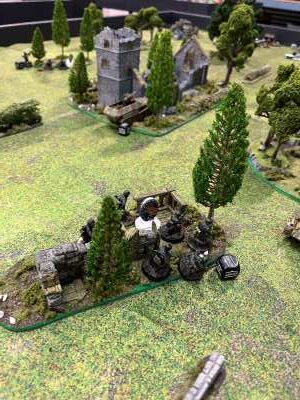
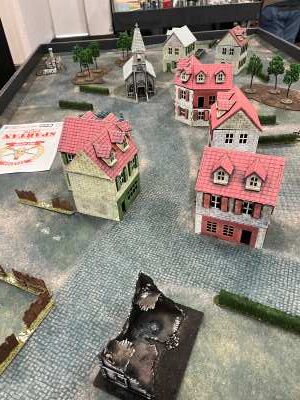
Bolt Action game in progress

I’ve recently got into Bolt Action a WW2 wargame and am absolutely loving it. Before too long I found out that one of the local Perth clubs, Outpost 6030, was hosting Bolt Action at it’s Skulls 2026 tournament in March. I’ve never been particularly competitive gamer, rather enjoying the stories at the table than the results. However, playing four games in a day and getting to meet the wider community was too good a chance to pass up.

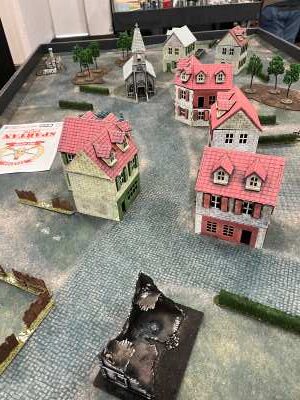
There is something nerve-wracking about your first tournament. You spend weeks painting models, tweaking lists, reading scenarios and imagining strategies. Then suddenly it is 0730 on a Sunday, you are standing in a hall full of strangers, ten beautifully laid out tables, 17 competitors, and your carefully assembled 1100 point force is waiting to march onto the battlefield.

I took a British Royal Marine Commando army with 12 order dice (not very many order dice as it turned out). I had spent plenty of time thinking about my list beforehand and honed it over a few practice games with Jake and Richard (thanks guys!). The event itself was run brilliantly by Dan. He kept everything moving smoothly, while maintaining a sunny disposition throughout. Four games between 0800 and 1700 is a proper marathon, but the day rattled along at a surprisingly fast pace.

Dan patrolled the tables answering rules queries and making sure we knew how much time we had left for each game. He also seemed to just love the atmosphere and getting into the hard fought games at each table. Every time he told me the time, I think a look of panic would cross my face. No poker faces in my side of the table.

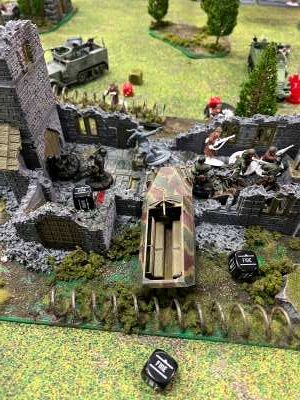
My commandos sneaking up to an objective

Game one was against Marco and his Japanese army. This was my first real lesson of the day. I played far too cautiously, sitting back and trying to preserve units instead of throwing myself into the objectives. The result was that the end score was very one sided. Marco wiped the floor with me. These games were moving fast, and with four games packed into one day you had to get yourself into a winning position within three turns or simply run out of time.

After that first match I realised I needed to change my approach. From that point on I became much more aggressive and mobile with my commandos.

Game two was against Mark and his American force. The scenario involved hunting an informant and I felt much sharper in this game. I had a clear plan, moved more decisively and generally played far more tactically than I had in game one. The strategy itself was sound, but the dice gods decided to laugh in my face. My reserves stubbornly refused to arrive and secure the left flank, which allowed Mark to roll up that side of the table and march away with the informant and a convincing win. A fun game, though and I really felt on the edge of my seat the whole way through.

Lunch was a classic sausage sizzle and a quick chat, talking tactics and straight back into it.

Game three was against Martin and, yes, another Japanese army. By this point I was starting to wonder if every Japanese player in the state had decided to attend. This scenario focused on destroying objectives rather than simply shooting each other. It created a very different sort of game because instead of trading fire across the table, both of us were racing to damage key targets.

Martin had a very rough run of luck with his dice, while my army stuck to my plan nicely. My commandos moved quickly, focused on the objectives and managed to take out most of them. At last, my first tournament win. It may not have been the most heroic battle of the day, but it felt great to get one on the board.

The final game was against Dave and, somehow, yet another Japanese force. The scenario focused on eliminating a specific unit. I made a few mistakes early, lost momentum and Dave completely outplayed me. I couldn’t get anywhere near his unit while his airstrike and mortars battered my army from turn one.

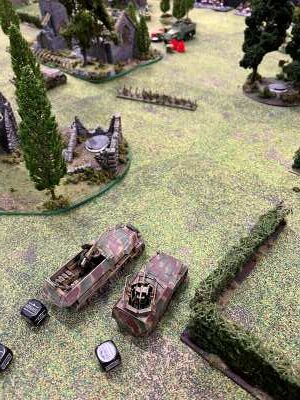
My brave commandos being strafed by an enemy fighter

One thing that really helped me through the day was preparation. Before the tournament I had printed out the scenario pack and written a rough strategy for each mission. That turned out to be incredibly useful. Instead of staring blankly at the table trying to invent a plan on the spot, I already had a basic framework in mind. It freed up brain space for reacting to what my opponent was doing and kept me focused on the scenario.

Perhaps the biggest takeaway from the day was not the result, but the people. Every opponent I played was an absolute gentleman. Everyone played fairly, kept things friendly and had a good laugh along the way. I also had some great conversations with the other players between rounds. The WA Bolt Action community felt very welcoming, which makes a huge difference when you are walking nervously into your first event.

At the end of the day there was a prize giving. I think I finished 11th out of 17, which I was pretty happy with for a first event. I also won some extra order dice and an exclusive Gus March-Phillipps model, which felt like a proper little treasure chest at the end of the day.

Most importantly, I came away with four fun games, a better understanding of how tournament Bolt Action works and a few offers for future games. Not a bad haul for one Sunday. One thing’s for certain, I’ll be signing up for the next one as soon as I can.

I Don’t Like Phones: Why I Ditched Them from D&D

phone on fire

I don’t like phones at the game table.

There. I’ve said it. Phones are a distraction, they fracture attention, and they undermine the very thing that, to my mind, makes tabletop roleplaying special: a group of people actively engaging with each other.

Dungeons & Dragons is not a single player experience with occasional multiplayer cutscenes. It is a shared act of imagination, built moment by moment through conversation, reactions, and collective focus. Phones pull at all three.

Attention Is the Real Resource

Every D&D table runs on attention. When everyone is present, listening, and responding, the game hums. Scenes flow. Jokes land. Tension builds. When phones come out, that attention leaks away.

A quick glance becomes a scroll. A scroll becomes checking messages. Suddenly someone needs the last thirty seconds repeated, or misses a crucial choice, or reacts half a beat too late. Multiply that by a few players and the game starts to feel sluggish, disjointed, and oddly flat.

It Feels Like Disengagement Because It Is

One of the hardest parts of running a game is reading the table. Are players interested? Confused? Excited? Bored? Phones muddy those signals. When a player is staring at a screen while someone else is roleplaying a heartfelt moment, it sends a message whether they intend it or not.

That message is: this isn’t worth my full attention.

Even if the player insists they are listening, the social signal remains. It affects the confidence of quieter players. It undercuts dramatic moments. Collaboration feels lopsided, like some people are rowing while others are checking notifications.

D&D is a conversation. Looking at your phone while someone is speaking in a normal conversation would be rude. The table should be no different.

Immersion Is Fragile

Roleplaying lives in a delicate space. One moment you’re a desperate adventurer descending into the darkened chasm with nothing but a sword and your trusty companions. The next moment a buzzing phone reminds you about tomorrow’s meeting or a meme you saw earlier. The spell breaks instantly.

Once immersion cracks, it takes effort to rebuild. Phones make that crack wider and more frequent. They anchor players back in the real world when the whole point of gathering is to step somewhere else together for a few hours.

This Is About Respect, Not Control

Banning phones is not about authority or nostalgia or pretending it’s 1985. It’s about respecting the time and effort everyone brings to the table.

The DM prepares.
Players show up.
Stories are built together.

Asking for phones to stay off the table is a way of saying: this time matters. These people matter. What we are creating together deserves our attention.

Presence Is the Point

At its best, D&D is rare in modern life. A group of people, in the same room, focused on each other, telling a story in real time. That kind of presence is increasingly hard to find and incredibly valuable.

So yes, I don’t like phones at the D&D table. Not because I hate technology, but because I love what happens when everyone is truly there.