
What is the point of Dungeons and Dragons?

People who don’t game often ask: “What is the point of Dungeons and Dragons?” The core of D&D is about storytelling. The group of players essentially tell a collective story, guiding their heroes through treacherous quests to search for loot, battle deadly enemies, and even carry out daring rescues. Most excitingly, the experience is only limited by the imagination of the players around the table.

In a world where entertainment options seem to grow exponentially by the day, Dungeons and Dragons (D&D) is standing the test of time. Far more than just a game, it has woven itself into the fabric of social gatherings and creative expression. It influences movies, books, art and perhaps surprisingly, it is also entering both leadership and personal development. But what exactly is the point of Dungeons and Dragons, and why does it continue to enchant players worldwide?

Understanding the Mechanics

At its core, Dungeons and Dragons is a tabletop role-playing game where players create characters and embark on adventures guided by a Dungeon Master (DM). The DM acts as a narrator, describing the world, setting challenges, and playing the roles of various characters the players encounter. The game relies heavily on imagination, with players making decisions and resolving actions through a combination of dice rolls and storytelling.

Players assume different roles within the game, each with its own set of abilities, strengths, and weaknesses. Cooperation and strategic thinking are essential as players navigate treacherous dungeons, solve puzzles, battle monsters, and interact with a richly crafted world.

Social and Creative Benefits

One of the most significant draws of Dungeons and Dragons lies in its social aspect. Gathering around a table with friends or strangers fosters camaraderie and builds bonds as players collaborate to overcome obstacles and achieve shared goals. The game encourages communication, teamwork, and compromise, promoting positive social interactions in an immersive and imaginative setting.

Moreover, D&D serves as a fertile ground for creativity. Players have the freedom to shape their characters’ personalities, backstories, and motivations, breathing life into their creations through role-playing. As they navigate the game world, players contribute to a collective narrative, weaving tales of heroism, intrigue, and adventure. The game sparks the imagination, encouraging players to think outside the box and explore endless possibilities.

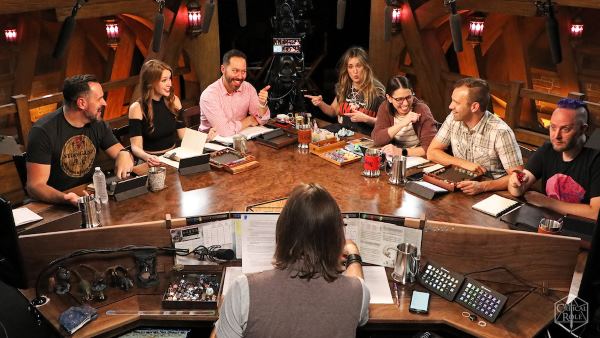
Some of the social benefits gained from playing D&D

Hone Leadership Skills

Interestingly, Dungeons and Dragons also offers a unique platform for honing leadership skills. As players navigate complex scenarios and confront challenges, leadership naturally emerges within the group dynamic. The role of the Dungeon Master, in particular, requires strong leadership qualities such as creativity, adaptability, and the ability to guide and inspire others.

Players who take on leadership roles within the game often find themselves making critical decisions under pressure, delegating tasks, and motivating their fellow adventurers. They learn to assess risks, weigh consequences, and adapt strategies on the fly—a valuable skill set applicable to real-world leadership scenarios. Of course, this is what this blog is all about.

Furthermore, D&D encourages empathy and understanding as players inhabit diverse characters with varying perspectives and experiences. Leaders emerge not only through commanding presence but also through empathy, diplomacy, and the ability to foster cooperation among team members.

Final Thoughts

In essence, the point of Dungeons and Dragons transcends mere entertainment; it encompasses social interaction, creative expression, and leadership development. Through collaborative storytelling and immersive gameplay, D&D offers a unique avenue for personal growth and interpersonal connection. As players embark on epic adventures together, they forge bonds that extend far beyond the gaming table, proving that the magic of Dungeons and Dragons lies not just in playing the game, but in the hearts and minds of those who dare to explore it.

Leadership Capital: Essential Strategies from the D&D Playbook

In leadership, a nuanced concept often overlooked is Leadership Capital—a currency comprising the intangible assets accrued through actions, decisions, and interactions. Drawing parallels from the social aspects of Dungeons & Dragons (D&D), we delve into the strategies for accumulating and depleting Leadership Capital, offering insights into effective leadership.

What is Leadership Capital?

Leadership Capital refers to the collective resources, credibility, influence, and goodwill that a leader accrues over time. It is accrued specifically through the leaders actions, decisions, and interactions with others. It encompasses a leader’s reputation, trustworthiness, expertise, and ability to inspire and motivate others. While seemingly intangible, Leadership Capital enables a leader to effectively lead and influence their team by leveraging their credibility and trust to implement change, make tough decisions, and achieve organizational goals. Effective leaders continuously invest in and nurture this concept through consistent and ethical leadership practices, transparent communication, and building strong relationships with stakeholders.

Actions and Decisions: The Currency of Leadership

In D&D, every action and decision shapes the trajectory of the adventurers’ journey. Additionally, they also shape the campaign world and the working relationships with the other characters. Imagine the Cleric who tries to keep all the magical loot for themselves. After a while this behavior wears thin with the rest of the party and when said Cleric reaches out for help, it may well not be forthcoming.

Similarly in the workforce, leaders accumulate Leadership Capital through decisive actions and thoughtful decisions. Acts of courage, strategic maneuvers, and ethical choices yield dividends in the form of increased trust and respect from followers. Conversely, reckless decisions or betrayals significantly erode your count, diminishing influence and credibility.

Quests and Challenges: Opportunities for Growth

A large part of joy in the game, quests and challenges are opportunities for adventurers to demonstrate their prowess and accrue valuable rewards. If each character plays their part in overcoming the evil villain they gain Leadership Capital with each other. As such, theywill work more closely as a team moving forward.

Likewise, leaders thrive when facing formidable challenges head-on. Successfully navigating crises, overcoming obstacles, and achieving milestones contribute to the accumulation of Leadership Capital. Each triumph reinforces trust and confidence in the leader’s abilities.

Alignment and Integrity: Upholding Principles

Alignment in D&D reflects a character’s moral compass and ethical principles. While it can be fun to play chaotic or morally ambiguous characters on occasion, consistently playing with a lack of integrity loses Leadership Capital very quickly. Do you always try to steal the treasure ahead of other players, or perhaps the character always tries to kill first and ask questions later. Wanting to hog the spotlight also has a negative impact. This very one-sided approach to the game results in other players disgruntlement as well as pushback reactions from the DM. If not handled carefully it can completely derail the game for everyone.

Of course, leaders uphold their integrity as a cornerstone of Leadership Capital. Consistent adherence to principles, transparency in decision-making, and alignment of actions with values foster trust and credibility. Leaders who stray from their moral compass risk depleting their Leadership Capital, as trust erodes in the face of inconsistency or duplicity.

Playing D&D is a great way to practice using Leadership Capital

NPC Interactions: Influence and Diplomacy

Non-player characters (NPCs) in D&D provide opportunities for interaction, negotiation, and diplomacy. During play characters gain and lose Leadership Capital through their interactions with them. Good DMs keep a rough track of this concept held by different NPCs and can quickly gauge their reactions to the characters in game. Getting help from the city Mage with a low Leadership Capital count is going to be very difficult indeed. Conversely, asking the gang of rogues who your party have provided work and a safe place to live will get a more positive response.

Effective leaders master the art of interpersonal relationships, leveraging influence and diplomacy to build alliances and garner support. Skillful negotiation, active listening, and empathy increase Leadership Capital by fostering trust and collaboration. Conversely, abrasive interactions or broken promises diminish this valuable resource.

Critical Hits and Failures: Impactful Moments

In D&D, critical hits and failures have profound consequences, altering the course of the adventure and in some cases even the long term campaign. This often form milestones and touchpoints for the journey of the players, their characters and the party.

Additionally, impactful moments define a leader’s legacy and influence Leadership Capital. Successfully navigating crises, seizing opportunities, or inspiring breakthroughs amplify this concept. Conversely, catastrophic failures or ethical lapses inflict significant damage, eroding trust and credibility.

Final thoughts

In the tapestry of leadership, the accumulation and depletion of Leadership Capital shape the trajectory of a leader’s journey. By understanding the mechanics of gaining and losing this invaluable resource—drawing parallels from the intricate dynamics of Dungeons & Dragons—leaders can embark on a quest for greatness, inspiring others to join them on the path to success.

Exploring Dynamics in Uncertainty: A Wargame Experience

April saw me attend MartyCon 2024, where I ran a miniatures wargame intended to test players resolve under uncertain conditions. As leaders in the real world we deal with a distinct lack of information about our competitors motives and objectives. This uncertainty leads to difficult decision making and stress. My players came from all walks of life including engineers, teachers, ex soldiers and bankers. All were thrust into a scenario of limited information where quick decision making was needed to win the game. In this article I describe the game set up and play before looking at three leadership lessons we can draw from the experience.

The Set Up

I designed the game using the Space Weirdos ruleset with players commanding one of six factions battling it out under a giant factory complex set in the underbelly of the Warhammer 40,000 universe. Each player had a different primary and secondary objective. These ranged from hunting a demon infused artefact, starting a rebellion and assassinating a rival leader. Below is a summary of each group:

  • Inquisition/Sisters of Battle: A formidable force dedicated to rooting out heresy and chaos, armed with faith and righteous fury.
  • Enforcers: Tasked with maintaining order and eliminating gang activity, these elite warriors are the enforcers of Imperial law.
  • Honor Guard Kill Team: The personal guard of the Imperial Governor, wielding the authority to bring the Mining Guild. They also had a side mission to get rid of the Governors future Son in Law.
  • Acolytes of the Red Mist: A mysterious order shrouded in secrecy, rumored to be on the brink of completing an elaborate ritual with unknown consequences.
  • Mining Guild: Hard-bitten workers pushed to the brink of rebellion by mistreatment, seeking to assert their rights amid the chaos of civil unrest.
  • Scissor Sisters: An influential crime syndicate capitalizing on the turmoil, maneuvering in the shadows to exploit opportunities for profit and power.

Each players team comprised four miniatures with different weapons and abilities. But so many that the game became overwhelming.

I took the role of gamemaster to keep play moving, answering rules queries and making sure everyone was having fun. Of course, this was key in keeping the game running smoothly and allowing for players to try things outside of the normal ruleset.

Part of the battlefield with four factions visible

Space Weirdos

I chose the Space Weirdos ruleset intentionally during my planning of the experience. First, it is very simple, but with enough variety in character skills and weapons to keep things interesting. Secondly, players take turns moving one miniature each. This, and the fact that players can interrupt each others goes with actions made sure that no players were left out twiddling their thumbs. Lastly, movement was completed using a 6 inch stick removing the cumbersomeness and clutter of tape measures.

Everyone around the table picked the rules up easily. This is high praise indeed as most hadn’t played a wargame before. I cant recognize this game enough. In fact, I know my friends and I will be playing this ruleset again in the near future.

Adding Uncertainty

Having read their briefs, each player knew their main objective and main adversary. They also had notes on potential allies. Consequently, there was a base line of understanding around the situation. Encouraging players to communicate by secret notes added extra spice. Creating and breaking alliances as needed. Communications lit up within the first minute of the game, with notes flying between all participants. I quickly ran out of post-it notes and players turned to texting one another.

Now the waters were truly muddied. Who to trust. How to win your objective and how to illicit help in doing so was no longer a straight forward concern.

Game Action

We played for two and half action filled hours. Alliances were made. Motives were guessed at. The ensuing firefight unleashing chaos. Feedback from the players showed how difficult they found working with such unknowns. Enjoyable, but difficult.

One player, found himself getting frustrated at another player, perceived to be a neutral party who seemed to be targeting him. Afterwards it dawned on him that the targeting was the result of an unknown objective. He was of course completely right about that.

The player who eventually won, was double crossed, lost most of their team members, but stayed focused on their objective to pull a win on the very last turn.

Often wargames can turn into straight forward affairs. Not this one. Everyone was second guessing each other right until the end. The debrief at the end created more than a few ah ha moments as pieces of the puzzle fell into place.

Given all this uncertainty experienced by the players, what lessons can we learn from the scenario?

The action from a models perspective

Lesson 1: Flexibility and Collaboration

The game’s setup, designed to pit players against each other amidst uncertainty, showcased the importance of flexibility and collaboration in leadership. One of the players, embodying these traits, adeptly negotiated alliances and adapted his strategy on the fly to help achieve his objective. His willingness to collaborate with unexpected allies underscored the power of flexibility in leadership, demonstrating the value of adaptability in the face of adversity.

Lesson 2: Trust, Betrayal, and the Art of Managing Expectations

As players delved into the fray, trust, betrayal, and the delicate art of managing expectations emerged as crucial leadership lessons. The player running the Sisters of Battle/Inquisition faction, initially sought alliances based on his knowledge of the Warhammer 40,000 universe. However, when his allies turned on each other and betrayal ran rampant, he found himself isolated and betrayed. His assumptions very nearly cost him the game. This experience highlighted the importance of managing expectations and understanding the fluid nature of alliances in leadership scenarios.

More action as the mining guilder sprints for the vox cast station (their primary objective)

Lesson 3: Effective Communication and Information Management in the Face of Adversity

Against the backdrop of clandestine dealings and covert alliances, effective communication and information management emerged as critical leadership skills. Players communicated covertly through notes and smartphones, forming secret alliances and plotting betrayals. This emphasis on information management underscored the importance of access to key intelligence and the ability to convey messages discretely in leadership scenarios, especially amidst the chaos of conflict.

Final Thoughts on Uncertainty

In conclusion, I believe this experience moved beyond that of a simple game. Instead serving as fertile ground for exploring leadership dynamics. Leading the different factions, players not only battled for victory but also honed their leadership skills in the crucible of conflict amidst uncertainty.

I will be sure to use this type of game to explore other leadership themes in the future.