Can 5-Minute Dungeon Significantly Level Up Your Teamwork Skills?

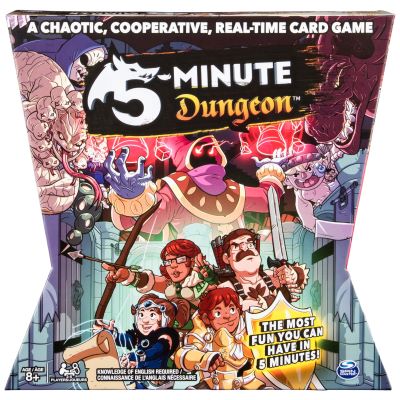
If you’re looking for a game that combines frantic fun, teamwork, and the pressure of time, 5-Minute Dungeon is exactly what you need. This cooperative card game challenges players to battle through dungeons by defeating monsters, overcoming obstacles, and taking down powerful bosses—all in just five minutes.

We bought this as a Christmas present for the family a couple of years ago and fell in love with it! This gem of a game creates tension and puts the players under stress. To win, players must communicate quickly, think on their feet, and work together as a cohesive unit.

What Is 5-Minute Dungeon?

In 5-Minute Dungeon, players take on the role of a unique hero, each with their own special abilities. Working together, they then clear a series of dungeon levels home to a series of increasingly difficult boss monsters. Every dungeon is filled with challenges such as monsters, traps, and bosses, which must be dealt with by playing matching action cards from the players’ hands. The catch? You only have five minutes to clear each dungeon level.

The game requires fast communication and decision-making because there’s no time for long debates or hesitation. Each player contributes their unique deck of cards—swords, shields, arrows, scrolls, and more—and must play the right cards at the right time to survive. If you hesitate or fail to coordinate, you risk running out of time or resources, and the dungeon will defeat your team.

Teamwork Under Time Pressure

One of the standout aspects of 5-Minute Dungeon is the intense, ticking-clock urgency. This forces players to communicate clearly and act quickly. There’s no space for egos or excessive planning. Every player needs to understand their role and support others immediately. That urgency enhances teamwork in ways that slower-paced games might not, making it an ideal exercise for teams that need to learn how to collaborate efficiently under pressure.

This dynamic can translate directly into real-life team scenarios. In a high-pressure work environment, quick decision-making and seamless communication are vital. By playing 5-Minute Dungeon, team members get a taste of this experience in a low-stakes, fun environment. They’ll discover each other’s strengths and weaknesses in real time, learning how to balance leadership, delegation, and collaboration—all while under the clock.
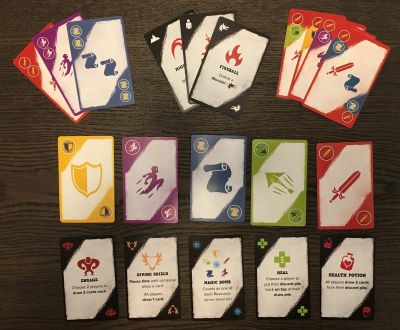
Cards players use to beat 5 Minute Dungeon

How 5-Minute Dungeon Can Bring Teams Closer

While the time pressure forces rapid action, it’s the cooperation that brings players closer. The need for constant communication creates bonds between team members as they learn to trust each other’s judgment and skills. Each successful dungeon completed is a shared victory, reinforcing the idea that teams work best when they collaborate smoothly.

By playing 5-Minute Dungeon, teams practice how to adjust to different situations and adapt to various team members’ play styles. Whether it’s knowing when to use your special ability or when to sacrifice your cards to help someone else, the game demands a constant balancing act of individual and team needs.

Leadership in 5-Minute Dungeon

Now, imagine incorporating 5-Minute Dungeon into leadership training or team development. What if every time the game is played, a new leader is assigned? Each person would have a chance to practice leadership in a safe, playful environment. The leader could be responsible for rallying the team, calling the shots, and making quick strategic decisions under pressure. This rotating leadership format could help participants explore different leadership styles and approaches, building confidence in those new to leadership and offering reflection opportunities for more seasoned leaders.

Moreover, leaders would experience the importance of effective communication and see firsthand how their guidance impacts the team’s performance under stress. This practice would directly translate to real-world team dynamics, where leadership often means managing pressure while still keeping the team focused and aligned.

Bringing Levity to Leadership and Team Development

Incorporating games like 5-Minute Dungeon into leadership and team development sessions might sound unorthodox, but it brings a much-needed levity to the process. Traditional leadership training or team-building exercises can sometimes feel formal, and while they offer valuable lessons, the serious tone may not always foster the team closeness you’re looking for. A game-based approach shakes things up, allowing teams to bond over laughter, creativity, and shared experiences.

Mixing up teams every session and assigning different leaders will also help participants practice adapting to new roles and personalities. Each session becomes a new challenge, with new opportunities to lead, collaborate, and improve team cohesion. Plus, having fun together lowers stress, builds trust, and keeps the atmosphere light even while learning important teamwork and leadership skills.

Final Thoughts

5-Minute Dungeon isn’t just a fun card game—it’s a fast-paced exercise in communication, cooperation, and leadership. Its time constraints force teams to work quickly and efficiently, while the cooperative nature encourages team bonding. By using games like this in leadership training, you can offer a break from the typical learning format while still fostering essential skills such as collaboration, problem-solving, and decision-making under pressure. The blend of play and learning could be just what your team needs to level up their teamwork—and have fun doing it.
Crafting Emergent Play with a Fun Heist Scenario

In the gritty world of the underhive, where law is loose and loyalty looser, rumors of a rare alien artifact have sent shockwaves through the criminal underworld. This isn’t just any artifact. It’s whispered to bestow immortality on those who use it. The scene is set for a deadly skirmish as gangs scramble to claim it, but there’s a twist: they can’t do it alone. Welcome to The Heist, a skirmish wargame scenario designed to encourage emergent play, where player-driven decisions and interactions take center stage.

This idea builds on a number of gaming sessions where I have been trying to encourage the emergent play of roleplaying games in skirmish wargaming. These examples have all been set in the grimdark Warhammer 40K universe and have been well received by my players. You can read more about these experiences here, here and here. I want to take my lessons learned and create a new multiplayer scenario that maximizes engagement. This is what I’ve come up with:

The Heist Scenario

An Imperial security vehicle has been ambushed and disabled deep in the underhive. Inside, the artifact lies under heavy lock and key, guarded by three security enforcers tasked with guarding it with their lives. But that’s not all—word of the ambush has spread like wildfire, and now multiple gangs are converging on the scene to grab the prize.

However, no gang can unlock the security vehicle on its own. To crack it open, members of two different gangs must be present at the same time. This forces players to navigate temporary alliances while eyeing each other warily—after all, betrayal could be just as profitable.

Adding to the chaos are rad zombies, creatures mutated by the toxic waste of the underhive. They’ll randomly enter the battlefield each turn, keeping players on their toes and preventing anyone from staying static for too long.

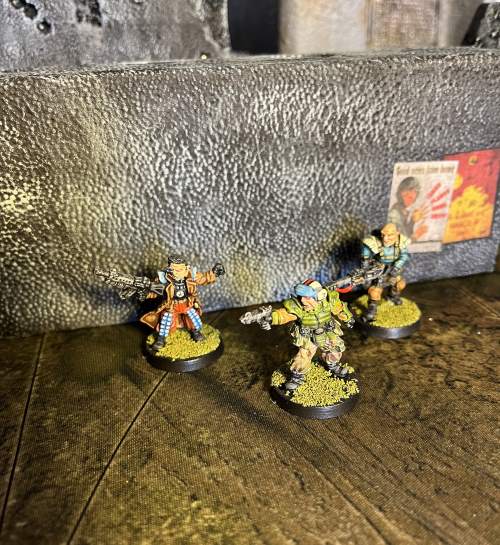
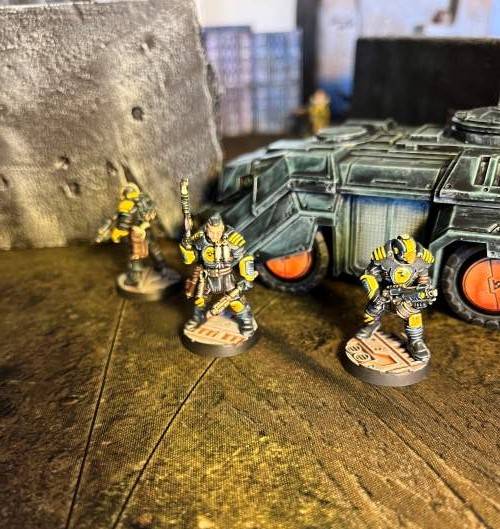
Gang members moving in towards the beleaguered APC, as part of the heist scenario

Encouraging Emergent Play

Emergent play is all about creating situations where the story unfolds naturally from player decisions, rather than being dictated by strict game rules. In The Heist scenario, this is encouraged through several design elements:

  1. Gang Identity: Each player will create their gang’s backstory, choosing a name, leader, and reputation. Is your gang known for ruthless efficiency? Or are they a scrappy underdog outfit that’s always two steps behind the bigger players? The identity of each gang will influence their approach to the scenario. Some might bargain and form temporary alliances, while others might rush in guns blazing.
  2. Forced Cooperation: The artifact cannot be obtained by one gang alone. To unlock the security vehicle, two gangs must cooperate. This creates a natural tension where players must balance collaboration with their need to score points through combat. Will they form fragile truces, or will betrayals happen as soon as the vehicle is open?
  3. Rad Zombie Threat: The random appearance of rad zombies adds another layer of unpredictability. These threats could push gangs to work together briefly, or they could be a useful distraction, allowing an opportunistic gang to slip in and make a move on the artifact.
  4. Endgame Choices: The gang that holds the artifact at the end of the game gets a powerful narrative decision—who do they sell it to? Players will choose between an Imperial Inquisitor, a Mysterious Underhive Cult, or an Offworld Rogue Trader Captain, each of which could shape future games. The outcome of this scenario will ripple through the campaign, giving players a sense of consequence and long-term impact.

Victory Points and Competition

To keep things competitive, victory points (VP) are awarded based on a variety of actions:

  • Hold the artifact at the end of the game: 15 VP
  • Blow open the security vehicle: 10 VP to each gang involved
  • Kill an enemy gang leader: 5 VP
  • Kill an enemy gang member: 2 VP
  • Kill a rad zombie: 1 VP

This scoring system incentivizes a mix of cooperation and conflict. Players need each other to unlock the vehicle and share points, but they also need to eliminate threats to rack up individual points. The shuffling rad zombies, though worth less VP, are ever-present distractions that could make or break a gang’s plans.

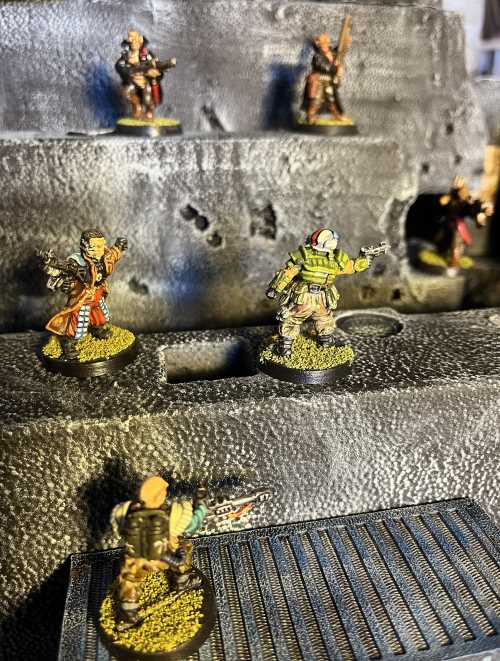
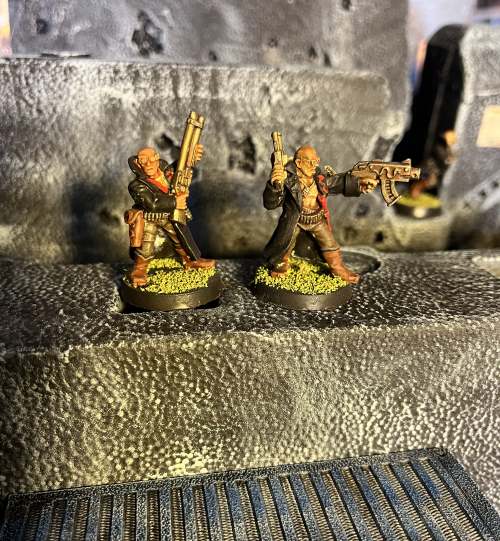
A rival mercenary team getting in on the action

The Artifact’s Dark Secret

The alien artifact can be activated, but its effects are unknown to the players. I won’t spoil what happens (just in case any of my players are reading this), but let’s just say turning it on could have major consequences. This secret adds an element of mystery and risk, offering players another decision to weigh—do they risk using it, or play it safe?

The Ruleset: Space Weirdos

As in previous scenarios, I’ll be using the Space Weirdos ruleset, which is perfect for quick and intense skirmishes. Each gang will consist of a leader and two gangers, making the game fast-paced but still strategic. The small team sizes also allow players to focus on individual characters, adding a personal touch to the emergent narratives that unfold.

Firefight!

Emergence and Tension

The beauty of The Heist scenario lies in the tension between cooperation and competition. Gangs must work together to unlock the artifact, but they’re constantly weighing whether it’s worth turning on their temporary allies. Meanwhile, the rad zombies and the looming threat of the artifact’s mysterious power ensure that no plan is ever safe.

This scenario offers a playground for emergent play, where player choices drive the action and create memorable stories. Whether through alliances, betrayals, or desperate last stands, no two games of The Heist scenario will ever be the same. So gather your gang, trust no one, and get ready to fight for (potential) immortality—if you survive long enough to claim it.

Strengthen Teamwork With An Innovative Dice Pool Mechanic

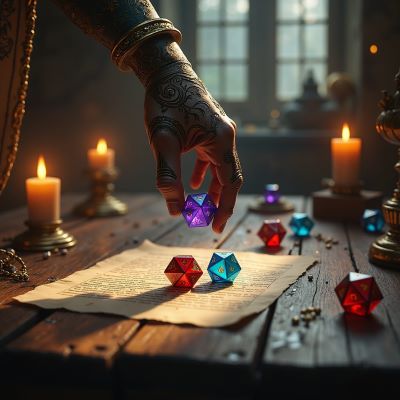
dice pool

As some of you may know, I have been developing a rules-lite roleplaying game specifically for leadership development. It is tentatively called Play to Lead and you can find the latest version here. One of my key design philosophies is that teamwork and collaboration are core to the game function. As such, there needs to be a mechanic that centers on this aspect. Currently, I’ve included a simple advantage style roll, similar to that used in the current iteration of Dungeons and Dragons. Effectively, if you work as a team to solve a problem roll two dice and take the best result. But, this doesn’t encapsulate the team dynamic that I am looking for. When writing a previous post on the subject I’ve realized that there has to be a more engaging way.

Therefore, I’ve decided to introduce the team dice pool, to add a new layer of strategic depth and reinforce the importance of working together. This article explores how the dice pool mechanic works, why it encourages collaboration, and how it transforms group dynamics into meaningful gameplay.

What Is the Team Dice Pool Mechanic?

In Play to Lead the team dice pool is a shared resource that players contribute to and draw from during the game. At the start of the game, add one die to the pool for each player, plus one extra. Place the dice in the middle of the table, within easy reach of everyone. Whenever the team faces a challenge, they can choose to add any number of team dice to aid the roll, but only if all players agree. Once used, team dice are removed from the pool. The team must decide whether to use the dice now or save them for future challenges in the adventure.

For example, the team are trying to fix a snowmobile to allow them to escape the Arctic research station. The mechanic suggests that they work together to mend the engine and add two team dice to the roll. A discussion ensues. Some players want to save the team dice for later in the adventure when they brave the Arctic wastes on the journey home, whilst others argue that without the engine there will be no escape. Finally they agree to use two team dice from their pool of four, leaving some in reserve for the journey ahead.

Generally, the team dice pool should be a finite resource. However, if the players do something out of left field or display great leadership or teamwork, the games master can award a dice back into the pool. Us this sparingly, as the decisions about when to use the pool are harder when the resource is finite.

Team Dice Pool Summary

  • When undertaking a challenge where more than one player is involved, team may add any number of team dice to the roll. Roll the dice and take the highest number.
  • All team members (players) must agree on when and how many dice should be used.
  • When players do something spectacular the games master may replenish a die back into the pool (use sparingly).

This mechanic gives the team a shared resource that they must allocate together. Ultimately, forcing team discussion and collaboration.

A Team Dice Pool enhances the teamwork aspect of any roleplaying game.

How It Encourages Collaboration

In Play to Lead, the team dice pool is not just about numbers—it’s about strategy, trust, and communication. Here are a few ways the mechanic encourages teamwork:

  1. Strategic Contributions
    Each player brings something unique to the table. When faced with a challenge, they’ll need to decide how many dice they can afford to contribute based on the current situation. However, they must balance this with the need to save resources for future challenges. Players have to talk things through, strategize together, and decide as a team how to best approach each obstacle and whether to use the dwindling pool of dice to enhance their chances of success.
  2. Sharing Success and Failure
    Whether the roll succeeds or fails, the outcome reflects the team’s combined effort. If they succeed, everyone feels that accomplishment because they collectively decided to use the dice pool. If they fail, it’s a shared experience, too, prompting discussions about what went wrong and how they can better support each other in the future. This shared responsibility strengthens the group dynamic and fosters a sense of collective ownership over the game’s progress.
  3. Building Trust and Leadership
    The dice pool also presents opportunities for leadership within the team. Players will need to rely on and trust each other’s judgment about when and how to use those resources. This builds in-game leadership and teaches players to recognize each other’s strengths and weaknesses. It’s a subtle but powerful way to develop trust—essential in both the game and real-world teamwork.
  4. Promoting Balance and Equity
    No single player can hog the spotlight in Play to Lead. The team dice pool is a shared resource, and everyone has a stake in its management. This ensures that even quieter or less experienced players get a chance to contribute meaningfully. The mechanic naturally balances the dynamics between stronger and weaker characters, encouraging all players to work together, regardless of individual power levels.

Making Decisions as a Team

One of the core ideas behind the team dice pool mechanic is that important decisions shouldn’t be made in a vacuum. If the team needs to figure out how many dice to commit to a challenge, they must openly discuss their take on the situation and overall goals. This creates natural moments for team-building as players assess risks, talk through options, and align on the best path forward.

It’s not just about dice—it’s about building consensus, making informed choices as a group, and learning how to lead or follow when necessary.

Fostering Communication in Play to Lead

At its heart, Play to Lead is a game about communication. Whether it’s communicating during the game to decide the best use of resources, or reflecting on the outcome of a roll and figuring out how to improve next time, this dice pool mechanic brings team communication to the forefront.

This dynamic creates a natural, in-game space for conversations about leadership, trust, and collaboration, aligning with the game’s mission to teach these real-world skills through play.

Final Thoughts

The team dice pool mechanic in Play to Lead is more than just a gameplay feature—it’s a tool to foster teamwork, enhance communication, and build trust among players. By having a shared resource that gives significant advantage on in game challenges, it encourages players to work together, strategize, and support one another.

This mechanic not only makes the game more fun but also brings the game’s central message of collaboration and leadership to life in a tangible, engaging way. In Play to Lead, the team’s success isn’t just about individual accomplishments—it’s about what the group can achieve together.


While I have written this article about my own ruleset, I believe this mechanic could also work in other roleplaying games. In D&D a team dice pool of D20’s could be used to confer advantage for team based challenges. What do you think? Would you try implementing a team dice pool in your own games? Let me know how it works for you!

Encouraging Terrific Teamwork in D&D: Mechanics and Tips

Dungeons & Dragons (D&D) and other games like it, are praised for their ability to bring players together in a shared narrative. While individual character development and heroic moments are highlights, the real magic, at least from my perspective, lies in the collaborative storytelling and problem-solving that happens at the table. Emphasizing teamwork and communication not only enhances the experience but also ensures that players feel a strong connection to both the story and each other.

While writing this blog, I have also been developing a simple RPG ruleset that can be used in the workplace. (You can download a free working copy of Play to Lead and a sample adventure here.) I showed the draft to Rich, a very good friend of mine, and he made a great observation.

“If you’re writing a game to help encourage teamwork, why isn’t there a mechanic that encourages teamwork?”

I was gob smacked. Rich was absolutely right!

In an effort to improve Play to Lead I want to explore a few ideas that aid in the teamwork aspect of roleplaying games. While I am looking to incorporate some of these into my ruleset you can use these ideas to elevate the cooperative nature of your own games.

Team-Based Objectives

The first step would be designing scenarios and challenges where success depends on the entire team working together. For instance, create objectives that require multiple skill sets or abilities to complete, such as a puzzle that needs both intellectual and physical solutions. I’ve tried to incorporate this in the design of my adventure The Lost Temple. Each character has specific skills and equipment that need to be used together to complete the challenges.

As the Dungeon Master/designer it is important that no single character can resolve these objectives alone. Encourage players to discuss and strategize as a team, highlighting the value of each member’s contribution.

Synergy Bonuses

From the game mechanic point of view synergy bonuses are pretty simple to implement. Essentially, these are bonuses where characters gain extra benefits when they combine their abilities or work in tandem. For example, if one character uses a defensive ability while another attacks, they both receive a temporary boost to their effectiveness.

Dungeons and Dragons has an excellent mechanic already in place. When characters pool their resources or assist each other advantage is applied. That means you get to roll two dice and choose the best result. This is excellent in the context of that game. But for Play to Lead I want teamwork to be at the forefront. Therefore anyone who assists on a task gets to roll their dice. The highest roll from all participants then constitutes the final result. Hopefully players will look for interesting ways to work together to gain this bonus.

As a Dungeon Master make sure to provide visual or narrative feedback when these bonuses trigger, reinforcing the idea that collaboration leads to greater outcomes. Regardless of the system players must be aware of the mechanical advantage that teamwork gives them.

Mechanics including rolling additional dice, or using a pool of dice can really highlight the teamwork and communication in game

Shared Resources

Another idea is to implement a shared resource pool that players can draw from for special abilities or actions. This could be a pool of “teamwork points” that accumulates based on cooperative actions or successful team-based objectives. Having a physical pool of teamwork dice that actually gets bigger before their eyes could really keep the idea of teamwork front and center. The additional twist here is that the team have to agree when these additional dice get to be used.

When running your games encourage players to manage these resources together, discussing when and how to use them for maximum impact. This promotes communication and planning, making teamwork an integral part of gameplay.

Role-Based Interactions

When designing the adventure assign specific roles within the team that complement each other. These could includes a leader who provides direction, a scout who gathers information, and a support character who buffs others. These roles should be flexible but designed to work best when used in concert.

As an example, I’ve used this in my adventure Lost Temple which includes the roles below.

  • Archaeologist – professor of the ancient world. Equipped with a lantern. Read hieroglyphics, understand artefacts, high level of knowledge
  • Climber – working at heights professional. Equipped with a 50m rope. Climbing, ropework, high level of agility
  • Engineer – technical specialist. Equipped with a shovel and axe. Construction, demolition, high level of practical know how
  • Navigator – directional expert. Equipped with a compass. Map and compass skills, unerring sense of direction
  • Pilot – helicopter pilot. Equipped with a lantern. Piloting vehicles of all types, radio use, electronics master
  • Expedition Leader (optional) – no specialist skills. Equipped with a knife. Must facilitate the team working together

As you can see, each role has very distinct skills and equipment. Only by combining these skills together can the team hope to escape the lost temple.

For games where you aren’t providing the characters consider guiding players in choosing roles that suit their play style but also encourage them to think about how their character’s strengths can benefit the group. Make sure to create moments in the game where these roles can shine, showing the value of each position.

Communication Challenges

Create in-game challenges that require clear and effective teamwork and communication to overcome. For example, a puzzle that involves different players receiving different pieces of information that they must share and interpret together. The most simple of these could be a simple cypher or map split into multiple parts and the team need to work together to fit them together. Another idea would be to make the puzzle verbal. Players need to take it in turns to speak parts of the solution in the correct order to pass.

Use these challenges to subtly teach players about the importance of listening and sharing information. Encourage out-of-character discussion if needed, but make sure the challenge requires in-character communication to succeed. Using the children’s game “Chinese Whispers” to pass complicated messages between themselves could work really well in this instance.

Narrative-driven Collaboration

In addition to having team-based objectives for your scenarios consider designing narrative arcs that require the players to create plans together and execute them as a team. These could be heists, diplomatic missions, or large-scale battles where every character’s role is vital to the outcome. During these moments, focus on the story implications of teamwork. Highlight how their collaboration influences the world and the NPCs around them, making their teamwork feel impactful beyond the mechanics.

Final Thoughts on Teamwork

In Play to Lead, making teamwork and communication central to gameplay can turn a good game into a great one. Presently I have a teamwork mechanic in place. However, I’m going to spend more time thinking about how a team dice pool can be incorporated as I love the idea of having a physical representation of teamwork at the table. I’ll also make sure to have teamwork as a central theme to all future Play to Lead adventures.

Make sure to keep the ideas above in mind when designing your adventures. Having players working together makes for a much more satisfying experience.

Echoes of Xenos: Did it Work?

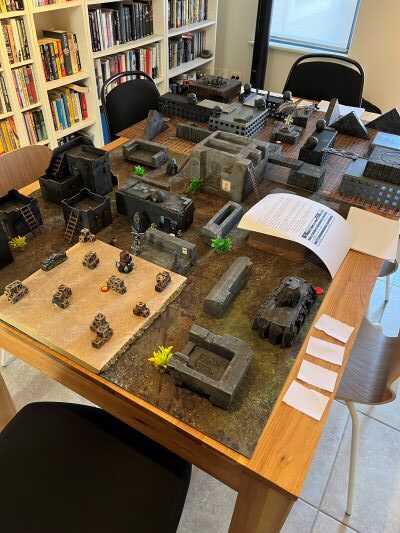
Now that the dust has settled on the Echoes of Xenos event that I ran last month, I want to take some time to think about whether it worked or not. Was it a success and what lessons did I learn. Importantly did the format support or encourage emergent play. To understand the event setup and planning visit my previous post on the subject here.

So, what’s the verdict?

Did the Players have Fun?

The primary objective of any event should be the enjoyment of the players. Did they have a good time? Discussions with everyone afterwards indicated that they did. The 1 vs 1 battles and leaderboard added a sense of competition and the secret objectives added a level of uncertainty that kept players on their toes. Additionally we made sure that everyone played different opponents each round giving variety throughout. The group was very tolerant and there wasn’t much in the way of overly competitive behavior.

The only time in the event that fun may have reduced was during the last multiplayer battle, where the set up favored some players over others. The ensuing chaos saw some players have less to do than others which was an unforeseen planning error. I will talk about the last part of the event later.

Having a small break between sessions where players could discuss outcomes was a good way to create space and a bit of banter in the group. This is definitely something to keep in mind when planning for the next one.

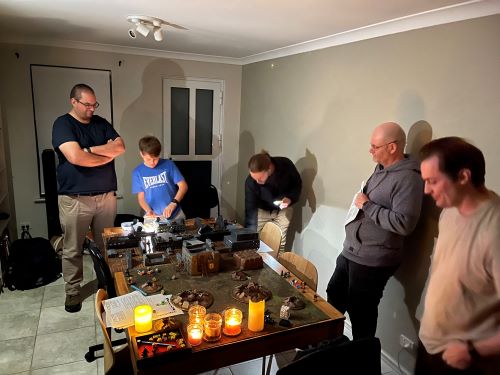
A power cut towards the end had us all playing by candlelight which really added to the atmosphere. But of course this was a happy coincidence!

A couple of location boards with clues, objectives and secret objectives ready for play

Was Emergent Play A Factor?

Unfortunately there was minimal emergent play occurring during the event. Interaction between the players was kept at the table and the storyline did not really feature very strongly. One player was attempting to make alliances and forge the narrative, however the others did not really engage in that aspect of the event.

The most emergent play occurred in the final scenario when one player (my son) went on the rampage. The other players figured he had been corrupted by chaos and teamed up to take him out. This was never a part of the original storyline, but worked really well as part of the finale.

Looking back, the faction set up and motivations of each group did not encourage as much of an emerging story as I hoped. There are a few things I would do differently next time, which I will discuss below.

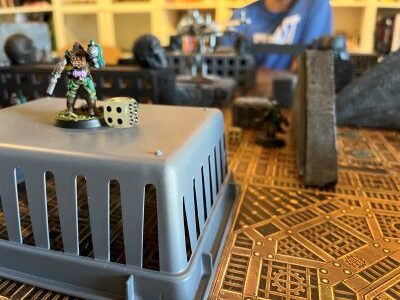
A 1v1 battle in full swing

The Grande Finale – Not as Planned

I had meant to set up the finale to be a multiplayer scramble for survival. All were competing for one macguffin (held by the leading faction) whilst being hunted by Xenos (alien) abominations. This was meant to facilitate a tense rush to escape, not knowing who to trust. Unfortunately, the xenos threat was never as threatening as I’d hoped. Resulting in players hanging back. NOt the energetic frenzy I’d hoped for. In an effort to add some action my sons faction went on the rampage effectively knocking two players out early in the game resulting in a less engaging experience for them both.

With the xenos threat neutralized and most players down to one agent we called the last battle. Not the epic finale I had hope for.

So, what could be changed to make this finale more grande? Firstly, have more of an external threat that impacts the players from the get go. This would have forced factions to work together. It would have created tension as factions helped each other, not quite knowing if they were going to be betrayed. It would also have prevented the chaotic infighting that started right from the get go. This could have taken the form of a swarm of low level aliens encroaching on the players in numbers that could not be defeated alone. In turn this would drive the agents towards the greater threats of the abominations.

Secondly, all the factions deployed in the same area creating the immediate potential for infighting. Deploying factions further apart would have removed this consequence letting players position tactically before the action commenced. Additionally, this would give players a greater sense of agency that I feel the original setup perhaps removed.

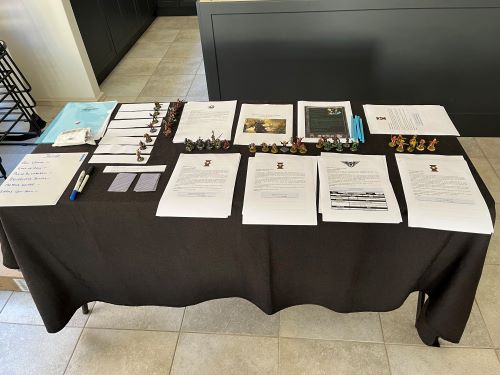
Player briefings and warbands ready to go

Increasing Emergent Play

Now that the game is over I think there are some clear ways that I could improve emergent play next time round.

Firstly, grouping players into factions will encourage interaction and cooperation immediately. By its very nature the increased interaction will allow emergent play to appear. Additionally, grouping players in teams or alliances creates a safer space to be creative. It’s always more fun doing this together, rather than trying to figure it out on your own.

Secondly, the scenario needs clearer factions. This is particularly true when you have players whop are not versed in the lore of your world. In this instance I love the murky world of the 40K Inquisitorial agents. But the lack of clarity makes it difficult for players to engage form a position of strength. Instead, having factions with clear goals and archetypes make them easier to engage with.

In this event all the players were gunning for the same objective making alliances difficult to form. Next time I would give every faction a different objective, but make sure they cross over. That way negotiations and alliances would become more important and emergent play more likely to appear.

Lastly, the players need a clearer reason to interact and ally with each other. A powerful external threat would neatly enhance this. In this event having a powerful alien species threatening everyone equally would force players to work together despite being enemies. Giving players the choice of allying with their enemy or facing annihilation can create some interesting negotiations and outcomes.

Final Thoughts on Echoes of Xenos

Despite not quite working as planned Echoes of Xenos was a fun event. While emergent play didn’t form as much as I’d hoped there were some very clear takeaways for the next event. I cant wait!