How to Use Clocks to Add Tension to Your D&D Game

Using clocks in Dungeons and Dragons

If you’ve ever played Blades in the Dark, you’ll know that one of the most effective tension-building tools in the game are clocks. Not the ticking kind on your wall, but a visual countdown that tracks threats, progress, or time-sensitive goals. It’s simple, elegant, and incredibly powerful.

What if I told you that you can lift this mechanic straight out of Blades in the Dark and drop it into your Dungeons & Dragons campaign to make things way more dramatic?

Let’s dive into how clocks work and how to use them in D&D to raise the stakes, keep players engaged, and build unforgettable moments of tension.

What Is a Clock?

In Blades in the Dark, a clock is a segmented circle that fills in as a consequence of actions or the passage of time. For example:

  • A 4-segment clock might track how long until the guards arrive.
  • A 6-segment clock might measure the party’s progress disabling a magical barrier.
  • A 12-segment clock might represent an ancient dragon slowly awakening.

Each time something happens that aligns with the consequence, the GM fills in one or more segments. When the clock is full, the event it represents happens.

Simple. Visual. And nerve-wracking.

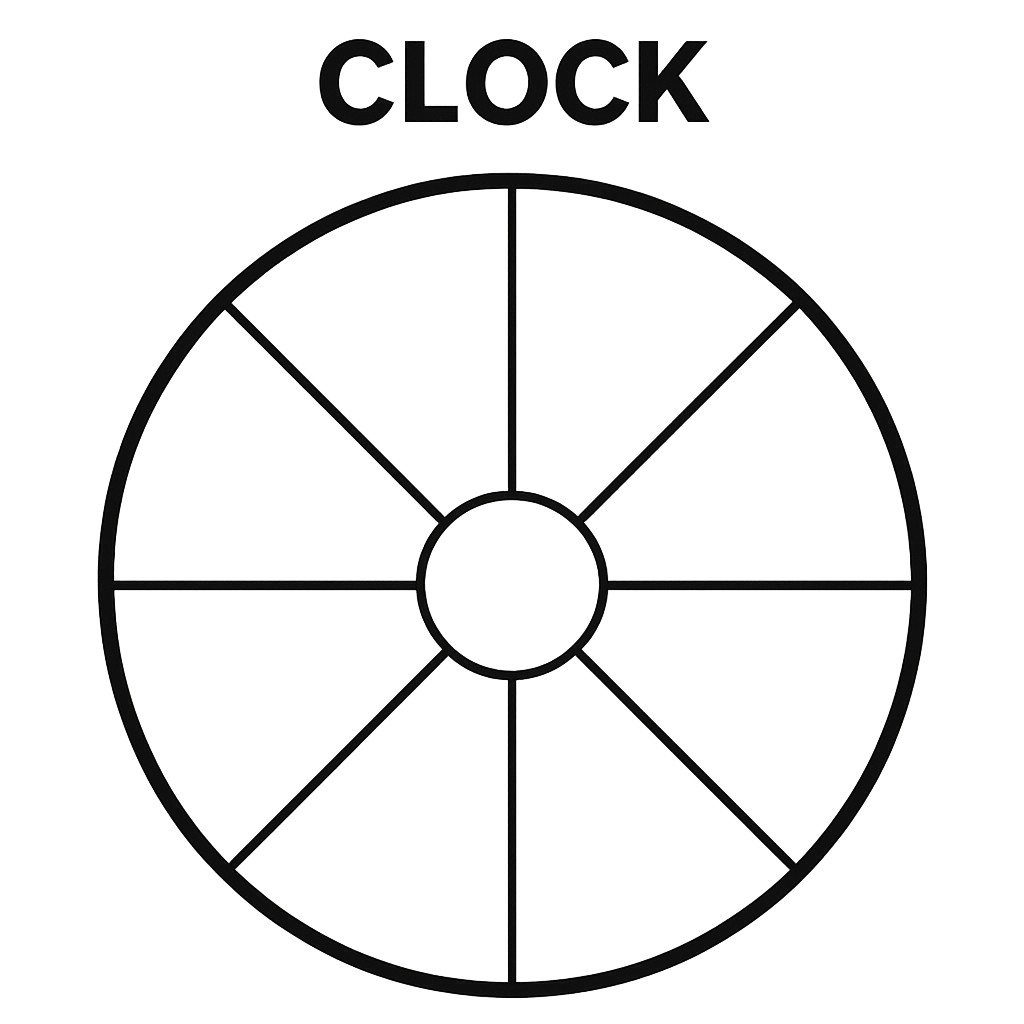
An example of a clock template you could use in your games

Why Clocks Work So Well

Clocks shine because they:

  • Make abstract danger feel concrete.
  • Give players a sense of urgency.
  • Create dynamic situations where failure and success aren’t binary.
  • Offer a visual reminder that choices have consequences.

This makes them an excellent fit for D&D, where pacing can sometimes sag or players feel unsure whether they’re making progress. Clocks are a quiet motivator—and a loud one when they fill up. The visual element of this tool keeps players aware of the likely consequences of the situation they are in and the closeness they are to getting into trouble.

How to Use Clocks in Your D&D Game

Here’s how to adapt clocks into your D&D session. No need to change any rules.

Draw Them Out
Grab a notepad, whiteboard, or even a coaster. Draw a circle, divide it into 4, 6, or 8 segments. See the template above. Make sure to label it:

  • “Reinforcements Arrive”
  • “The Ritual Completes”
  • “Guards Become Suspicious”
  • “Ship Sinks”

Then, fill in segments as events unfold—on failed checks, at key intervals, or whenever the party dithers too long.

Tie Them to Player Actions
Players will quickly learn that failing stealth rolls might tick the “Guards Notice” clock. Or that every round spent arguing about tactics fills in the “Cult Finishes Ritual” clock.

You don’t need to explain the consequences in detail. Just let the clock sit on the table, ominously gaining ticks. Players will feel it.

Use Them for Progress, Too
Clocks aren’t just for bad things. Use them to track the party’s progress disabling a trap, researching a cure, or converting a noble to their cause. It turns a string of skill checks into something far more satisfying to complete.

Stack Them for Chaos
Multiple clocks running at once? That’s where the drama kicks in. Imagine:

  • “Enemies Reinforce in 3 Segments”
  • “Party Finds Hostages in 4 Segments”
  • “Explosion in 5 Segments”

Now the players are really juggling priorities and feeling the pressure.

Example in Play

Scenario: Infiltrating a Cult’s Ceremony
You’re running a tense infiltration mission to stop a cult from manifesting a Demon. Here’s how clocks could work:

  • 6-Segment Clock: “Cultists Grow Suspicious” — Ticks up with noise or strange behavior.
  • 8-Segment Clock: “Ritual Completes” — Starts ticking when the party arrives. Once it’s full, the demon enters the world and all chaos breaks loose. Too late.

The party now has layered objectives, a visible countdown, and the need to make hard calls.

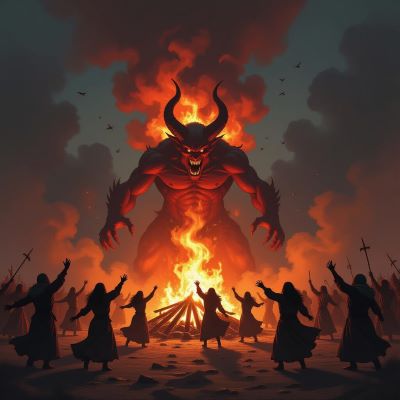
Looks like the “Ritual Completes” clock filled up…

Do I Need to Change Rules?

Not at all. Clocks are purely narrative tools. They don’t replace D&D mechanics—they enhance them. You still roll perception checks, stealth rolls, persuasion attempts. But now, failures and delays have a tangible cost.

Want to go deeper? Tie clocks to initiative rounds, make players roll d4s to fill segments faster, or let them spend inspiration to remove ticks. But honestly, just drawing and filling a circle is already incredibly effective.

Final Thoughts
D&D thrives on drama. But often, that drama is hidden behind numbers, dice rolls, and DM narration. Blades in the Dark clocks offer something more visual, more urgent, more human. By borrowing this mechanic, you give your players a countdown they can see—and feel. You turn waiting into worry, failure into friction, and decisions into dilemmas.

So next session, pull out a pen, draw a circle, and start ticking. You’ll be amazed at the tension that builds.

Three Valuable Lessons from the Infamous Leeroy Jenkins

Over the last 15 year, few moments have become as iconic in the gaming sphere as the infamous “Leeroy Jenkins” incident from the video game World of Warcraft. For those unfamiliar, Leeroy Jenkins is a character who, in a recorded raid planning session, abruptly charges into battle without waiting for his team’s strategy, resulting in a spectacular failure. While this moment is often remembered for its humor, it also holds valuable lessons that transcend gaming and apply to various aspects of life and teamwork. So what can we learn?

1. The Importance of Preparation

One of the most glaring takeaways from the Leeroy Jenkins saga is the significance of preparation. In the video, the team meticulously plans their strategy, calculating odds and discussing tactics. However, Leeroy’s unplanned charge into the fray completely derails their carefully laid plans, leading to most of the party being wiped out and their objective lost.

Lesson: Preparation is key to success, whether in gaming, work, or personal projects. Taking time to plan, understand the task at hand, and ensure everyone is on the same page can dramatically increase the chances of success. While spontaneity can sometimes lead to positive surprises, a lack of preparation often results in preventable failures. Think of the six Ps: Proper Planning Prevents Piss Poor Performance.

2. The Value of Teamwork and Communication

The Leeroy Jenkins moment underscores the importance of teamwork and clear communication. The rest of the team was engaged in a collaborative effort to strategize, yet Leeroy’s solo actions ignored this collective effort, leading to chaos. The actions of one, completely destroyed the goal of the group.

Lesson: Effective teamwork relies on every member contributing and adhering to the agreed-upon plan. Communication is crucial in ensuring that all team members understand their roles and responsibilities. Disregarding team dynamics can undermine the entire group’s efforts, leading to conflict and failure.

Although amusing, Leeroy Jenkins does highlight the issues of having a Lone Wolf on your team. As a leader you need to try and get everyone pulling together as a team. If an individual doesn’t want to do that, then perhaps it is time for them to work/play elsewhere.

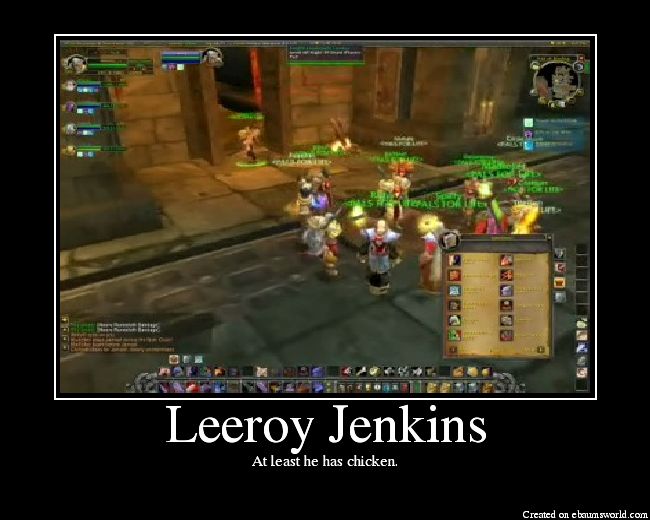
Some great memes came from the Leeroy Jenkins incident.

3. Embracing Failure and Learning from It

Despite the catastrophic outcome, the Leeroy Jenkins incident has been embraced by the gaming community as a legendary moment of humor and learning. World of Warcraft now has a Leeroy Jenkins NPC for players to interact with and references have popped up in media ranging from Family Guy to serious military discourse. It highlights that failure, while sometimes embarrassing or frustrating, can also be an opportunity for growth and camaraderie.

Lesson: Failure is an inevitable part of any endeavor. The key is to embrace these moments, analyze what went wrong, and use the experience to improve future efforts. In both gaming and life, laughter and resilience in the face of failure can transform a setback into a memorable and educational experience.

Final Thoughts

The legend of Leeroy Jenkins is more than just a funny internet video; it’s a cautionary tale with lessons about preparation, teamwork, and the value of learning from failure. By taking these lessons to heart, we can approach our own challenges with greater foresight. So next time you’re about to charge into a situation, take a moment to plan, communicate, and remember the enduring cry: “Leeeeroy Jenkins!”

Start with Why: Running D&D with Purpose

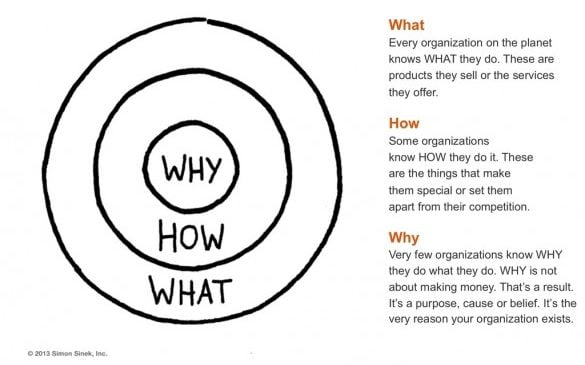
Simon Sinek’s Start with Why has inspired countless leaders to dig deeper into their motivations and clarify their purpose. His message is simple but powerful: “People don’t buy what you do; they buy why you do it.” When applied to leadership, business, or creativity, this mindset can be transformative.

But what if we applied it to Dungeons & Dragons?

Whether you’re a Dungeon Master or a player, understanding your “Why” can elevate your game from a fun pastime to a truly memorable and meaningful experience—for yourself and everyone at the table.

Why are you playing?

Let’s start at the broadest level: why do you play D&D?

  • Is it to blow off steam and have a laugh with friends?
  • To experience epic, cinematic fantasy stories?
  • To scratch that creative itch—worldbuilding, improvisation, writing?
  • To connect more deeply with your friends, family, or coworkers?

Being honest about this can help you set expectations, choose the right tone, and avoid burnout. When you know your “Why,” you can shape your approach and make sure the game aligns with what you’re hoping to get from it.

As a Dungeon Master, this becomes even more important. You’re not just playing; you’re facilitating. So ask yourself:

Why am I running this game?

  • Is it to give new players a chance to fall in love with D&D?
  • To tell a dark, emotional story you’ve been imagining for years?
  • To create a low-pressure space where friends can just have fun together?

Your Why becomes the compass for your style of prep, how you run sessions, and even which rules you emphasize or ignore.

Simon Sinek’s Golden Circle applicable to business and D&D!

Why is this campaign happening?

Once you’ve got your own purpose clear, zoom in on the game you’re running. Every campaign needs a “Why” behind the story, or it risks feeling generic and forgettable.

You can ask:

  • Why is this world worth exploring?
  • Why are these characters central to what’s going on?
  • Why does this story need to be told now?

When your players understand the thematic or emotional core of the campaign—whether it’s rebellion, redemption, survival, legacy, or something else—it helps them buy in. They’re not just reacting to plot beats; they’re engaging with the story on a deeper level.

You don’t have to spell it out in a monologue. Just make sure your theme is present in the way you frame quests, describe NPCs, or react to player choices.

A campaign where “Why” is clear might look like:

“This land was conquered long ago, and the people are still suffering. You’re part of a fragile spark of rebellion. Will you fan the flames or protect what little peace remains?”

Now the game isn’t just about killing goblins. It’s about choosing between safety and justice.

Why is each character here?

Encourage your players to think about their Why too—not just backstory, but purpose.

Why did this character leave home? Why do they keep going after that near-death experience? Or even, why do they care about the group?

When players define their characters’ core motivations, they make better decisions in character, and the party becomes more than a random collection of murderhobos. Even better? Ask your players how their Why might evolve. Give them the space to change. Because just like in real life, a good “Why” can grow as your story deepens.

Running D&D like a Purpose-Driven Leader

If you’re a DM, you’re already leading a team—even if you don’t think of it that way. Applying Start with Why means you’re leading with intent.

  • Your prep becomes more focused.
  • Your storytelling has more depth.
  • Your players are more emotionally invested.
  • And your games—no matter how light-hearted or intense—feel more meaningful.

It doesn’t mean you need to be serious all the time. A campaign where the “Why” is “laugh until we cry every Wednesday night” is just as valid as “explore grief through fantasy allegory.”

The point is to know your Why. Share it. Revisit it when things start to drift.

Final thoughts on Start with Why

Simon Sinek’s idea isn’t just for boardrooms and brand strategists—it’s for anyone trying to create something with heart. In D&D, whether a DM or a player, knowing your “Why” can be the spark that takes your game from good to unforgettable.

So before your next session, pause and ask yourself:

Why are we sitting around this table?

Then build everything from there.

MartyCon 2025 Wrap Up

Last April saw a group of friends made their way to rural WA for MartyCon 2025, a weekend of gaming shenanigans. Getting away from everything and focusing on games and laughing with your mates is such a great thing to do. It didn’t take much to organize and let us all take turns running games and exploring systems that we hadn’t tried before.

Much like last time we had some incredibly creative sessions including:

  • New Zealand game inspired by the Peter Jackson film Bad Taste. Kiwi accents were mandatory.
  • Wild West Horror game involving pioneers finding that an evil cult has taken their refuge. Betrayal and sacrifices, holy guardians and gun fights. Very cinematic!
  • The Raid miniatures skirmish for 8 people. The Gangers thrashed the Enforcers. for a description of the game check out my post on the game design.
  • Harrowing submarine horror game based on the zine Crush Depth Apparition. Incredibly creepy and unsettling.
  • Paranoia, a game of dystopian future frustration and clone death…
Some of the crew getting ready for the first game of the weekend.

As you can see we had a broad variety of games. We also played board and card games throughout the weekend, went for walks and generally chilled out. The perfect mini break based on mates and gaming!

The Raid Synopsis

I was planning on running two miniature skirmish games, but unfortunately we only had time for one. So we ended up playing the Raid. This asymmetric wargame saw five underhive gangs take on three well disciplined Arbites (law) fire teams.

The game ended up being a real nail biter. The Arbites teams were dominating during the first half, basically trapping any over eager gangers. However, the gangs started working together pretty quickly and ended up swamping the Arbites patrol and winning by a huge margin.

The game was great fun and everyone stayed involved and engaged. However, having 8 players at the table was only just manageable and I think stretched the ruleset a little too much. If I have that many players next year I would split the battles over three separate boards with the outcomes all adding to the story of an overall conflict. I’m already thinking about a desperate siege. Battles could include, destroy the bridge to prevent reinforcement, silence the battery and break the line. Perhaps we need another MartyCon sooner rather than later.

An Arbites Enforcer keeps an eye out for the encroaching gangers.
The battleground
Gangers getting ready to rush the Law

Run Your Own Con

Why am I writing this you might ask? If you are part of a group of friends who enjoy playing games together why not run a mini con together. Grab an AirBnB, get everyone to chip in for food and you’re sorted.

Everyone has games that they want to play but have never had the chance to run. Well now’s your chance. Have a friend who’s always wanted to DM, give them a shot. As you can see above our games are very varied and all run by different people. It’s the perfect time to experiment.

Start small. The first MartyCon only had 5 attendees. But it was a great weekend that spawned a great tradition amongst our gaming groups. So grab some friends, plan some games and create a Con. I can almost guarantee you’ll have a great time!!

MartyCon 2025

All in all a fantastic weekend. So jam packed with games and laughter that I was absolutely exhausted by the time I got home on the Sunday afternoon.

Let me know if you are running your own mini Con. I’d love to hear what works for your group.

The Joy of Designing an Engaging Three Player Skirmish Scenario

Three-player skirmish games can be very tricky to design. Without careful planning, you risk two players ganging up on the third, one player getting stuck waiting for the others to resolve their turns, or the action becoming lopsided. In this scenario, set in the grim darkness of the 41st millennium, I aimed to create a balanced and engaging experience where all three players remained in the thick of the action.

The Scenario: “The Saint’s Fate”

As you probably know, I love adding narrative flavor to my games. Whether D&D or Warhammer an engaging narrative creates much more opportunity for emergent play. I’ve recently developed a loose setting for my 40K inspired games as a way to develop an interesting and ongoing narrative. Consequently, I wanted to set this scenario in the same setting. For more information on Mordax Prime follow the link here. As for the scenario…

A miraculous manifestation has occurred. A Saint touched by the power of the God Emperor, has manifested among the ranks of the Adepta Sororitas, but her fate is uncertain. The Inquisition, ever wary of uncontrolled power, has dispatched a team of Lancet Hereticus Space Marines to capture her for interrogation. Meanwhile, a force of Chaos Plague Marines, the Ferrymen, seeks to claim the Saint for a dark ritual, hoping to summon a daemon of the Warp into realspace.

The Sisters of Battle, unaware of what forces are closing in, have fortified their shrine compound to protect the Saint. What follows is a brutal three-way battle where each faction must act quickly to achieve victory.

Board Setup

  • Board Size: 3ft x 3ft
  • The Saint: Begins inside the shrine compound, positioned on one half of the board.
  • Deployment:
    • Sisters of Battle are entrenched in and around the shrine compound.
    • The Lancet Hereticus Space Marines deploy in one corner opposite the shrine.
    • The Chaos Plague Marines deploy in the other opposite corner.
Table deployment map

Victory Conditions

  • At the start of Turn 4, an escape shuttle may arrive at the compound on a roll of 5 or 6.
  • Each turn after that, the roll threshold decreases (4+ on Turn 5, 3+ on Turn 6, etc.).
  • The player who has control of the Saint and gets her to the escape shuttle wins the game.

Note that the Saint begins in the possession of the Sisters of Battle.

Key Design Features

1. Balanced Start & Player Equality

  • The two marine factions begin an equal distance from the objective (the Saint in the shrine), ensuring no player has an immediate advantage.
  • Sisters of Battle start in a strong defensive position but must react to two incoming threats.
  • Both invading forces must contend with the Sisters and each other.

2. Quick Action & Continuous Engagement

  • The short board size (3ft x 3ft) ensures combat starts early, preventing long movement phases where nothing happens.
  • The Sisters’ defensive position means they will likely be fighting by Turn 1.
  • Since the Saint is stationary at the beginning, players must maneuver aggressively and fight over control.
  • The time limit ensures that all players must take action in order to win.

3. Preventing “Two vs. One” Situations

  • Both the Inquisition and Chaos forces have competing objectives, preventing an easy alliance.
  • The victory condition forces all players to engage—hoarding forces in a corner will not secure a win.
  • The randomized escape shuttle arrival means players must remain flexible; camping a spot isn’t a viable strategy.

Final Thoughts on the Three Player Scenario

This three player scenario creates a dynamic battlefield where all players are constantly engaged. It prevents downtime, discourages ganging up, and forces strategic decision-making. The next blog post will explore how this scenario played out in actual gameplay—did it live up to expectations, or were there unexpected twists? Stay tuned!

Title image is Sister of Battle by Anna Steinbauer. For more of her awesome art visit her site here.