Rediscovering the Amazing Benefits of Warhammer 40K

When I was in school, one of my favorite pastimes was playing Warhammer 40K. The thrill of painting miniatures and taking them into battle with my friends are memories I always cherish. Life moved on, and like many hobbies from our youth, my 40K collection was boxed up and stored away. Recently, however, my son has discovered the game, and his enthusiasm has reignited my passion for it. Returning to Warhammer 40K has not only brought back fond memories but also reminded me of the many benefits this game offers, both for young players like my son and for those of us (oldies)who are reconnecting with it.

Creativity and Artistic Expression

One of the most rewarding aspects of Warhammer 40K is the opportunity for creativity. Of course, assembling and painting miniatures allows players to express themselves artistically, experimenting with color schemes, customizing models, and even creating their own unique chapters or factions. I’ve never really thought of myself as creative, until my wife pointed out the imagination and innovation that I put into the hobby.

  • For Kids: For my son, painting his first Space Marine was an exercise in patience and creativity. It was a chance for him to explore his artistic side and take pride in creating something with his own hands.
  • For Adults: Returning to painting after so many years has been incredibly satisfying. It’s a meditative process that lets me unwind and focus on something tangible. Plus, it’s a great way to bond with my son as we share tips and admire each other’s work.

Strategic Thinking and Problem-Solving

Warhammer 40K is as much about strategy as it is about creativity. Every game requires players to think critically about their tactics, anticipate their opponent’s moves, and make decisions that will impact the outcome of the battle.

  • For Kids: My son is learning valuable skills in strategic thinking and problem-solving. Interestingly, he’s discovering that winning isn’t just about having the biggest army. Rather, it’s about making smart decisions, understanding the strengths and weaknesses of his units, and planning several steps ahead.
  • For Adults: Revisiting the tactical side of the game has been a great mental workout. It’s reminded me of how much fun it is to engage in deep strategic planning, where every move counts and adapting to unexpected situations can turn the tide of a battle.

Social Interaction and Community

Warhammer 40K isn’t just a game you play alone; it’s a social hobby that brings people together. Whether it’s meeting up with friends for a game, attending tournaments, or participating in online communities, Warhammer 40K fosters a sense of camaraderie and shared interest.

  • For Kids: My son has started making new friends through the game, connecting with others who share his enthusiasm. It’s been great to see him engage with a community that encourages sportsmanship, respect, and friendly competition.
  • For Adults: Re-entering the Warhammer 40K community has been like reuniting with old friends. The shared passion for the game creates an instant connection, whether with fellow hobbyists from years ago or new players just starting their journey.

Learning and Immersion in Rich Lore

The Warhammer 40K universe is vast and filled with deep lore that has captivated players for decades. The game isn’t just about battles on the tabletop; it’s about the stories and histories that give context to those battles.

  • For Kids: My son has become engrossed in the lore, reading up on the history of the factions, their motivations, and the epic battles that shape the Warhammer 40K universe. It’s sparked his interest in storytelling and history, showing how games can inspire a love for learning.
  • For Adults: Rediscovering the lore has been like diving back into a beloved book series. The depth of the Warhammer 40K universe never ceases to amaze me, and it’s a joy to explore it with my son, discussing our favorite characters and story arcs.
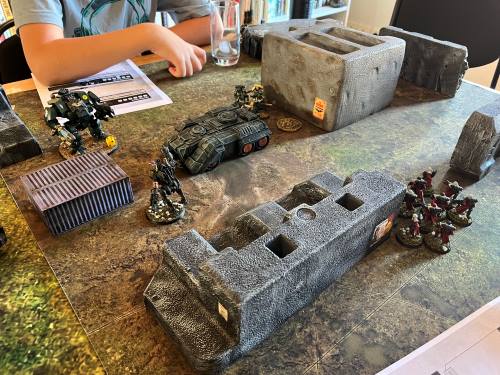
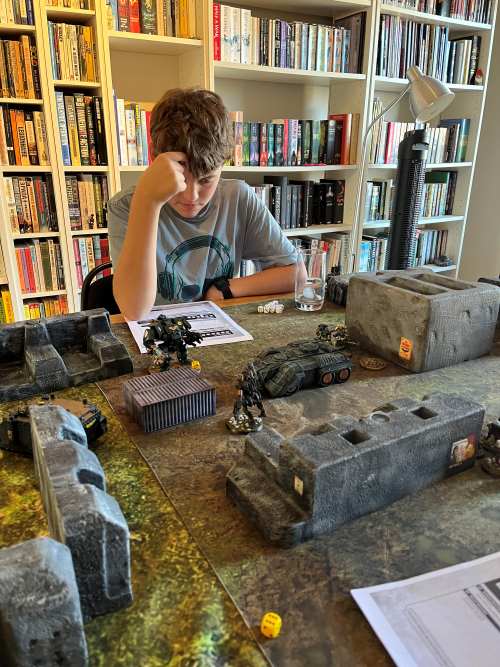
Considering the next move! Spoiler: I lost this game.

Patience, Discipline, and Achievement

Building an army, painting miniatures, and learning the rules of Warhammer 40K require patience and discipline. The sense of achievement that comes with completing a project or mastering a new strategy is incredibly rewarding.

  • For Kids: My son is learning the value of patience and perseverance. Every finished model and every well-played game are milestones that boost his confidence and show him the benefits of hard work.
  • For Adults: For me, the discipline of the hobby has been a welcome change of pace. It’s a reminder that some of the best things in life take time and effort, and the sense of accomplishment that comes with it is well worth the investment.

A Hobby for All Ages

Warhammer 40K is more than just a game; it’s a lifelong hobby that offers endless opportunities for personal growth. Watching my son discover the joys of Warhammer 40K has been a reminder of why I loved the game so much in the first place. Whether you’re a new player or someone rediscovering the hobby after years away, Warhammer 40K has something to offer everyone. I’m hoping to use this experience to explore how tabletop wargames of this sort can be used to provide experiential learning down the track. Much like I did with megagames earlier in the year.

Using the Power of The One Minute Manager With Dungeons & Dragons

Many years ago I was promoted to Team Leader and put through our company’s future leader program. Part of the syllabus revolved around the One Minute Manager by Kenneth Blanchard and Spencer Johnson. At the time I got a lot of value from this thin tome and it stood me in good stead as my leadership career progressed. While thinking about this recently I wondered if the lessons can port over into the world of roleplaying games. Having run through a similar exercise with the Culture Code to good feedback, I thought this worthwhile pursuing. So, could you purposefully use the tenets of the One Minute Manager in game to enhance your leadership skill in the real world? Let’s find out.

The One Minute Manager: A Brief Overview

For those unfamiliar, The One Minute Manager, originally published in 1982, is a classic in leadership literature. Through the conceit of a short business parable it introduces three key principles for effective management:

  1. One Minute Goals: Setting clear, concise goals.
  2. One Minute Praisings: Providing immediate and specific praise.
  3. One Minute Redirects: Offering quick and constructive feedback on performance.

These principles are designed to improve efficiency and motivation in any team setting. TO my mind this includes a D&D campaign. Let’s explore this further.

Applying One Minute Management to Your D&D Game

1. One Minute Goals: Setting Clear Objectives

In D&D, clear objectives are crucial for maintaining the focus and momentum of the game. As a Dungeon Master (DM) or a party leader, you can use the One Minute Goals principle to set and communicate objectives for your sessions.

  • For Dungeon Masters: At the beginning of each session, outline the key goals for the party. For example, “Today, you’ll need to explore the abandoned castle and find the hidden chamber.” This ensures everyone knows the purpose of the adventure and can align their actions accordingly. If necessary, add details from previous sessions so that the players understand why this goal is important.
  • For Players: When strategizing with your party, propose clear goals for your character’s actions and the group’s overall mission. For example, “Let’s focus on gathering information about the enemy’s weaknesses this session.” This clarity helps in making tactical decisions and improving group cohesion.

2. One Minute Praisings: Recognizing Achievements

In game, recognition and encouragement can greatly enhance player engagement and satisfaction. Applying the One Minute Praisings concept can lead to a more motivated and enthusiastic group.

  • For Dungeon Masters: Acknowledge players’ creative problem-solving or role-playing efforts. For example, “I loved how you cleverly used your spell to bypass the trap. Great thinking!” This immediate and specific praise boosts morale and encourages players to continue being inventive.
  • For Players: When your fellow adventurers contribute meaningfully to the story or overcome a challenge, recognize their efforts. For instance, “Your character’s bravery in battle was inspiring. You really saved us there!” This fosters a positive group dynamic and strengthens team bonds. This can also be done effectively post game. Reminiscing about a fellow players spotlight moments strengthens the team and gets everyone excited about the next session.
The One Minute Manager. A quick, invaluable read!

3. One Minute Redirects: Providing Constructive Feedback

Effective feedback is vital in both leadership and gameplay. The One Minute Redirects approach helps in delivering constructive feedback in a way that is respectful and productive.

  • For Dungeon Masters: If a player’s actions disrupt the game or cause confusion, address it quickly and constructively. For example, “I noticed you missed a few rules in the last encounter. Let’s review them together so we can keep the game flowing smoothly.” This ensures that issues are resolved promptly and do not detract from the overall enjoyment of the game.
  • For Players: If you need to address a concern with a fellow player’s behavior, do so in a constructive manner. For example, “I felt that some of the decisions made in combat slowed down our progress. Can we discuss how to streamline our actions?” This approach promotes a collaborative atmosphere and helps the group to improve collectively.

Benefits of Integrating One Minute Management into D&D

Combining the One Minute Manager principles into your D&D games can provide several benefits:

  • Enhanced Communication: Clear goals and immediate feedback foster better communication among players and between the DM and the party.
  • Increased Engagement: Recognizing and praising achievements boosts enthusiasm and investment in the game.
  • Improved Team Dynamics: Constructive feedback helps resolve issues quickly and keeps the group focused on collaborative problem-solving.

Final Thoughts on The One Minute Manager

Integrating these management principles into your D&D sessions takes practice. Reflect on how the application of these techniques impacts your gameplay and leadership skills. Consider discussing with your group what worked well and what could be improved. This continuous feedback loop will help you refine your approach and become a more effective leader both in-game and in real life. Using these experiences in game allows you to reflect on how you might apply them in the real world. Experimenting in game is the perfect low risk environment to try out these skills. Why not give it a go? Your party—and your leadership skills—will thank you!

Create an Outstanding Gaming Group Using “The Culture Code”

My usual mode of operation in this blog is to see how we can use games to improve our leadership skills. However, today I wanted to turn that on its head. What can we learn from the world of work that we can apply to make our games better? When we are at the table, the group’s dynamic can make or break the experience. I’ve recently read Daniel Coyle’s book, The Culture Code: The Secrets of Highly Successful Groups and I think as gamers there is a lot to takeaway. This book looks into the principles that make groups work effectively. While the books audience is meant for leaders in business I believe it offers insights that can transform any gaming group into a fun, inclusive, well-oiled machine. Here’s a few ways you can apply the concepts from The Culture Code to create a high-performing and fun gaming group.

Build Safety: Creating a Comfortable Environment

According to Coyle, the first pillar of a successful group is building safety. In a gaming context, this translates to creating an environment where all players feel comfortable and secure. Of course, its important to remember that safety isn’t just physical but emotional as well.

  • Encourage Open Communication: Make sure everyone feels their voice is heard. Each player’s input should be valued. Encourage feedback and be receptive to it.
  • Foster Inclusivity: Ensure your group is welcoming to all players, regardless of skill level or background. A diverse group can bring fresh perspectives and ideas, enriching the gaming experience.
  • Set Clear Expectations: Clarify the group’s goals, rules, and etiquette. When everyone knows what to expect, it reduces anxiety and builds trust.

Having safety tools at the table, like the X-card, is a great way to make people feel safe. An x-card is simply a card with an x on that sits within easy reach of all the players. If at any time a player feels uncomfortable they pick up the card and that scene will stop. The Dungeon Master will then move the game away from that topic.

For more information on safety tools you can have at the table see this awesome post from dramadice.com.

Share Vulnerability: Building Trust Through Honesty

Coyle emphasizes that sharing vulnerability is crucial for building trust within a group. This doesn’t mean exposing deep personal secrets but rather being honest about mistakes and uncertainties.

  • Admit Mistakes: As a game master or leader, show that it’s okay to make mistakes. If you miss a rule or make an error in judgment, acknowledge it openly. This encourages others to do the same, fostering a supportive environment.
  • Ask for Help: Demonstrate that it’s okay to seek assistance. Whether you’re stuck on a puzzle or need advice on character development, asking for help can strengthen group bonds.
  • Embrace Feedback: Encourage constructive criticism and be willing to act on it. This not only improves the game but also shows that you value the group’s input.

When playing with my regular group, I don’t always know the rules. I’m okay with admitting this and the players jump in and assist. This has definitely strengthened the trust amongst us. It also helps prevent any feelings of them and us forming between the games master and the players.

Establish Purpose: Creating a Shared Vision

A high-performing group needs a shared sense of purpose. This involves not just playing the game but understanding and buying into a common goal or vision.

  • Define the Group’s Mission: What does your gaming group aim to achieve? It could be as simple as having fun, or as complex as mastering a particular game. Clearly define this mission and remind the group regularly.
  • Celebrate Milestones: Recognize and celebrate achievements, whether it’s completing a challenging quest or reaching a new level of teamwork. Celebrations reinforce the group’s purpose and motivate members.
  • Create Traditions: Develop rituals or traditions that strengthen group identity. This could be a regular game night, a pre-game ritual, or special events for holidays or milestones.

This is something that we could do more of in my regular group. I would say our shared vision is to have fun gaming together. While this vision is not something we have articulated often we recently found that two players were not enjoying the horror themes of a particular campaign. Circling back to our purpose of having fun gaming together, we have pivoted the game were playing and moved to a campaign where we can all have fun.

Applying the Culture Code to your group can bring more cohesion and ultimately more fun

Applying The Culture Code to Gaming

How might these principles look in a Dungeons & Dragons group aiming to enhance its culture:

  1. Build Safety: The Dungeon Master (DM) creates a welcoming environment by encouraging all players to share their character backstories and contribute to the narrative. Rules and expectations are clearly laid out, ensuring everyone feels secure in their role. they also have an X-card prominently displayed in the center of the table and clearly explain its use.
  2. Share Vulnerability: The DM admits when they’ve forgotten a rule and asks the group for input. Players are encouraged to share their ideas and help each other, fostering a collaborative atmosphere.
  3. Establish Purpose: The group agrees on a campaign goal, such as exploring a vast new world or defeating a formidable enemy. Regular sessions are held to maintain momentum, and achievements are celebrated, keeping everyone motivated and aligned with the shared vision.

By incorporating the principles from The Culture Code, your gaming group can become more cohesive, resilient, and high-performing. The result is not just better gameplay, but a richer, more fulfilling experience for all members. In essence, applying these ideas to your group will take group cohesion and culture far beyond the game itself.

Rust Monster Wisdom: Unique Leadership Lessons from D&D

In the rich world of Dungeons & Dragons (D&D), monsters serve as more than mere obstacles for adventurers. They can embody interesting lessons for those of us willing to look more closely at their characteristics. One creature that I love including in my games is the rust monster. This seemingly unassuming foe has a unique ability that can teach us some valuable leadership lessons. Let’s explore how the rust monster can inform and inspire effective leadership.

What is a Rust Monster?

As alluded to above, a rust monster is a fictional creature from D&D, known for its ability to corrode and consume metal. It is typically depicted as an insect-like creature with a hard, chitinous exoskeleton, long segmented body, antennae, and a maw designed for crunching and consuming metal. When a rust monster touches metal with its antennae or mandibles, the metal rapidly rusts and deteriorates, posing a significant threat to adventurers’ weapons, armor, and other metal equipment.

Encountering a rust monster in D&D can be challenging for players, as it goes beyond simply attacking the foe. Instead it requires strategic thinking to protect their hard earned gear and defeat the creature without losing their equipment.

Embrace Unconventional Strategies

The rust monster isn’t a fearsome beast in the traditional sense. It doesn’t wield sharp claws, spit poison or breathe fire. Instead, it has a unique and highly disruptive ability: it corrodes metal. This ability can render even the most well-armed adventurer vulnerable, showcasing that strength doesn’t always come from power but from creativity and unconventional methods.

Leadership Lesson: Effective leaders often need to think outside the box. Unconventional strategies can lead to success in ways that brute force or traditional methods cannot. Embrace creative problem-solving and look for unique approaches to challenges.

It is also worth bearing in mind that there is no cookie cutter approach to leadership problems. Each issue involves unique people and situations. As such, embrace strategies that suit your specific situation. In turn, this can often mean looking at unconventional and creative answers.

What a rust monster is actually supposed to look like

Leverage Your Natural Strengths

Rust monsters are designed to do one thing exceptionally well—destroy metal. They don’t try to be something they’re not. By focusing on their natural abilities, they become formidable opponents despite their otherwise unthreatening appearance.

Leadership Lesson: Understand and leverage your strengths. Focus on what you and your team do best. By honing these natural talents and skills, you can maximize your effectiveness and impact, much like the rust monster.

I find this to be particularly true when leading a business. Opportunities will present themselves that fall beyond your teams core capabilities. To my mind this can be dangerous as you will end up struggling to deliver on your usual quality. Sticking to your strengths is a significant strategic decision.

Disarm Your Opponents

A rust monster’s primary threat is its ability to disarm opponents by destroying their metal weapons and armor. This tactic forces adventurers to rethink their approach and often leaves them scrambling to adapt.

Leadership Lesson: In leadership, disarming your opponents doesn’t mean undermining them but rather finding ways to neutralize challenges and obstacles. This involves proactively addressing concerns, resolving conflicts (internal and external), and identifying and removing barriers to your team’s success.

Consequently, a leader needs to have strong situational awareness. What are the competitors doing? How are your clients behaving? Do your team members have the right tools to be productive? A leader who is not seeking this information will be caught unawares, without the chance to protect and strengthen their team.

Create Strategic Disruption

A rust monster’s presence can cause significant disruption within a party of adventurers. Ultimately, forcing them to change their tactics and often leading to a more creative and strategic approach to overcoming obstacles.

Leadership Lesson: Strategic disruption can be a powerful tool in leadership. Sometimes, shaking up the status quo and challenging existing processes can lead to innovation and improvement. Be willing to disrupt complacency and encourage your team to think creatively and strategically.

A good example of this is when a leader asks why something is done the way it is. If the response is, “We’ve always done it this way,” it is time to investigate and consider disruption. Strategic disruption does not need to be overly dramatic. Instead fostering a culture of continuous improvement can make sure that disruption occurs on a smaller, often more manageable level, while yielding stronger results.

Final Thoughts on the Rust Monster

The rust monster, with its unique abilities and characteristics, offers a wealth of leadership lessons for those who look beyond its surface. By embracing some of the learnings from this humble creature, leaders can draw inspiration and up their own game. So, the next time you face a leadership challenge, remember the rust monster and maybe it will hold the solution.

What Can Dungeons & Dragons Teach Me? Life Lessons from the World’s Greatest Role-Playing Game

Dungeons & Dragons (D&D), the iconic tabletop role-playing game, has captivated the imaginations of millions since its inception in the 1970s. While celebrated for its ability to transport players to fantastical realms filled with epic quests and heroic deeds, D&D offers much more than escapist entertainment. Beneath the layers of storytelling and strategy lie profound lessons that can be applied to everyday life. Whether you’re a seasoned adventurer or a curious newcomer, here are some of the life lessons and insights that playing D&D can give you.

Creativity and Imagination

At its core, D&D is a game of imagination. Players create characters, weave intricate backstories, and embark on adventures limited only by their creativity. This process enhances your ability to think outside the box, solve problems creatively, and envision possibilities beyond the ordinary. Whether you’re brainstorming for work or tackling personal projects, the imaginative muscles you flex during a D&D session can help you generate innovative ideas and solutions.

Teamwork and Collaboration

Successful D&D campaigns rely heavily on teamwork. Each player character (PC) brings unique skills and abilities to the table, and achieving goals often requires seamless collaboration. Players must communicate effectively, share responsibilities, and support each other to overcome challenges. These collaborative skills are directly transferable to real-life situations, such as working on group projects, leading teams, or navigating social dynamics.

Resilience is one of the core life lessons from D&D

Resilience and Adaptability

In D&D, things rarely go as planned. Unforeseen obstacles, unpredictable dice rolls, and the whims of the Dungeon Master (DM) can turn the tide of any adventure. Players learn to adapt quickly, think on their feet, and stay resilient in the face of adversity. This resilience is invaluable in real life, helping you cope with unexpected changes, bounce back from failures, and remain flexible in a constantly evolving world.

Strategic Thinking and Planning

Every D&D game involves a blend of strategic planning and tactical execution. Players must consider various factors—such as their character’s abilities, the environment, and potential consequences—before making decisions. This kind of strategic thinking sharpens your ability to analyze situations, plan ahead, and make informed choices, skills that are beneficial in both personal and professional contexts.

Empathy and Perspective-Taking

Role-playing different characters allows players to step into someone else’s shoes, experiencing the world from diverse perspectives. This practice fosters empathy and understanding, as you navigate the motivations, fears, and dreams of characters different from yourself. In real life, this enhanced empathy can improve your relationships, deepen your understanding of others, and promote more compassionate interactions.

Storytelling and Communication

D&D is fundamentally a shared storytelling experience. Players and the DM co-create narratives, crafting compelling stories that engage and entertain. This collaborative storytelling hones your ability to communicate effectively, both verbally and in writing. Whether you’re delivering a presentation, writing an email, or telling a story to friends, the communication skills you develop in D&D can enhance your ability to convey ideas clearly and persuasively.

Confidence and Self-Expression

Playing D&D often involves stepping out of your comfort zone, whether you’re role-playing a daring hero, speaking in character, or making bold decisions. This practice can boost your confidence and encourage you to express yourself more freely. Over time, the courage you build in the game can translate to greater self-assurance and assertiveness in real-world situations.

Ethical Decision-Making

Many D&D campaigns present moral dilemmas and complex choices that challenge players to consider their values and ethics. Navigating these scenarios helps you practice ethical decision-making, weighing the consequences of your actions and reflecting on what it means to be a good person. These life lessons in morality and ethics can guide you in making thoughtful, principled choices in your everyday life.

Final Thoughts on Life Lessons from D&D

I think you might agree that Dungeons & Dragons is more than a game. It’s a dynamic learning experience that enriches your life in unexpected ways. From fostering creativity and teamwork to building resilience and empathy, the skills you develop while adventuring in a fantasy world can have a profound impact on your real-world interactions and personal growth. So, gather your friends, roll those dice, and embark on a journey that can teach you more than you ever imagined.