
Can 5-Minute Dungeon Significantly Level Up Your Teamwork Skills?

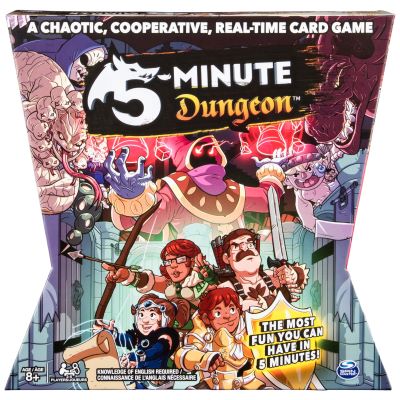
If you’re looking for a game that combines frantic fun, teamwork, and the pressure of time, 5-Minute Dungeon is exactly what you need. This cooperative card game challenges players to battle through dungeons by defeating monsters, overcoming obstacles, and taking down powerful bosses—all in just five minutes.

We bought this as a Christmas present for the family a couple of years ago and fell in love with it! This gem of a game creates tension and puts the players under stress. To win, players must communicate quickly, think on their feet, and work together as a cohesive unit.

What Is 5-Minute Dungeon?

In 5-Minute Dungeon, players take on the role of a unique hero, each with their own special abilities. Working together, they then clear a series of dungeon levels home to a series of increasingly difficult boss monsters. Every dungeon is filled with challenges such as monsters, traps, and bosses, which must be dealt with by playing matching action cards from the players’ hands. The catch? You only have five minutes to clear each dungeon level.

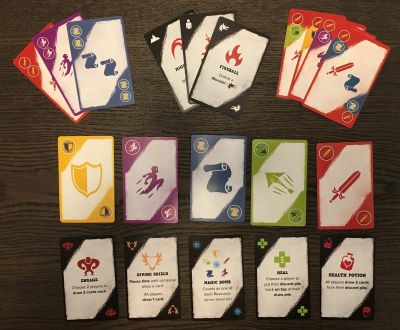
The game requires fast communication and decision-making because there’s no time for long debates or hesitation. Each player contributes their unique deck of cards—swords, shields, arrows, scrolls, and more—and must play the right cards at the right time to survive. If you hesitate or fail to coordinate, you risk running out of time or resources, and the dungeon will defeat your team.

Teamwork Under Time Pressure

One of the standout aspects of 5-Minute Dungeon is the intense, ticking-clock urgency. This forces players to communicate clearly and act quickly. There’s no space for egos or excessive planning. Every player needs to understand their role and support others immediately. That urgency enhances teamwork in ways that slower-paced games might not, making it an ideal exercise for teams that need to learn how to collaborate efficiently under pressure.

This dynamic can translate directly into real-life team scenarios. In a high-pressure work environment, quick decision-making and seamless communication are vital. By playing 5-Minute Dungeon, team members get a taste of this experience in a low-stakes, fun environment. They’ll discover each other’s strengths and weaknesses in real time, learning how to balance leadership, delegation, and collaboration—all while under the clock.

Cards players use to beat 5 Minute Dungeon

How 5-Minute Dungeon Can Bring Teams Closer

While the time pressure forces rapid action, it’s the cooperation that brings players closer. The need for constant communication creates bonds between team members as they learn to trust each other’s judgment and skills. Each successful dungeon completed is a shared victory, reinforcing the idea that teams work best when they collaborate smoothly.

By playing 5-Minute Dungeon, teams practice how to adjust to different situations and adapt to various team members’ play styles. Whether it’s knowing when to use your special ability or when to sacrifice your cards to help someone else, the game demands a constant balancing act of individual and team needs.

Leadership in 5-Minute Dungeon

Now, imagine incorporating 5-Minute Dungeon into leadership training or team development. What if every time the game is played, a new leader is assigned? Each person would have a chance to practice leadership in a safe, playful environment. The leader could be responsible for rallying the team, calling the shots, and making quick strategic decisions under pressure. This rotating leadership format could help participants explore different leadership styles and approaches, building confidence in those new to leadership and offering reflection opportunities for more seasoned leaders.

Moreover, leaders would experience the importance of effective communication and see firsthand how their guidance impacts the team’s performance under stress. This practice would directly translate to real-world team dynamics, where leadership often means managing pressure while still keeping the team focused and aligned.

Bringing Levity to Leadership and Team Development

Incorporating games like 5-Minute Dungeon into leadership and team development sessions might sound unorthodox, but it brings a much-needed levity to the process. Traditional leadership training or team-building exercises can sometimes feel formal, and while they offer valuable lessons, the serious tone may not always foster the team closeness you’re looking for. A game-based approach shakes things up, allowing teams to bond over laughter, creativity, and shared experiences.

Mixing up teams every session and assigning different leaders will also help participants practice adapting to new roles and personalities. Each session becomes a new challenge, with new opportunities to lead, collaborate, and improve team cohesion. Plus, having fun together lowers stress, builds trust, and keeps the atmosphere light even while learning important teamwork and leadership skills.

Final Thoughts

5-Minute Dungeon isn’t just a fun card game—it’s a fast-paced exercise in communication, cooperation, and leadership. Its time constraints force teams to work quickly and efficiently, while the cooperative nature encourages team bonding. By using games like this in leadership training, you can offer a break from the typical learning format while still fostering essential skills such as collaboration, problem-solving, and decision-making under pressure. The blend of play and learning could be just what your team needs to level up their teamwork—and have fun doing it.

Strengthen Teamwork With An Innovative Dice Pool Mechanic

dice pool

As some of you may know, I have been developing a rules-lite roleplaying game specifically for leadership development. It is tentatively called Play to Lead and you can find the latest version here. One of my key design philosophies is that teamwork and collaboration are core to the game function. As such, there needs to be a mechanic that centers on this aspect. Currently, I’ve included a simple advantage style roll, similar to that used in the current iteration of Dungeons and Dragons. Effectively, if you work as a team to solve a problem roll two dice and take the best result. But, this doesn’t encapsulate the team dynamic that I am looking for. When writing a previous post on the subject I’ve realized that there has to be a more engaging way.

Therefore, I’ve decided to introduce the team dice pool, to add a new layer of strategic depth and reinforce the importance of working together. This article explores how the dice pool mechanic works, why it encourages collaboration, and how it transforms group dynamics into meaningful gameplay.

What Is the Team Dice Pool Mechanic?

In Play to Lead the team dice pool is a shared resource that players contribute to and draw from during the game. At the start of the game, add one die to the pool for each player, plus one extra. Place the dice in the middle of the table, within easy reach of everyone. Whenever the team faces a challenge, they can choose to add any number of team dice to aid the roll, but only if all players agree. Once used, team dice are removed from the pool. The team must decide whether to use the dice now or save them for future challenges in the adventure.

For example, the team are trying to fix a snowmobile to allow them to escape the Arctic research station. The mechanic suggests that they work together to mend the engine and add two team dice to the roll. A discussion ensues. Some players want to save the team dice for later in the adventure when they brave the Arctic wastes on the journey home, whilst others argue that without the engine there will be no escape. Finally they agree to use two team dice from their pool of four, leaving some in reserve for the journey ahead.

Generally, the team dice pool should be a finite resource. However, if the players do something out of left field or display great leadership or teamwork, the games master can award a dice back into the pool. Us this sparingly, as the decisions about when to use the pool are harder when the resource is finite.

Team Dice Pool Summary

  • When undertaking a challenge where more than one player is involved, team may add any number of team dice to the roll. Roll the dice and take the highest number.
  • All team members (players) must agree on when and how many dice should be used.
  • When players do something spectacular the games master may replenish a die back into the pool (use sparingly).

This mechanic gives the team a shared resource that they must allocate together. Ultimately, forcing team discussion and collaboration.

A Team Dice Pool enhances the teamwork aspect of any roleplaying game.

How It Encourages Collaboration

In Play to Lead, the team dice pool is not just about numbers—it’s about strategy, trust, and communication. Here are a few ways the mechanic encourages teamwork:

  1. Strategic Contributions
    Each player brings something unique to the table. When faced with a challenge, they’ll need to decide how many dice they can afford to contribute based on the current situation. However, they must balance this with the need to save resources for future challenges. Players have to talk things through, strategize together, and decide as a team how to best approach each obstacle and whether to use the dwindling pool of dice to enhance their chances of success.
  2. Sharing Success and Failure
    Whether the roll succeeds or fails, the outcome reflects the team’s combined effort. If they succeed, everyone feels that accomplishment because they collectively decided to use the dice pool. If they fail, it’s a shared experience, too, prompting discussions about what went wrong and how they can better support each other in the future. This shared responsibility strengthens the group dynamic and fosters a sense of collective ownership over the game’s progress.
  3. Building Trust and Leadership
    The dice pool also presents opportunities for leadership within the team. Players will need to rely on and trust each other’s judgment about when and how to use those resources. This builds in-game leadership and teaches players to recognize each other’s strengths and weaknesses. It’s a subtle but powerful way to develop trust—essential in both the game and real-world teamwork.
  4. Promoting Balance and Equity
    No single player can hog the spotlight in Play to Lead. The team dice pool is a shared resource, and everyone has a stake in its management. This ensures that even quieter or less experienced players get a chance to contribute meaningfully. The mechanic naturally balances the dynamics between stronger and weaker characters, encouraging all players to work together, regardless of individual power levels.

Making Decisions as a Team

One of the core ideas behind the team dice pool mechanic is that important decisions shouldn’t be made in a vacuum. If the team needs to figure out how many dice to commit to a challenge, they must openly discuss their take on the situation and overall goals. This creates natural moments for team-building as players assess risks, talk through options, and align on the best path forward.

It’s not just about dice—it’s about building consensus, making informed choices as a group, and learning how to lead or follow when necessary.

Fostering Communication in Play to Lead

At its heart, Play to Lead is a game about communication. Whether it’s communicating during the game to decide the best use of resources, or reflecting on the outcome of a roll and figuring out how to improve next time, this dice pool mechanic brings team communication to the forefront.

This dynamic creates a natural, in-game space for conversations about leadership, trust, and collaboration, aligning with the game’s mission to teach these real-world skills through play.

Final Thoughts

The team dice pool mechanic in Play to Lead is more than just a gameplay feature—it’s a tool to foster teamwork, enhance communication, and build trust among players. By having a shared resource that gives significant advantage on in game challenges, it encourages players to work together, strategize, and support one another.

This mechanic not only makes the game more fun but also brings the game’s central message of collaboration and leadership to life in a tangible, engaging way. In Play to Lead, the team’s success isn’t just about individual accomplishments—it’s about what the group can achieve together.


While I have written this article about my own ruleset, I believe this mechanic could also work in other roleplaying games. In D&D a team dice pool of D20’s could be used to confer advantage for team based challenges. What do you think? Would you try implementing a team dice pool in your own games? Let me know how it works for you!

Using the Power of The One Minute Manager With Dungeons & Dragons

Many years ago I was promoted to Team Leader and put through our company’s future leader program. Part of the syllabus revolved around the One Minute Manager by Kenneth Blanchard and Spencer Johnson. At the time I got a lot of value from this thin tome and it stood me in good stead as my leadership career progressed. While thinking about this recently I wondered if the lessons can port over into the world of roleplaying games. Having run through a similar exercise with the Culture Code to good feedback, I thought this worthwhile pursuing. So, could you purposefully use the tenets of the One Minute Manager in game to enhance your leadership skill in the real world? Let’s find out.

The One Minute Manager: A Brief Overview

For those unfamiliar, The One Minute Manager, originally published in 1982, is a classic in leadership literature. Through the conceit of a short business parable it introduces three key principles for effective management:

  1. One Minute Goals: Setting clear, concise goals.
  2. One Minute Praisings: Providing immediate and specific praise.
  3. One Minute Redirects: Offering quick and constructive feedback on performance.

These principles are designed to improve efficiency and motivation in any team setting. TO my mind this includes a D&D campaign. Let’s explore this further.

Applying One Minute Management to Your D&D Game

1. One Minute Goals: Setting Clear Objectives

In D&D, clear objectives are crucial for maintaining the focus and momentum of the game. As a Dungeon Master (DM) or a party leader, you can use the One Minute Goals principle to set and communicate objectives for your sessions.

  • For Dungeon Masters: At the beginning of each session, outline the key goals for the party. For example, “Today, you’ll need to explore the abandoned castle and find the hidden chamber.” This ensures everyone knows the purpose of the adventure and can align their actions accordingly. If necessary, add details from previous sessions so that the players understand why this goal is important.
  • For Players: When strategizing with your party, propose clear goals for your character’s actions and the group’s overall mission. For example, “Let’s focus on gathering information about the enemy’s weaknesses this session.” This clarity helps in making tactical decisions and improving group cohesion.

2. One Minute Praisings: Recognizing Achievements

In game, recognition and encouragement can greatly enhance player engagement and satisfaction. Applying the One Minute Praisings concept can lead to a more motivated and enthusiastic group.

  • For Dungeon Masters: Acknowledge players’ creative problem-solving or role-playing efforts. For example, “I loved how you cleverly used your spell to bypass the trap. Great thinking!” This immediate and specific praise boosts morale and encourages players to continue being inventive.
  • For Players: When your fellow adventurers contribute meaningfully to the story or overcome a challenge, recognize their efforts. For instance, “Your character’s bravery in battle was inspiring. You really saved us there!” This fosters a positive group dynamic and strengthens team bonds. This can also be done effectively post game. Reminiscing about a fellow players spotlight moments strengthens the team and gets everyone excited about the next session.
The One Minute Manager. A quick, invaluable read!

3. One Minute Redirects: Providing Constructive Feedback

Effective feedback is vital in both leadership and gameplay. The One Minute Redirects approach helps in delivering constructive feedback in a way that is respectful and productive.

  • For Dungeon Masters: If a player’s actions disrupt the game or cause confusion, address it quickly and constructively. For example, “I noticed you missed a few rules in the last encounter. Let’s review them together so we can keep the game flowing smoothly.” This ensures that issues are resolved promptly and do not detract from the overall enjoyment of the game.
  • For Players: If you need to address a concern with a fellow player’s behavior, do so in a constructive manner. For example, “I felt that some of the decisions made in combat slowed down our progress. Can we discuss how to streamline our actions?” This approach promotes a collaborative atmosphere and helps the group to improve collectively.

Benefits of Integrating One Minute Management into D&D

Combining the One Minute Manager principles into your D&D games can provide several benefits:

  • Enhanced Communication: Clear goals and immediate feedback foster better communication among players and between the DM and the party.
  • Increased Engagement: Recognizing and praising achievements boosts enthusiasm and investment in the game.
  • Improved Team Dynamics: Constructive feedback helps resolve issues quickly and keeps the group focused on collaborative problem-solving.

Final Thoughts on The One Minute Manager

Integrating these management principles into your D&D sessions takes practice. Reflect on how the application of these techniques impacts your gameplay and leadership skills. Consider discussing with your group what worked well and what could be improved. This continuous feedback loop will help you refine your approach and become a more effective leader both in-game and in real life. Using these experiences in game allows you to reflect on how you might apply them in the real world. Experimenting in game is the perfect low risk environment to try out these skills. Why not give it a go? Your party—and your leadership skills—will thank you!

Play a Game to Develop Awesome Leadership Skills

In previous posts, we’ve explored how being a Dungeon Master (DM) in Dungeons & Dragons (D&D) offers a unique opportunity to develop leadership skills. However, stepping into the role of a player can be just as valuable in learning and practicing leadership. While you may not be the one guiding the story or setting the stage for encounters, the choices you make as a player can be purposeful in enhancing your leadership abilities. Here are three tips for leveraging your D&D player experience to develop leadership skills.

Using Your Persona to Explore Different Leadership Models

Playing a character in D&D offers the perfect opportunity to experiment with different leadership styles. Including those you might not naturally gravitate toward. A player’s character can be purposefully designed or role-played to embody various leadership models, such as:

  • Situational Leadership: Depending on the needs of the moment, does your character adopt a directive, coaching, or supportive style? Perhaps in battle, they take charge with authority, but when solving puzzles or negotiating with NPCs, they lead through collaboration and encouragement.
  • Transformational Leadership: Maybe your character focuses on inspiring and motivating others by developing a vision or goal that everyone can rally behind. These could include completing a shared quest or fighting injustice.

D&D lets you experiment with these styles and reflect on how different approaches can inspire or challenge your party. Being purposeful with different styles let’s you work out your own way of leading. Use each session to practice a leadership model that you can later apply in real-world settings.

Situational leadership, one of the many models you can use to develop leadership skills

Creating Cohesion Within the Team

A strong D&D group relies on collaboration and trust, much like an effective team in the workplace. As a player, you can take a leadership role by focusing on team cohesion. Instead of leading from the front you take the initiative in getting the players to bond as a group. Here are a few ways to foster unity:

  • Encouraging Participation: Ensure that everyone at the table has a chance to contribute. Sometimes quieter players may hesitate to speak up. As a player, you can encourage them by drawing them into the conversation or seeking their advice in-game.
  • Resolving Conflicts: When disagreements arise within the party (or even between players), step up as a mediator. This not only keeps the game moving forward but also helps you hone your conflict resolution skills, a crucial aspect of leadership.
  • Celebrating Successes: Recognition is an often overlooked aspect of leadership. Whether it’s a particularly clever move in battle or the solving of a tough puzzle, take the time to acknowledge the contributions of others. This builds morale and reinforces the idea that everyone plays a vital role.

Developing Emotional Intelligence

Being a leader isn’t just about decision-making; it’s also about understanding and managing interpersonal dynamics. D&D, as an inherently social game, offers ample opportunities to develop emotional intelligence, a core trait of effective leaders. Paying attention to how your actions, both in-game and at the table, affects others helps hone this skill.

  • Practice Empathy: Whether in character or during role-play, try to understand your fellow players’ motivations and emotions. This can help you build stronger relationships within your group, as well as improve your ability to lead with empathy in the workplace.
  • Adaptability: In both leadership and D&D, things don’t always go as planned. Use your playtime to practice staying calm under pressure, adjusting your strategies when necessary, and being flexible when new ideas are presented.

Final Thoughts

When I play D&D as a player I find great satisfaction in practicing and understanding different leadership principles during the session. I wrote about a great example of a player led mutiny here. I love it when the group are put under pressure and have to try an win against insurmountable odds. Post-game I often think about how we dealt with the stress as a team, what worked, and of course, what didn’t.

Playing Dungeons & Dragons as a player offers an incredible platform to explore and refine leadership skills in a low-stakes, highly creative environment. Using your character to explore different facets let’s you translate these in game lessons to real-world leadership scenarios. Next time you sit down for a session, think about how you can be purposefulto develop leadership—not just for your character’s growth, but for your own.

How New Workers Learn Teamwork: From Group Projects to Dungeons & Dragons

While we all know that teamwork is a critical skill in the workplace, it’s not something that comes naturally to everyone. People entering the workforce for the first time often arrive with varying degrees of experience in collaborative environments. The ability to work in a team is developed through a range of experiences. These can range from group projects in school and college to participating in team sports and clubs. But what if there was a more engaging, dynamic way to learn teamwork skills? Enter Dungeons & Dragons (D&D)—a game that not only entertains but also teaches essential teamwork skills in a way few other activities can.

Group Projects in School

For many, school group projects are their first significant taste of teamwork. These projects often involve a diverse mix of randomly assigned individuals. All of whom must come together to achieve a common goal—completing an assignment or presentation. Both of my kids are going through this at the moment. Interestingly, their understanding of how teams work (and don’t) is already beginning to form.

  • Experience: Students learn to divide tasks, manage time, and communicate effectively to ensure the project is completed on time.
  • Challenges: Conflicts can arise when some members contribute less or when communication breaks down. In fact, these challenges provide valuable lessons in conflict resolution, leadership, and compromise.

Team Sports

Participation in team sports is a well known way to learn teamwork. Whether it’s soccer, ice hockey, or volleyball, team sports teach players the importance of trust, communication, and working together towards a shared objective. With my own kids sports teams, it has been a joy to watch them progress from a bunch of individuals to a group that works as a team.

  • Experience: Athletes quickly learn that individual talent is not enough; the team must function as a cohesive unit. Success comes from understanding each other’s strengths and weaknesses and playing to those strengths.
  • Challenges: The fast-paced nature of sports often requires split-second decisions that affect the entire team, reinforcing the need for clear communication and trust in one another’s abilities.

Club Participation

Clubs offer a different flavor of teamwork, often centered around shared interests or goals. Whether it’s a debate club, drama society, or environmental group, clubs provide a structured yet flexible environment for teamwork. Usually clubs have a strong purpose, which gives the group direction.

  • Experience: Members often take on specific roles that contribute to the club’s overall success, such as organizing events, managing finances, or leading discussions.
  • Challenges: Balancing individual initiative with group consensus is a common challenge, teaching members how to negotiate and collaborate effectively.
learn teamwork with D&D
The ultimate way to learn teamwork, D&D?

The Ultimate Way to Learn Teamwork: Dungeons & Dragons

While group projects, sports, and clubs all provide valuable teamwork experience, there’s another activity that really stands out: Dungeons & Dragons. This tabletop role-playing game might seem like just a game to outsiders. But, it’s a powerhouse for building teamwork skills. Here’s why:

  1. Collaborative Storytelling: In D&D, players create a shared narrative, with each person contributing to the story’s direction. Success is rarely achieved alone. Players work together solving problems, overcoming obstacles, and achieving their goals. This collaborative aspect mirrors real-world team dynamics, where success often depends on effective communication and mutual support.
  2. Role Differentiation and Cooperation: Every character in D&D has unique abilities and strengths, just like members of a workplace team. Players must understand their own role and how it complements others in the group. This dynamic teaches the importance of role differentiation, cooperation, and leveraging individual strengths for the benefit of the team.
  3. Problem-Solving Under Pressure: D&D scenarios often present complex challenges that require quick thinking and teamwork to resolve. The pressure to make decisions that affect the entire group, combined with the unpredictable nature of the game, mirrors the problem-solving demands of a fast-paced work environment.

RPGs in Graduate Programs

Given the immense benefits of roleplaying games like Dungeons & Dragons, incorporating them into graduate programs can provide unparalleled teamwork experiences. While new to the workforce, graduates are expected to collaborate on complex projects, manage time effectively, and navigate high-pressure situations. These are skills that are directly honed through playing RPGs.

By introducing D&D type sessions into your organizations graduate programs, students gain a unique opportunity to develop and refine their teamwork abilities. Teamwork under pressure is simulated in a dynamic, engaging, and ultimately, low-risk environment. These games encourage creativity, foster deep communication, and build strong, trust-based relationships among participants. Qualities that are invaluable in any professional setting.

Additionally, scenarios can be created that reflect common leadership issues faced by your organization. Albeit wrapped in a different genre.

While traditional activities like group projects, team sports, and clubs provide essential building blocks for teamwork, Dungeons & Dragons offers a uniquely powerful way to cultivate these skills. By embracing the collaborative and immersive nature of RPGs, new workers and students alike can learn the art of teamwork in a way that’s both fun and profoundly impactful.

All you leaders out there, why not talk to your learning and development team about incorporating D&D into your graduate program?