How to Play Dungeons & Dragons 5th Edition: A Beginner’s Guide

How to play dungeons and dragons

Of course, I talk about Dungeons and Dragons a lot on this blog. But to someone who has never played it doesn’t necessarily make a lot of sense. Perhaps you’ve heard the stories. Brave adventurers. Dangerous dungeons. Dragons that blot out the sun. But how does it work? We’ll look at how to play Dungeons & Dragons, in particular 5th Edition (5e), the most popular version of the game.

This guide walks you through the basics so you can jump into your first adventure with confidence.

What is Dungeons & Dragons?

Dungeons & Dragons (D&D) is a tabletop role-playing game where players work together to tell a fantasy story.

One player, the Dungeon Master (DM), describes the world, controls monsters and non-player characters, and sets challenges. The rest of the players create characters—heroes that explore, solve problems, fight enemies, and shape the story through their choices.

Instead of a board or video game controller, you use:

  • Your imagination
  • A character sheet
  • A set of dice
  • A lot of conversation

There’s no “winning” or “losing” in the traditional sense. The goal is to create an exciting story together.
Dice are essential, the other things not so much.

What You Need to Play

To get started with D&D 5e, you’ll need just a few things:

  • Players: Usually 3–6 people (plus a DM)
  • Dice: A set of polyhedral dice (d4, d6, d8, d10, d12, and d20)
  • Character sheet: Either printed or digital
  • Rulebook access: The Player’s Handbook or basic rules online
  • Something to write with – a pencil and eraser are best, there’s always something to change
  • Snacks (strongly recommended)

Some groups use maps and miniatures, while others prefer “theatre of the mind” where everything happens through description.
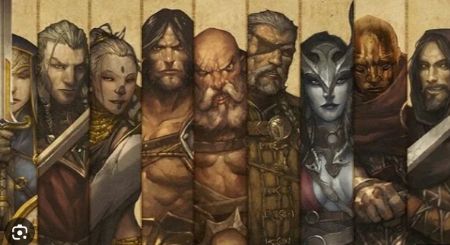
Step 1: Creating a Character

Your character is your alter ego and avatar in the world of D&D. They might be a noble paladin, a sneaky rogue, a powerful wizard, or anything in between.

To create one, you’ll choose:

1. A Species
This is your character’s fantasy species (such as Human, Elf, Dwarf, Halfling, Dragonborn, etc). Each one gives you special abilities and traits.

2. A Class
This defines what your character does:

  • Fighters and Barbarians excel in combat
  • Wizards and Sorcerers use magic
  • Rogues rely on stealth and precision
  • Clerics and Paladins draw power from faith
  • Bards, Rangers and others fill versatile roles

3. Ability Scores
There are six core abilities:

  • Strength (physical power)
  • Dexterity (speed and agility)
  • Constitution (endurance)
  • Intelligence (reasoning and memory)
  • Wisdom (perception and insight)
  • Charisma (force of personality)

These scores influence how good your character is at different tasks.

4. Background & Personality
These aren’t stats but let you begin shaping who your character is and how they might react to the world. Answer questions like these help with this:

  • Where are you from?
  • What motivates you?
  • What do you fear?

These details shape how you’ll roleplay your character.
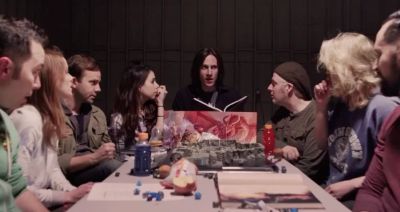
Let’s begin….

Step 2: How the Game Actually Works

D&D is played through a cycle of:

  1. The DM describes a situation
  2. The players describe what they want to do
  3. The DM asks for a dice roll (if needed)
  4. The result determines the outcome

Example:

DM: “You come to a locked wooden door at the end of the corridor.”
Player: “I try to pick the lock.”
DM: “Roll a Dexterity check.”
(Dice roll determines success or failure.)

Most actions in the game use a d20 roll:

d20 + ability modifier + proficiency bonus (if trained)

If your total equals or exceeds the required number (called the Difficulty Class or DC), you succeed.

Combat Basics (Without the Overwhelm)

When fighting breaks out, the game switches to combat rounds. Each round represents roughly 6 seconds in the world.

Here’s the basic flow:

  1. Roll initiative (a Dexterity check) to determine turn order
  2. On your turn, you can:
    • Move
    • Take one action (attack, cast a spell, help an ally, etc.)
    • Use a reaction when triggered

You roll to hit, roll for damage, and describe what happens cinematically.

Combat continues until the threat is dealt with, escaped, or negotiated with.

Roleplaying: The Heart of the Game

D&D is as much about storytelling as it is about rules.

You don’t just say:

“I roll Persuasion.”

You say:

“I step closer to the guard, lower my voice, and say, ‘If you let us through, no one needs to know you ever saw us.’”

The dice then determine how well you pull it off.

This is where the magic happens—your character’s voice, choices, mistakes and heroics bring the world to life.

Working as a Party

You are not competitors. You are a team.

Every character brings something different:

  • One might be strong in combat
  • Another might solve puzzles
  • Another might negotiate and read people well

Success in D&D comes from communication, creativity, and cooperation.

Some of the most memorable moments come from unexpected plans, clever teamwork, and hilarious failures.
What are you waitin gfor?

The Most Important Rule of All

More important than any mechanic or rule is this:

Dungeons & Dragons is meant to be fun.

The best groups aren’t the ones who know every rule. They’re the ones who:

  • Support each other
  • Share the spotlight
  • Embrace the story
  • Laugh at bad dice rolls
  • Celebrate each other’s wins

If everyone is having fun, you are playing it correctly.

Step 3: Ready to Start?

Grab some friends. Grab the basic rules for free. Roll some dice. Create a hero. Make terrible decisions. Save a village (or accidentally burn it down).

Welcome to Dungeons & Dragons.
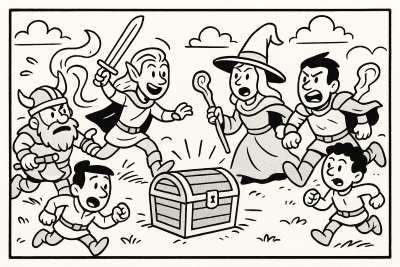
When Rival Parties Enter the Dungeon: Competition and Time Pressure

Most of the time when we think of Dungeons & Dragons, we picture a single party of adventurers delving into a dungeon, working together, fighting monsters, and uncovering treasure. But what if there were two rival parties competing for the same goal, racing against each other in real time?

I first came across this idea listening to the excellent podcast Fear of a Black Dragon, where presenter Tom McGrenery described running the Dungeon Crawl Classics adventure Piercing the Demon’s Eye for two groups at the same time. It sounded chaotic, exhilarating, and utterly brilliant.

So of course, I had to try it.

Did it work? Read on to find out.

Two DMs, Two Rival Parties

Together with my fellow DM Rich, we set up a dungeon crawl for ten friends. The twist? Instead of one unwieldy group of ten, we’re splitting them into two rival parties, entering the dungeon (Piercing the Demons Eye) five minutes apart.

The rules of engagement are simple:

  • The dungeon closes in four real-time hours. When the clock hits zero, the dungeon magically shuts. Any characters still in there are trapped, experiencing a slow and agonizing death.
  • The party with the most loot wins. If they make it out in time.
  • We’ll keep tension high with regular real-time countdowns, making every decision feel urgent. One player from each team will be designated time keeper, reminding their team mates to keep moving, or to escape.
  • On top of that, we’re borrowing a mechanic from Blades in the Dark: each time a spell is cast, a clock ticks forward. When it fills, something catastrophic is unleashed into the dungeon.

It’s part dungeon crawl, part pressure cooker, part competitive sport.

What Does This Have to Do With Leadership?

At first glance, this might just sound like a fun twist on D&D (and it absolutely will be). But it’s also a fascinating experiment in leadership under stress. Competition changes everything. When you know another team is out there grabbing treasure, time suddenly becomes your most precious resource. Leaders in the group will have to:

  • Prioritize quickly: Is it worth taking that side passage, or should we push deeper?
  • Manage risk: Do we burn spells now, advancing faster but bringing the catastrophic clock closer to midnight?
  • Balance the team’s needs: Some players may want to fight everything. Others may want to sneak past. Good leadership will mean finding the middle path without wasting precious time.

These dynamics mirror real-world leadership challenges.

Similar scenarios could be run as part of a leadership training exercise. Imagine putting your aspiring leaders through these:

  • Two groups of scavengers in a zombie apocalypse racing to loot supplies before winter. Only one settlement will thrive.
  • Rival companies bidding for the same contract, knowing only one can succeed.
  • Disaster response teams in a crisis where resources are shared between teams and time is brutally limited.

In each case, leaders need to stay calm, make rapid but thoughtful decisions, and keep their team united under pressure.

All of these scenarios can be run using my simple, easy to run Play to Lead ruleset.

Why This Works for Leadership Training

What makes games like this so effective for leadership development is that they feel real. As Jennifer Ouellette explains in Me, Myself, and Why, our brains encode roleplaying experiences as though they genuinely happened. That means when you practice making tough calls, prioritizing under pressure, and communicating clearly in a D&D dungeon, you’re exercising the same leadership “muscles” you’ll use in the workplace.

Adding competition into the mix elevates the stakes. The stress is simulated, but the feelings of urgency, pressure, and rivalry are real enough to create meaningful growth.

Bringing It Back to Work

If you want to use this kind of scenario in a leadership training environment, here are some tweaks:

  • Theme it for your group: Instead of fantasy loot, consider one of the alternative scenarios mentioned above.
  • Make consequences clear: Limited time, limited resources, and a final score that determines success or failure.
  • Encourage reflection afterwards: The real learning happens when teams debrief what worked, what didn’t, and how leadership showed up under pressure.
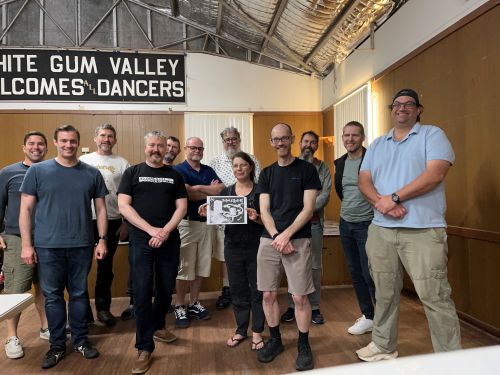
The happy participants!

Running the Game

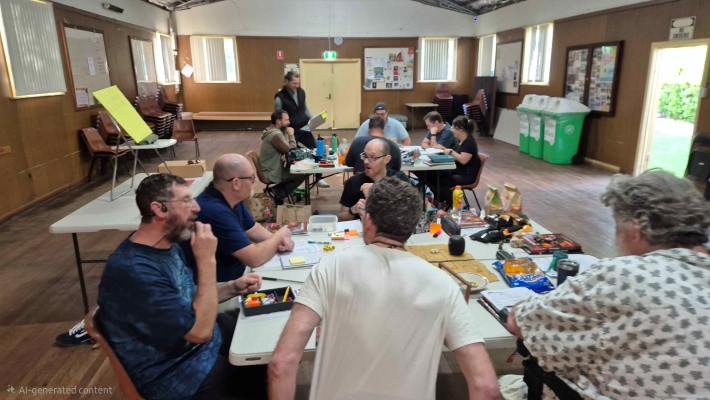
What a blast to run! Rich had booked a community hall for the event. Everyone was primed to bring two 5E D&D characters, just in case. First we used a dice bag with coloured dice to randomly assign the teams. After explaining the premise we set the 4 hour timer and we were off.

Rich and I passed each other notes as the adventurers made their way through the dungeon. The players tables were facing each other so they were always aware of the rival party and their progress. Some of the highlights from the game were:

  • One party coming upon the other and sending an owl to trail them.
  • The first party setting traps for the second.
  • One party battling for their lives, the second popped their head in the room before beating a hasty exit.
  • The slow realisation that casting spells had an impact on the dungeon clock, but not knowing quite what it was counting down to.
  • One player sifting through the treasure horde and throwing unwanted bits into oblivion.

The teams were going to be judged by how much treasure they retrieved. So I made a series of treasure cards describing what they found, but with no value written on them. At the end of the session we totaled up the value of the rescued valuables to determine a winner. There was only 100gp between the two parties!

That being said noone actually made it out alive……

This photo shows our set up. DMs back to back, the bright yellow clock countdown to the left.

Did it Work?

Absolutely it did! The players really got into the premise of the game and told us it was a completely different experience to anything else they had played. There was great banter between the tables and the debrief dinner afterwards was great fun as they pieced together what each rival party had been up to.

Rich and I worked really well as a team. Luckily we had done a load of prep before hand so we knew the module well and how we were going to handle different parts of it. Passing notes between ourselves also added additional paranoia to the players. Always a win.

One interesting thing was that the players actually engaged with the adventure faster then we though they would. Between the two teams they covered every room and trap. This is a good lesson for next time.

I also made a mistake where my group were moving much faster than the others and caught them up without me realising. So we had two parties in the same place at the same time without seeing each other. Woops. Not to worry though, once I’d worked it out I managed to stall my guys long enough for it all to settle out again.

Final Thoughts

In the end, this experiment is both a thrilling way to play D&D and a powerful way to test leadership under competition and time stress. When two parties enter the dungeon, only one comes out on top—but everyone comes out having had a different and fun experience.

If this sort of thing appeals to you I would strongly suggest grabbing a co-DM and running this for your friends. It was a memorable event for everyone, with lots of pressure, paranoia and of course laughter.

Leadership Is a Muscle—And You Need to Train It

business man training his leadership muscle

We all know the value of exercise. You go to the gym to lift weights, run on the treadmill, or maybe stretch through a yoga class. Each of these activities targets different aspects of your physical health: strength, stamina, flexibility. If you don’t exercise those muscles, they weaken over time. Of course, Leadership is no different. Being an effective leader isn’t a fixed trait—it’s a skillset. And like your biceps or your lungs, those skills need intentional training to stay sharp and healthy. You can’t expect to be at your best if you never put them under purposeful stress. How do we train our leadership muscle?

Training Your Leadership Muscle at Work

In the workplace, this means being deliberate. You can:

  • Practice communication: Share openly, listen actively, and make sure your team understands not just what you’re saying, but why.
  • Build self-awareness: Take time to reflect on how you show up for your team, what went well, and where you can improve.
  • Be purposeful: Don’t just drift from meeting to meeting—set clear intentions about how you want to show up as a leader that day.

These small acts, repeated, strengthen your “leadership core.”

Another Gym for Leaders

Here’s where it gets interesting. You don’t have to limit leadership practice to the office. Just as athletes cross-train with different sports, leaders can cross-train with games.

Given the theme of this blog we’ll take Dungeons & Dragons as an example. At first glance, it’s a fantasy roleplaying game filled with dice, dragons, and dungeons. But beneath the surface, it’s an intricate leadership laboratory.

  • As a Dungeon Master, you’re practicing facilitation, storytelling, and group management—all while balancing competing needs and personalities.
  • As a player, you’re practicing collaboration, decision-making under uncertainty, and influencing a group without dominating it.

What’s fascinating is that, as science writer Jennifer Ouellette explains in Me, Myself and Why, our brains treat these imagined experiences as real. When you roleplay leading a group through a perilous dungeon, your memory encodes it as though you actually led people through challenges. That means the leadership muscles you work in a game session can directly strengthen the ones you’ll use in Monday’s staff meeting.

Games can be a useful gym in which to train your leadership muscle.

Purposeful Play as Practice

Think of it this way:

  • A high-stakes project deadline is like a boss battle.
  • Negotiating with a client isn’t all that different from convincing a suspicious NPC to help your party.
  • Balancing diverse team needs mirrors balancing a party of adventurers with wildly different skills and motivations.

If you approach these game scenarios with intentionality—practicing clear communication, reflection, and purposeful decision-making—you’re training your leadership muscles in a safe but meaningful environment.

Keep Your Leadership Strong

Just like the gym, leadership training isn’t a one-and-done activity. You need to keep working at it. At work, in life, and yes—even in play.

So next time you roll dice at the table, don’t think of it as just a game. Think of it as a workout for your leadership. The more you train, the stronger you get.

Fast, Fun, and Focused: Using Character Playbooks to Enhance Your Game

Character Playbooks

Character creation is often one of the most exciting, and sometimes most daunting, parts of starting a new roleplaying game. For many, it’s a chance to dream up a bold new identity. For others, it’s a speed bump they need to get through before the fun begins. That’s where character playbooks come in.

Popularized by games like Blades in the Dark and Dungeon World, playbooks are pre-structured character archetypes that bundle together key decisions: attributes, gear, special moves, and even personality prompts. Making each character feel distinctive and unique. They let players jump into the action fast, without sacrificing the creativity and individuality that make roleplaying so engaging.

But playbooks aren’t just great for steampunk heists or fantastical dungeon crawls—they’re also an incredible tool for leadership-focused RPGs and team training games like my own Play2Lead.

What Makes Playbooks Powerful?

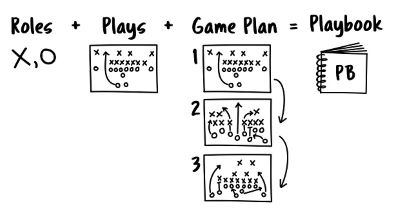
At their core, playbooks do three key things:

  1. Simplify Decision-Making: Instead of choosing from dozens of classes, feats, skills, and powers, players select a playbook and make a few meaningful choices within it. This lowers the cognitive load and keeps the game moving, while still making character creation meaningful.
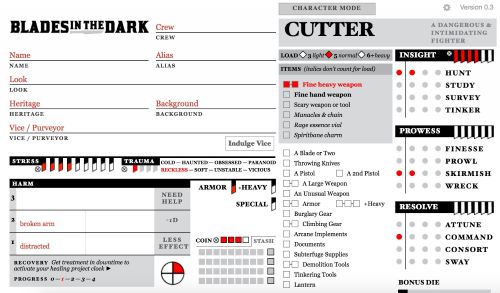
  2. Set Expectations: A Cutter in Blades in the Dark is likely to be physical, intimidating, and direct. The playbook leads the player in that direction through the choices that it offers. clarity like this really helps players quickly understand their role in the team and how they might contribute.
  3. Encourage Roleplay: Many playbooks include bonds, questions, or prompts that nudge players into thinking about how their character sees the world—and how they’ll interact with the rest of the group.

These features combine to create a quicker, smoother onboarding process—perfect for groups who want to dive into the action or get through a session during a lunch break.

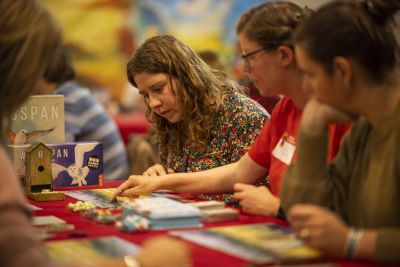
An example of one of the Blades in the Dark Character Playbooks

How Character Playbooks Can Elevate Play2Lead

In my own game Play2Lead, the focus is on leadership, communication, and teamwork in a roleplaying context. It’s a game designed to help people learn by doing—to explore different leadership styles, solve complex problems together, and reflect on how they interact in a group. Currently character creation sits with a broad occupation, leadership style and one stat (exhaustion). Using playbooks might be a quick way for participants to engage with the game and understand what’s expected of them during play.

Here’s how playbooks can serve that mission:

  • Align with Leadership Styles: Playbooks in Play2Lead could represent leadership archetypes: The Visionary, The Facilitator, The Challenger, The Harmoniser, etc. Each one comes with strengths, blind spots, and a unique way of contributing to the team.
  • Jumpstart the Game: With predefined goals, triggers, and interpersonal dynamics, players can hit the ground running. This is especially helpful in one-shot sessions or corporate workshops where time is limited. You could also include a differing objective for each player, letting them work through conflict and compromise.
  • Create Teachable Moments: By embedding questions like “What do you do when your suggestion is ignored?” or “How do you handle team conflict?”, playbooks can gently guide players into valuable moments of reflection and growth.

Overall including a playbook system in Play2Lead is a great way to create more depth into the scenarios. Now instead of just trying to escape the Lost Temple, we can include interparty conflict and different objectives that better reflect teams in the real world.

Using Playbooks with Traditional D&D-Style Games

Playbooks aren’t exclusive to narrative indie RPGs—they can be layered onto more rules-heavy systems like Dungeons & Dragons to help get new or time-strapped players into the story faster. Imagine starting a D&D one-shot where the group is a squad of mercenaries. Each player picks a playbook with questions like:

  • The Veteran (Fighter/Leader) – “Who saved your life once, and what do you owe them?”
  • The Scout (Rogue/Observer) – “What truth have you discovered that no one else believes?”
  • The Mystic (Cleric/Wild Card) – “What vision haunts your dreams, and how does it shape your choices?”

These pre-framed characters help players understand not only what their characters can do, but also who they are, and why they’re involved in the mission. You don’t need to rewrite the D&D rulebook—just wrap character choices in storytelling scaffolding that speeds things up and adds emotional depth.

For inspiration, Simon Carryer has developed some great playbooks for older versions of D&D, check them out here.

Making Your Own Playbooks

Creating your own playbooks is easier than it sounds. Think of it like designing a template that sparks imagination while setting clear boundaries. Here’s a quick method:

  1. Define the Role: What job does this character do in the team? What are they responsible for?
  2. List Core Abilities: Pick 2-3 key strengths. Keep the wording accessible: “You keep the group calm in crisis” is better than “+2 to Persuasion.”
  3. Add Unique Moves or Perks: Give each playbook one or two special abilities or tools that make them distinct.
  4. Prompt Player Reflection: Include a few questions about values, goals, or backstory. These help the player bring the character to life in their own way.
  5. Include Interpersonal Hooks: Write 2-3 “bonds” or connections to other team members. These generate immediate relationships and drama.

Final Thoughts on Character Playbooks

Playbooks are more than shortcuts—they’re powerful frameworks for story and chartacter depth. Whether you’re sneaking through a haunted city in Blades in the Dark, solving a leadership challenge in Play2Lead, or running a team-building D&D session, playbooks help players connect quickly, act decisively, and reflect meaningfully.

So next time you’re planning a game—whether for fun, training, or both—consider developing some playbooks. You’ll be amazed at how fast your players step into the story and start leading.

How to Write a 1-Hour Workplace Adventure Using Play2Lead

If you’ve been following this blog for a while you’ll know that I consider D&D to be a powerful way to develop teamwork, communication, and leadership skills. There is a great opportunity to use games like D&D in the workplace to upskill your team. However, as the old adage suggests time is money. Finding time to run a workplace adventure can be difficult. So, when you only have an hour, structure really matters.

That’s where the Play2Lead ruleset shines. Designed to be fast, focused, and built around teamwork mechanics like the Team Dice Pool, it’s ideal for short, high-impact sessions. It is just a ruleset. Where it really shines is in the scenarios played. In this post, I’ll show you how to write a tight, engaging 1-hour workplace adventure using a three-encounter framework that encourages collaboration and leaves players excited for more.

The 1-Hour Workplace Adventure Framework

Here’s the structure:

  1. Opening Shots (In Media Res) – Drop the players right into the action.
  2. Team Puzzle / Challenge – Test communication, collaboration, and creative problem-solving.
  3. Exciting & Threatening Finale – Deliver a climactic moment with urgency and consequences.

This structure mirrors how stories are told in action-packed short fiction, and it works beautifully for limited time workplace sessions: start fast, build tension, finish big.

Key Design Goals

When designing adventures in the 1 Hour Framework consider the following design goals.

  • Limit to 3 Encounters – Focus is your friend. Three scenes is the sweet spot.
  • Use the Team Dice Pool – Give players moments to contribute, support each other, and spend shared dice to solve problems.
  • Theme Around Soft Skills – Use metaphors for leadership, trust, or crisis management.
  • Keep Time – Allocate about 15 minutes per scene and leave 10–15 minutes for debrief and reflection.

Some Example Workplace Adventures

Here are some examples to get you started. Leaning in to popular tropes can help players begin engaging with the game quicker. Everyone knows Zombies, superheroes or pulp adventures and what they entail. The more easily recognizable the faster players can understand what is needed from them.

Zombie Apocalypse Scenario

Title: “Extraction Point Echo”
Theme: Crisis leadership, teamwork under pressure

Inspiration: 28 Days later, Walking Dead, iZombie, Dawn of the Dead.

1. Opening Shots: “Trapped in the School”

  • The team is barricaded in a classroom as zombies break through the hallway.
  • One NPC survivor, a doctor, is injured, another panicking.
  • Team must decide: fight, flee, or rescue?
  • Team must coordinate escape strategies and save NPCs.
  • Dilemma: who will they save?

2. Team Puzzle: “The Blocked Gym Doors”

  • To reach the evacuation chopper, the team needs to open the sealed gym doors.
  • Puzzle includes a broken generator, a keypad lock, and zombies thudding at the fence.
  • Players must delegate tasks: repair, protect, decode.

3. Finale: “Last Stand at the Helipad”

  • The evac chopper is delayed, and a wave of zombies is closing in.
  • Team must defend the landing site, signal the chopper, or use environmental elements (fire, water hoses, barriers).
  • Keep the pressure on. When the chopper arrives it doesn’t have enough space for everyone…

Underwater Adventure Scenario

Title: “Pressure Protocol”
Theme: Decision-making under constraint, trust, clarity in communication

Inspiration: Abyss, The Poseidon Adventure, The Deep, Jaws, The Meg

1. Opening Shots: “Flooded Research Lab”

  • The team wakes up in a partially collapsed undersea lab after an earthquake.
  • Water is rising fast, oxygen is limited.
  • Decide what to salvage, who to carry, and how to reach the control hub.
  • In media res—start with klaxons blaring and lights flickering.
  • Provide too much equipment to be taken, some useful, some not. Each character can take one item. What will be left behind?

2. Team Puzzle: “The Pressure Doors”

  • The route to the escape sub is blocked by a malfunctioning pressure system.
  • One team member must navigate ducts, others solve a system override puzzle.
  • Split the team but encourage constant communication.

3. Finale: “The Cracking Dome”

  • Final room has the escape sub—but the lab’s glass dome is fracturing.
  • An injured NPC radios from another part of the station begging to be taken, but time is tight.
  • Players choose: who goes, who stays, what can be sacrificed.
  • High tension, high stakes. Let them spend the last team pool dice for one heroic effort.

Final Tips on Prepping a Workplace Adventure

  • Prep NPCs with distinct roles or emotions (coward, loyalist, idealist), making it clear who they are, to prompt team dynamics.
  • Track Time with a visible timer or countdown clock—it adds tension and keeps pacing sharp.
  • End with Reflection – Ask players what choices worked well, what they’d do differently, and how it connects to teamwork at work.

Why It Works

Using the Play2Lead ruleset in a 1-hour adventure is basically a leadership workshop disguised as a zombie movie or underwater thriller. It’s short enough to fit a lunch break or between learning sessions, structured enough to teach valuable skills, and fun enough to make people want to play again.

Three encounters. One hour. One story they’ll talk about all week.