
Three Leadership Lessons From The Game: Mutiny and Collaboration

Recently, I had the opportunity to play a thrilling roleplaying game session of “Those Dark Places” with a group of friends. This game is all about horror and adventure in deep space, following the themes laid out form my favorite film Alien. Little did we know that amidst the excitement and tension, we would stumble upon valuable insights into leadership styles and dynamics. As the game unfolded, our experiences shed light on the importance of collaboration, building leadership capital, and the consequences of failing to adapt in times of crisis. In this post, I will discuss three key leadership lessons from the game that emerged in our space faring journey.

Of course, I’m lucky to play with a group who enjoy roleplaying their characters to the hilt. This often means that the optimal solution is not always played out, making for a much more interesting game. But the leadership lessons still stand, highlighting the experiential learning opportunities that roleplaying games can provide leaders.

In space no one can hear you scream, or mutiny as the case might be…. (Alien 1979 – huge inspiration for this game).

Lesson 1: Collaboration Over Dictation

At the beginning of our virtual space expedition, one of our friends assumed the role of the captain—a position of authority entrusted with leading the crew of space workers on a mission to aid an on-planet mine. However, the captain’s leadership style was initially authoritarian and highly directive. He issued orders without seeking input or fostering collaboration within the crew. In the absence of any serious threats, the crew complied silently, and the mission progressed smoothly. In fact the team members were helping each other with tasks while the captain was “overseeing” from a place of safety. This lack of collaboration between the leadership and the team began to create a divide. Which, as it turns out, was going to limit the effectiveness of the leader moving forward.

Lesson 2: Building Leadership Capital

However, when faced with unexpected adversity in the form of an horrific android uprising, the true test of leadership began. Tension was mounting and the pressure rising. As the crew confronted the urgent task of returning to the spaceship, evading homicidal androids along the way, the captain’s lack of collaboration and failure to build leadership capital became apparent. At no point during the adventure up to this point had the captain tried to gain the trust of the team. Directing them to do the difficult and dangerous jobs while remaining safe, refusing to collaborate and acting in a dictatorial style were to behis undoing. The crew had not developed trust or respect for the captain’s leadership style, making it difficult for them to rally behind their directives in this critical situation. This came to a head when the captain started making decisions that were putting the crew in harms way.

The pressure in Those Dark Places creates a good test of leadership principles

Lesson 3: Adaptability and Resilience in Crisis

Under the mounting pressure, the crew’s survival instincts kicked in, and they collectively realized the need for collaboration and shared decision-making. The android uprising had spread throughout the mine and the adventure theme had turned to one of survival. The captain however, was looking to follow company orders, effectively putting the crew at risk. Recognizing that their lives were at stake, they overruled the captain’s orders and effectively mutinied. In this desperate situation, the crew’s ability to adapt and work as a cohesive unit became paramount. By embracing a collaborative approach and pooling their collective knowledge and skills, they navigated through the dangers, ultimately surviving the ordeal. As their ship left the turmoil of the planet below the captain had effectively lost command.

Final thoughts

Our experience playing “Those Dark Places” brought to light crucial leadership lessons that transcend the boundaries of a mere game. The importance of collaboration, building leadership capital, and adaptability during times of crisis emerged as central themes. Effective leaders understand the significance of collaboration, seek input from team members, and foster an environment where diverse perspectives are valued. Furthermore, they invest time and effort in building trust, respect, and credibility among their team. Finally, leaders must possess the ability to adapt and remain resilient in challenging situations, recognizing when it is necessary to shift their approach and empower their team members to make crucial decisions.

Whether in the context of a tabletop roleplaying game or the real world, these leadership lessons have the potential to transform the dynamics within teams and drive them towards success. By embracing these insights, leaders can build cohesive teams that thrive in both favorable and adverse circumstances, navigating the darkest of places with resilience and shared purpose.

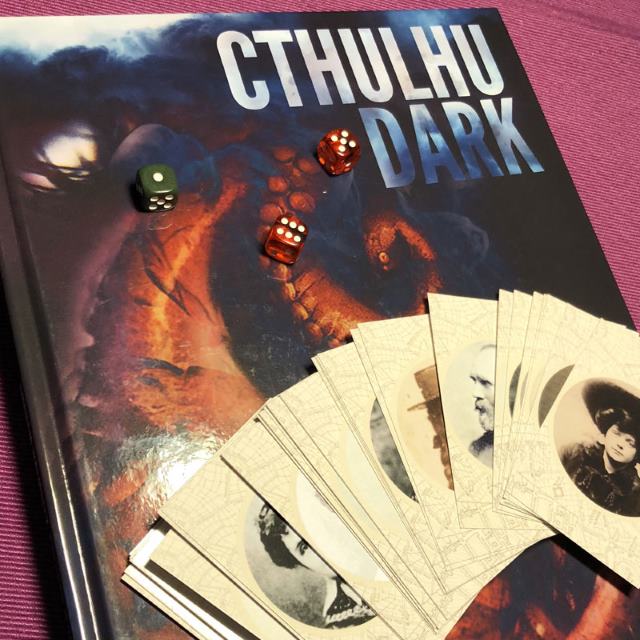
Developing a Powerful Learning RPG with Cthulhu Dark and Those Dark Places

Role-playing games (RPGs) have long been celebrated for their ability to immerse players in rich narratives and challenging scenarios. Beyond their entertainment value, RPGs can also serve as powerful tools for learning and personal development. It is my aim to create a roleplaying game that can help facilitate powerful learning experiences. I have set out a series of principles that I consider critical to playing the game in this context.

In this article, I look at two rulesets that I think can be used in developing a learning RPG where player decision making is key. I believe that Cthulhu Dark and Those Dark Places, can be effectively harnessed into a ruleset for a learning-focused RPG experience.

Cthulhu Dark

Cthulhu Dark, designed by Graham Walmsley, is a minimalist RPG system that thrives on atmospheric horror and player-driven storytelling. While the game is known for its Lovecraftian themes, its simplicity and focus on narrative make it a versatile tool for educational settings. The core mechanic revolves around rolling one to three six-sided dice to determine success or failure. Additionally, characters have only one stat. This streamlined approach encourages players to immerse themselves in the story, fostering creative thinking and collaborative problem-solving skills.

This game has a brilliant insight mechanic. As characters are exposed to the horrors of the scenario it slowly builds. Until the characters have seen too much and break. While this works really well for the horror theme it may need alteration when developing a learning RPG. Changing it from insight to exhaustion would allow you to cover a wider variety of genres and scenarios.

You can read a more in depth review of this fantastic game here.

Those Dark Places

Those Dark Places, created by Jonathan Hicks, is a science fiction RPG system that invites players to explore the mysteries of the cosmos. My favourite movie of all time, Alien is a core inspiration here. It emphasizes the survival of a team in an unforgiving environment, fostering teamwork, critical thinking, and decision-making skills. By presenting players with complex challenges and dilemmas, Those Dark Places prompts them to weigh the consequences of their choices, fostering a deep sense of responsibility and strategic thinking.

Of course, the game system is also very rules-lite. Utilizing six sided dice over four attributes. It also has a great stress mechanic that builds over time as the characters experience high pressure situations.

You can find a more detailed review of this awesome game here.

Using These Games

Integrating Cthulhu Dark and Those Dark Places into an experiential learning setting yields numerous benefits. Firstly, these games encourage active participation and engagement, fostering a love for learning and exploration. Dice rolling in both games are kept to a minimum. Meaning decision making and player actions have significantly more weight. The collaborative nature of RPGs also promotes teamwork and effective communication skills, as players must work together to overcome obstacles and solve problems. Additionally, neither game has the level/experience constructs of Dungeons & Dragons. The open-ended nature of these systems stimulates creativity and imagination, allowing players to think outside the box and develop innovative solutions.

Use When Developing a Learning RPG

Utilizing Cthulhu Dark and Those Dark Places as learning tools, educators can adapt the game mechanics to suit specific educational goals. For example, scenarios based in reality can be easily reimagined in the Cthulhu Dark system. Focusing on participant decisions and collaboration. Those Dark Places might be more applicable to simulate problem-solving, using skills to solve hypothetical challenges.

Of the two I think that Cthulhu Dark will form the mainstay of my future learning-rpg ruleset. It is highly versatile, focuses on player decision making and ramps up pressure with its insight mechanic. While scenarios will require careful tweaking, the core of the rules will not. Additionally it is the easier to teach players who are completely new to the concept of roleplaying.

Safety and Ethical Considerations

You may have noticed that the two gaming systems chosen both have a horror theme. This is not intentional. Perhaps the horror genre lends itself to more narrative focused gameplay. Of course, it is not my intent to include horror elements into the learning-focused scenarios, instead focusing on more grounded high pressure scenarios.

Remember, when utilizing RPGs as learning tools, it is crucial to establish a safe and inclusive environment for all participants. Emphasize the importance of respect, consent, and cooperation among players. Ensure that sensitive topics are approached with care, and provide opportunities for reflection and discussion after each session to process the emotional impact of the game.

Final Thoughts On Use as a Learning RPG

Cthulhu Dark and Those Dark Places are not only captivating RPG systems for entertainment but also effective tools for fostering learning and personal development. By leveraging their narrative-driven mechanics, we can create engaging and immersive experiences that promote critical thinking, problem-solving, teamwork, and creativity. Both would make a great learning RPG in their own right.

Using these game mechanics we can create unique and exciting ways to engage learners and expand their horizons beyond traditional training methods. Over the coming weeks I intend to pull together a simple ruleset that will let us explore experiential leadership and team learning through the poser of RPGs.

5 Secrets Essential for Every Learning RPG

Role-playing games (RPGs) have long captivated our imaginations, allowing us to embark on epic adventures and explore fantastical worlds. However, they can offer more than just entertainment. They also serve as powerful tools for learning and personal development. In particular, an RPG ruleset designed with a focus on leadership learning can provide players with valuable opportunities to enhance their decision-making, critical thinking, and ingenuity. In this post, I explore the key principles required for an RPG ruleset that enables leadership learning, while ensuring simplicity, adaptability, and a limited complexity for easy comprehension and application.

Ideally a ruleset of this nature can be used with professionals who know nothing of roleplaying. It should be learned fast and not get in the way of the learning experience.

Simplicity in Under 5 Minutes

An effective leadership-oriented RPG ruleset should be easily understood within a short timeframe, ideally within five minutes. Clear and concise rules ensure that players can quickly grasp the fundamental mechanics of the game, allowing them to focus on developing their leadership skills rather than getting bogged down in complex rulebooks. By providing a straightforward framework, players can immerse themselves in the game world and concentrate on making meaningful decisions.

This also means keeping the dice types simple. Although I love the polyhedral dice used in D&D (I own far too many), it adds a level of complication to the game that isn’t needed. Instead, we know most people will be familiar with the six-sided dice. Most family board games have them. Keeping that familiarity is a good way to remove the barriers of entry for new players.

Limited Complexity – Rules Lite

To foster a focus on leadership development, the ruleset should be “rules lite.” This means avoiding unnecessary complexity and heavy reliance on intricate mechanics that plague many RPGs. By stripping away excessive rules, the game encourages players to think creatively, adapt to various situations, and make decisions based on critical thought. This is much better than relying solely on dice rolls or random chance. A rules lite approach empowers players to take ownership of their characters and their choices, fostering a sense of agency and leadership.

Critical Thought over Dice Rolls

Chance and randomness have their place in RPGs. However, a leadership-oriented ruleset should prioritize decision-making based on critical thought rather than relying solely on dice rolls. This approach emphasizes the development of strategic thinking, problem-solving skills, and evaluating consequences. By encouraging players to analyze situations, consider alternative approaches, and weigh risks and rewards, the ruleset cultivates leadership qualities such as foresight, adaptability, and effective decision-making.

Force the players to use their minds, keep dice rolling to a minimum.

Keep dice rolling to a minimum

Adaptability Across Genres and Situations

A versatile leadership-focused RPG ruleset should be easily adaptable to various genres and situations. By providing a flexible framework, players can explore diverse settings, from medieval fantasy realms to futuristic space colonies or even contemporary corporate environments. This adaptability allows players to transfer their leadership skills and strategies from one context to another, expanding their ability to lead and navigate different challenges effectively.

This means that you can choose the genre that best fits the team. In the corporate setting there may be a preference to keep scenarios contemporary. However, pushing the team into a new genre might be the key to unlocking untapped creativity. For example running a team of environmental scientists through a scenario involving a crashing spaceship may get them to react in ways that differ from their normal working day.

Fostering Ingenuity

One of the most captivating aspects of RPGs is the freedom they provide for creative problem-solving and ingenuity. An effective leadership-oriented ruleset should encourage players to think outside the box, rewarding innovative solutions and approaches. By providing a supportive environment for experimentation and rewarding ingenuity, the ruleset fosters leadership qualities such as adaptability, resourcefulness, and the ability to inspire and motivate others.

Your learning RPG ruleset needs to foster ingenuity

Final Thoughts

Incorporating a leadership learning focus into an RPG ruleset offers a unique and engaging way to develop essential skills and qualities. By adhering to the principles of simplicity, limited complexity, critical thought over dice rolls, adaptability, and fostering ingenuity, such a ruleset can create an immersive and transformative experience for players. Whether you aspire to enhance your decision-making abilities, refine your critical thinking skills, or become a more effective leader, engaging with an RPG ruleset designed for leadership learning can provide a rewarding journey of growth and development.

In future posts I will use these principles to develop a ruleset for leadership development. My mind is already bubbling away with ideas and I’m excited to see where this will lead.

Are there any other principles that should be incorporated?