What Are Megagames? Exploring the Benefits of Large-Scale Gaming

Although not well known, Megagames stand as the ultimate immersive experience, blending elements of role-playing, board games, and live-action simulations. These large-scale games, often involving dozens to hundreds of players, create complex and dynamic environments. This structure and emergent play style really puts players through their paces. Notably, I believe that Megagames could be an exceptional in fostering leadership skills. This article delves into what Megagames are, provides specific examples, and explores how they might be used to enhance leadership skill through experiential learning.

What Are Megagames?

Megagames are large-scale games that combine elements of strategy, role-playing, and simulation, often played out over an entire day. They typically involve multiple teams, each with distinct roles and objectives, interacting within a shared narrative framework. The complexity and scale of these games demand coordination, strategic thinking, and adaptive problem-solving from players.

The design of Megagames allows for rich, emergent gameplay, where the actions of individual players and teams can significantly influence the overall outcome. This dynamic environment mirrors real-world scenarios, making Megagames not only entertaining but also educational.

Examples of Megagames

While I have explained what a Megagame is, it really takes some examples to showcase their scale and complexity. Here are some better known examples.

1. Watch the Skies

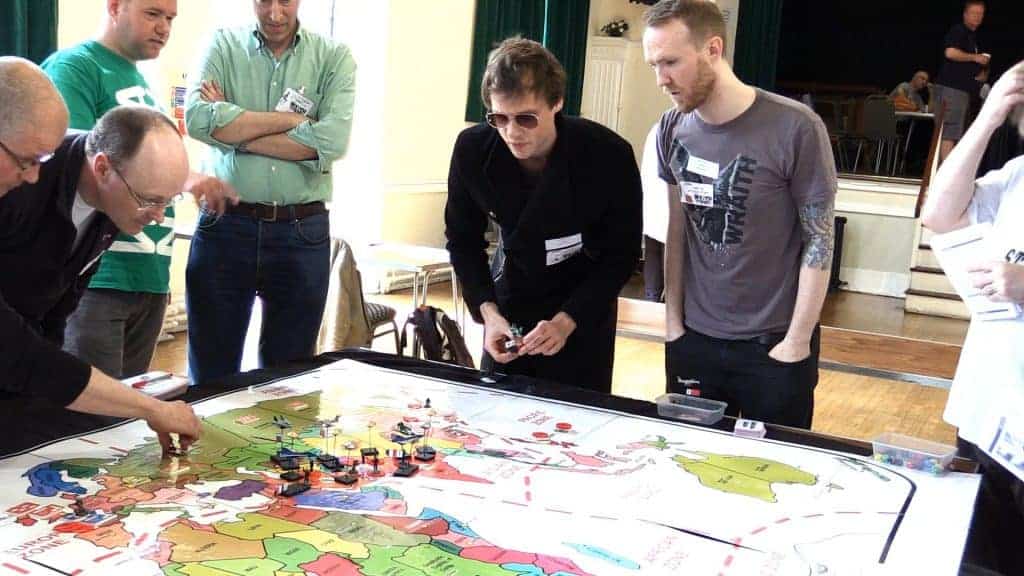
One of the most well-known Megagames, “Watch the Skies,” involves teams representing nations and alien factions navigating a world where extraterrestrial contact has just been made. Each team must manage resources, conduct diplomacy, and respond to various crises, all while dealing with the unknown intentions of the aliens.

“Watch the Skies” has been run by numerous organizations across the UK, USA and Australia and there are some great videos exploring the players experiences.

For more information, you can visit the Stone Paper Scissors website here.

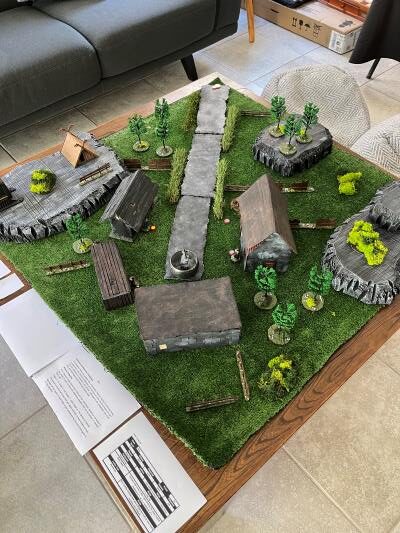
A small part of a Watch the Skies Megagame in progress

2. Den of Wolves

“Den of Wolves” places players in the roles of the crew and passengers of a fleet of spaceships escaping a dying star system. Players must manage limited resources, make critical decisions about survival, and navigate complex interpersonal dynamics. Leadership roles within the fleet are crucial for the game’s progression.

Further details are available from the South West Megagames. Interestingly they also run games for businesses and other organizations, already proving the concept that games of these sort can build leadership skill and ability.

3. Urban Nightmare: State of Chaos

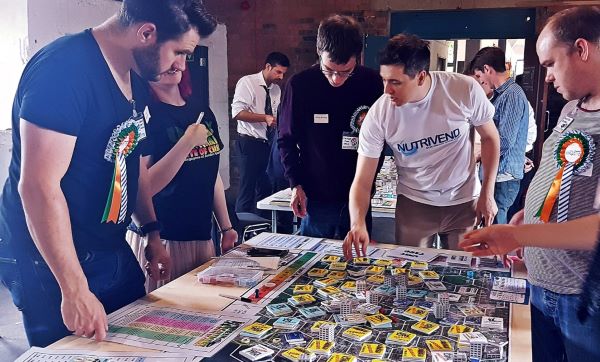
Written by Megagame stalwart Jim Wallman, “Urban Nightmare: State of Chaos,” throws players into a zombie apocalypse affecting an entire state. Teams represent various governmental and non-governmental organizations working to manage the outbreak, maintain public order, and ensure survival. The game emphasizes crisis management and inter-agency cooperation. A great game to play if a business is experiencing low communication or significant silo-ing between departments.

You can explore more about this game here. A great review can be found on the BeckyBecky blog.

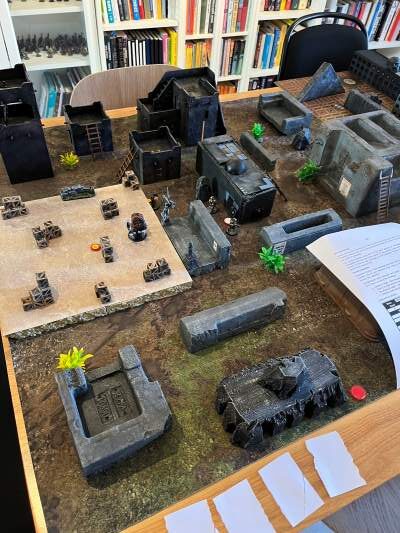
A game of Urban Nightmare in progress

Megagames and Leadership Development

The immersive and multifaceted nature of Megagames makes them an excellent platform for developing leadership skills. surprisingly, they are already being used in this capacity. Both Stone Paper Scissors and SW Megagames are hosting games in the corporate and government spheres.

Here’s a few reasons why these games are so effective:

1. Strategic Thinking and Planning

Megagames require players to think strategically and plan ahead. In “Watch the Skies,” for example, national leaders devise long-term strategies while preparing to adapt to rapidly changing circumstances, mirroring the need for strategic foresight in leadership roles.

2. Decision-Making Under Pressure

Megagames often place players in high-pressure situations where quick, decisive action is necessary. “Den of Wolves” challenges players to make critical decisions about resource allocation and crisis response, honing their ability to make sound decisions under stress.

3. Collaboration and Teamwork

Success in Megagames relies heavily on effective teamwork and collaboration. Players must communicate and coordinate with their teammates and other groups to achieve their objectives. This aspect is particularly evident in “Urban Nightmare: State of Chaos,” where various agencies must work together to manage the zombie outbreak.

4. Conflict Resolution

Megagames simulate environments where conflicts of interest are common, requiring players to negotiate and resolve disputes. These skills are directly transferable to leadership scenarios where conflict resolution is a daily necessity.

5. Adaptability and Flexibility

The dynamic nature of Megagames demands that players be adaptable and flexible. Unexpected events and actions by other players can drastically alter the game landscape, requiring leaders to pivot and adjust their strategies. This mirrors real-world leadership scenarios where adaptability is key to navigating uncertainty.

Final Thoughts

Megagames offer a unique and powerful means of developing leadership skills through their complex, interactive, and immersive gameplay. By simulating real-world scenarios and challenges, they provide players with opportunities to enhance strategic thinking, decision-making, teamwork, conflict resolution, and adaptability. As these games continue to grow in popularity, their potential as tools for leadership development becomes increasingly apparent.

As such, I’ve been interested in running one of these behemoths for a long time. I’m currently writing a smaller version for 12 players and I’ll report back once I’ve actually run it. As a side note, if you’re in Perth, Australia and would like to play in a Megagame drop me a line. A game this size will need plenty of players!

Critical Hits: D&D Tactics for Career Growth

For many, roleplaying games serve as a delightful escape filled with dragons, wizards, and epic quests. However, beyond the tabletop adventures lies a treasure trove of skills and experiences that can significantly impact your professional life. In this article, we explore the top three ways that indulging in RPGs can actually help grow your career.

Strategic Thinking and Decision-Making

When playing games like D&D, every choice has consequences. Players quickly learn the art of strategic thinking and decision-making. Whether it’s navigating a treacherous dungeon or negotiating with an in-game character. Players evaluate risks, consider potential outcomes, and make decisions that impact the entire party.

Application to Career

  • Strategic Planning: RPGs cultivate an ability to think strategically, a skill invaluable in roles that require long-term planning and goal setting.
  • Decision-Making: Practicing decision-making in a low-risk environment helps build confidence and sharpens critical thinking skills, directly applicable to real-world scenarios.

Team Collaboration and Leadership

Roleplaying games are inherently collaborative, requiring players to work together to achieve common goals. Each party member brings unique skills to the table. Successful campaigns hinge on effective communication and teamwork. Additionally, players often find themselves in leadership roles within the game, responsible for guiding the group through challenges.

Application to Career

  • Teamwork: RPGs foster a collaborative spirit, teaching players how to work with diverse personalities, a valuable skill in any workplace.
  • Leadership Development: Taking on leadership roles in-game translates to enhanced leadership capabilities in the workplace, as players learn to inspire and guide their team to success.
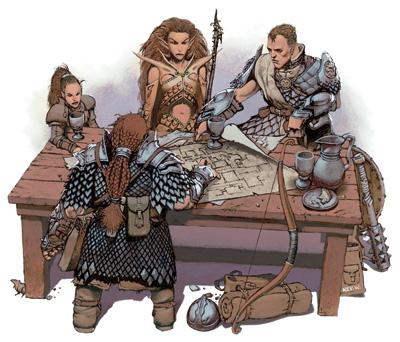
Teamwork ultimately makes you a better employee (and dragon slayer!)

Creativity and Problem-Solving

Creativity is the lifeblood of RPGs. Players constantly find themselves in unforeseen situations, requiring them to think outside the box to overcome challenges. From creating intricate character backgrounds to improvising solutions on the fly, RPGs encourage players to flex their creative muscles.

Application to Career

  • Innovative Thinking: RPGs nurture a creative mindset, fostering the ability to approach problems from multiple angles and develop innovative solutions.
  • Adaptability: Dealing with unexpected plot twists and adapting to dynamic game scenarios teaches adaptability, a critical skill in today’s fast-paced and ever-changing work environments.

Final Thoughts

So, can playing D&D help my career?

Yes! As you embark on your next RPG adventure, take a moment to remember that the skills and experiences gained at the table can be powerful assets in your professional journey. From strategic thinking to teamwork and creativity, the lessons learned in the fantastical realms of RPGs can translate seamlessly into the challenges and opportunities of the real world. So, roll those dice with confidence; your career may just thank you for it.

For more information on this topic why not look at how and why to put D&D on your CV or Resume.

The Lost Temple: An Adventure in Collaboration

I’ve been working on the idea of a roleplaying game that can be used for leadership development for a while now. My first attempts can be found in my Play2Lead ruleset. During playtesting the rules definitely work as intended. Now all that is needed are some scenarios that focus on specific leadership lessons. There are so many themes to choose from it was difficult to work out which to use. However, the more I thought about it the more collaboration bubbled to the surface. Every successful team, business and leader thrive on collaboration. Therefore this adventure scenario focuses on exactly that.

Design Principles

For a game to work in the leadership development setting I believe it should attempt to fit within the following principles:

  • Easily identifiable. Players who don’t like or understand fantasy should be able to relate to the setting and themes of the adventure
  • Playable in a lunch break. Maximum play time of 1.5 hours, though ideally within 1 hour
  • Playable for 4-6 participants excluding the gamemaster
  • Have a clear objective
  • Start in the action immediately
  • Apply pressure throughout, forcing fast tense decision making
  • Focus heavily on the leadership lesson. In this instance “collaboration”.

Given the short playing time I have designed the scenario around the following timeline:

  • Introduction, explanation of rules and choosing of roles – 10 mins
  • Encounter 1 – straight into the action – 15 mins
  • Encounter 2 – problem solving – 15 mins
  • Encounter 3 – explosive finale – 15 mins
  • Wrap up and debrief – 10-20mins

Adventure Introduction

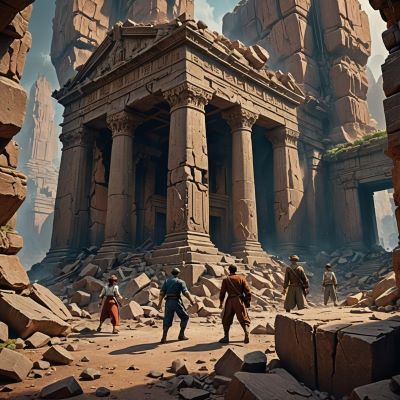
In the heart of the dense jungle lies the ruins of an ancient temple, rumored to hold untold riches and artifacts of great power. However, the temple is also said to be filled with traps and puzzles designed to test the wit and cooperation of those who dare to enter.

A group of treasure hunters have funded an expedition to the temple in the hope of uncovering it’s wonders to share with the world. The architects of this ancient place were cunning beyond measure, and the team will soon discover that their greatest challenge will be working together to make it out alive.

For inspiration think Indiana Jones, Tomb Raider, Unchartered and Jungle Cruise.

Player Set Up with Collaboration in Mind

Using the Play2Lead ruleset all players need is an occupation. For this adventure they can choose from:

  • Archaeologist – professor of the ancient world. Equipped with a lantern. Read hieroglyphics, understand artefacts, high level of knowledge
  • Climber – working at heights professional. Equipped with a 50m rope. Climbing, ropework, high level of agility
  • Engineer – technical specialist. Equipped with a shovel and axe. Construction, demolition, high level of practical know how
  • Navigator – directional expert. Equipped with a compass. Map and compass skills, unerring sense of direction
  • Pilot – helicopter pilot. Equipped with a lantern. Piloting vehicles of all types, radio use, electronics master
  • Expedition Leader (optional) – no specialist skills. Equipped with a knife. Must facilitate the team working together

To speed things up have a character sheet for each character type ready to go.

#1 Collapsing Chamber

We begin in the treasure room of the Lost Temple. A chamber adorned with intricate carvings, hieroglyphics and ancient relics. Piles of gold and gems lie strewn along the walls. Timber shelves lie broken on the floor. On a roughly hewn plinth sits the fabled statue of the gods glinting in the torchlight. Pick a player at random. That characters hand has just closed around the ancient artefact. Suddenly, they trigger a hidden mechanism, causing the chamber to shake violently as the ceiling starts to collapse. Large stone blocks begin to fall from above, blocking the exit. Gold coins rain from the ceiling filling the chamber and restricting movement.

Challenge: The party must quickly assess the situation and find a way to escape before they’re crushed by falling debris.

Solution: A hidden lever is located up one of the walls. Reading the hieroglyphics will point out it’s location. Otherwise careful observation might allow it to be found. Pulling the lever stops the collapse and reveals a new passage to safety. Alternatively, the party could use their strength and agility to dodge falling rocks and clear a path to the exit.

Remember this is a high pressure situation. Make players take Exhaustion (Play2Lead) or other Pressure Tests if using another system to ratchet up the tension. Don’t give the players too much time to plan. If an individual is taking too much time skip them and move on. Pushing the time threat is a critical part of this encounter.

#2 River Rapids

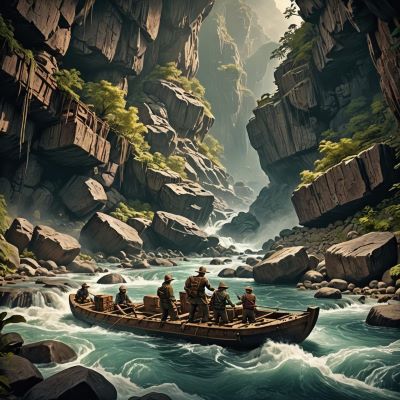
Exiting the collapsing chamber, the group of adventurers find themselves in a vast underground river that flows through the heart of the temple. The river’s currents are swift and treacherous, and the only means of escape seems to be an old rickety raft tethered to the shore.

Challenge: Maneuvering the raft through the river’s rapids while avoiding jagged rocks and hidden dangers.

Solution: The party must work together first to make the raft river worthy. Not doing this will give it a chance to break up halfway through the encounter. Secondly, to navigate the river, using their skills to steer the raft safely. The river will fork. The navigator will be able to tell which way to go. Alternatively there is a fresher breeze coming from the right channel. Along the way, they encounter a series of jagged rocks that threaten to damage and capsize the raft.

Reward player ingenuity here. What will they use to steer the raft? How will they make it safe to use?

#3 Guardian’s Gauntlet

The river throws the group from a low waterfall into a pool below. The bright sunlight of the jungle pool meets them as they find themselves out of the temple. However, as they swim to the side something slides against the leg of one of the swimmers. They are not alone.

Within the pool lives a formidable guardian—a massive, serpentine creature with gleaming scales and razor-sharp fangs. Blocking their path, the guardian seems intent on preventing anyone from leaving the temple alive. It will attempt to encircle the character that is most alone and attempt drown it. One bite from this creature will kill a character outright. This should be played as a deadly, exciting grand finale to the adventure.

Challenge: Defeating or evading the guardian while making a desperate dash for freedom.

Solution: The party must use their wits to outmaneuver the guardian, perhaps by exploiting its weaknesses or finding a way to distract it long enough to slip past. Alternatively, they could way to incapacitate it temporarily, allowing them to make their escape without resorting to violence.

Heighten the terror by having the creature signal it’s presence. Slithering past a leg. Ripples on the water. A flick of a slimy, scaly tail. When the creature reveals itself play up the danger, the toothy maw, the crazed eyes. Make sure the payers know that their characters are in trouble.

Once again reward out of the box thinking and collaboration. How will the team distract or defeat the creature together. This is not something they can win alone.

Collaboration Debrief

Did the players escape unscathed? While the adventure is over, the experience is not. Now is the time to get your players reflecting upon their experience. Ask some or all of the following questions to draw out the discussion.

  • Where did you as a team collaborate well?
  • Did you utilize everyone’s skills?
  • How could you have integrated collaboration better?
  • Is there anything you would have done better?

Following the debrief it’s also worth asking your players for feedback. Did they enjoy the experience and was there anything that could have been done better?

Final Thoughts on an Adventure in Collaboration

This adventure aims to be a fast, exciting experience that fosters collaboration between the players. A chance to debrief afterwards gives attendees a chance to reflect on their experience and what went well and what didn’t.

I envisage this as a useful experience for a cohort of a future leaders training course. Run this experience at the beginning of the course. Then, follow up with a similar experience at the end and see how they have grown as leaders. Has their level of collaboration increased?

Alternatively it could be used as a way help a newly forming team. A chance to get to know each other in a fun experience as well as reflect on how they might work together moving forward. Other uses might be as a way to introduce new people to world of rpgs. A small commitment of time as a way to dip their toes into this exciting medium.

I hope this simple scenario opens your eyes to what can be done with a short, simple adventure. Where do you think it could be used?

A pdf of this adventure with character sheets can be found at the Play to Lead downloads page.

Exploring Dynamics in Uncertainty: A Wargame Experience

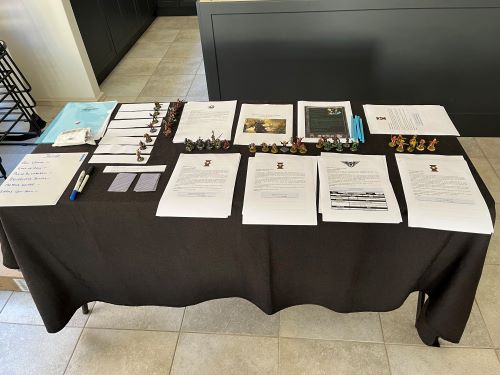
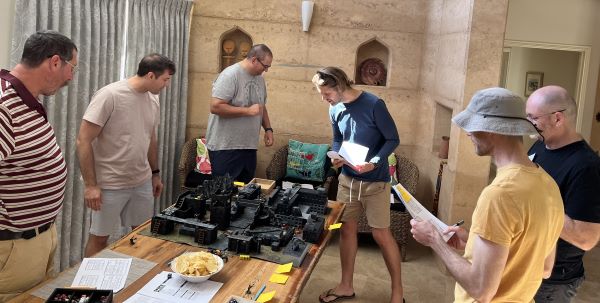
April saw me attend MartyCon 2024, where I ran a miniatures wargame intended to test players resolve under uncertain conditions. As leaders in the real world we deal with a distinct lack of information about our competitors motives and objectives. This uncertainty leads to difficult decision making and stress. My players came from all walks of life including engineers, teachers, ex soldiers and bankers. All were thrust into a scenario of limited information where quick decision making was needed to win the game. In this article I describe the game set up and play before looking at three leadership lessons we can draw from the experience.

The Set Up

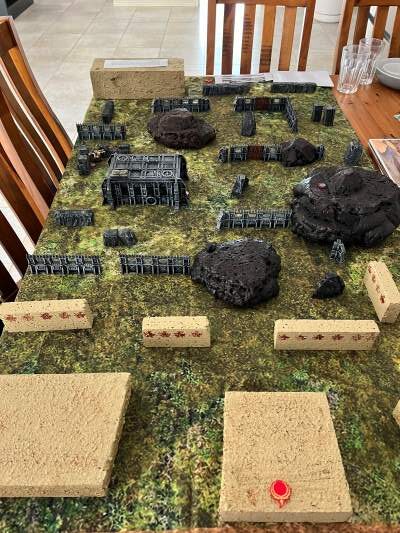
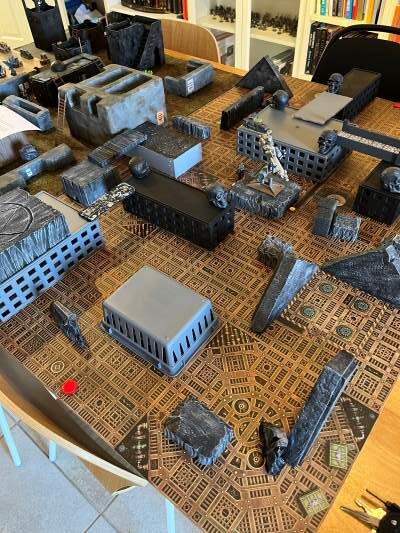
I designed the game using the Space Weirdos ruleset with players commanding one of six factions battling it out under a giant factory complex set in the underbelly of the Warhammer 40,000 universe. Each player had a different primary and secondary objective. These ranged from hunting a demon infused artefact, starting a rebellion and assassinating a rival leader. Below is a summary of each group:

  • Inquisition/Sisters of Battle: A formidable force dedicated to rooting out heresy and chaos, armed with faith and righteous fury.
  • Enforcers: Tasked with maintaining order and eliminating gang activity, these elite warriors are the enforcers of Imperial law.
  • Honor Guard Kill Team: The personal guard of the Imperial Governor, wielding the authority to bring the Mining Guild. They also had a side mission to get rid of the Governors future Son in Law.
  • Acolytes of the Red Mist: A mysterious order shrouded in secrecy, rumored to be on the brink of completing an elaborate ritual with unknown consequences.
  • Mining Guild: Hard-bitten workers pushed to the brink of rebellion by mistreatment, seeking to assert their rights amid the chaos of civil unrest.
  • Scissor Sisters: An influential crime syndicate capitalizing on the turmoil, maneuvering in the shadows to exploit opportunities for profit and power.

Each players team comprised four miniatures with different weapons and abilities. But so many that the game became overwhelming.

I took the role of gamemaster to keep play moving, answering rules queries and making sure everyone was having fun. Of course, this was key in keeping the game running smoothly and allowing for players to try things outside of the normal ruleset.

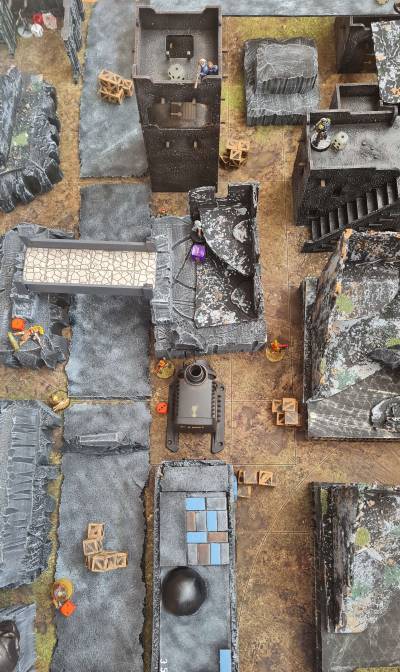
Part of the battlefield with four factions visible

Space Weirdos

I chose the Space Weirdos ruleset intentionally during my planning of the experience. First, it is very simple, but with enough variety in character skills and weapons to keep things interesting. Secondly, players take turns moving one miniature each. This, and the fact that players can interrupt each others goes with actions made sure that no players were left out twiddling their thumbs. Lastly, movement was completed using a 6 inch stick removing the cumbersomeness and clutter of tape measures.

Everyone around the table picked the rules up easily. This is high praise indeed as most hadn’t played a wargame before. I cant recognize this game enough. In fact, I know my friends and I will be playing this ruleset again in the near future.

Adding Uncertainty

Having read their briefs, each player knew their main objective and main adversary. They also had notes on potential allies. Consequently, there was a base line of understanding around the situation. Encouraging players to communicate by secret notes added extra spice. Creating and breaking alliances as needed. Communications lit up within the first minute of the game, with notes flying between all participants. I quickly ran out of post-it notes and players turned to texting one another.

Now the waters were truly muddied. Who to trust. How to win your objective and how to illicit help in doing so was no longer a straight forward concern.

Game Action

We played for two and half action filled hours. Alliances were made. Motives were guessed at. The ensuing firefight unleashing chaos. Feedback from the players showed how difficult they found working with such unknowns. Enjoyable, but difficult.

One player, found himself getting frustrated at another player, perceived to be a neutral party who seemed to be targeting him. Afterwards it dawned on him that the targeting was the result of an unknown objective. He was of course completely right about that.

The player who eventually won, was double crossed, lost most of their team members, but stayed focused on their objective to pull a win on the very last turn.

Often wargames can turn into straight forward affairs. Not this one. Everyone was second guessing each other right until the end. The debrief at the end created more than a few ah ha moments as pieces of the puzzle fell into place.

Given all this uncertainty experienced by the players, what lessons can we learn from the scenario?

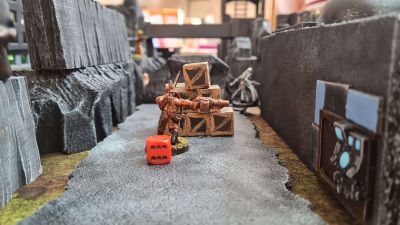
The action from a models perspective

Lesson 1: Flexibility and Collaboration

The game’s setup, designed to pit players against each other amidst uncertainty, showcased the importance of flexibility and collaboration in leadership. One of the players, embodying these traits, adeptly negotiated alliances and adapted his strategy on the fly to help achieve his objective. His willingness to collaborate with unexpected allies underscored the power of flexibility in leadership, demonstrating the value of adaptability in the face of adversity.

Lesson 2: Trust, Betrayal, and the Art of Managing Expectations

As players delved into the fray, trust, betrayal, and the delicate art of managing expectations emerged as crucial leadership lessons. The player running the Sisters of Battle/Inquisition faction, initially sought alliances based on his knowledge of the Warhammer 40,000 universe. However, when his allies turned on each other and betrayal ran rampant, he found himself isolated and betrayed. His assumptions very nearly cost him the game. This experience highlighted the importance of managing expectations and understanding the fluid nature of alliances in leadership scenarios.

More action as the mining guilder sprints for the vox cast station (their primary objective)

Lesson 3: Effective Communication and Information Management in the Face of Adversity

Against the backdrop of clandestine dealings and covert alliances, effective communication and information management emerged as critical leadership skills. Players communicated covertly through notes and smartphones, forming secret alliances and plotting betrayals. This emphasis on information management underscored the importance of access to key intelligence and the ability to convey messages discretely in leadership scenarios, especially amidst the chaos of conflict.

Final Thoughts on Uncertainty

In conclusion, I believe this experience moved beyond that of a simple game. Instead serving as fertile ground for exploring leadership dynamics. Leading the different factions, players not only battled for victory but also honed their leadership skills in the crucible of conflict amidst uncertainty.

I will be sure to use this type of game to explore other leadership themes in the future.

Unleashing Attributes: Translating D&D Abilities into the Business World

Dungeons and Dragons (D&D) is not only a game of fantasy and adventure but also a platform that explores the diverse abilities that define characters. In today’s article, we delve into the six primary attributes of D&D—Strength (STR), Dexterity (DEX), Constitution (CON), Wisdom (WIS), Intelligence (INT), and Charisma (CHA). Ultimately, with the aim of uncovering their relevance to the business world. As a player in D&D, understanding these abilities and their impact on the game allows creation of a character that has a strong chance of success. Likewise, by understanding how each attribute relates to essential qualities and skills in business, individuals can harness their own strengths and develop a well-rounded approach to professional success.

Strength (STR): Power in Action

Strength in D&D represents physical prowess, raw power, and the ability to overcome challenges. Characters with high STR scores would be Conan the Barbarian, Buffy the Vampire Slayer or Aragorn from Lord of the Rings.

In the business world, strength translates into action-oriented leadership, resilience, and the ability to navigate and overcome obstacles. Individuals with high STR traits exhibit determination, drive, and the physical and mental fortitude required to persevere in demanding and competitive environments. Entrepreneurs and construction managers exhibit this trait, as leaders dealing with fast paced highly fluid situations every day.

Dexterity (DEX): Agility and Adaptability

The Dexterity attribute encompasses agility, nimbleness, and reflexes. Sneaky rogues and accurate archers are characters with high DEX. Think Robin Hood or Jyn Erso from Rogue One.

In leadership, DEX translates into adaptability, quick thinking, and the ability to respond swiftly to changing circumstances. Individuals with high DEX traits exhibit flexibility, strategic thinking, and the capacity to navigate complex situations with grace and efficiency. Development managers in the IT sector and project managers of all scales must have high DEX to succeed.

Constitution (CON): Resilience and Endurance

Constitution reflects resilience, stamina, and the ability to withstand physical and mental challenges. Within the game this equates to more hit points and thus makes your character harder to kill. Ellen Ripley from Alien and Ethan Hunt from Mission Impossible display huge levels of constitution and fortitude.

In the real world, CON translates into resilience, perseverance, and the capacity to endure setbacks and overcome adversity. Individuals with high CON traits exhibit determination, emotional stability, and the ability to maintain focus and performance in high-pressure situations. Successful leaders with high CON bounce back from failure stronger than ever before. For real world examples think Elon Musk or JK Rowling of Harry Potter fame.

A great explanation of D&D abilities, referencing tomatoes…

Wisdom (WIS): Insight and Decision-Making

Intuition, perception, and the ability to make sound judgments fall out of a high WIS attribute. From a players perspective these characters are often Clerics, wise in the ways of the world. In fiction characters with high WIS often take the form of mentors. Dumbledore and Yoda are great examples from popular culture and need no introduction. A character with high WIS who is most definitely not a mentor is Tyrion Lannister from Game of Thrones. Throughout the series Tyrion displays great wisdom, finding inner peace where his flaws are concerned and recognizing his great power lies in his ‘smart brain’.

WIS translates into insightful decision-making, problem-solving, and the capacity to evaluate situations holistically. In the business world, individuals with high WIS traits possess keen observation skills, intuition, and the ability to navigate ambiguity and make informed choices. Often leaders with high WIS act as mentors. However, positions where a large number of conflicting stakeholders are involved also need this attribute. Any leadership position in a government department or other bureaucracy must have this to succeed.

Intelligence (INT): Knowledge and Analytical Thinking

Intelligence for a D&D character signifies intellectual acumen, knowledge, and the ability to process information. Since the first days of the game INT has bee important for Wizards as they research the arcane. Over time this has ported to alchemists, artificers and bards. It comes as no surprise that fictional characters like Gandalf, Spock and Hermione Granger display intelligence as their primary attribute.

When looking at real world professionals, INT translates into analytical thinking, strategic planning, and the capacity to gather and apply knowledge effectively. Individuals with high INT traits exhibit strong problem-solving skills, critical thinking abilities, and the capacity to make informed decisions based on data and insights. Leaders with this primary attribute excel in running teams and projects with a high level of technical complexity. They should also be included when formulating long term strategic plans for the business or division.

Charisma (CHA): Influence and Relationship-Building

Charisma in D&D represents charm, persuasiveness, and the ability to influence others. In the game this is often used to avoid deadly combat situations. Fast talking Bards, inspirational Paladins and silver tongued Warlocks all benefit from having a high CHA attribute. In the business world, CHA translates into effective communication, relationship-building, and the capacity to inspire and motivate others. In the movies Tony Stark, James Bond, Jack Sparrow and Princess Leia all have high CHA scores.

Leaders with high CHA abilities possess strong interpersonal skills, the ability to communicate ideas effectively, and the capacity to build rapport and influence outcomes. This is particularly important if you have a large team so that messages are clear and easily understood. A leader with the ability to communicate a strong and compelling vision to his team can create strong loyalty and collaboration. Think Elon Musk or Steve Jobs and see what they have achieved by using this attribute.

Final Thoughts

The six abilities of Dungeons and Dragons—Strength, Dexterity, Constitution, Wisdom, Intelligence, and Charisma—hold valuable lessons for leaders. By understanding and harnessing these attributes, individuals can identify their strengths and develop the qualities necessary for success. Whether it’s leveraging physical and mental fortitude, adapting to changing circumstances, building resilience, making informed decisions, applying analytical thinking, or fostering effective communication and relationship-building, the attributes of D&D can empower individuals to thrive and excel as leaders in the real world.